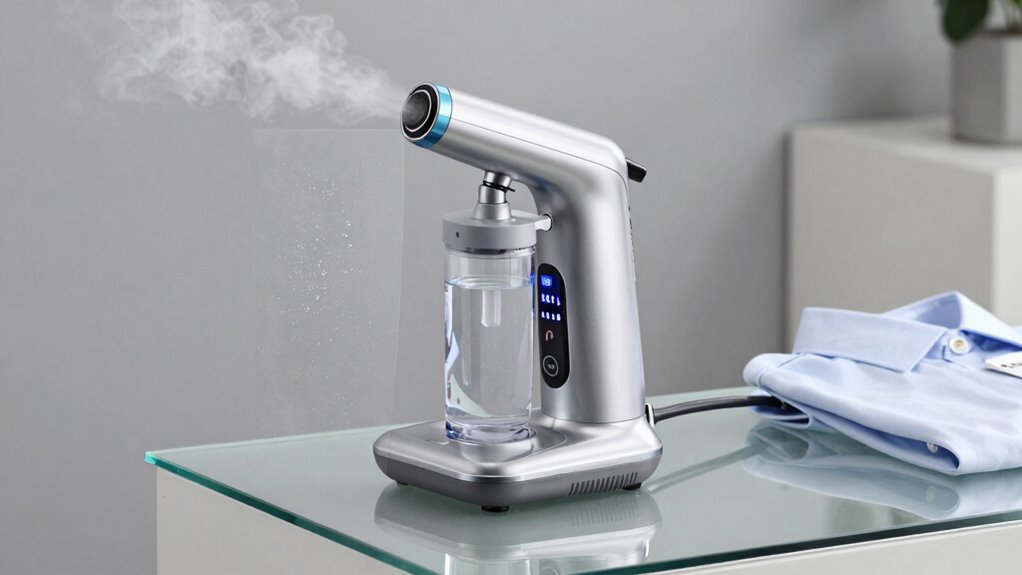
To get great results from your garment steamer, choose one with higher wattage for quick heat-up and strong steam; this helps de-wrinkle fabrics efficiently. Adjust the steam settings based on fabric type to prevent damage, especially for delicate materials. Use distilled water to avoid mineral buildup and water spots, and always keep a safe distance while steaming. Proper maintenance and safety features boost performance and durability—stay with us to learn more about perfecting your steaming routine.

Get your wardrobe favorites delivered free — and shop member deals
- Fast, free delivery on millions of items
- Access to Prime Big Deal Days deals on October 6–7
- Prime Video, Amazon Music and more included
Key Takeaways
- Higher wattage and steam output improve de-wrinkling efficiency, especially on thicker fabrics, while maintaining fabric safety.
- Proper water management with distilled water and well-designed tanks prevents mineral buildup and water spots.
- Adjustable steam settings allow tailored steam delivery based on fabric type, reducing the risk of damage or spots.
- Safety features like automatic shut-off and safe handling practices prevent burns and water spots during steaming.
- Consistent, even steam delivery minimizes water spots and ensures a smooth, professional finish on garments.
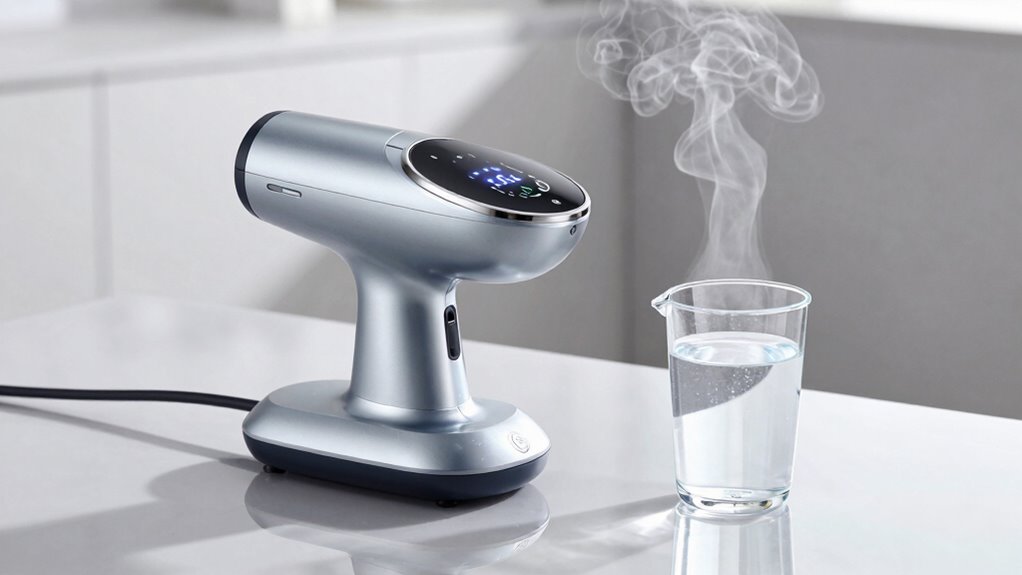
Have you ever struggled with stubborn wrinkles on your clothes and wished there was a faster, easier way to refresh them? Garment steamers are the answer, offering a quick solution that restores fabric freshness without the hassle of traditional ironing. When choosing a steamer, wattage and output are key factors because they directly influence how effectively and efficiently your clothes get steamed. Higher wattage typically means more power, which translates to faster heat-up times and stronger steam output. This guarantees your clothes are de-wrinkled in less time, saving you effort and making the process more convenient. The steam output, usually measured in grams per minute, determines how much steam is delivered during use. A higher output helps loosen stubborn wrinkles more effectively, especially on thicker fabrics like denim or upholstery. Additionally, consistent steam delivery helps maintain a uniform appearance, preventing uneven results and saving you time.
However, while power and steam output are essential for performance, you also need to think about how well the steamer maintains fabric freshness. A device with consistent steam delivery ensures your clothes look crisp and feel fresh without needing multiple passes. This not only saves time but also helps preserve the integrity of delicate fabrics, which can be damaged by excessive heat or uneven steaming. Remember, a good garment steamer should be easy to handle, allowing you to move smoothly across various fabrics and shapes, ensuring an even application of steam.
Steam safety is another critical aspect, especially since hot steam can cause burns or water spots if not used properly. Look for models with safety features like automatic shut-off, which turns the steamer off if it’s left idle for a certain period, preventing accidents. Also, some steamers have adjustable steam settings, giving you control over the intensity based on the fabric type — gentle for silk, more robust for cotton or linen. Proper water management is vital too; always use clean, distilled water if possible, to prevent mineral buildup that can lead to water spots or damage. To avoid water spots on your clothes, keep the steamer at a safe distance from the fabric and move it continuously, rather than holding it in one spot too long. Incorporating water management techniques can further enhance your steaming experience and prolong the lifespan of your device. Additionally, understanding the importance of wattage and output can help you select a device that balances power and safety for optimal results. A well-designed water tank can also improve user convenience by making refills easier and more efficient. Furthermore, choosing a steamer with easy-to-refill water tanks can make the process even more convenient and reduce interruptions during steaming sessions.
In the end, a good garment steamer combines wattage, output, and safety features to give you a seamless experience. It helps you quickly refresh your wardrobe, guaranteeing your clothes look their best with minimal effort and maximum fabric care.
As an affiliate, we earn on qualifying purchases.
Frequently Asked Questions
How Long Does It Take for a Garment Steamer to Heat Up?
It takes about 30 seconds to 2 minutes for a garment steamer to heat up, depending on its wattage and design. Once you turn it on, the steam temperature quickly rises as the heating time varies. Higher wattage models heat up faster, so you’ll be ready to steam your clothes sooner. Keep an eye on the indicator light or steam release to know when it’s ready to use.
Can Garment Steamers Be Used on Delicate Fabrics?
Yes, you can use garment steamers on delicate fabrics, but you should do so carefully. Always check the fabric care label first, and test a small, hidden area before steaming the entire piece. Use the lowest heat setting and hold the steamer at a safe distance to avoid damage. Properly using your steamer helps maintain delicate textiles, keeping them fresh and wrinkle-free without risking harm.
What Safety Precautions Should I Follow When Using a Steamer?
To guarantee safe use of your steamer, always follow safety guidelines like unplugging it when not in use and keeping it away from children and pets. Use the steamer on a stable surface, avoid overfilling the water tank, and never point the nozzle at yourself or others. For steam safety, test the steam on a small area first, and handle the device carefully to prevent burns or accidents.
Are There Eco-Friendly Garment Steamers Available?
Think of eco-friendly garment steamers as gentle rain nourishing the earth. Yes, they’re available! These steamers use eco-friendly materials and are made through sustainable manufacturing processes, reducing environmental impact. They often feature energy-efficient designs and safe, biodegradable components, making your wardrobe greener without sacrificing performance. By choosing these models, you support a healthier planet while keeping your clothes fresh and wrinkle-free.
How Often Should I Descale My Garment Steamer?
You should descale your garment steamer every 2-3 months if you have soft water, but more often—about once a month—if your water has high mineral content. Descaling frequency depends on your water’s mineral content because minerals cause buildup. Regular descaling prevents blockages, guarantees peak steam output, and prolongs your steamer’s lifespan. Always follow your manufacturer’s recommendations for the best results.
Conclusion
In the end, choosing the right garment steamer depends on wattage, output, and features like water spot prevention. Higher wattage models often deliver faster results, saving you time. Did you know that 70% of users report fewer wrinkles and less water spotting when they select steamers with advanced features? By understanding these factors, you can make smarter choices, ensuring your clothes stay crisp and spotless. Invest in the right steamer, and you’ll enjoy perfectly pressed garments every time.
Fall Picks
fall essentials
As an affiliate, we earn on qualifying purchases.