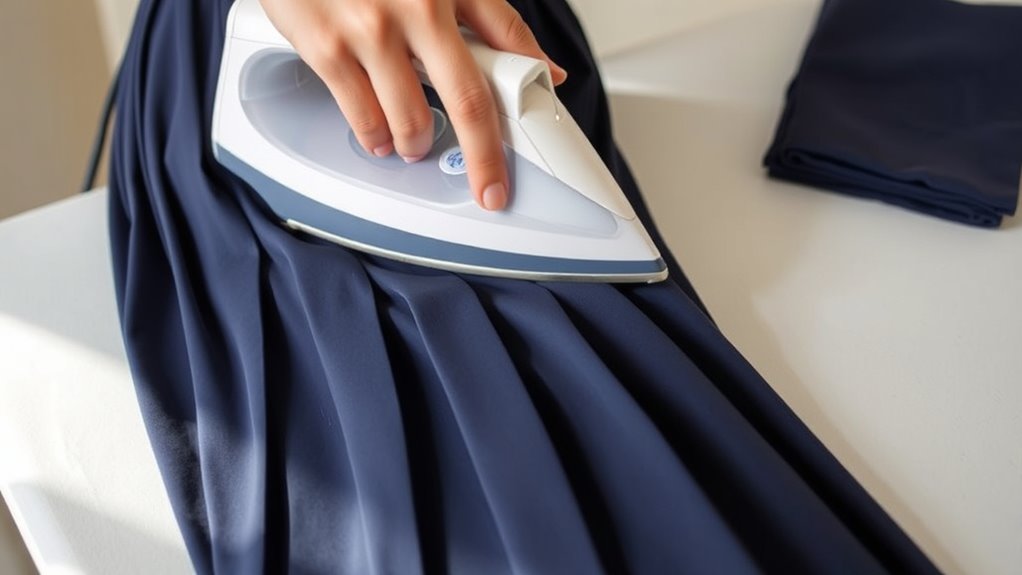

To iron pleated skirts effectively, set your iron to the fabric’s proper temperature, checking the care label first. Lightly spray or steam the skirt to loosen wrinkles, then press each pleat individually with gentle, steady movements—avoid dragging the iron. Use a pressing cloth or pleat guide for best results, and keep the iron hovering above the fabric to prevent flattening. If you want to keep your skirts looking sharp, more tips await inside.
Key Takeaways
- Check the fabric care label and set the iron to the appropriate temperature for delicate or synthetic materials.
- Lightly spray or steam the skirt to loosen wrinkles before ironing.
- Iron along each pleat individually using a pressing cloth or pleat guide for crispness.
- Keep the iron hovering above pleats, avoiding direct pressure to prevent distortion.
- Use steam to lift fibers and maintain sharp pleats, and store skirts properly to preserve their shape.
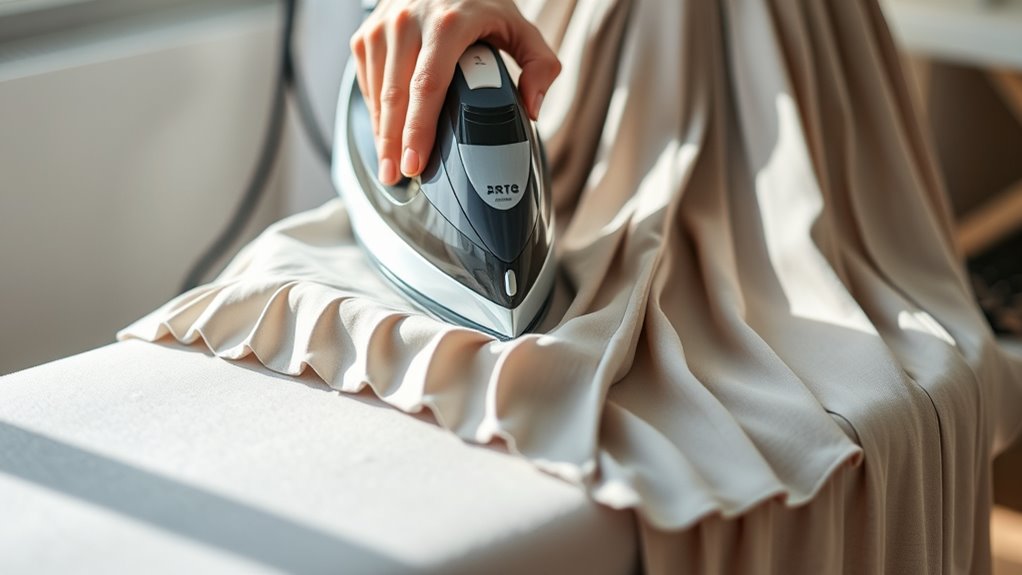
Ironing pleated skirts can seem tricky at first, but with the right technique, you can keep your pleats sharp and crisp. The key starts with choosing the right fabric. Different fabrics respond differently to heat and steam, so it’s essential to know what your skirt is made of before you start. For instance, polyester and synthetic blends usually handle ironing well at lower temperatures, while silk and wool require more delicate treatment. Checking the care label helps you set the correct heat setting on your iron, preventing damage or shine. Once you’ve identified the fabric, you can approach the task confidently, knowing you won’t ruin the pleats or the material.
When it comes to storage tips, how you store your pleated skirts can considerably impact their appearance over time. To keep pleats sharp and prevent them from losing their shape, always hang your skirts using a skirt hanger with clips or a padded hanger to avoid creases or indentations. If you prefer folding, do so along the pleats to avoid crushing them, and store the skirt flat in a drawer or on a shelf. Avoid stuffing your skirts into tight spaces, which can cause the pleats to become distorted or permanently creased. Proper storage is a simple but effective way to maintain the crispness of your pleats so they look freshly pressed whenever you wear them.
Before ironing, lightly spray your skirt with water or use a steam iron to loosen any wrinkles. For pleated skirts, it’s best to work with steam to gently lift the fibers without flattening the pleats. Set your iron to the appropriate temperature based on your fabric, and always test on a small, inconspicuous area first. To preserve the sharpness of the pleats, press along each pleat individually, running the iron gently over the fabric without dragging. Avoid pressing directly on the pleats if possible; instead, hover the iron just above them, using steam to do the work. If your iron has a pleat guide or a pressing cloth, those tools can help you achieve the most professional, crisp finish. Additionally, understanding the importance of fabric care can significantly extend the life and appearance of your pleated skirts. Proper storage techniques also play a crucial role in maintaining their shape and appearance over time. Incorporating home security systems knowledge, such as proper maintenance and safety measures, can similarly help preserve your investments in clothing and accessories over time.
Frequently Asked Questions
Can I Iron Pleated Skirts With a Steam Iron?
You can use a steam iron on pleated skirts, but be careful to preserve the pleats. Steam helps relax fabric fibers and makes ironing easier, but too much moisture can flatten pleats if not done properly. For pleat preservation, use a low heat setting and hold the steam iron just above the fabric, avoiding direct contact. Comparing steam vs. dry ironing, steam offers gentler smoothing without flattening your pleats.
How Do I Prevent Shiny Marks on Pleats?
Think of fabric sheen as a mirror reflecting your care, and you’ll want to keep your pleats pristine. To prevent shiny marks, avoid direct heat on the fabric’s surface. Use a pressing cloth or a low heat setting to preserve pleat structure and fabric sheen. Gently press rather than drag the iron, ensuring pleat preservation. This way, your skirt maintains its elegance without unwanted shine.
Is It Safe to Iron Pleated Skirts With Synthetic Fabrics?
When it comes to synthetic fabric care, you should be cautious about ironing pleated skirts. It’s generally safe if you follow iron safety tips, like using a low heat setting and placing a pressing cloth between the iron and your skirt. Always check the care label first, and avoid direct contact with high heat to prevent melting or shiny marks. This way, your pleats stay crisp without damage.
How Often Should I Iron My Pleated Skirt?
When it comes to pleats maintenance, you don’t want to overdo it; think of ironing frequency as keeping your skirt fresh without going overboard. Usually, you should iron your pleated skirt only when it starts to look wrinkled or loses its crispness, about once a week or after washing. This prevents damage to synthetic fabrics and keeps those pleats sharp, so your skirt always looks polished and neat.
What Temperature Setting Is Ideal for Different Fabric Types?
When considering fabric care, you should always check the label for recommended iron temperature. For delicate fabrics like silk or polyester, use a low heat setting to prevent damage. Cotton or linen can handle a higher temperature, but always start low and increase gradually. Adjust your iron temperature based on fabric type to avoid scorching or shiny spots, ensuring your pleated skirt stays crisp and well-maintained.
Conclusion
Now that you know the right way to iron pleated skirts, you’re almost ready to achieve that perfectly crisp look. But here’s the secret: the real magic happens when you master the timing and temperature. One small mistake could undo all your effort, leaving you wondering where it went wrong. So, stay attentive and gentle—because when done right, your skirt will not only look flawless but also hold its shape longer than you ever imagined.