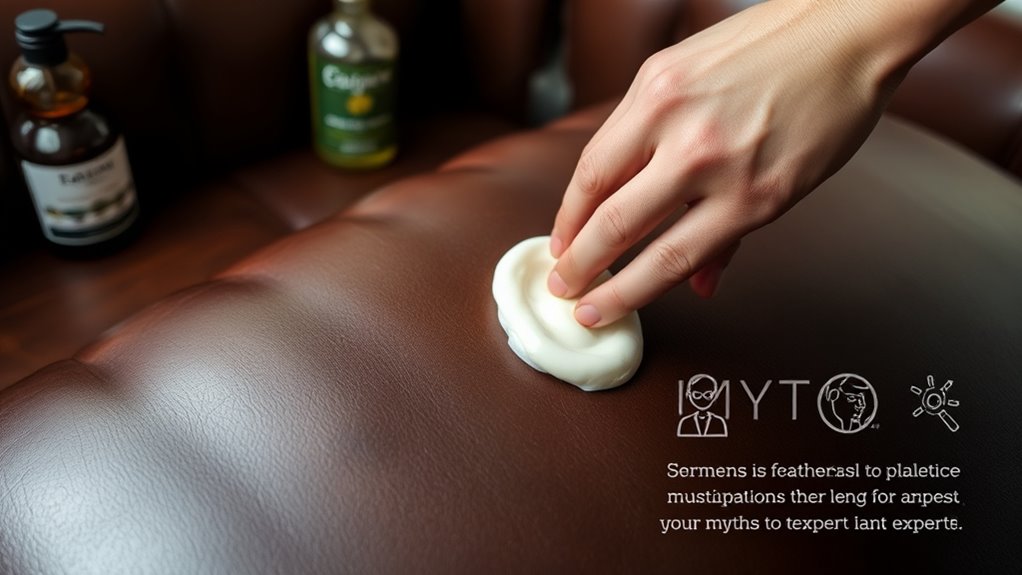

To keep your leather looking its best, condition it regularly—typically every 3 to 6 months, depending on climate and usage. Use quality products designed for leather, applying small amounts in circular motions and testing first on hidden areas. Myths say over-conditioning can damage leather, but with proper products and technique, it helps maintain flexibility and appearance. Wondering how to choose the right products or ideal schedule? Keep exploring to learn all the essentials.
Key Takeaways
- Regularly condition leather every 3-6 months, depending on usage and environment, to maintain suppleness and appearance.
- Use high-quality, appropriate products like leather conditioners or oils, avoiding excessive or harsh substances.
- Myths suggest over-conditioning causes damage; in reality, proper, moderate application supports leather health.
- Test products on small, hidden areas first to prevent unwanted reactions or discoloration.
- Environmental factors like humidity or dryness influence how often you should condition your leather items.
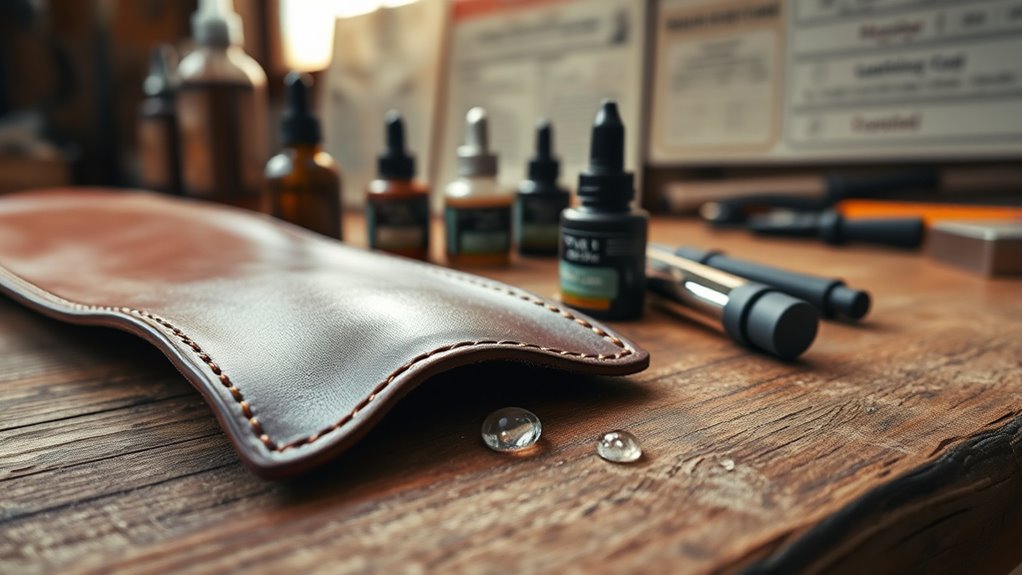
Leather conditioning is essential for maintaining the durability and appearance of your leather items. Over time, leather naturally experiences aging, which can lead to dryness, cracking, and a loss of its original luster. Proper conditioning helps slow down this process by replenishing moisture and keeping the leather flexible. When you understand the right conditioning techniques, you can considerably extend the life of your leather goods, whether they’re shoes, bags, or furniture. It’s important to recognize that every piece of leather is unique, and each may require a tailored approach to properly care for it.
Leather care extends item life by preventing dryness and cracking through proper, tailored conditioning techniques.
One of the key aspects of caring for leather is understanding how it ages. Leather aging isn’t just about getting older; it involves changes in texture, color, and suppleness. Many people mistakenly believe that leather should be left untouched as it ages, but in reality, applying the correct conditioning treatments can enhance its natural beauty and prevent premature deterioration. Conditioning techniques involve more than just applying a product; they include proper cleaning beforehand, choosing the right conditioner, and applying it evenly. Using the appropriate products helps to restore moisture, improve flexibility, and protect against environmental damage. Additionally, understanding the effects of environmental exposure on leather can help you determine the optimal conditioning schedule. Recognizing the importance of leather type can also influence your conditioning routine, ensuring a tailored approach for each item.
A common myth is that conditioning leather too often can damage it, but that’s not true if you choose the right products and follow proper techniques. Over-conditioning, or using the wrong products, can lead to buildup or greasy surfaces, but regular, moderate conditioning actually maintains leather’s integrity. The key is to assess your leather’s needs—drier, older leather benefits from more frequent conditioning, while newer or well-maintained pieces require less. You should also be cautious about the climate and environment, as dry or humid conditions affect how often you should condition your leather.
When you apply conditioners, make sure to use small amounts and work in a circular motion to ensure even coverage. Always test a small, inconspicuous area first to see how the leather reacts. You should also follow the product instructions, allowing sufficient time for absorption before using or exposing the item to moisture or sunlight. Proper conditioning techniques involve patience and consistency, helping to preserve the leather’s natural oils and prevent cracking. Regular use of glycolic acid in your skincare routine, for example, can also help improve the overall appearance of your skin, complementing the health of your leather accessories. Additionally, maintaining a consistent conditioning schedule tailored to your leather’s environment can significantly extend its lifespan and appearance.
Frequently Asked Questions
Can Leather Conditioning Remove Existing Stains?
You might wonder if leather conditioning can remove stains. While conditioning keeps leather soft and shiny, it’s not designed for stain removal. For effective stain treatment, use specific products or methods tailored to the stain type. Conditioning alone won’t eliminate existing stains, but it can improve the leather’s appearance after proper treatment. Remember, the treatment’s effectiveness depends on the stain’s nature and the product used.
Is Leather Conditioning Suitable for All Types of Leather?
Imagine you’re stepping into a vintage boutique—leather conditioning isn’t a one-size-fits-all. You should check if your leather type is suitable, as some delicate or suede materials require specialized care. Proper conditioning helps with leather preservation and aesthetic enhancement, but not all products work on every type. Always test a small area first, and choose conditioners formulated for your specific leather to keep it looking its best.
How Long Does a Leather Conditioner Typically Last?
A leather conditioner typically lasts about six months to a year once opened, but this can vary based on usage and storage. Proper application helps slow leather aging, keeping it supple and protected. Check the conditioner’s shelf life—most products have an expiry date or a recommended timeframe. Over time, the product may lose effectiveness, so replacing it guarantees your leather stays conditioned and prevents premature aging.
Can Over-Conditioning Damage Leather?
Think of your leather surface as a delicate garden. Over-conditioning is like overwatering; it can lead to root rot, or in this case, damage to the leather. Using conditioning products too often can weaken the leather’s natural fibers, causing it to become sticky or lose its suppleness. Stick to the recommended conditioning frequency to keep your leather healthy and vibrant without risking harm.
Are Natural Remedies Effective for Leather Conditioning?
Natural remedies like herbal remedies and DIY solutions can be effective for leather conditioning if used properly. You might find that olive oil or beeswax, for example, help keep your leather soft and moisturized. However, be cautious—some DIY solutions can damage the leather if applied excessively or incorrectly. Always test a small area first, and remember that natural remedies work best when used in moderation and with proper knowledge.
Conclusion
Think of leather like your skin—keep it moisturized, and it’ll age gracefully. I once neglected a leather bag, and cracks appeared like a dry desert. After just a few conditioning sessions, it looked lush again, like a well-tended garden. Regular care isn’t just maintenance; it’s your leather’s best friend, preserving its beauty and strength. So, don’t wait for cracks to appear—treat your leather like a treasured friend, and it’ll reward you for years to come.