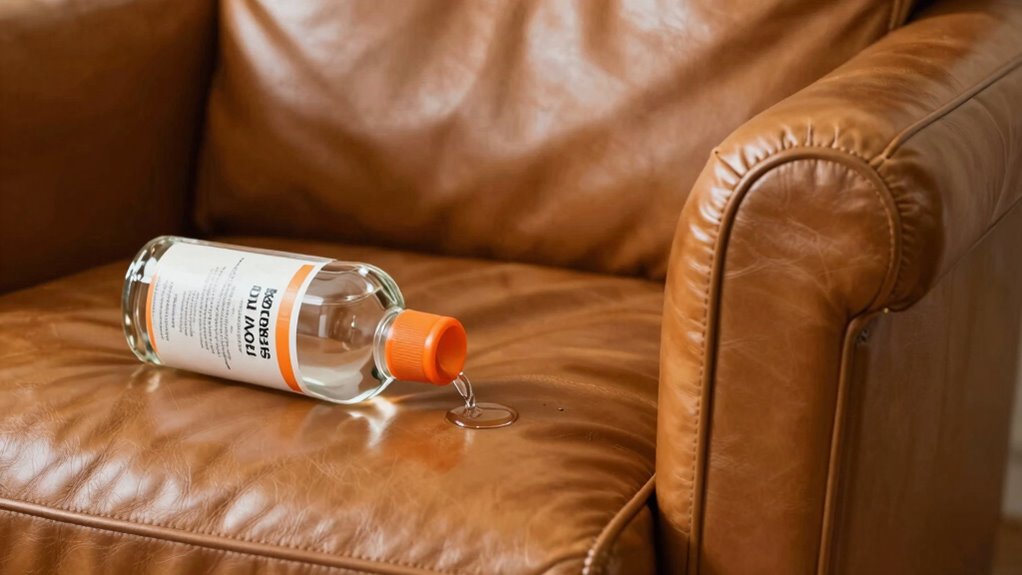

The one cleaner you should never use on leather furniture is any product with harsh chemicals like ammonia, bleach, or alcohol. These substances strip away natural oils, cause fading, and damage the leather’s surface, leading to cracks and brittleness over time. Using such cleaners can ruin your furniture permanently. To keep your leather looking its best and lasting longer, it’s important to choose gentle, leather-specific products and effective cleaning techniques—keep going to learn more.
Key Takeaways
- Never use harsh chemicals like alcohol, ammonia, or bleach on leather furniture, as they damage the surface and natural oils.
- Avoid DIY or inexpensive cleaners with strong solvents that can strip moisture and cause cracking or fading.
- Stay away from synthetic detergents and abrasive scrubbers that can scratch or dull the leather.
- Do not use excessive water or improper cleaning products, which can lead to stains, warping, and streaking.
- Always choose pH-balanced, leather-specific cleaners and conditioners for safe, effective maintenance.
Why Harsh Chemicals Will Damage Your Leather Furniture
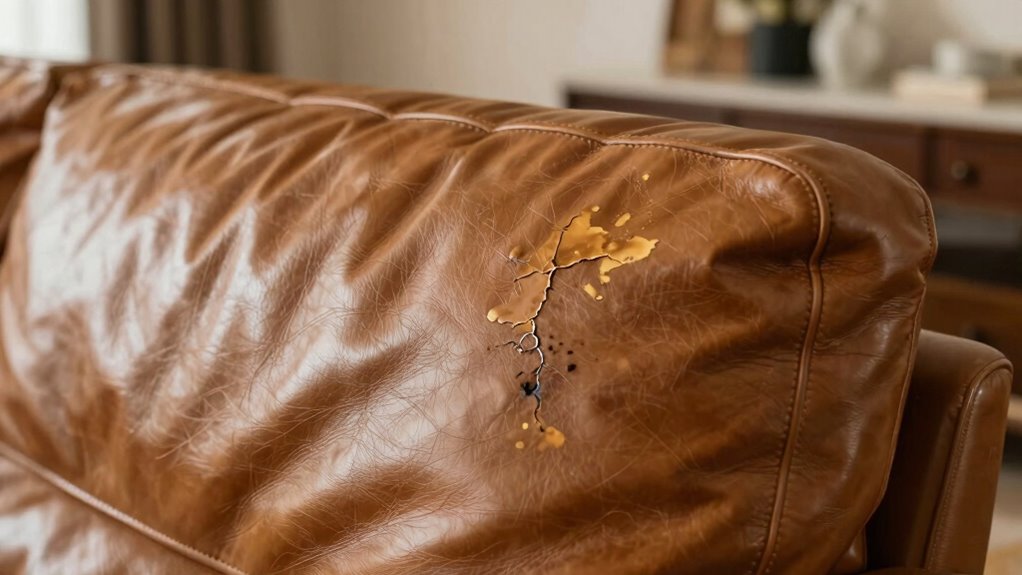
Harsh chemicals can quickly damage your leather furniture because they strip away the natural oils and moisture that keep leather supple and durable. Using products like strong leather polish or aggressive cleaners can dry out and crack the surface. Instead, opt for gentle leather conditioners that restore moisture without causing harm. These conditioners help maintain the leather’s flexibility and prevent cracking over time. Avoid anything with alcohol, ammonia, or bleach, as they can cause irreversible damage. Regularly conditioning your leather with a suitable leather conditioner keeps it looking vibrant and soft. Proper care also involves understanding smart home technology features that can help monitor and maintain your furniture’s environment. Additionally, employing proper cleaning techniques can significantly extend the lifespan of your leather furniture. Employing correct cleaning tools ensures you do not inadvertently scratch or harm the leather during cleaning. Incorporating proper ventilation can also prevent the buildup of moisture and mold that could damage the leather over time. Remember, the key to preserving your furniture’s beauty is choosing the right products and avoiding harsh chemicals that compromise its integrity. Proper care ensures your leather stays beautiful for years to come.
The Most Harmful Leather Cleaners You Should Avoid
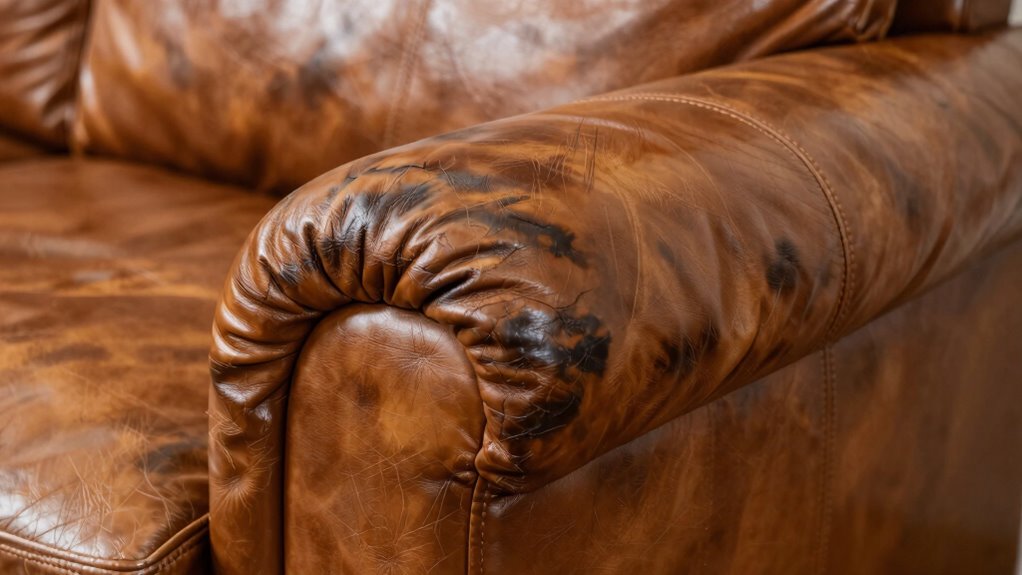
Avoid cleaners with harsh chemicals, as they can damage your leather and cause discoloration. Some products may leave moisture or streaks that ruin the surface’s appearance. Knowing which cleaners to steer clear of helps keep your furniture looking its best. Additionally, using vintage-inspired products designed specifically for leather can help maintain its original look and feel over time. It is also important to select vetting products that are tested and approved for leather furniture to ensure safe and effective cleaning. Understanding chemical composition of cleaning agents can further aid in choosing safe options that preserve your leather’s integrity, especially considering how color accuracy impacts overall image quality in visual displays. Being aware of wood types used in furniture can also guide you in selecting appropriate cleaning methods to prevent damage.
Harsh Chemical Damage
Many common leather cleaners contain harsh chemicals that can cause significant damage to your furniture. DIY cleaning methods or commercial products often include strong solvents, ammonia, or bleach, which strip away the leather’s natural oils and protective finish. Using these substances may lead to cracking, drying, or discoloration over time. These aggressive chemicals weaken the leather’s structure, making it more prone to tears and permanent damage. Even if a cleaner seems effective, it might do more harm than good in the long run. Instead, opt for gentle, leather-specific cleaners designed to preserve the material’s integrity. Avoid shortcuts with DIY solutions or inexpensive commercial products that promise quick results—they often sacrifice your furniture’s health for convenience. Your leather deserves safe, proper care. Always prioritize proper cleaning techniques to maintain your furniture’s appearance and longevity, as neglecting appropriate maintenance can accelerate deterioration. Incorporating quality leather cleaners formulated for delicate materials can help prevent unintended damage and ensure your furniture remains in excellent condition. Regular conditioning not only helps keep the leather supple but also forms a protective barrier against environmental damage and daily wear, extending the lifespan of your furniture.
Discoloration Risks
Certain leather cleaners contain dyes or chemicals that can cause discoloration, even if they seem harmless. These substances can lead to color fading, leaving your furniture looking uneven or patchy. Some cleaners promise effective stain removal but contain harsh ingredients that damage the leather’s finish and pigment. Using the wrong product might seem like a quick fix, but it risks permanent damage, making discoloration difficult to reverse. Avoid cleaners with strong solvents or alcohol, as they can strip away the leather’s natural color. Instead, opt for gentle, leather-specific cleaners designed to preserve color and texture. Protect your furniture from these risks by choosing the right products and steering clear of those that could cause irreversible discoloration. Additionally, understanding free floating properties can help you select cleaning methods that do not disturb the leather’s natural state, ensuring your furniture maintains its original appearance and durability. Proper cleaning techniques can also help maintain the leather’s flexibility and longevity, preventing cracks and wear over time. Incorporating knowledge of connected home technology can assist in monitoring and maintaining your furniture’s condition more effectively. Being aware of material composition can further guide you in selecting compatible cleaning solutions that safeguard your leather furniture.
Moisture and Streaks
Using the wrong leather cleaners can introduce moisture or leave streaks that damage your furniture. Water stains are a common issue when excess moisture seeps into the leather, causing discoloration and warping. Cleaning streaks often result from applying too much product or using harsh chemicals, leaving uneven patches that are difficult to restore. These streaks not only look unsightly but can also weaken the leather’s surface over time. To avoid this, always use a damp cloth with a gentle, leather-specific cleaner and wipe in a smooth, consistent motion. Proper leather cleaning techniques can help prevent streaking and moisture issues, ensuring your furniture remains in top condition. Additionally, choosing the right cleaning products is essential to prevent damage and maintain the leather’s natural properties. Steer clear of products that contain alcohol or ammonia, as they can exacerbate streaking and moisture problems. Proper care and maintenance helps maintain your furniture’s appearance and prolongs its lifespan. Additionally, understanding everyday safety principles can help you choose the right cleaning methods and products for your leather furniture. Being aware of common cleaning mistakes can further protect your investment and keep your furniture looking its best.
How Harsh Cleaners Cause Cracking, Fading, and Wear
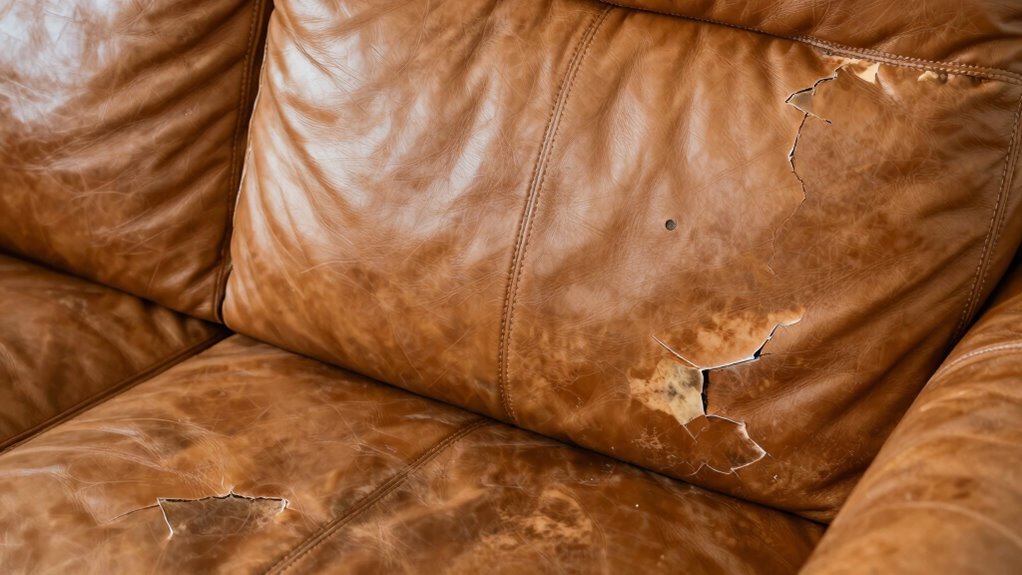
Harsh cleaners can do serious damage to your leather furniture by stripping away its natural oils and protective coatings. This compromises leather preservation, leaving the material vulnerable to cracking and fading over time. Many cleaning myths suggest that aggressive products clean better, but in reality, they accelerate wear and tear. When you use harsh chemicals, you remove the leather’s natural moisture barrier, causing it to become brittle and prone to cracking. Fading occurs as the color pigments break down or wash away. Proper care involves understanding the materials and using appropriate cleaning methods, such as ventilation considerations to prevent moisture buildup that can also harm leather. Instead of risking damage, stick to gentle, pH-balanced cleaners designed specifically for leather. Proper care helps maintain the furniture’s appearance and longevity, ensuring it stays beautiful for years to come. Avoid shortcuts and protect your investment by steering clear of damaging cleaning agents. Additionally, regular maintenance can prevent the buildup of dirt and oils that contribute to deterioration.
The Best Safe Cleaners and Techniques for Leather Furniture
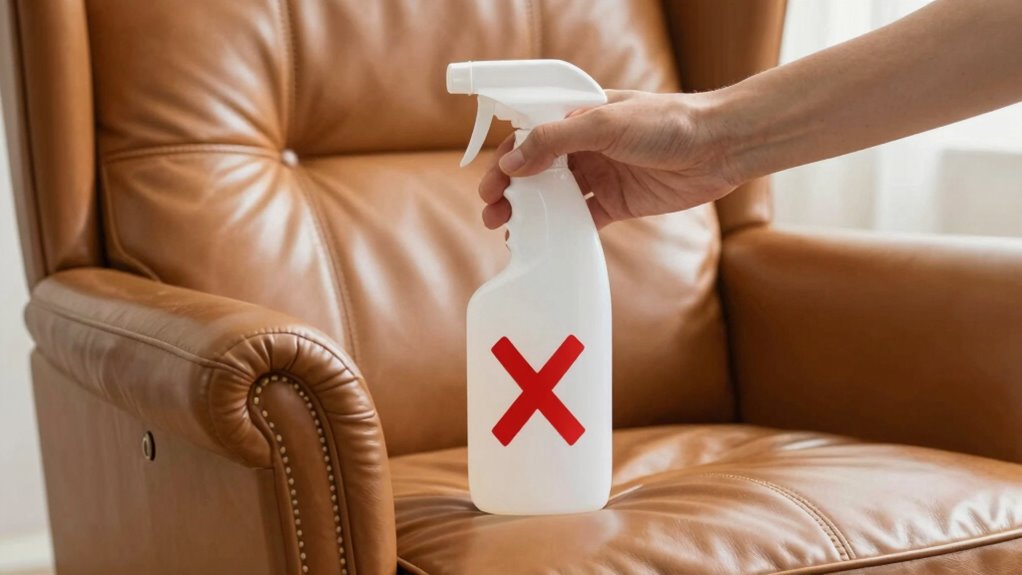
To keep your leather furniture looking its best, you need gentle cleaning methods and the right cleaners. Using suitable products prevents damage and maintains the leather’s suppleness and shine. Let’s explore safe techniques and cleaners that effectively clean without harming your furniture.
Gentle Cleaning Methods
When it comes to cleaning leather furniture, gentle methods are essential to preserve its appearance and longevity. Use soft cloths or microfiber towels for leather cleaning, avoiding abrasive materials that can scratch or damage the surface. Dampen the cloth with a small amount of water or a mixture of mild soap and water, and gently wipe the furniture without applying too much pressure. Always test a small, inconspicuous area first to ensure no discoloration occurs. Stick to gentle techniques that focus on lifting dirt and oils without stripping the leather’s natural oils. Avoid harsh chemicals, and never use excessive water, as it can cause staining or warping. Regular, delicate cleaning helps maintain the leather’s softness and sheen over time.
Suitable Leather Cleaners
Choosing the right leather cleaner is essential to maintaining your furniture’s appearance and durability. Look for cleaners specifically formulated for leather, as they help preserve the material’s pH balance and prevent damage. A good leather cleaner should gently lift dirt and oils without stripping away natural oils or moisture. After cleaning, apply a quality leather conditioner to restore suppleness and protect against cracking. Always check the product labels to ensure they’re pH balanced, as cleaners with an improper pH can harm the leather’s finish. Avoid harsh chemicals like ammonia or bleach, which can cause discoloration and deterioration. Using the proper cleaner and conditioner together keeps your leather furniture looking fresh, soft, and well-maintained for years to come.
Tips to Keep Your Leather Looking New and Lasting Longer
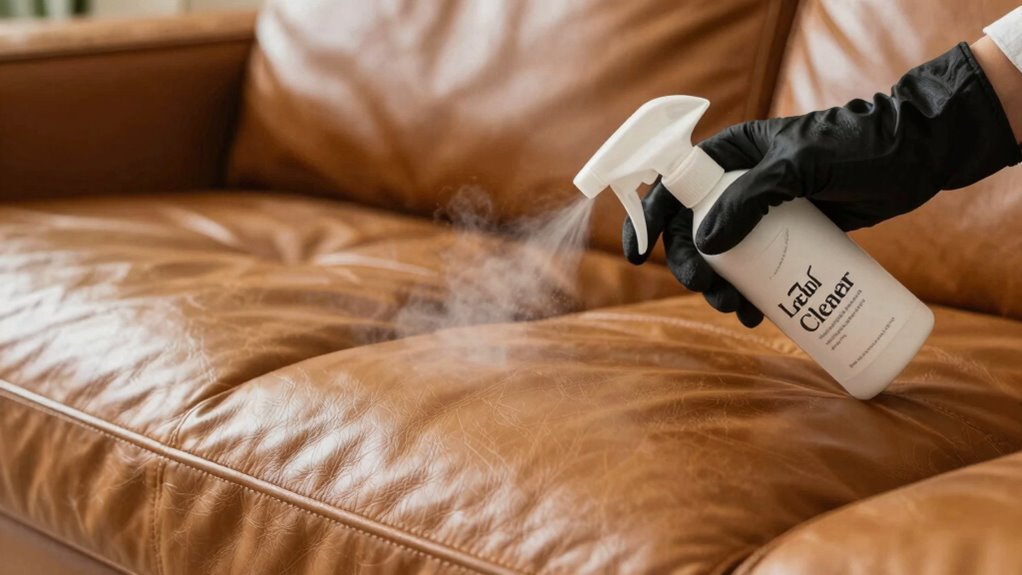
Keeping your leather furniture looking new and ensuring it lasts longer requires regular care and attention. To preserve its beauty, avoid harsh cleaners and consider leather dyeing to restore color when needed. Regular dusting and wiping with a damp cloth prevent dirt buildup. Moisturize your leather periodically to maintain suppleness. Proper upholstery preservation involves avoiding direct sunlight and sharp objects that can cause damage. Additionally, keep your furniture away from heat sources. Here’s a quick guide:
| Tip | Action | Benefit |
|---|---|---|
| Leather dyeing | Use specialized dye to restore faded areas | Revives color and appearance |
| Regular cleaning | Dust and wipe with a soft cloth | Prevents dirt accumulation |
| Moisturizing | Apply leather conditioner periodically | Maintains flexibility |
| Avoid sun and heat | Keep away from direct sunlight and heaters | Prevents cracking and fading |
Common Mistakes to Avoid When Cleaning Leather Furniture
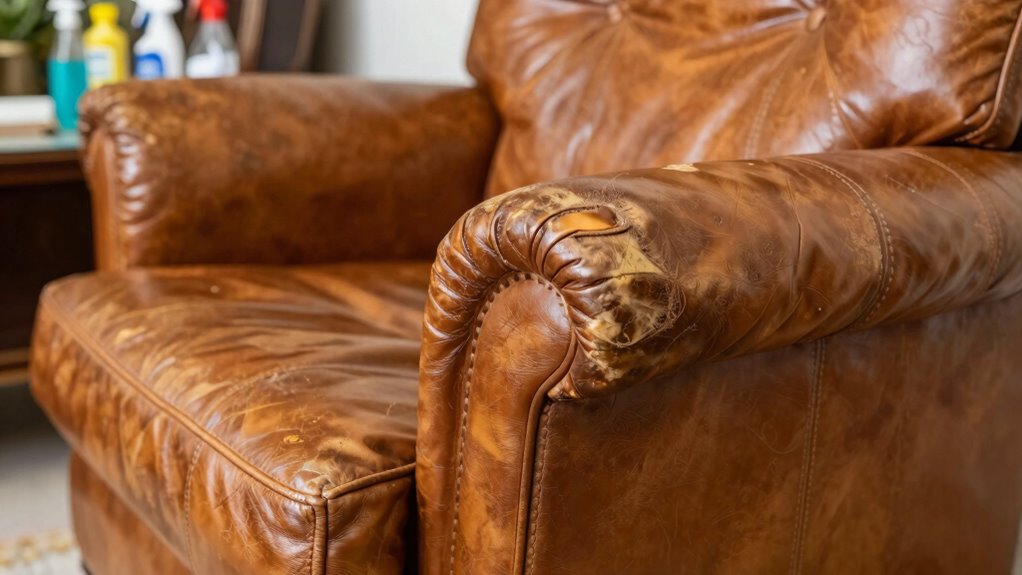
While regular cleaning helps maintain your leather furniture’s appearance, making common mistakes during the process can cause lasting damage. One key mistake is using abrasive scrubbers, which can scratch and dull the leather’s surface. Avoid scrubbing harshly or with rough materials that can harm the finish. Additionally, steer clear of synthetic detergents, as they often contain chemicals that strip away the leather’s natural oils, leading to dryness and cracks. Instead, use gentle, leather-specific cleaners and soft cloths. Over-cleaning or using improper products can weaken the leather’s protective coating, making it more vulnerable to stains and wear. Being mindful of these mistakes ensures your leather furniture stays beautiful and durable for years to come.
Frequently Asked Questions
Can I Use Household Cleaning Products on My Leather Furniture?
You should avoid using household cleaning products or DIY solutions on your leather furniture. Household chemicals can damage the leather’s finish, causing cracking or discoloration. Instead, use a cleaner specifically made for leather to keep it looking its best. Always test a small, hidden area first to verify compatibility. Proper care prevents long-term damage, so steer clear of harsh chemicals and stick to gentle, leather-safe products.
Is It Safe to Use Water-Based Cleaners on All Leather Types?
Water-based cleaners are generally safe for most leather types, but you should always check for leather compatibility first. If your leather is sensitive or untreated, water might cause damage or staining. Test the cleaner on a small, hidden area before full use. Using the right water-based cleaner guarantees your leather stays supple and looks great, but never assume all leather reacts the same—know your specific furniture’s needs.
How Often Should I Clean My Leather Furniture?
Did you know that regular cleaning can extend your leather furniture’s life by up to 50%? You should aim for a leather cleaning frequency of every 6 to 12 months, depending on usage. Maintaining a consistent schedule helps prevent dirt buildup and keeps your furniture looking great. Spot clean spills immediately, and follow your maintenance schedule to make sure your leather stays soft, shiny, and durable for years.
Are There Natural Alternatives to Chemical Cleaners for Leather?
Yes, you can use natural alternatives like natural oils and herbal extracts to clean your leather furniture. Lightly apply a mixture of olive or coconut oil to nourish and clean the leather, but avoid overdoing it. Herbal extracts like chamomile or aloe vera can help soothe and condition the leather without harsh chemicals. Always test a small area first and use a soft cloth for gentle cleaning.
What Signs Indicate My Leather Needs Professional Cleaning?
You should consider professional cleaning when you notice leather discoloration or surface cracking. These signs indicate your furniture needs expert attention to restore its appearance and prevent further damage. If cleaning with home remedies isn’t improving the look or if the leather feels dry or brittle, it’s time to call in a professional. Acting promptly helps preserve your leather’s durability and keeps it looking its best longer.
Conclusion
Just like using the wrong paint can ruin a masterpiece, using harsh cleaners on your leather furniture can cause lasting damage. I once watched a friend ruin her sofa by scrubbing it with strong chemicals, and it was heartbreaking. Remember, gentle care preserves beauty and longevity. Stick to safe cleaners and proper techniques—your leather deserves the best. With a little care, your furniture can stay stunning, just like a well-tended garden that flourishes year after year.