

Flash sales tap into your emotions by creating a sense of urgency and scarcity that pushes you to act quickly. As soon as you see limited-time offers or notices like “while supplies last,” your fear of missing out kicks in, making hesitation uncomfortable. Marketers use countdowns and flashing banners to reinforce this pressure, often prompting impulsive buys. If you want to understand how these tactics influence your decisions, there’s more to uncover.
Key Takeaways
- Scarcity and urgency in flash sales trigger FOMO, prompting quick, impulsive purchases.
- Limited-time offers and visual cues like countdown timers heighten perceived value and exclusivity.
- Consumers often bypass rational decision-making, driven by internal pressure to act before the deal disappears.
- Marketers reinforce scarcity through phrases and visuals, accelerating decision-making and reducing hesitation.
- Despite awareness of artificial limits, psychological triggers maintain high purchase rates during flash sales.
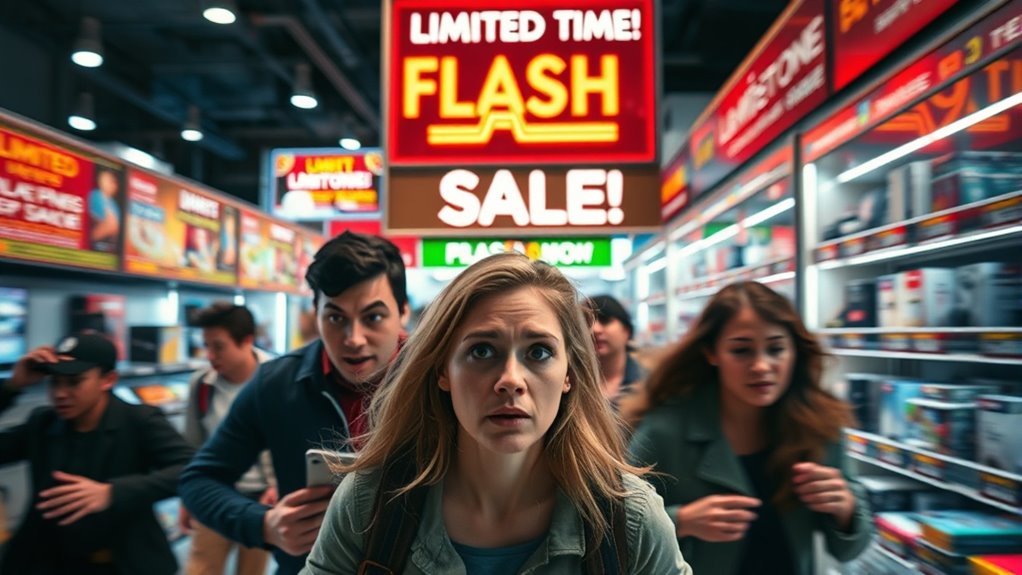
Have you ever wondered why flash sales make you feel compelled to buy immediately? It’s because they tap into a powerful psychological mechanism rooted in consumer urgency and the scarcity effect. When you see a limited-time offer or a deal that’s about to expire, your mind perceives the opportunity as rare and valuable. This perception triggers a sense of urgency—an instinct to act quickly before the chance slips away. The scarcity effect amplifies this feeling by signaling that the product or deal is in limited supply, making it seem more desirable simply because it’s scarce. You might find yourself thinking, “If I don’t buy now, I’ll miss out,” which overrides your usual hesitation or rational decision-making. This rush of emotion is precisely what marketers aim to generate, knowing it can lead to impulsive purchases you might not otherwise consider.
The key here is how scarcity influences your perception of value. When a deal is labeled as “limited stock” or “today only,” your brain interprets it as more exclusive and worth more. It’s a classic case of “fear of missing out” (FOMO), a potent driver that compels you to act swiftly. This isn’t just about liking a product; it’s about feeling that if you don’t buy immediately, you’ll lose the opportunity forever. The limited timeframe creates a sense of consumer urgency—an internal pressure to decide fast. Because your brain believes the deal could vanish at any moment, hesitation becomes uncomfortable. In that moment, you might ignore your usual shopping deliberation and jump straight into making a purchase.
Furthermore, understanding how zodiac signs and personality traits can influence decision-making may help explain why some consumers are more susceptible to the effects of flash sales than others. Marketers leverage this psychology by creating a sense of immediacy. They may use countdown timers, flashing banners, or phrases like “while supplies last” to reinforce the scarcity effect. These cues are designed to accelerate your decision-making process by making you feel that the clock is ticking, and missing out is inevitable if you don’t act now. The psychological impact is so strong that even when you know the deal might be artificially limited, the urge to buy persists. Your mind prioritizes the potential loss of the deal over rational evaluation, prompting rapid, often impulsive, purchases. This combination of consumer urgency and scarcity effect makes flash sales incredibly effective at turning browsers into buyers, sometimes before you even realize what’s happening.
Frequently Asked Questions
How Do Flash Sales Impact Long-Term Customer Loyalty?
Flash sales can boost short-term sales but may hurt your long-term customer loyalty if not managed carefully. They risk loyalty erosion because customers might start expecting discounts and wait for sales rather than purchasing at regular prices. Additionally, frequent flash sales can negatively impact your brand perception, making it seem less premium or reliable. To maintain loyalty, balance these sales with genuine value and consistent quality, so customers stay engaged without feeling manipulated.
What Psychological Tricks Do Companies Use During Flash Sales?
Companies use psychological tricks like price anchoring, where they highlight a higher original price to make the discount seem more attractive, and social proof, showing reviews or previous buyers to boost trust. During flash sales, you’re influenced by these tactics, making you feel the deal is irresistible. This pushes you to purchase quickly, often without fully considering if it’s the right choice, tapping into your desire for a good deal.
Do Flash Sales Encourage Impulsive or Planned Purchases?
They say “act fast, think later,” and flash sales often trigger impulsive buying, even when you’d normally plan your purchases. These limited-time offers create a sense of urgency that overrides your usual purchase planning, encouraging impulse buying. You might find yourself grabbing deals without considering if you need them, driven by the fear of missing out. So, flash sales are designed to tap into your impulsive side, making quick decisions feel like smart choices.
How Does Scarcity Influence Consumer Decision-Making in Flash Sales?
Scarcity influences your decision-making by making you feel the urgency to act quickly, fearing you’ll miss out. This tactic, combined with effective pricing strategies like limited-time offers, pushes you toward impulsive purchases. Social proof, such as others buying or sharing the deal, amplifies this effect, convincing you that the deal is valuable and popular. Together, these elements make you more likely to buy on impulse during flash sales.
Are There Any Negative Psychological Effects of Participating in Flash Sales?
Participating in flash sales can sometimes lead to negative psychological effects like consumer anxiety and purchase regret. You might feel overwhelmed by the limited time and pressure to decide quickly, which increases stress. If you buy impulsively, you could later regret your decision, questioning whether it was necessary. To avoid these feelings, set clear budgets and remind yourself that it’s okay to pass on deals that don’t truly meet your needs.
Conclusion
Remember, in the world of flash sales, timing and psychology go hand in hand. You’re often driven by fear of missing out, making quick decisions without overthinking. As the saying goes, “strike while the iron is hot.” By understanding these tactics, you can make smarter choices and avoid impulse buys. Stay mindful, and don’t let fleeting deals manipulate your wallet—your awareness is your best defense in this fast-paced shopping game.