
Knowing the difference between outlet and factory stores helps you shop smarter. Outlet stores are operated by brands and offer a variety of overstock, discontinued, or imperfect items at discounts of 30% to 70%, with a more organized shopping environment. Factory stores, run directly by manufacturers, focus on clearing excess inventory with steeper discounts often exceeding 70 and feature utilitarian layouts for quick bulk purchases. If you want to discover how these differences can maximize your bargains, keep exploring.
Key Takeaways
- Outlets typically offer a broader selection of overstock and imperfect items, while factory stores focus on excess seasonal or older inventory.
- Factory stores usually provide steeper discounts, often exceeding 70%, compared to outlet discounts of 30-70%.
- Outlets feature organized, boutique-like layouts with a shopping-friendly environment; factory stores have utilitarian, bulk-focused layouts.
- Outlets often host seasonal sales and exclusive collaborations, whereas factory stores prioritize quick inventory turnover and efficiency.
- Shopping expectations differ: outlets cater to shoppers seeking variety and current styles; factory stores appeal to those wanting maximum discounts and quick purchases.
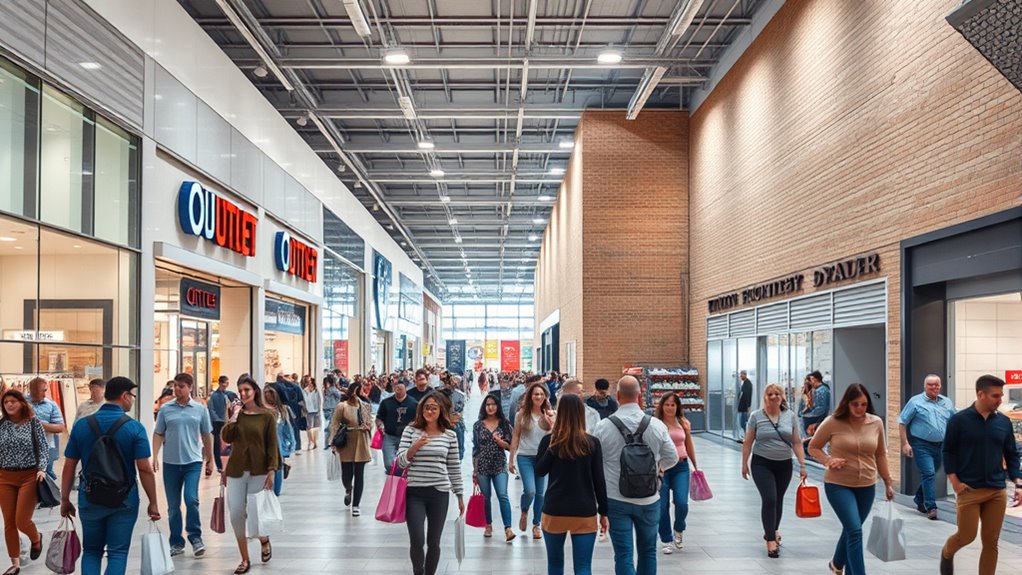
When shopping for discounted brand-name products, you might come across outlets and factory stores, but understanding the difference can help you make smarter choices. Both types of stores aim to sell products at lower prices, but their pricing strategies and store layouts differ considerably. Recognizing these differences can help you decide where to shop for the best deals and what to expect from each.
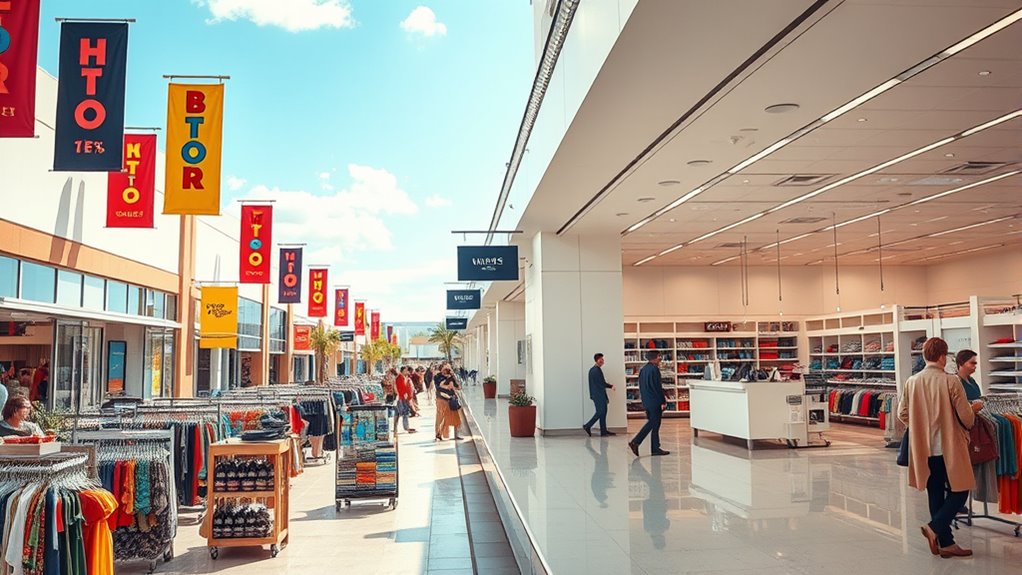
Outlets are typically operated by the brand itself or are official affiliated stores. They often feature a broader selection of products, including overstock, discontinued items, or slightly imperfect merchandise. Their pricing strategies focus on offering notable discounts compared to regular retail stores, often ranging from 30% to 70% off. This approach attracts bargain hunters looking for high-quality items at a fraction of the original cost. When it comes to store layouts, outlets tend to mimic traditional retail stores, with organized displays, clearly marked sections, and a more spacious, shopping-friendly environment. This layout makes it easier to browse and compare items, encouraging consumers to explore different categories and discover deals across the store. Additionally, many outlets may host seasonal sales or special promotions to further entice shoppers.
Outlets are operated by the brand, offering a wide selection and 30-70% discounts in organized, retail-style layouts.
Factory stores, on the other hand, are usually operated directly by manufacturers, often located close to production sites. Their primary goal is to sell excess inventory or products made specifically for outlet sales, which may sometimes be older models or seasonal items. The pricing strategies here are designed to clear inventory quickly, so discounts may be even steeper—sometimes exceeding 70%. Factory stores often have a more utilitarian store layout, with less emphasis on aesthetics and more on efficiency. The focus is on moving large quantities of products rather than creating a boutique shopping experience. You might notice narrower aisles, stacked shelves, and a no-frills environment that emphasizes practicality over presentation. This layout allows for quick browsing and bulk purchasing, making it ideal for shoppers who want to stock up or hunt for deeply discounted items. Additionally, inventory management practices at factory stores often contribute to the rapid turnover of stock, ensuring that new discounted items are regularly available. Moreover, the pricing strategies at factory stores are often more aggressive, aiming to clear out inventory swiftly to make room for new stock.
Understanding these differences helps you set expectations and choose where to shop based on what you’re looking for. If you prefer a more organized shopping experience with a wider variety of current styles, outlets might be your best bet. If you’re after the deepest discounts and don’t mind a more basic shopping environment, factory stores could be the better option. Additionally, shopping at outlets can sometimes provide access to exclusive brand collaborations, which are not available in regular retail stores. Ultimately, knowing about their pricing strategies and store layouts empowers you to navigate the outlet and factory store landscape more confidently, ensuring you get the best deals without sacrificing your shopping experience.
Frequently Asked Questions
Do Outlet Stores Sell Authentic Brand Products?
You might wonder if outlet stores sell authentic products, and the answer is yes. They carry genuine brand items, but sometimes at lower prices due to overstock or discontinued lines. While they uphold brand integrity, it’s important to buy directly from reputable outlets to verify authenticity. Shopping at authorized outlets guarantees you receive authentic products, helping protect the brand’s integrity and giving you confidence in your purchase.
Are Factory Stores Owned by the Brand?
You might wonder if factory stores are owned by the brand. Generally, yes, factory stores are usually owned or operated directly by the brand, ensuring consistent store branding and authentic products. This ownership allows the brand to control pricing, inventory, and presentation. So, when shopping at a factory store, you’re getting a genuine brand experience, often with better deals, because the store is an authorized extension of the brand itself.
Can I Find the Same Discounts Online and In-Store?
You can often find similar discounts online, but watch out for differences in online pricing and store exclusives. Retailers may offer special deals online that aren’t available in-store, or vice versa. Some items might be cheaper online due to promotions or limited-time offers, while certain products could be store exclusives. Always compare both options to guarantee you’re getting the best deal, whether shopping online or in person.
How Often Do Outlet and Factory Stores Restock?
Did you know that outlet and factory stores typically restock every 4 to 8 weeks? This restocking frequency can vary based on seasonal updates and store policies. You should visit regularly or sign up for alerts, as new merchandise arrives often to keep things fresh. Seasonal updates also influence restocking schedules, so shopping during special sales or new collections can give you the best chance to find what you want.
Is There a Difference in Return Policies Between the Two?
You might wonder if there’s a difference in return policies between outlets and factory stores. Typically, return policy differences are minimal, but factory stores often offer more flexible or extended post purchase warranty options. You should check each store’s specific policy, as some may have stricter rules or shorter return windows. Knowing these differences helps you make smarter shopping choices and guarantees you’re covered if issues arise after your purchase.
Conclusion
Now that you know the key differences between outlets and factory stores, you’re better equipped to make savvy shopping decisions. Remember, mistaking one for the other is like confusing a diamond for a pebble—both shine, but only one offers true brilliance. Whether you’re chasing bargains or authentic finds, understanding these nuances guarantees you won’t miss out on the perfect deal. Stay sharp, shop smart, and let your shopping prowess shine brighter than a thousand suns!