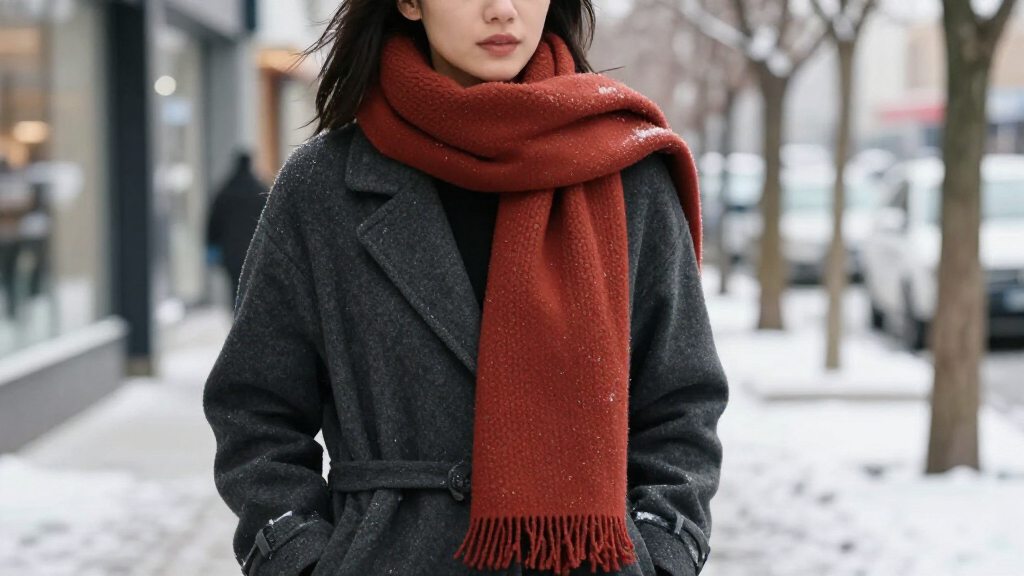
TL;DR
Stylish winter scarves balance warmth, comfort, and personal style: wool, cashmere, and alpaca are popular cold-weather choices, while fabric thickness, weave, coverage, and layering also affect warmth. Match scarf bulk to your coat, choose a color that works with the clothes you plan to wear, and check the care label before washing.
A scarf can turn a familiar winter coat into an outfit that feels fresh, and it can keep a cold gust from creeping down your collar. The right one feels comfortable against your neck, fits your everyday routine, and gives you a color or texture you enjoy seeing in the mirror.

Get your wardrobe favorites delivered free with Prime
- Fast, free delivery on millions of items
- Prime Video, Amazon Music and more included
- Member-only deals all year
When you shop for stylish winter scarves, the fiber label only tells part of the story. A dense knit can block wind better than a loose weave, while a large wrap may be cozy outdoors and cumbersome on a crowded bus. Your climate, skin preferences, coat, and budget all shape the right choice.
This guide will help you compare common fabrics, choose a size and color, style a scarf with different coats, and care for it so it lasts. You’ll also find practical examples for everything from a brisk walk to a daily commute, because the best scarf is one you’ll actually reach for.
Wool, cashmere, and alpaca are popular warm options, but thickness, weave, wind, coverage, and layering affect warmth too.
Try a scarf against your neck if you can; softness and comfort vary from person to person.
Check dimensions and match scarf bulk to your coat, commute, and plans.
Choose a neutral that works with your regular coats or use a bright color or check as an accent.
Follow the care label, dry some natural-fiber scarves flat, and remove pills gently.
Choose a scarf fabric that matches your winter
Stylish winter scarves feel warmer when their fiber, thickness, and weave suit your weather and routine. Wool, cashmere, and alpaca are popular for cold days; fleece and acrylic can offer easy-care options, while cotton or linen blends tend to suit milder conditions better.
Wool provides warmth while allowing some moisture vapor to escape, which can feel comfortable when you walk briskly and then step indoors. Cashmere often feels soft and light, and alpaca is known for warmth and a soft feel. Still, the fiber name alone cannot promise comfort: construction and thickness matter, too.
Imagine you walk to work in a windy city and wait ten minutes for a bus. A tightly woven wool scarf may shield your neck more effectively than a loose, decorative knit. If you mostly drive between heated spaces, a lighter cashmere blend might feel less bulky. A scarf is a little like a coat for your neck: coverage and wind resistance count as much as the label.
That difference matters because warmth has to work with your day. A thick scarf can hold warmth during a long outdoor wait, but may feel stifling once you enter a heated train. A lighter scarf is easier to carry and adjust, though it may leave gaps when wind blows. Think about how long you stay outside and whether you can loosen, remove, or pack the scarf as conditions change.
Read the full fiber breakdown when you see “wool blend.” That phrase does not tell you the exact proportions unless the label lists them. If you need a scarf for wet weather, also think about drying time and how easily it layers under your coat. A fabric that takes a long time to dry may be inconvenient if you wear it every day, even if it feels warm when dry.
- Cold and windy: Try a dense wool knit or tightly woven wrap.
- Mild winter: Consider lighter blends or a thinner merino style.
- Easy care: Check whether fleece or acrylic can go in your washing machine.
Popular right now

LG 55-Inch QNED73B Mini LED 4K Smart TV (2026)

Dyson HushJet Compact Air Purifier, White/Silver

Bose QuietComfort Headphones (2nd Gen) Wireless Noise-Cancelling Headphones, Black
As an affiliate, we earn on qualifying purchases.
Find a soft feel if your neck dislikes scratchy knits
Stylish winter scarves should feel good against your skin, and a softer fiber or smooth lining can make a big difference if scratchy knits bother you. Merino wool, cashmere, brushed fabrics, and smooth synthetics are options to try, but individual comfort varies.
If you can shop in person, press the scarf against the side of your neck for a moment rather than judging it by a quick touch with your fingertips. A scarf that feels fine in your hand may feel irritating after an hour of walking. Check the seams and fringe, too; a rough edge can be the part that rubs.
For example, you might wear a wool coat to an outdoor market and keep your scarf on from the tram ride through lunch. A soft merino scarf can offer warmth without the bulky feel of a chunky knit. If you shop online, look for the listed fiber content, weave, and care instructions, and review the return terms before ordering.
There is no single “best” fiber for every person. A smooth synthetic scarf may be more comfortable for you than a natural fiber, and a blend can give you a useful mix of softness, price, and simpler care. Let your own neck be the final judge.
Comfort affects whether a scarf becomes part of your routine. If it feels irritating, you may keep adjusting it or leave it at home, which makes its warmth and styling less useful. A softer scarf may cost more or need gentler care, while an easy-care synthetic may have a different texture or feel less breathable. Weigh those tradeoffs against how often you expect to wear it.
Comfort is personal: If a scarf feels itchy in the shop, it probably won’t become more pleasant after a whole afternoon outside.
Pick the right scarf size for your coat and plans
Stylish winter scarves are easier to wear when their length and bulk suit your coat and the places you go. Long rectangles offer several tying options, oversized wraps provide more coverage, and infinity scarves are quick to put on, but each shape has tradeoffs.
A long rectangular scarf can be looped once, knotted close to the neck, or draped down the front. That flexibility helps if you walk to work in the morning and want a looser look indoors. An oversized wrap can cover your shoulders at an outdoor café, though its extra fabric may feel cumbersome under a fitted coat or on a packed train.
Think about a commuter wearing a tailored wool coat with a narrow collar. A compact scarf knot tucked inside the coat keeps the silhouette tidy and the ends out of the way. Someone in a roomy parka has more space for a thick knit, or can spread a wide scarf over their shoulders during a long wait outside.
Size affects more than appearance: excess fabric can press against your neck, bunch under a collar, or catch on a bag strap, while too little length can make it hard to cover the gap at your neckline. A compact style is convenient in transit, but offers fewer ways to adjust coverage. Choose based on the places you will wear it, not only how it looks laid flat.
One size does not suit every intended use. Before buying, check the scarf’s dimensions and consider how many times you want to wrap it. If you plan to wear it over several layers, give yourself enough length without choosing so much fabric that it pulls at your neck or trails into a bag zipper.
- Check your coat: Note its collar, neckline, and room for extra layers.
- Think about your route: A long walk may call for more coverage than a short car trip.
- Try your usual knot: Make sure the scarf stays comfortable when tied and tucked.
Match scarf colors to clothes you already wear
Stylish winter scarves can make everyday clothes feel new through color, pattern, and texture. Neutrals such as charcoal, navy, camel, gray, and black are easy to coordinate, while a bright shade or classic check can bring energy to a simple coat.
Start with the coats you wear most. If your winter wardrobe centers on a navy coat and black boots, a camel scarf adds warmth to the palette, while a red check introduces a more noticeable accent. If you often wear several colors, a charcoal or gray scarf may work across more outfits.
For instance, imagine pulling on the same dark puffer every weekday. A forest-green scarf gives it a quieter, earthy feel; a red-and-navy plaid looks more traditional; and a pale gray wrap softens the contrast. You can change the mood without buying a new coat. Texture helps, too: a ribbed knit gives a smooth wool coat a little visual depth.
There is no universal color that goes with everything, because your coat colors and personal preferences matter. A useful approach is to choose one scarf that repeats a color already in your wardrobe, then add a pattern or brighter shade if you want another option. Seasonal trends such as rich winter colors, oversized knits, and checks can offer ideas, but they do not need to dictate your choice.
A versatile neutral may earn more use if it works with several coats, but it can also make outfits feel similar day after day. A brighter or patterned scarf gives a familiar coat a stronger focal point, though it may coordinate with fewer looks. If you are choosing just one, consider whether you value easy repetition or a noticeable change; if you already have a neutral, an accent color can add variety without complicating most outfits.
Style your scarf so it stays warm and easy to wear
Stylish winter scarves work best when you adjust how you wear them to your coat, the weather, and your plans. A close wrap can help cover your neck outdoors, a loose drape suits a relaxed outfit, and a broad scarf can double as a shoulder wrap.
With a structured coat, try a compact knot and tuck the ends inside the front so they do not compete with the lapels. With a roomier coat, let a long scarf fall loosely or wrap it once for extra coverage. When the wind picks up, bring the fabric closer around your neck; when you reach a warm café, loosen it so you stay comfortable.
Here’s a real-life example: you walk from home to a chilly train platform, then sit in a heated carriage. An oversized scarf can feel lovely outside, but quickly become too warm inside. You can wear it over your shoulders for the walk, then fold it into your tote rather than leaving thick layers around your neck.
If your scarf keeps slipping, try a simple knot, tuck the ends into your coat, or choose a texture that grips more easily. The right choice depends on how you move through the day. A lightweight scarf may also work indoors as an accessory, while a thick winter wrap might be more comfortable left with your coat.
These adjustments balance warmth against comfort and movement. A close wrap reduces exposed gaps, but tying it too tightly can feel restrictive and make it harder to loosen quickly. A loose drape is convenient indoors and looks relaxed, but offers less protection when wind reaches your collar. Choose the simplest style that stays put during your normal activities, then change it as your surroundings change.
- Structured coat: Use a compact knot or tuck the ends in.
- Roomy outerwear: Try a loose drape or shoulder wrap.
- Windy walk: Wrap close enough to cover your neck without pulling tightly.
Keep your scarf looking good with simple care
Stylish winter scarves last longer when you follow their care label and store them away from snags and pests. Washing methods vary by fiber: some wool and cashmere styles need gentle hand washing or professional cleaning, while many synthetic scarves can go in the washing machine.
Heat, agitation, and incorrect drying can shrink or distort some natural-fiber scarves. If the label calls for hand washing, use cool water and a gentle detergent, press out water without twisting, and dry the scarf flat. A wool scarf left dripping from a hanger may stretch into a long, uneven shape.
After a day outdoors, give your scarf time to air before folding it away. Store it neatly in a drawer or on a shelf where zippers and hooks cannot catch the knit. If small pills appear where the scarf rubs against your coat, remove them gently with a fabric comb or suitable de-piller instead of pulling at the fibers.
Consider a person who wears a soft scarf every day on a backpack commute. Its shoulders and ends meet constant friction, so a little pilling is more likely than on a scarf worn only for occasional dinners. Choosing a durable texture and caring for it as directed can matter more than a trend label when you want a piece you’ll enjoy for several winters.
Care is part of the cost of owning a scarf: a delicate fabric may feel luxurious, but require more time or professional cleaning, while a machine-washable option can be easier to rotate through frequent wear. Friction and repeated washing both affect how a scarf looks, so follow the label and avoid unnecessary washing when airing it out is enough. That balance helps preserve the texture without making upkeep a chore.
Frequently Asked Questions
Which scarf material is warmest for winter?
Wool, cashmere, and alpaca are popular warm choices, but fiber alone does not determine warmth. A dense, thick scarf with good coverage may feel warmer in wind than a thinner scarf made from a premium fiber. Match the fabric to your weather and how you plan to wear it.
What scarf fabric works well for sensitive skin?
Try merino wool, cashmere, brushed fabric, or a smooth synthetic scarf, then check how it feels against your neck if possible. Comfort varies by person and by how a scarf is made, so the fiber name cannot guarantee a pleasant feel.
How long should a winter scarf be?
Long rectangular scarves give you more wrapping and tying options, while shorter styles can be easier to tuck under a coat. Check the dimensions and try your usual knot; a scarf should cover the area you want without feeling cumbersome.
How do I keep a scarf from slipping?
Try a simple knot, tuck the ends into your coat, or choose a thicker texture that grips more easily. If you move between cold streets and warm trains, a knot you can loosen quickly may be more comfortable than a tight wrap.
How should I wash a wool or cashmere scarf?
Follow the care label, because washing needs vary between scarves. Some call for gentle hand washing or professional cleaning, and many should dry flat to avoid stretching or distortion. Avoid twisting a wet scarf to squeeze out water.
What scarf color goes with everything?
Black, charcoal, navy, camel, and gray are easy to coordinate, but the most versatile choice depends on the colors of your coats and clothes. If you wear mostly navy, for example, camel or gray may give you more outfit options than another dark blue.
Conclusion
Choose your next scarf by starting with the days you actually dress for: the walk, the weather, the coat, and the feel you want against your neck. Then pick a color you’ll enjoy wearing and a size that lets you move easily.
A good winter scarf should feel like a warm pocket of color you can carry from the frosty street into the rest of your day.