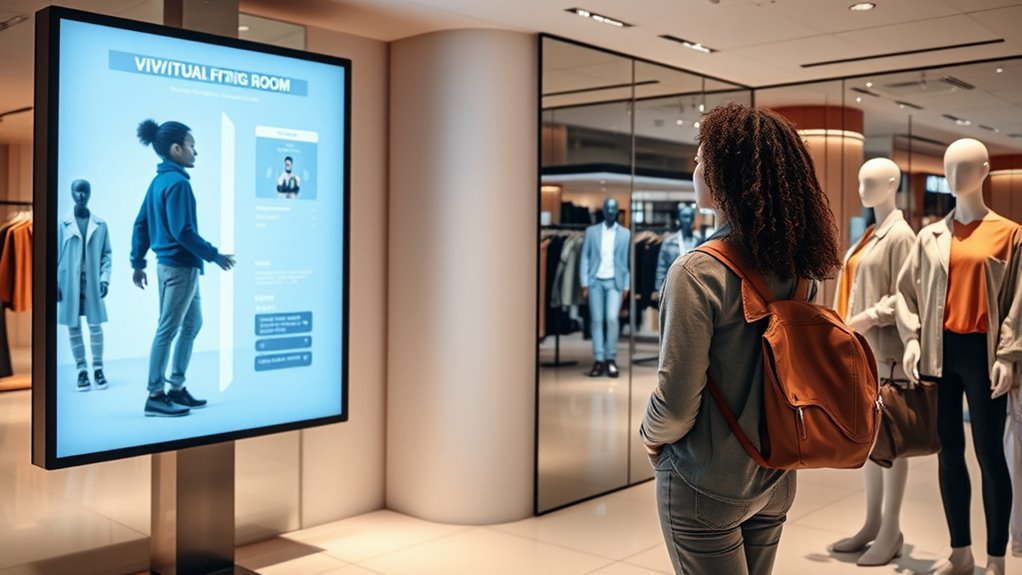

Virtual fitting rooms can really help you see how clothes will look and fit before buying online. They use augmented reality to overlay garments onto your image or avatar, boosting confidence and reducing returns. While not perfect yet, improvements in technology make these tools more realistic and reliable. As advancements continue, you’ll find virtual try-ons becoming even more accurate and useful. Discover how these innovations are shaping the future of online shopping as you explore further.

Get your wardrobe favorites delivered free — and shop member deals
- Fast, free delivery on millions of items
- Access to Prime Big Deal Days deals on October 6–7
- Prime Video, Amazon Music and more included
Key Takeaways
- Virtual fitting rooms use AR to overlay clothing on images or avatars, providing an immersive try-on experience.
- They improve sizing accuracy by offering personalized recommendations, reducing fit issues and online returns.
- High-quality AR offers realistic visuals, but device limitations can affect the precision of virtual try-ons.
- While not perfect, technological advancements continually enhance the realism and reliability of virtual fitting tools.
- They serve as a helpful supplement to online shopping, helping consumers explore styles and make more confident purchases.

Virtual fitting rooms are transforming how you shop for clothes online by allowing you to try on garments virtually before making a purchase. This innovative technology leverages augmented reality to create a more immersive shopping experience, giving you the chance to see how clothes look on your digital avatar or live image. With augmented reality, you can position yourself in front of your device’s camera, and the system overlays clothing items onto your image in real time. This makes it easier to visualize fit and style without stepping into a fitting room or guessing from photos.
One of the biggest advantages of virtual fitting rooms is their potential for enhancing sizing accuracy. Traditional online shopping often leaves you uncertain about whether an item will fit, leading to returns and frustrations. Virtual fitting rooms aim to address this by integrating detailed sizing algorithms that analyze your measurements or upload of your body dimensions. These systems can recommend the best size for you based on your specific measurements, reducing the likelihood of ordering clothes that are too tight or too loose. When sizing accuracy improves, you gain confidence in making online purchases, which saves you time and minimizes disappointment. Additionally, the increasing use of advanced measurement technology helps refine these recommendations further, making virtual fitting more reliable.
Virtual fitting rooms improve sizing accuracy, reducing returns and increasing confidence in online clothing purchases.
However, the effectiveness of virtual fitting rooms isn’t solely about technology. The quality of the augmented reality experience plays a significant role. High-quality AR provides more realistic and precise visualizations, so you can better judge how a garment will look on your body. Some platforms even simulate movement, fabric draping, and lighting effects, giving you a more authentic preview. But, keep in mind, no system is perfect. Variations in device quality, camera angles, and lighting conditions can influence the accuracy of the virtual try-on. Despite these limitations, many users find that virtual fitting rooms offer a surprisingly good approximation of how clothes will look and fit. Additionally, advancements in augmented reality hardware and software are continuously improving the realism and precision of these virtual try-ons. These innovations are also inspired by the role of father figures and role models in guiding and empowering individuals to explore new technology. As the technology evolves, user experience continues to improve, making virtual try-ons more accessible and reliable for consumers.
While virtual fitting rooms aren’t a complete replacement for trying on clothes physically, they are a powerful tool for better online shopping. They give you an interactive way to explore styles, understand fit, and make more informed decisions. As augmented reality technology continues to evolve, expect even more precise sizing tools and more realistic visualizations. This means you’ll likely experience fewer surprises when your order arrives, and you’ll spend less time returning items. In the end, virtual fitting rooms are reshaping how you shop online, making it more convenient, accurate, and engaging.
Frequently Asked Questions
How Accurate Are Virtual Fitting Room Size Suggestions?
You’re curious about how accurate virtual fitting rooms are, especially regarding size estimation and fit accuracy. These tools use your measurements or photos to suggest sizes, but precision varies depending on the platform and data quality. While they can improve fit predictions, they might not always be perfect. Keep in mind, virtual fitting rooms provide helpful guidance, but trying on clothes in person remains the most reliable way to ensure the best fit.
Can Virtual Fitting Rooms Replace In-Store Shopping Entirely?
Imagine browsing a store from your couch, with augmented reality blending fashion innovation into your space. Virtual fitting rooms won’t fully replace in-store shopping yet, but they’re transforming how you try on clothes. They offer convenience and personalized experiences, yet some prefer the tactile feel of fabrics and the instant gratification of in-person shopping. As technology advances, virtual fitting rooms will become a key part of your fashion journey, but likely won’t replace traditional shopping completely.
Do Virtual Fitting Rooms Work Equally Well on All Devices?
You wonder if virtual fitting rooms work equally well on all devices. The answer depends on device compatibility and user interface. Some apps perform better on high-resolution screens and newer operating systems, providing a smoother experience. On older or less capable devices, the interface may be sluggish or limited, affecting accuracy. To get the best results, use devices optimized for these apps and guarantee your user interface is user-friendly.
Are Virtual Fitting Rooms Accessible for People With Disabilities?
Imagine a world where everyone can explore fashion seamlessly. Virtual fitting rooms are advancing with adaptive accessibility, making them more inclusive for people with disabilities. Developers focus on designing user interfaces that accommodate diverse needs, ensuring easier navigation and interaction. While progress is ongoing, some platforms still have room to improve, but the goal remains clear: creating a virtual space where all users can confidently try on clothes and enjoy the experience.
How Do Virtual Fitting Rooms Handle Different Body Types?
When it comes to handling different body types, virtual fitting rooms aim to embrace body diversity by offering customization accuracy. You’ll find that many platforms allow you to input your measurements or use 3D scans, helping the virtual try-on match your unique shape. While some still struggle with perfect accuracy, ongoing improvements focus on better representing a wide range of body types, making the experience more inclusive and realistic for everyone.
Conclusion
Think of virtual fitting rooms as your trusty lighthouse guiding you through fashion’s fog. They won’t always reveal everything perfectly, but they help you navigate choices with confidence. Just like a lighthouse won’t guarantee safe passage but shines a helpful light, these tools assist you in making better decisions without promising flawless results. So, embrace the journey, trust the process, and enjoy the adventure of discovering styles that truly fit you.
Fall Picks
fall essentials
As an affiliate, we earn on qualifying purchases.