

To create wishlists that actually convert, make them easy to find and add to from any page, using clear icons and prominent placement. Provide instant visual feedback when items are added, and keep your wishlist simple, allowing quick edits and reordering. Connect it with personalized suggestions and special offers to boost engagement. A well-designed, seamless experience builds trust and encourages users to turn their favorites into purchases—keep exploring for more tips to optimize your wishlist strategy.
Key Takeaways
- Position wishlist icons prominently in top navigation or near product images for easy access.
- Provide instant visual feedback, like checkmarks or animations, when items are added to reinforce engagement.
- Keep wishlists organized and clutter-free, allowing effortless editing, reordering, and note addition.
- Integrate personalized product recommendations and targeted discounts based on wishlist items.
- Design intuitive, consistent interfaces that build trust, reduce hesitation, and encourage repeat visits.
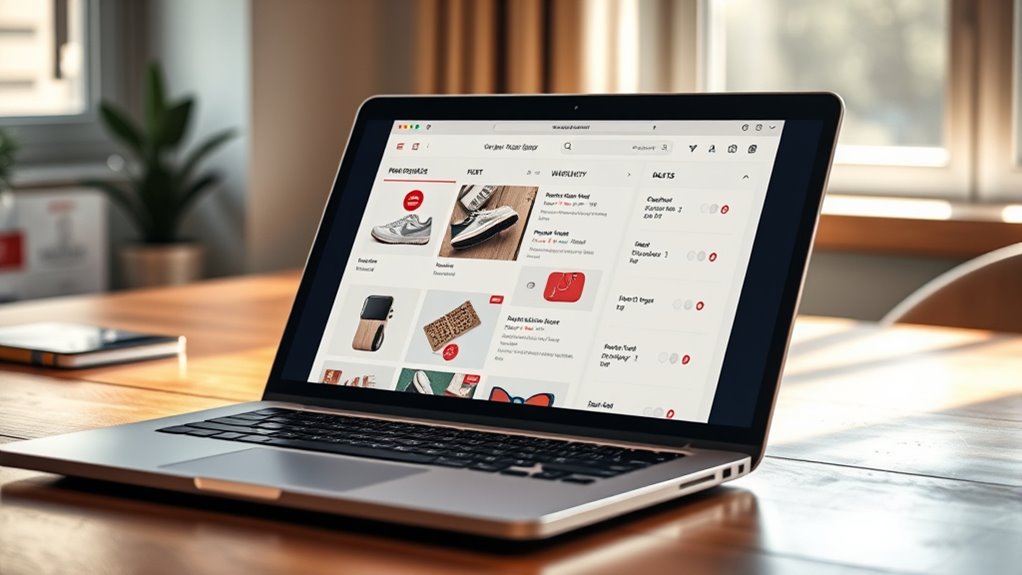
Creating a wishlist that actually converts is crucial for turning casual browsers into loyal customers. When you focus on the fundamentals of product psychology and apply design best practices, you can craft a wishlist that feels intuitive and compelling. The key is understanding what motivates users to add items and how to make that process seamless. By aligning your design with how people naturally think and behave, you’ll increase the chances they return to purchase.
Start by making your wishlist easy to find and accessible from any page. Use clear, prominent icons or buttons that invite users to add items without confusion. Placement matters — ensure the wishlist icon is visible but not intrusive, ideally in the top navigation bar or near the product image. Consistency in design reassures users they’re in control, reducing friction and hesitation. When your design adheres to best practices, visitors won’t get lost or frustrated, keeping their focus on what they want to save for later.
Make your wishlist easy to find with clear icons, placed prominently for seamless user access.
Next, leverage product psychology by creating a sense of value and personalization. When users add items to their wishlist, give immediate visual feedback — a subtle animation or checkmark can reinforce their action. This taps into the psychological principle of commitment and consistency. Additionally, consider incorporating social proof or urgency cues, like notifications that others are viewing or purchasing the same product, to boost perceived value. Make the wishlist feel like a personalized space that anticipates their needs, which encourages repeat visits.
It’s also essential to keep the wishlist clutter-free and easy to edit. Users should be able to effortlessly remove, reorder, or add notes to items. Incorporate smart design practices like drag-and-drop functionality and clear labels to simplify management. When your interface respects users’ cognitive load, they’re more likely to engage deeply with their saved items. This keeps them coming back, increasing the chance of conversion when they’re ready to buy.
Finally, integrate your wishlist with other parts of your site, such as product recommendations or targeted promotions. When users view their wishlist, suggest complementary items or discounts to nudge them toward purchase. This is a strategic application of product psychology — subtly influencing decision-making with relevant offers. By combining thoughtful design and understanding human behavior, you create a wishlist experience that not only captures interest but also drives conversions. When your wishlist feels personalized, easy to use, and psychologically compelling, you foster customer loyalty that translates into increased sales and long-term growth.
Frequently Asked Questions
How Do Wishlists Impact Overall Conversion Rates?
Wishlists boost your overall conversion rates by tapping into wishlist psychology, making customers more likely to return and complete purchases. They enhance customer engagement by giving shoppers a personalized space to save items, creating a sense of ownership and anticipation. When customers see their wishlist grow, they’re more motivated to follow through, increasing conversion chances. Implementing effective wishlist features directly influences your sales, turning casual browsers into loyal buyers.
What Are Common Mistakes to Avoid in Wishlist Design?
Think of your wishlist layout as a clear map guiding users to their treasures. Avoid cluttered design and confusing navigation that frustrate the user experience. Don’t overlook mobile responsiveness or make the wishlist hard to find. Instead, create a streamlined, visually appealing layout that invites exploration. Keep it simple, intuitive, and consistent—these choices prevent users from losing interest, ensuring your wishlist becomes a powerful tool that boosts conversions.
How Can Personalized Wishlists Boost Sales?
Personalized wishlists boost sales by using personalization strategies that cater to your customers’ preferences, making shopping more relevant and engaging. When you tailor wishlists based on browsing history and purchase data, you increase customer engagement and encourage repeat visits. This personalized approach helps customers feel understood, prompting them to add more items and complete purchases. Ultimately, effective personalization strategies turn wishlists into powerful tools for driving conversions and increasing your sales.
Which Industries Benefit Most From Wishlists?
Did you know that 60% of consumers in retail sectors and luxury brands use wishlists to guide their purchasing decisions? You’ll find these industries benefit most because wishlists help customers save items for later, boosting engagement and conversions. By integrating wishlists, you encourage repeat visits and higher spend, especially in high-end markets where customers appreciate personalized shopping experiences. So, if you’re targeting retail or luxury, wishlists are a smart tool to grow your business.
How to Measure Wishlist Effectiveness Effectively?
To measure wishlist effectiveness effectively, focus on engagement metrics like add-to-wishlist rates and revisit frequency. Understand wishlist psychology to see why customers save items, and track how many wishlists convert into purchases. Use analytics tools to analyze these patterns and identify popular items. This helps you optimize your strategy, improve user experience, and ultimately increase conversion rates by aligning offerings with customer preferences and behaviors.
Conclusion
By implementing these wishlist strategies, you can turn browsers into buyers. For instance, a small online boutique saw a 20% boost in sales after optimizing their wishlist features, making it easier for customers to save and revisit their picks. Remember, a well-designed wishlist isn’t just a list—it’s a powerful tool that guides your customers toward making confident purchases. Start refining yours today, and watch your conversions grow effortlessly.