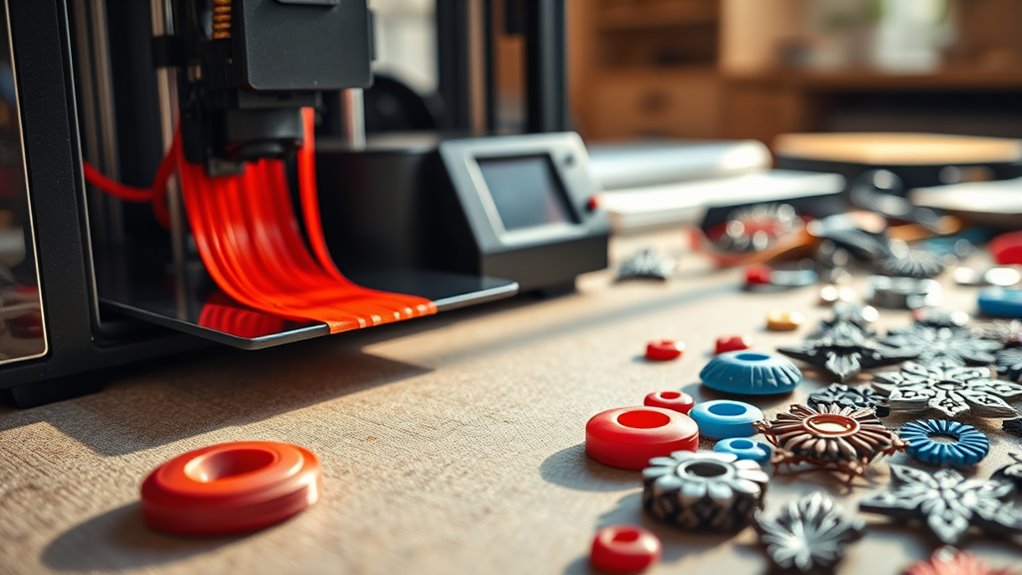

3D printing spare buttons and trims at home lets you easily create customized, matching accessories for your garments, saving time and money. You can design or find digital models, select durable materials like ABS or PETG, and print personalized buttons or trims that match your fabric perfectly. This method offers quick prototypes and unique designs, making repairs or embellishments simple and cost-effective. If you want to discover more creative ideas and tips, keep exploring how 3D printing can elevate your wardrobe.
Key Takeaways
- Design or find digital models of custom buttons and trims using CAD software or online resources.
- Choose durable, flexible filament like ABS or PETG for wear-resistant, long-lasting parts.
- 3D print the components, then sand, paint, or decorate for a perfect fabric match.
- Quickly iterate designs to achieve the ideal size, style, and color for your garments.
- Save time and money by creating personalized, on-demand replacements and embellishments at home.
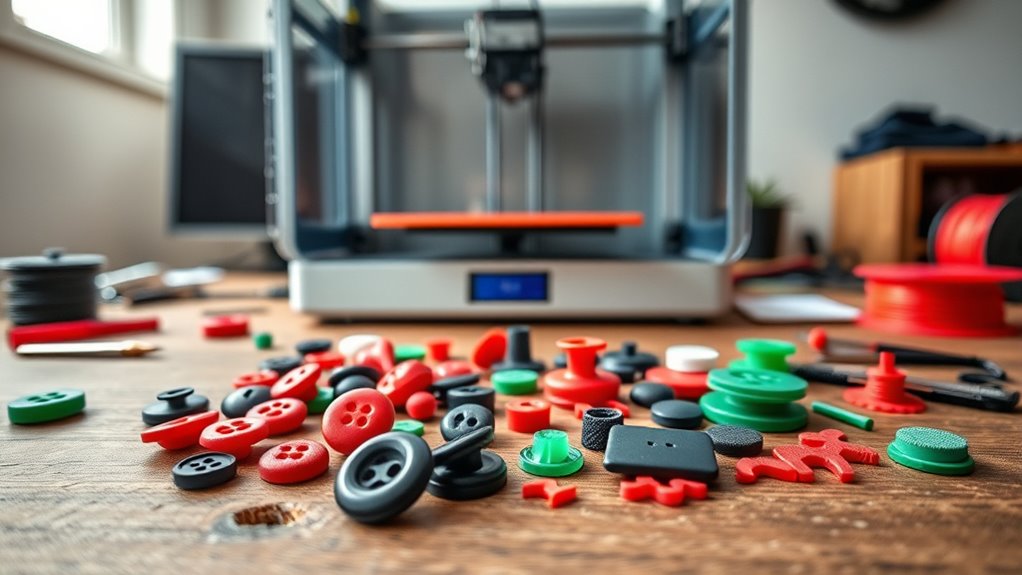
If you’ve ever needed a replacement button or trim quickly, 3D printing at home offers a practical solution. Instead of rushing to stores or trying to find a matching button, you can create custom buttons right in your own space. This is especially useful for fabric embellishments that require a specific look or unique detail. With a 3D printer, you can make buttons that match your garment’s color, style, and size, ensuring a seamless repair or customization. Plus, 3D printing allows for on-demand production, so you’re not stuck with generic options. Whether you’re fixing a favorite jacket or adding a fancy touch to a craft project, having the ability to create custom buttons saves both time and money.
Create custom buttons at home for quick, personalized repairs and craft projects.
The process is straightforward. First, you select or design a digital model of the button or trim you need. Many free or paid models are available online, or you can design your own with simple CAD software. Once you have your design, you load it into your 3D printer and choose the appropriate filament. For buttons and fabric embellishments, durable plastics like ABS or PETG work well because they withstand wear and washing. Once printed, you can sand or paint the button to match your fabric perfectly. If you’re creating fabric embellishments, you can even incorporate textured or decorative elements into your design, giving you complete control over the final look. Understanding the contrast ratio of your printed materials can help ensure the finished product looks professional and cohesive. Additionally, considering the material properties such as flexibility and strength ensures your custom buttons will perform well over time. The material selection can also impact the durability and overall appearance of your printed parts, which is crucial for fabric embellishments.
One of the biggest benefits of printing your own buttons and trims is customization. You can make them in any shape, size, or color, giving your projects a personalized touch. It also opens up creative possibilities—imagine designing buttons with intricate patterns, initials, or thematic motifs that perfectly match your garment or craft. Additionally, 3D printing allows for quick iteration. If a design doesn’t turn out quite right, you can tweak your model and reprint it without much hassle. This flexibility ensures you get exactly what you want without settling for less.
Another advantage is the ability to produce fabric embellishments that are lightweight yet sturdy. You can embed different textures or even small decorative elements, expanding your creative options. 3D printing also reduces waste, as you only produce what you need, and you can reuse or recycle filament material. Overall, whether you’re replacing buttons or designing unique fabric embellishments, 3D printing at home empowers you to customize your wardrobe and projects with precision and ease, making it a powerful tool for DIY enthusiasts and craft lovers alike.
Frequently Asked Questions
What Type of 3D Printer Is Best for Printing Buttons and Trims?
For printing buttons and trims, you want a 3D printer that offers good filament color options and reliable print bed adhesion. FDM printers with a heated bed work well, letting you choose from various filament colors to match your projects. Look for one with precise temperature control and a sturdy build platform to guarantee your small, detailed parts stick well and come out smoothly.
Can I Print Durable Buttons Suitable for Everyday Wear?
Like a knight in shining armor, you can print durable buttons suitable for everyday wear. Focus on selecting the right button material, such as PETG or ABS, known for their print durability and impact resistance. These materials withstand daily use better than standard PLA. With proper settings and post-processing, your custom buttons will be resilient, functional, and long-lasting, making them perfect for frequent use and adding a personal touch to your wardrobe.
Are There Eco-Friendly Filament Options for Home 3D Printing?
You’re wondering if eco-friendly filament options exist for home 3D printing. Yes, you can choose biodegradable filaments made from materials like PLA, which break down more easily. Recycled plastics are also available, offering sustainable options that reduce waste. These eco-friendly filaments help you create functional and durable items while minimizing environmental impact. So, you can print responsibly and contribute to a greener future with these sustainable choices.
How Do I Achieve a Smooth Finish on Printed Trims?
Did you know that a smooth finish can markedly improve the look of your printed trims? To achieve this, you should focus on surface smoothing with finishing techniques like sanding, applying a filler primer, or using a heat gun carefully. These methods help eliminate layer lines and create a polished surface. With patience and practice, you’ll enhance your prints and make your trims look professionally finished.
What Safety Precautions Should I Take During Home 3D Printing?
When you’re home 3D printing, you should always prioritize safety. Wear personal protective equipment like gloves and safety glasses to avoid burns or fumes. Make certain proper ventilation in your workspace to disperse potentially harmful particles and fumes released during printing. Keep your workspace organized, and stay attentive to your printer’s alerts. These precautions help you stay safe while enjoying your 3D printing projects at home.
Conclusion
By embracing 3D printing at home, you hold the power to transform your wardrobe with just a few clicks. No longer are you bound by store shelves or waiting periods—you’re the artist and creator of your style. Imagine a world where your clothing reflects your unique personality, each button and trim echoing your ingenuity. Isn’t it exhilarating to realize that with a little effort, you can turn everyday items into personalized masterpieces?