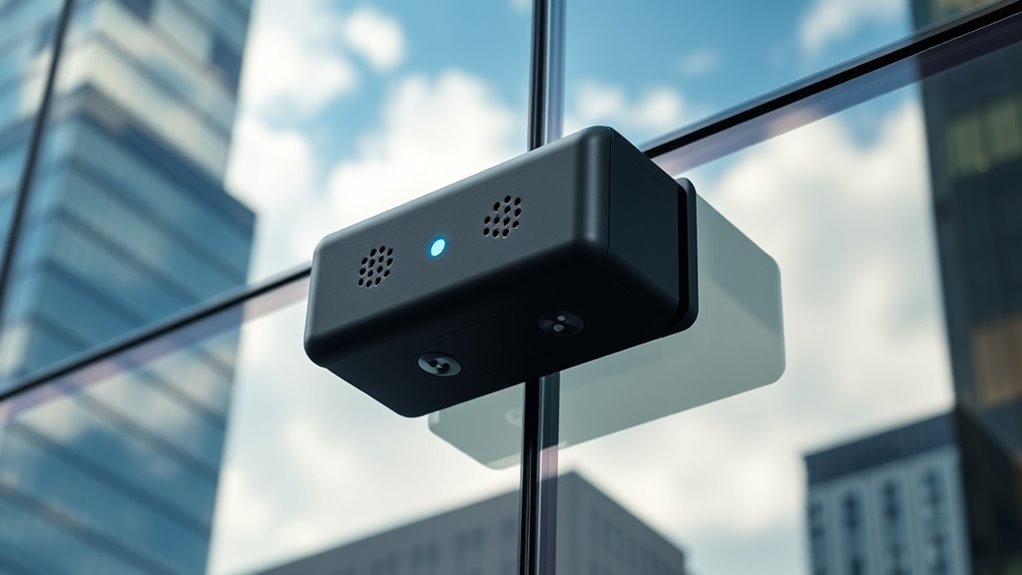

When monitoring air quality, you should focus on key pollutants like particulate matter (PM2.5 and PM10), volatile organic compounds (VOCs), carbon dioxide (CO2), and nitrogen dioxide (NO2). These pollutants impact health and environmental quality, so tracking their levels helps identify pollution sources and risks. Make certain your sensors are calibrated properly, and consider environmental factors that might influence readings. Keep exploring to discover how to ensure accurate and reliable air quality data.
Key Takeaways
- Monitor particulate matter levels, including PM2.5 and PM10, to assess airborne particle pollution.
- Track gaseous pollutants like VOCs, CO2, NO2, and ozone for comprehensive air quality analysis.
- Observe environmental factors such as humidity and temperature that influence sensor readings.
- Detect sudden pollution spikes or sustained increases indicating potential hazards.
- Ensure sensors are properly calibrated to maintain measurement accuracy over time.
Have you ever wondered how you can monitor the air you breathe in real-time? Air quality sensors make this possible, giving you immediate insights into the environment around you. To get accurate readings, sensor calibration is vital. Proper calibration ensures that the sensor’s measurements align with standardized air quality levels, preventing false alarms or overlooked hazards. When sensors aren’t calibrated correctly, data interpretation becomes tricky because you might misjudge the air quality. Regular calibration, whether through manual adjustment or automated processes, helps maintain reliability, so you can trust the information your sensors provide. Once calibrated, these sensors continuously collect data on various pollutants, but raw data alone isn’t enough. You need to interpret this data correctly to understand what it means for your health and environment. Additionally, understanding the sensor specifications such as detection limits and response times is crucial for accurate data interpretation. Data interpretation involves analyzing the sensor outputs and translating them into meaningful information. Many sensors measure multiple parameters, such as particulate matter (PM2.5 and PM10), volatile organic compounds (VOCs), carbon dioxide (CO2), and nitrogen dioxide (NO2). When you read the data, look for spikes or sustained increases that could indicate pollution sources nearby, like traffic or industrial activity. Some sensors have built-in algorithms that help filter out noise and provide clearer readings. It’s also important to compare sensor data with local air quality standards and thresholds to determine if the levels are safe or hazardous. This process requires understanding the sensor’s specifications, such as the detection limits and response times, which influence how you interpret the data accurately. Sensor calibration and data interpretation go hand in hand. Calibration ensures that the data you interpret is accurate, while proper interpretation helps you make informed decisions about your environment. For example, if your sensor detects elevated levels of PM2.5, you might decide to ventilate your space or wear a mask. Conversely, if the data shows consistently safe levels, you can feel more confident about your environment. Remember, environmental conditions like humidity and temperature can affect sensor performance, so understanding these factors is essential during data interpretation. Regularly maintaining your sensors, updating calibration settings, and understanding the nuances of the data ensure that you’re always making decisions based on reliable information. Ultimately, monitoring air quality in real-time empowers you to protect your health and improve your living or working environment effectively.
Frequently Asked Questions
How Do Air Quality Sensors Affect Indoor Air Circulation?
Air quality sensors help you improve indoor air circulation by providing real-time data on pollutant levels, enabling you to enhance airflow. With pollutant tracking, you can identify problem areas and adjust ventilation systems accordingly. This proactive approach ensures better airflow, reduces indoor pollutants, and creates a healthier environment. By continuously monitoring air quality, you can maintain ideal circulation, preventing stale air buildup and promoting fresh, clean indoor air at all times.
Can Sensors Detect All Types of Air Pollutants?
In a blink of an eye, you’d think sensors could detect all pollutants, but that’s not the case. You see, sensor limitations mean they often lack pollutant specificity, so they might miss certain chemicals or particulates. While advanced sensors can identify common pollutants like VOCs, CO2, and particulate matter, they don’t catch everything. You’ll need multiple sensors or specialized equipment for exhaustive air quality monitoring.
What Maintenance Is Required for Long-Term Sensor Accuracy?
To keep your air quality sensors accurate long-term, you need to regularly perform sensor calibration to make certain their readings stay precise. Additionally, dust removal is essential; dust can clog sensors and impair performance. Check and clean your sensors periodically, especially in dusty environments, and recalibrate as needed. Proper maintenance helps your sensors provide reliable data over time, supporting effective air quality monitoring and healthier indoor environments.
Are Portable Air Quality Sensors as Reliable as Fixed Ones?
Portable air quality sensors are like a flashlight in a dark room—they can be reliable, but their accuracy depends on proper calibration. While they offer flexibility, fixed sensors usually provide more consistent data reliability because they’re less affected by movement or environmental changes. To guarantee accuracy, you should regularly calibrate portable sensors and compare their readings with fixed units. This way, you get dependable data wherever you are.
How Do Sensor Readings Influence Health and Safety Decisions?
Sensor readings directly influence your health and safety decisions by providing real-time data. When you trust sensor accuracy, you can interpret the data effectively, identifying pollution spikes or hazardous conditions promptly. Accurate sensors help you make informed choices, like ventilating a space or evacuating when needed. Always verify data interpretation carefully, and consider sensor calibration to guarantee that your decisions are based on reliable, precise information, safeguarding your well-being.
Conclusion
Now that you know what to monitor with air quality sensors, you’ll be better equipped to breathe easy and keep your environment safe. Regular checks can prevent issues before they become serious—like a modern-day Florence Nightingale, but for your air. Don’t forget, staying informed is your best defense against pollution. So, get your sensors ready, stay vigilant, and remember: in today’s world, clean air is your greatest treasure.