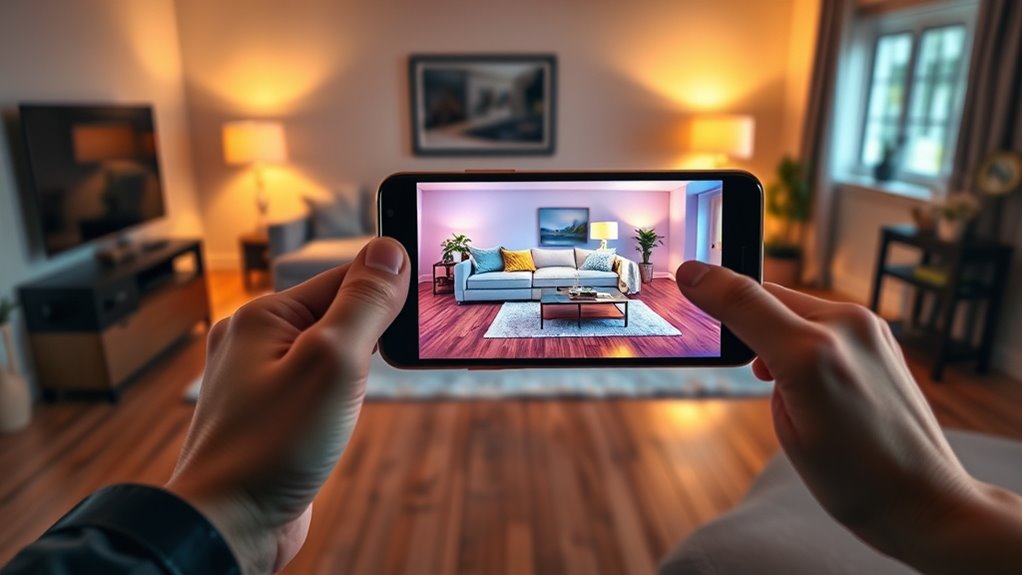

Augmented reality shopping lets you try products virtually at home before buying. You can see how clothes, accessories, or furniture fit and look in your space in real time. This technology makes shopping more interactive, personalized, and confident, helping you avoid returns and guesswork. With improved visuals and realistic displays, AR makes the experience immersive and fun. If you want to explore how this technology can revolutionize your shopping, keep exploring further.
Key Takeaways
- AR shopping allows users to visualize products in their actual home environment before purchasing.
- Virtual try-on features enable trying clothes, accessories, or makeup remotely for better fit and style assessment.
- Interactive AR displays help users customize colors, sizes, and styles instantly, enhancing confidence in choices.
- Advanced AR hardware improves realism, making virtual try-ons more lifelike and seamless at home.
- Overall, AR shopping bridges online and in-store experiences, reducing returns and increasing purchasing satisfaction.

Augmented reality shopping is transforming the way you browse and buy products by blending digital images with the real world. Instead of relying solely on photos or descriptions, you can now see how items will look and fit in your actual environment. This technology makes shopping more interactive and personalized, giving you confidence in your choices before making a purchase. One of the key features that enhance this experience is virtual fitting, which allows you to try on clothes, accessories, or even makeup without leaving your home. With virtual fitting tools, you can see how different styles and sizes look on your body in real-time, helping you find the perfect fit without the hassle of returns or guesswork.
Interactive displays play a vital role in making augmented reality shopping engaging and easy to use. When you visit an online retailer supporting AR, you might see a virtual mirror or screen that overlays digital images onto your view of the real world. This setup lets you experiment with various products, adjusting colors, styles, or sizes instantly. For example, with just a few taps, you can see how a new pair of glasses frame your face or how a piece of furniture fits in your living room. These interactive displays eliminate the need to imagine how an item will look, replacing guesswork with visual certainty. They also make the shopping process more fun, as you can explore different options and customize products to match your preferences. Additionally, the integration of advanced display technologies enhances the clarity and realism of the augmented reality experience, making it even more immersive. Incorporating high-quality materials in the display hardware can further improve the visual fidelity and realism of virtual try-ons. Moreover, advancements in display technology are continuously improving the realism and responsiveness of AR applications, resulting in more seamless interactions.
AR technology bridges the gap between online and in-store shopping by giving you a more tactile, realistic experience. You no longer have to rely purely on static images or vague descriptions; instead, you get a detailed, real-time view of products in your own space. Virtual fitting tools help you assess fit and style with precision, reducing the chances of disappointment upon delivery. Interactive displays encourage you to experiment freely, making the experience engaging and intuitive. Additionally, understanding the importance of projector technologies in home entertainment can help you create a dedicated space for viewing and shopping experiences. As a result, you can shop more confidently, knowing exactly what you’re getting before you click “buy.” This technology not only saves you time but also enhances your overall satisfaction, transforming shopping into a seamless, immersive experience from the comfort of your home.
Frequently Asked Questions
How Accurate ARe AR Try-On Features Compared to Real-Life Fitting?
You might wonder how accurate AR try-on features are compared to real-life fitting. Virtual fitting tools use advanced accuracy metrics to simulate how clothes or accessories will look, but they aren’t perfect yet. Factors like device quality and lighting matter. Overall, AR try-on provides a pretty good estimate, helping you make smarter choices, but it’s wise to remember that real-life fitting still offers the most precise results.
What Devices ARe Compatible With AR Shopping Applications?
You might wonder about device compatibility with AR shopping apps. Usually, these apps work on smartphones and tablets with advanced cameras and sensors. Many integrate seamlessly with iOS and Android devices, thanks to robust app integration. While some AR features may require newer models, most modern devices today support AR shopping, making it easy for you to try products virtually before buying, right from your device.
ARe There Privacy Concerns With AR Shopping Data Collection?
You might worry about privacy invasion when AR shopping apps collect your data. While these apps enhance your experience, they often gather information like location and preferences, raising concerns about data security. It’s smart to review privacy policies and control your settings. By staying informed and cautious, you can enjoy AR shopping benefits without compromising your privacy or exposing yourself to unnecessary risks.
How Does AR Shopping Impact Return Rates and Customer Satisfaction?
You’ll find that AR shopping, like virtual fitting rooms, can reduce return rates by helping you see exactly how products fit or look before buying. This boosts your satisfaction because you’re making more confident choices. When customers have positive experiences, it increases customer retention. Overall, AR shopping makes the process smoother, leading to fewer surprises and happier shoppers who are more likely to return.
Can AR Technology Be Used for Personalized Product Recommendations?
You can use AR technology for personalized product recommendations by engaging in virtual fitting experiences. As you try on items virtually, the system analyzes your preferences, fit, and style to suggest products tailored specifically for you. This interactive process enhances your shopping experience, making it easier to discover items you’ll love. By leveraging virtual fitting data, retailers can offer more accurate and personalized suggestions, increasing satisfaction and reducing the likelihood of returns.
Conclusion
With augmented reality shopping, you hold the key to a world where trying before buying feels as natural as testing a star’s glow. It’s like having a magic mirror that shows you exactly how products fit into your life, saving you time and guesswork. This technology transforms your home into a personalized showroom, making shopping more confident and fun. Embrace AR, and turn your choices into a clear path through the shopping maze, brighter and more certain than ever.