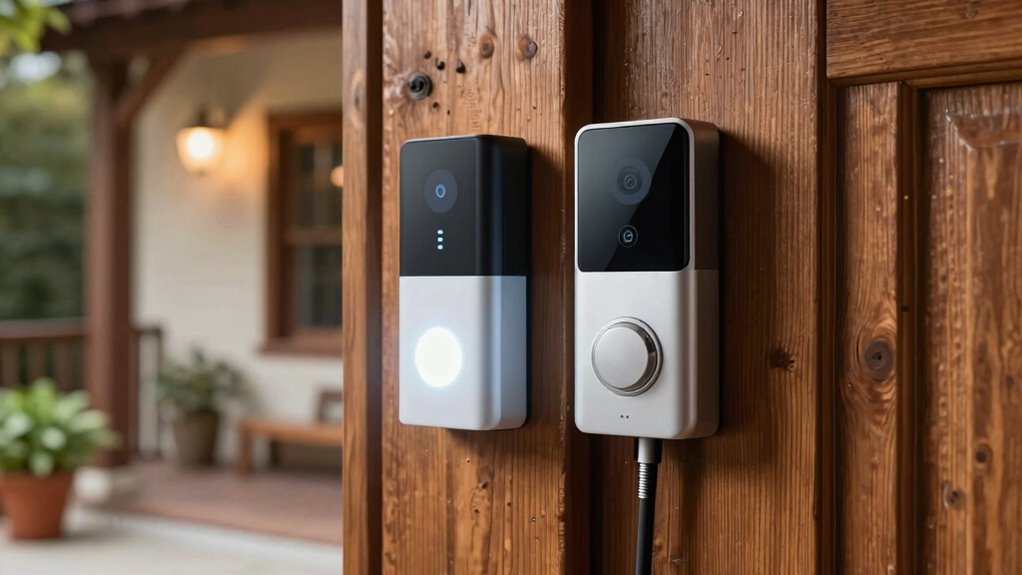
Choosing between battery and wired smart doorbells means balancing ease of installation, placement flexibility, and ongoing maintenance. Battery-powered models are easy to install and can go almost anywhere, but you’ll need to check or recharge batteries regularly. Wired options offer reliable power and consistent operation but require wiring, which can limit placement. Consider your home setup and priorities—if you’re curious about how to make the best choice for your home, you’ll find helpful insights ahead.

Get your wardrobe favorites delivered free with Prime
- Fast, free delivery on millions of items
- Prime Video, Amazon Music and more included
- Member-only deals all year
Key Takeaways
- Battery doorbells are easier to install and flexible in placement, while wired models require more complex wiring and fixed locations.
- Battery-powered doorbells offer portability but need regular battery maintenance, unlike wired options with continuous power.
- Wired doorbells provide consistent operation but limit placement options and are more difficult to install.
- Battery models are more adaptable to different home layouts, whereas wired ones depend on existing wiring infrastructure.
- Wired doorbells are generally more reliable over time, but vulnerable if wiring is damaged or disrupted.

Choosing between battery-powered and wired smart doorbells can considerably impact your home security setup. One of the first considerations is installation complexity. Battery-powered doorbells typically come as a DIY project. They’re designed to be simple to install, often requiring just a few minutes to mount and connect to your Wi-Fi. You usually don’t need to deal with complicated wiring or electrical work, making them ideal if you’re not comfortable with tools or if your home’s existing wiring isn’t easily accessible. On the other hand, wired smart doorbells involve more involved installation. You’ll need to connect the device directly to your existing doorbell wiring, which might require some electrical knowledge or professional help. This process can take longer and may involve drilling, wiring, and possibly troubleshooting electrical issues. The installation process can vary significantly between these options based on your home’s existing infrastructure. Additionally, installation versatility is a key factor to consider, as it influences how adaptable the doorbell is to different home layouts.
Battery-powered doorbells are easy to install and ideal for DIY setups, while wired options require electrical work and professional help.
Power source flexibility is another major factor. Battery-powered doorbells are truly wireless, offering you the freedom to place them anywhere within Wi-Fi range. You aren’t limited by your home’s wiring, so you can position them at ideal spots for visibility and security. Plus, with rechargeable batteries, you can often swap or recharge them without much hassle, ensuring continuous operation. Wired doorbells, however, depend on your home’s electrical wiring. This means they’re continuously powered, which can be a benefit for reliability, but it also limits placement options to where wiring is available. If you want a sleek, seamless look or need a doorbell in a difficult-to-wire spot, wired options might not be practical. It’s also worth noting that installation complexity can vary significantly between these options based on your home’s existing infrastructure.
It’s also worth considering maintenance and reliability. Battery-powered models require regular battery checks or recharges, which can be an inconvenience but also means you’re not reliant on your home’s electrical system. Wired models, conversely, tend to be more reliable since they’re powered constantly but can be vulnerable if wiring is damaged or disrupted. Additionally, power source flexibility plays a crucial role in determining your overall security setup. Both options have their pros and cons, so weigh them carefully based on your home’s layout, your technical comfort level, and your security needs.
As an affiliate, we earn on qualifying purchases.
Frequently Asked Questions
How Long Does the Battery Typically Last Before Needing a Replacement?
You can expect a battery lifespan of about 6 to 12 months before needing a replacement, depending on usage and the doorbell model. The replacement frequency varies based on how often visitors press the doorbell and the device’s energy efficiency. To extend battery life, consider adjusting motion detection settings or reducing notifications. Always keep a spare battery handy to guarantee continuous security and convenience.
Can Wired Doorbells Be Easily Upgraded to Smart Technology?
Yes, you can easily upgrade wired doorbells to smart technology. You’ll want to check wireless compatibility with your existing setup and explore power source options—most smart doorbells can connect to your existing wiring or run on batteries. Installing a smart doorbell usually involves replacing your current chime with a compatible model and connecting it to your Wi-Fi network. This upgrade is straightforward and enhances your home security effortlessly.
Are There Any Security Risks Associated With Wireless Doorbells?
Wireless doorbells can pose security risks, such as security vulnerabilities that hackers might exploit to access your camera feeds or recordings. Signal interference can also disrupt the connection, causing missed alerts or live feeds. To protect yourself, make certain you change default passwords, keep firmware updated, and use a strong, unique Wi-Fi password. Regularly monitor your device’s security settings to minimize these risks and maintain a secure smart doorbell system.
What Is the Typical Installation Time for Each Type?
Imagine the hum of tools as you install each doorbell—battery-powered units snap in quickly, often within 10-15 minutes, thanks to minimal wiring. Wired doorbells, however, weave through your walls, requiring more time—usually about an hour or two—due to installation complexity and connecting to a power source. Your choice impacts how fast you get your smart doorbell up and running, blending ease with technical effort.
Do Smart Doorbells Require a Stable Wi-Fi Connection?
Yes, smart doorbells require a stable Wi-Fi connection to function properly. Wireless interference from other devices can disrupt your connection, affecting video quality and notifications. If your Wi-Fi isn’t stable or experiences frequent drops, it can increase power consumption as the device repeatedly tries to reconnect. To guarantee reliable performance, keep your Wi-Fi signal strong, minimize interference, and consider a dedicated network or extender for your smart doorbell.
Conclusion
Choosing between battery and wired smart doorbells is like picking between a reliable friend and a free spirit. Battery doorbells offer flexibility and easy installation, but they need regular charging — like a pet that needs daily attention. Wired doorbells stay connected, providing constant power, but they tie you down with wires. Weigh your lifestyle and needs, and you’ll find the perfect fit. Either way, your door will be smarter and more secure, like a sentinel watching over your home.
Fall Picks
fall essentials
As an affiliate, we earn on qualifying purchases.