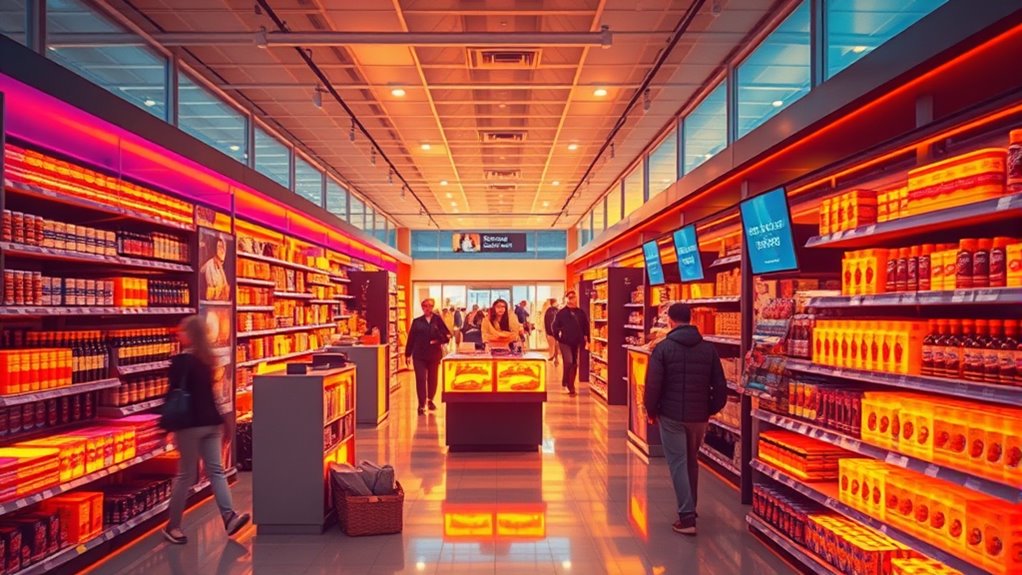

Heat-mapping sensors give you real-time insights into customer movement, showing where people spend the most time and which areas attract attention. This information helps you optimize store layout and product placement, boosting engagement and sales. You can identify high-traffic zones and adjust lighting, signage, or displays accordingly. By understanding customer flow, you make smarter space decisions. To find out how these strategies can transform your store, explore what else you can do.
Key Takeaways
- Sensors track customer movement to identify high-traffic zones and optimize product placement accordingly.
- Heat-mapping provides real-time insights for adjusting store layout and signage to enhance engagement.
- Data reveals underperforming areas, enabling targeted redesigns to improve traffic flow and sales.
- Insights guide strategic space utilization, such as stocking in popular zones and reducing low-traffic sections.
- Continuous monitoring allows quick testing of layout changes, ensuring an inviting shopping environment.
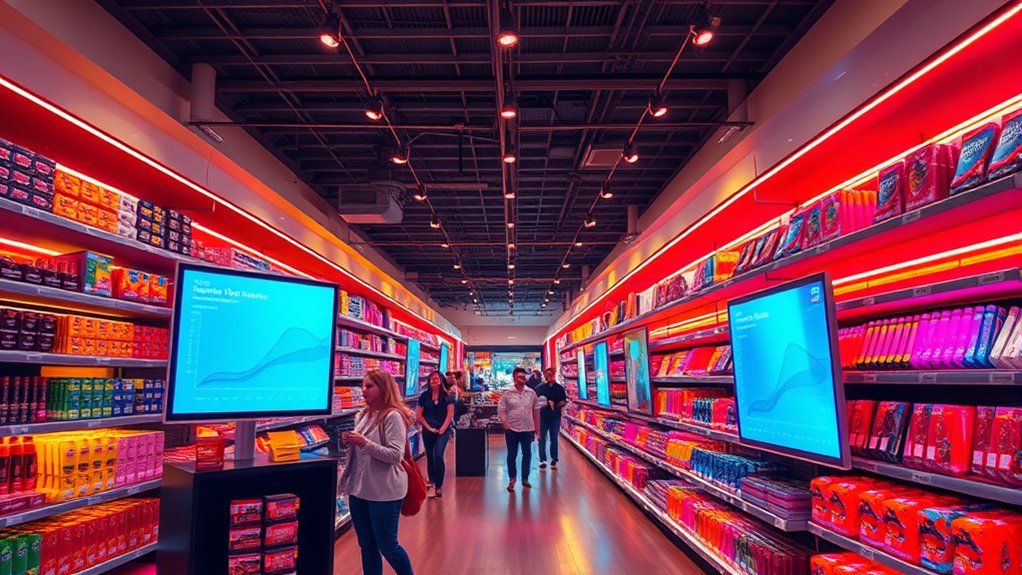
Have you ever wondered how retailers identify the most popular areas within their stores? The answer lies in heat-mapping technology, which uses sensors to track customer movement and behavior in real-time. These sensors generate detailed visualizations of foot traffic, highlighting where customers spend the most time and which sections attract the most attention. By analyzing this data, you can make smarter decisions about store layout, product placement, and overall customer engagement. Heat-mapping provides clear insights into how customers interact with your space, allowing you to optimize every square foot to enhance their shopping experience.
Heat-mapping reveals customer movement patterns to optimize store layout and boost sales.
When you utilize heat-mapping, you’re essentially tapping into customer engagement at a much deeper level. Instead of relying on guesswork or outdated intuition, you see precisely how customers move through your store, which displays catch their eye, and where they might get stuck or lose interest. This real-time feedback helps you identify high-traffic zones and underperforming areas. With this knowledge, you can rearrange your displays and signage to draw attention to specific products, increasing the chances of impulse buys or targeted marketing. This heightened customer engagement ultimately leads to increased sales and stronger brand loyalty because you’re actively creating an environment that resonates with shoppers.
Beyond improving customer engagement, heat-mapping plays a vital role in inventory management. Knowing where customers spend the most time helps you allocate your stock more effectively. For example, if a particular section consistently draws a crowd, you can ensure it’s well-stocked and replenished promptly, reducing the risk of empty shelves that might frustrate shoppers. Conversely, areas with low traffic might be adjusted or even phased out, saving you from overstocking less popular items. This data-driven approach not only minimizes waste but also helps you maximize profit by focusing your inventory on what customers actually want to see and buy. Incorporating space utilization strategies can further enhance your store’s efficiency and overall customer experience.
Additionally, understanding visualization of customer movement can help you optimize store lighting and signage, making the shopping environment more attractive and easier to navigate. Retailers can also leverage this data to identify popular product displays, which are effective in attracting customer attention and increasing sales. Moreover, heat-mapping allows you to test different store layouts quickly and efficiently. You can implement changes, monitor how customer movement shifts, and refine accordingly—all without costly, disruptive renovations. This agility helps you stay competitive and responsive to customer preferences. Over time, you develop a nuanced understanding of your store’s flow, enabling you to create a shopping environment that feels intuitive and inviting. In the end, heat-mapping sensors are more than just tools—they’re strategic assets that help you elevate your retail operation by blending data insights with a customer-centric approach.
Frequently Asked Questions
How Accurate Are Heat Maps Compared to Manual Observation?
You might wonder how accurate heat maps are compared to manual observation. Sensor accuracy varies depending on the technology used, but generally, heat maps provide consistent, real-time data that surpasses the limitations of observation comparison. Unlike manual methods, sensors reduce human error and offer all-encompassing insights into customer behavior patterns. This allows you to make informed decisions about store layout, optimizing space and enhancing the shopping experience effectively.
What Are the Privacy Considerations for Customers?
Think of customer privacy like a delicate vase—you want to handle it with care. When using sensors, you’re gathering data for layout optimization, but you must prioritize data security and respect customer privacy. Be transparent about data collection, anonymize personal information, and implement strong security measures. This way, you build trust, ensuring your customers feel safe while you optimize your store’s layout without crossing privacy lines.
How Much Does Implementing Heat-Mapping Technology Cost?
When you consider implementation costs for heat-mapping technology, the expenses mainly involve sensor deployment and setup. The overall costs vary depending on store size, sensor type, and integration complexity. You might spend a few thousand dollars for small stores, while larger retail spaces could require considerably more. Keep in mind, investing in this technology can improve customer flow and sales, often offsetting initial costs over time.
Can Heat Maps Predict Future Shopping Trends?
Did you know 70% of purchase decisions are made in-store? Heat maps can’t precisely predict future shopping trends, but they reveal current customer behavior patterns. By analyzing heat map data, you can identify seasonal trends and adjust your layout accordingly, influencing purchase behavior. This proactive approach helps you optimize product placement, improve customer experience, and stay ahead of changing shopping habits, ultimately boosting sales and loyalty.
How Do Heat Maps Integrate With Existing Store Management Systems?
You can integrate heat maps with your existing store management systems through sensor integration, which allows real-time data collection from customer movement. Data synchronization guarantees that the heat map updates instantly, providing accurate insights into shopper behavior. By linking sensors directly to your management system, you streamline operations, improve decision-making, and optimize your store layout effectively, making certain you respond swiftly to changing customer patterns.
Conclusion
As you analyze the heat maps, you start to realize what your sensors are revealing—hidden patterns, unexpected hotspots, and untapped potential. But the real breakthrough lies just beyond the data, waiting to be unlocked. Will you act on these insights and transform your store’s layout? The next move could redefine your customer experience—and your bottom line. Are you ready to uncover what truly drives your shoppers and seize the opportunity before it’s gone?