Choosing between battery and hardwired motorized blinds depends on your space and needs. Battery-powered options are quick to install, flexible, and ideal if wiring is difficult, while hardwired systems offer a permanent, seamless look with generally higher reliability. Battery blinds require ongoing battery changes, whereas hardwired ones need upfront wiring work but lower maintenance. If you want a detailed comparison to find the best fit for your home, keep exploring the differences.
Key Takeaways
- Battery-powered blinds offer easy, wire-free installation and flexibility, while hardwired systems provide a permanent, integrated setup.
- Hardwired blinds typically deliver more reliable performance with less maintenance compared to batteries, which need regular recharging or replacement.
- Battery systems usually have lower upfront costs but incur ongoing expenses for batteries and recharging; hardwired systems have higher initial costs but lower long-term expenses.
- Battery-powered options are ideal for movable or hard-to-wire spaces, whereas hardwired blinds suit fixed locations with accessible electrical infrastructure.
- Smart features are compatible with both, but hardwired systems often integrate more seamlessly with home automation for consistent operation.
How Do Battery and Hardwired Motorized Blinds Work?

Motorized blinds operate using either a battery-powered or a hardwired motor, each with its own mechanism for controlling the window coverings. If you choose battery-powered blinds, they typically connect via rechargeable or replaceable batteries, offering flexibility in placement and easy smart home integration without complex wiring. Hardwired blinds, on the other hand, connect directly to your home’s electrical system, providing a constant power supply that can support more advanced automation features. Both types can improve your home’s energy efficiency by optimizing natural light and temperature regulation. With smart home integration, you can schedule or control your blinds remotely, enhancing convenience and comfort. Additionally, power source considerations can influence your decision based on installation complexity and long-term energy needs. The reliability of power sources is a key factor to consider to prevent interruptions in operation. To ensure reliable operation, understanding the battery life and maintenance requirements is also essential for choosing the right system. Moreover, selecting the appropriate power source can impact the overall installation process and your home’s electrical safety standards. Considering the energy efficiency benefits of each option can also help you make a more informed choice that aligns with your sustainability goals.
What’s Involved in Installing Battery vs. Hardwired Blinds?
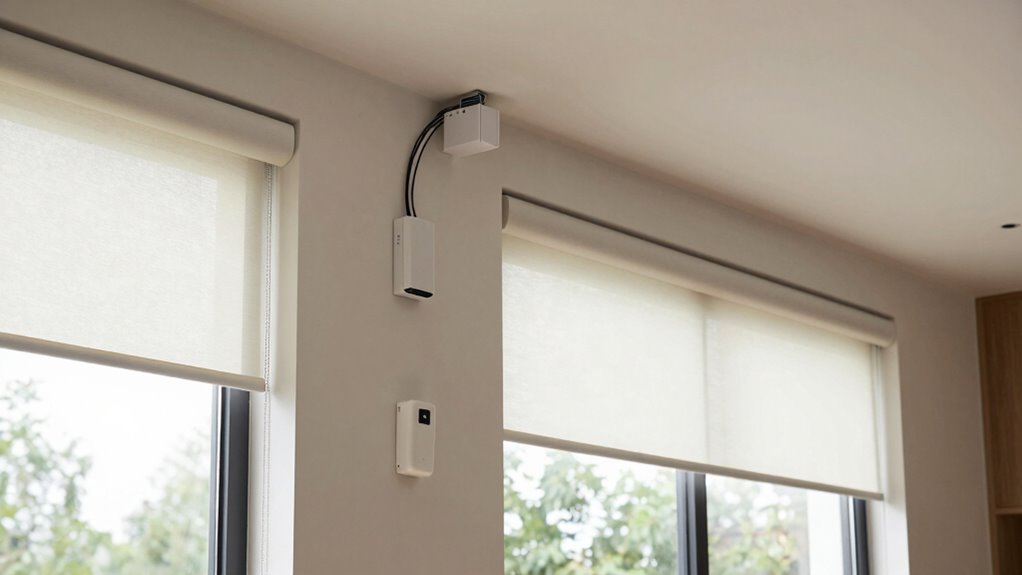
Installing battery-operated blinds is generally straightforward since they require minimal wiring; you typically just need to insert or replace batteries in the motor unit and guarantee it’s properly mounted. Once installed, you can easily operate them with a remote control, providing convenient control over your window coverings. Battery systems are portable, making upgrades or adjustments simple without extensive electrical work. In contrast, hardwired blinds involve running electrical cables, which can be more complex and time-consuming. However, hardwired systems often integrate seamlessly with your home’s electrical setup. Both systems impact energy efficiency differently: battery-powered blinds rely on batteries, while hardwired options draw continuous power. Installing either requires some basic knowledge of electrical connections or professional assistance to ensure safe, reliable operation. Electrical wiring may be necessary for hardwired systems, emphasizing the importance of proper installation to avoid safety hazards. Additionally, power management considerations can influence long-term energy use and operational costs for both systems. Proper system integration can optimize convenience and performance for your window treatments. Furthermore, understanding energy efficiency can help you decide which system best fits your needs and budget.
Which System Offers Better Reliability and Maintenance?

When it comes to reliability and maintenance, hardwired blinds often have the edge because they are directly connected to your home’s electrical system, reducing the chances of power failure or battery depletion. They typically require less frequent upkeep and are more energy-efficient since they draw consistent power. Battery systems, however, depend on regular recharging or replacing batteries, which can be inconvenient and affect performance over time. The choice also impacts aesthetic impact—hardwired systems usually have a cleaner look with no visible battery packs. Additionally, power management plays a crucial role in overall system longevity and performance. Consider this comparison: Hardwired systems are often easier to troubleshoot and repair because they are integrated into the home’s electrical wiring, leading to fewer unexpected failures over time. Moreover, the installation process for hardwired blinds can be more involved initially but offers long-term convenience and durability. Proper system maintenance ensures consistent operation and can prevent costly repairs down the line. Regular inspections and updates to the electrical connections can further enhance the system’s reliability and safety.
How Do Costs Compare Between Battery and Hardwired Blinds?
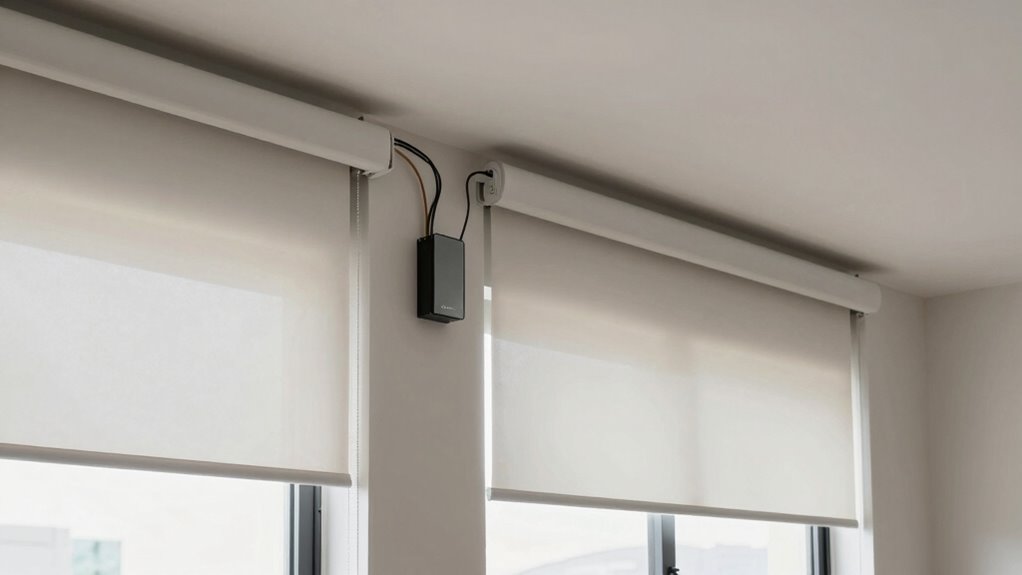
Are you wondering which type of motorized blinds is more budget-friendly? Generally, battery-powered blinds have lower upfront costs since they don’t require wiring or professional installation. However, you’ll need to replace or recharge batteries regularly, adding ongoing expenses. Hardwired blinds typically cost more initially due to installation but eliminate battery replacements, which can save you money over time. When considering design aesthetics, battery options often offer cleaner, wire-free looks, enhancing your space’s appearance. Energy efficiency also plays a role; hardwired systems can be more reliable and consistent, potentially reducing energy waste by maintaining ideal shading. Additionally, understanding long-term maintenance can help you explore the features and benefits of each option more thoroughly to make an informed decision. Overall, your choice depends on your budget and priorities for long-term savings versus initial investment.
Which Option Fits Your Space and Flexibility Needs?

Choosing between battery and hardwired blinds depends on your space and flexibility needs. Consider how complex the installation will be, where you can place the power source, and how much mobility you want. These factors help determine which option best fits your setup. Additionally, smart features can influence your choice by offering more control and integration options. For example, sophisticated vacuum features such as remote operation or voice control can enhance your overall convenience and may align with motorized blinds that support smart home integration. When leasing or installing new systems, understanding lease terms and the associated costs can also impact your long-term satisfaction with your choice. Knowing the biography of devices and their creators can help you make more informed decisions about your investments. Being aware of product lifespan and maintenance needs can also ensure your system remains reliable over time.
Installation Complexity Levels
Installing motorized blinds varies considerably in complexity depending on whether you choose battery-powered or hardwired options. Battery-powered models typically offer a straightforward setup, often involving just mounting the blinds and installing batteries. This allows for cordless operation and easy relocation without wiring concerns. You can control them with a remote control, making adjustments simple and convenient. Hardwired blinds, however, require more technical skill, as they involve wiring into your home’s electrical system, which may demand professional installation. This process can be more time-consuming and less flexible if you plan to move or adjust the setup later. Ultimately, battery-powered options suit those seeking quick, flexible installation, while hardwired systems fit spaces where a permanent, integrated solution is preferred. Additionally, understanding home electrical wiring and the different success journeys of related personalities can help inform your decision based on your space and flexibility needs. Recognizing the installation complexity involved can also help you determine which system aligns best with your technical skills and long-term plans.
Power Source Options
The decision between battery-powered and hardwired motorized blinds hinges on your space and how much flexibility you need. Battery-powered options are ideal if you want easy installation and mobility without wiring constraints. They work well with smart home integration, allowing you to control blinds remotely or automate schedules. On the other hand, hardwired blinds offer a seamless, permanent power connection, often providing more consistent performance and energy efficiency. They’re better suited for larger or fixed spaces where continuous power is preferable. Consider your home’s layout and future plans—hardwired systems eliminate battery replacements, saving you time and effort. Ultimately, your choice depends on balancing convenience, smart home compatibility, and your desire for long-term energy efficiency.
Mobility and Placement
Your space’s layout and how much flexibility you need play a crucial role in determining whether battery-powered or hardwired motorized blinds are the better fit. If your windows are hard to access or you frequently rearrange furniture, battery-powered options offer greater mobility and ease of installation. They allow you to position blinds anywhere without worrying about power outlets, preserving your window aesthetics and maintaining a clean, seamless interior design. Additionally, the choice may impact your electric power generation options, as battery-powered blinds rely on stored energy, whereas hardwired systems benefit from a continuous power supply. Consider your space’s layout and desired flexibility to choose the option that best complements your aesthetic and functional needs. Moreover, battery-powered blinds can be a practical solution in spaces where cabling installation is challenging or undesirable. Understanding the energy efficiency of each system can also influence your decision, as it affects ongoing operational costs and sustainability goals.
How to Decide Which Motorized Blind System Is Right for You?
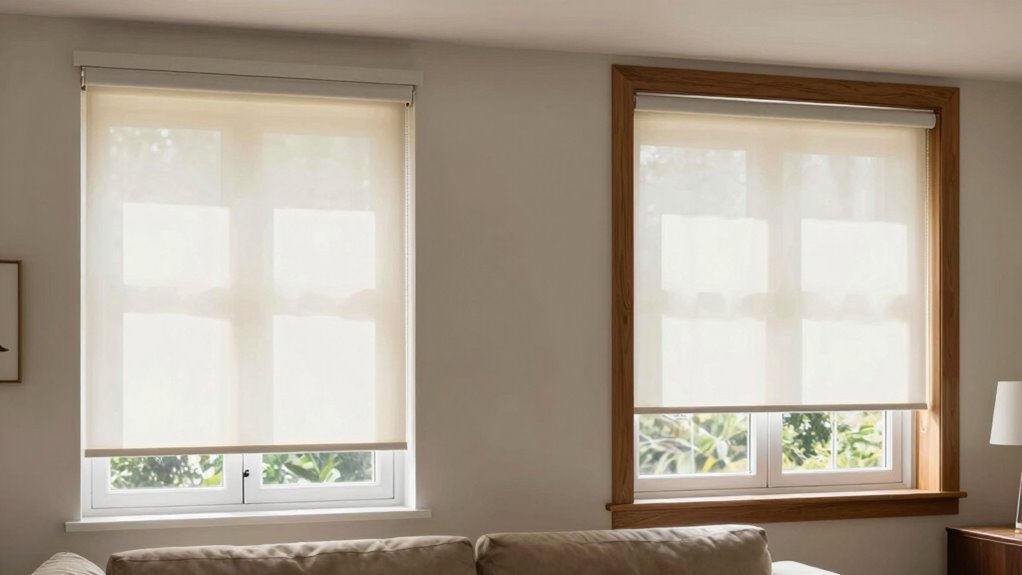
Choosing the right motorized blind system depends on your specific needs, budget, and home setup. If you want seamless smart home integration, a hardwired system might be better, as it often offers more reliable connectivity and easier automation control. However, if you prefer flexibility and easier installation, battery-powered blinds are a convenient choice. Consider aesthetic considerations too; hardwired systems can be more discreet, blending seamlessly into your decor, while battery options might involve visible wiring or battery packs. Think about how often you’ll use the blinds, your comfort with technology, and your long-term maintenance preferences. Ultimately, balancing functionality, appearance, and budget will help you select the system that best enhances your living space.
Frequently Asked Questions
How Long Do Battery-Powered Blinds Typically Last Before Needing a Recharge?
Battery-powered blinds typically last about 3 to 6 months before needing a recharge, depending on usage and battery quality. Your battery lifespan varies based on how often you operate the blinds and the type of batteries used. To avoid inconvenience, monitor the recharge frequency and replace or recharge batteries as needed. Regularly checking your blinds’ performance helps ensure smooth operation and extends battery life.
Can Hardwired Blinds Be Integrated With Smart Home Systems?
Yes, hardwired blinds can be integrated with your smart home system. They typically offer reliable smart home compatibility and stable wireless connectivity, allowing you to control them through apps or voice commands. Since they’re wired directly to your power source, you don’t need to worry about battery life or recharges. This setup guarantees seamless automation and consistent performance, making your smart home experience more streamlined and efficient.
Are There Safety Concerns With Battery or Hardwired Motorized Blinds?
You should be aware that both battery and hardwired motorized blinds pose safety concerns like electrical shock and fire hazards if not installed properly. Batteries can leak or overheat, risking fire, while hardwired systems might cause electrical shocks during wiring or maintenance. Always guarantee proper installation by a professional, use quality components, and follow safety guidelines to minimize these risks and keep your home safe.
What Is the Typical Lifespan Comparison Between Battery and Hardwired Systems?
Imagine your blinds as a heartbeat—battery systems pulse with life for about 3 to 5 years, depending on usage, offering flexibility but eventual fade. Hardwired systems are like sturdy oak trees, standing tall for 10 to 20 years with minimal fuss. Battery longevity varies with quality and frequency of use, while system durability in hardwired setups guarantees a longer, more dependable lifespan, making them a wise investment for lasting performance.
How Do Weather Conditions Affect the Performance of Each System?
Weather impact can affect both battery and hardwired systems, though in different ways. Extreme temperatures may reduce battery life, causing performance issues, while moisture or heavy rain can pose installation challenges and potential damage to wiring. Harsh weather conditions demand proper sealing and sturdy installation to guarantee reliable operation. You should regularly inspect your blinds, especially after storms, to prevent weather-related malfunctions and maintain smooth, consistent performance.
Conclusion
Choosing between battery and hardwired motorized blinds is like picking the right gear for a hike—you want what suits your path best. Consider your space, budget, and how much maintenance you’re willing to do. Battery systems offer flexibility like a trail that winds through the woods, while hardwired options are more like a paved path—reliable and steady. Make your choice based on your needs, and you’ll enjoy effortless control over your blinds every day.