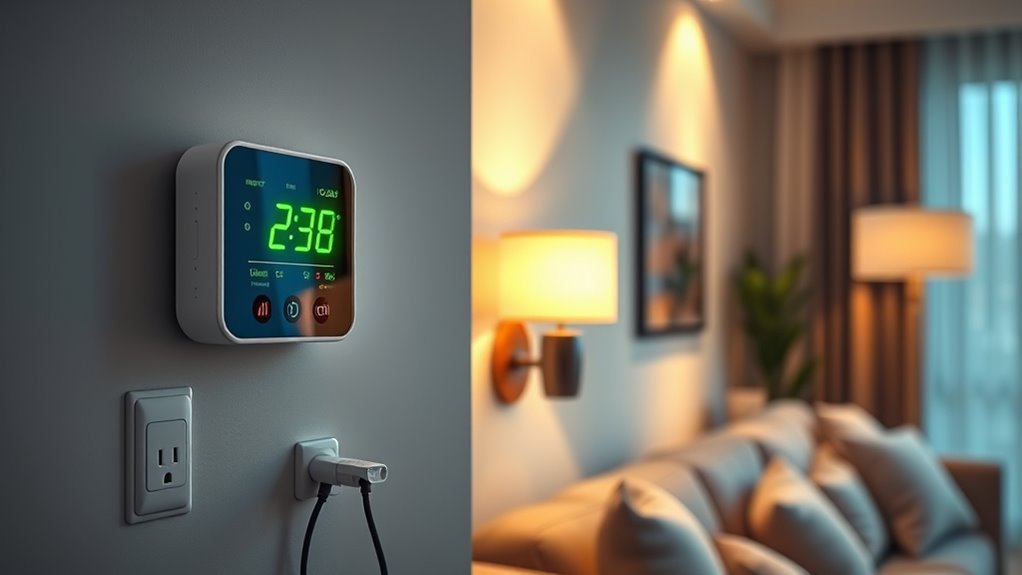

Energy monitoring with smart meters lets you see your real-time energy use and spot wasteful habits. By tracking your consumption, you can identify which appliances use the most power and adjust your habits accordingly. You can also schedule high-energy tasks during cheaper, off-peak times. Smart meters make it easy to cut your energy bills and reduce your environmental impact. Keep exploring how you can optimize your usage for even greater savings and sustainability.
Key Takeaways
- Smart meters provide real-time energy data to identify high usage periods and appliances.
- Analyze detailed consumption patterns to target and reduce waste effectively.
- Schedule energy-intensive tasks during off-peak hours to lower costs and save energy.
- Receive remote alerts for unusual consumption, enabling quick action to cut unnecessary usage.
- Utilize insights to upgrade appliances and improve home insulation for long-term savings.

Have you ever wondered how much energy your home or business consumes daily? It’s a question that many overlook, but understanding your energy use is the first step toward saving money and reducing your carbon footprint. One of the most effective tools for this is a smart meter. Unlike traditional meters that require manual readings, smart meters provide real-time data directly to your device or utility provider. This instant feedback helps you identify when your energy consumption spikes and which appliances or systems are responsible. With this knowledge, you can make smarter decisions about usage, such as turning off unnecessary devices or scheduling energy-intensive tasks during off-peak hours.
Smart meters also play a pivotal role in renewable integration. As more homes and businesses adopt renewable energy sources like solar panels or small wind turbines, smart meters help track not only your consumption but also your energy production. This two-way data flow allows you to see when you’re generating excess energy and how much you’re drawing from the grid. By monitoring this balance, you can optimize your renewable assets, ensuring you use as much of your generated power as possible and sell surplus energy back to the grid when conditions are favorable. This integration makes renewable energy more practical and cost-effective, encouraging more widespread adoption.
Smart meters enable two-way data flow, optimizing renewable energy use and promoting cost-effective, sustainable power generation.
Moreover, with smart meters, you gain detailed insights into your energy patterns over time. Instead of relying on monthly bills, you see daily or even hourly trends. This granular data reveals hidden wastage—like standing-by power drain or inefficient appliances—that adds up over time. Armed with this information, you can implement targeted strategies to cut down on unnecessary consumption. For instance, you might replace outdated devices, improve insulation, or adjust your usage schedule to match off-peak rates, all of which contribute to lower bills and a smaller environmental impact.
Additionally, smart meters facilitate better communication with your utility provider. They enable remote diagnostics and quicker outage detection, reducing downtime and service disruptions. Many utilities also offer online portals or mobile apps where you can monitor your energy use in real time, set goals, and receive tips for further savings. This ongoing feedback loop keeps you engaged and motivated to continue refining your energy habits. Furthermore, Etsy shops that focus on energy-efficient products can provide accessories or tools to help you implement energy-saving strategies at home or in your business.
Frequently Asked Questions
How Often Should I Check My Energy Monitor Readings?
You should check your energy monitor readings at least weekly to guarantee monitoring frequency remains accurate. Regular checks help you spot any discrepancies that might affect reading accuracy. If you notice unusual spikes or drops, consider more frequent monitoring, like daily, until you identify the cause. Consistent tracking allows you to better understand your energy habits and make informed decisions to cut usage effectively.
Can Energy Monitoring Help Reduce My Utility Bills Significantly?
Yes, energy monitoring can help you cut your utility bills markedly. Imagine discovering hidden energy drains and optimizing your smart home integration for maximum efficiency. By tracking your usage, you reveal renewable energy savings and make smarter choices that add up over time. The more you monitor, the more you save—turning your home into an energy-smart powerhouse. Don’t wait; your savings are just a read away.
Are There Any Safety Risks Using Energy Monitoring Devices?
Using energy monitoring devices is generally safe if you follow proper electrical safety guidelines. Make sure the device is compatible with your electrical system to prevent any malfunctions or hazards. Avoid tampering with wiring or installing devices yourself unless you’re qualified. Always read the manufacturer’s instructions, and consider consulting a professional if you’re unsure about compatibility or safety measures. This way, you can enjoy benefits without risking electrical safety.
What Features Should I Look for in an Energy Monitor?
Did you know that smart homes can reduce energy bills by up to 30%? When choosing an energy monitor, look for features like smart home integration, which allows seamless control, and real-time alerts, so you’re immediately notified of unusual energy spikes. These features help you stay proactive, optimize usage, and save money while maintaining safety and convenience in your home.
How Can I Interpret Complex Energy Consumption Data Effectively?
To interpret complex energy consumption data effectively, focus on visualization techniques like graphs and charts that make patterns clear. Prioritize data accuracy to guarantee reliable insights. Break down the data into manageable segments, compare usage over different periods, and identify peaks and anomalies. Use these visual cues and precise data to make informed decisions about reducing energy waste and optimizing your consumption habits.
Conclusion
By keeping a close eye on your energy use, you’re harnessing the power to cut costs and reduce your carbon footprint. Think of energy monitoring as a lighthouse guiding you away from waste and toward efficiency. When you actively track your consumption, you illuminate your path to smarter habits and savings. So, don’t wait—take control now, and let your energy habits shine as brightly as a beacon for a sustainable future.