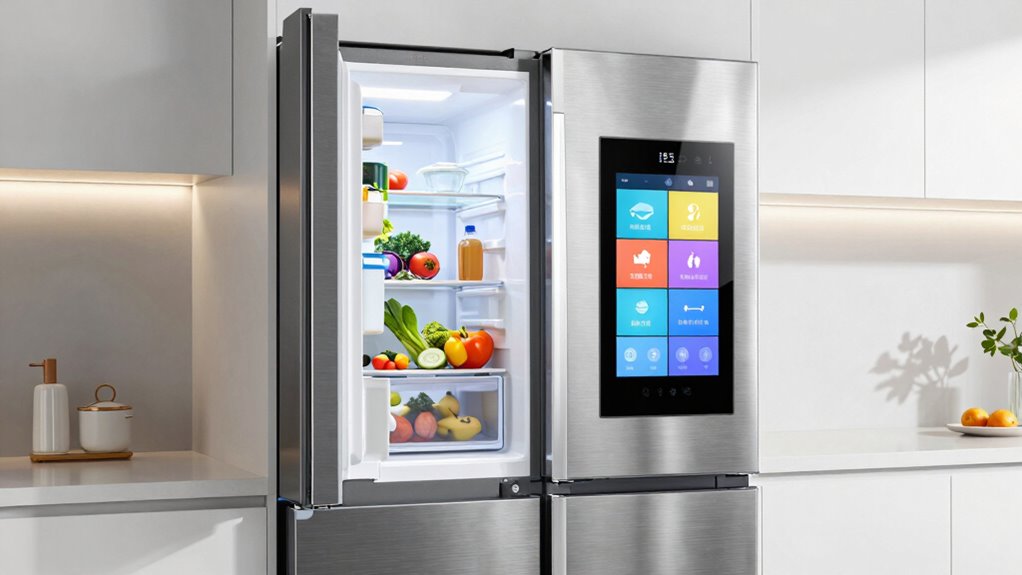

Smart refrigerators can streamline your life with features like energy-saving cooling, voice control, and touchscreens, but not all are equally useful. Energy-efficient models save money only if you enable and use their functions properly. Voice controls are handy but depend on good Wi-Fi and accurate commands. Smart features like remote access are convenient, yet they bring security concerns and potential failures. To find out which features truly add value versus those just marketing hype, keep exploring what each offers.

Get your wardrobe favorites delivered free with Prime
- Fast, free delivery on millions of items
- Prime Video, Amazon Music and more included
- Member-only deals all year
Key Takeaways
- Energy efficiency features can save money but depend on proper use and user engagement.
- Voice control offers convenience but may be unreliable due to connectivity and system accuracy.
- Smart features like recipe browsing and remote lists add value if interfaces are responsive and reliable.
- Increased connectivity raises security and privacy concerns, which vary by manufacturer.
- Additional costs for smart features are justified only if they provide significant, practical benefits.

Smart refrigerators have become a popular upgrade in many kitchens, promising convenience and high-tech features that can transform your everyday routine. But before you get caught up in the hype, it’s important to understand which features genuinely add value and which are more about flashy marketing. One of the most touted benefits is energy efficiency. Modern smart refrigerators are designed to optimize cooling cycles, monitor door openings, and adjust temperatures automatically. These features can help reduce energy consumption compared to traditional models, saving you money on electricity bills over time. However, the actual savings depend on how you use your fridge and whether these energy-saving features are enabled and functioning properly. If you’re already mindful of energy use, these high-tech functions might not make a significant difference.
Smart fridges offer energy-saving features, but real benefits depend on proper use and functionality.
Another feature that’s gaining popularity is voice control. With voice assistants like Alexa or Google Assistant integrated into your smart fridge, you can ask for a shopping list, check what’s inside, or even reorder groceries. This can be incredibly convenient, especially when your hands are full or you’re in a hurry. But the real question is whether this feature simplifies your life enough to justify its cost and potential privacy concerns. Voice control can be helpful for quick updates, but it’s not always perfectly accurate. You might find yourself repeating commands or needing to double-check what the system understood. Plus, if your smart home ecosystem isn’t already set up, integrating the fridge’s voice functions can feel more like a hassle than a convenience. Additionally, the reliance on internet connectivity makes these features vulnerable to network disruptions. It’s also worth noting that some models include software updates to improve functionality, but these require regular internet access to be effective.
Beyond these features, it’s essential to contemplate whether the smart fridge’s connectivity adds real value or just creates potential points of failure. For example, some models offer touchscreen interfaces that let you browse recipes or leave notes, but these can sometimes be slow or unresponsive. The ability to sync with your smartphone or create grocery lists remotely sounds appealing, but it depends on the app’s reliability and your internet connection. If your Wi-Fi goes down, you might lose access to many of these “smart” features altogether. Moreover, the increasing connectivity of household appliances raises concerns about data privacy and security, which are important to consider before making a purchase. Interestingly, some manufacturers are now implementing security features to protect user data, but the effectiveness of these measures varies. Additionally, the cost of these smart features can be a significant factor in your decision-making process.
Ultimately, while energy efficiency and voice control are features worth pondering, they shouldn’t be the sole reasons to buy a smart refrigerator. Focus on how these features can genuinely enhance your routine and whether they’re worth the additional cost. Some innovations are genuinely useful, but others are just hype designed to make the fridge seem more cutting-edge than it actually is.
smart refrigerator with energy-saving features
As an affiliate, we earn on qualifying purchases.
As an affiliate, we earn on qualifying purchases.
Frequently Asked Questions
How Much Do Smart Refrigerators Typically Cost Compared to Traditional Models?
Smart refrigerators typically cost between $2,000 and $4,000, making them pricier than traditional models, which usually range from $1,000 to $2,500. Smart pricing reflects added features like touchscreens and Wi-Fi connectivity. While the feature affordability varies, you often pay extra for these smart capabilities. Consider whether the convenience and tech benefits justify the higher cost for your needs before making a purchase.
Are Smart Refrigerators Compatible With All Smart Home Systems?
Like a puzzle piece fitting perfectly, smart refrigerators mostly integrate with popular smart home systems like Alexa or Google Assistant, but not all models are compatible. You might need to check specific product details for smart home integration. Keep privacy concerns in mind, as some features could collect data. If seamless compatibility matters to you, choose models explicitly designed for your existing smart home ecosystem.
What Security Risks Are Associated With Smart Refrigerator Connectivity?
Connecting your smart refrigerator can expose you to cybersecurity vulnerabilities, such as hacking or unauthorized access. These devices often collect personal data, raising concerns about data privacy. If not properly secured, hackers could manipulate settings or access sensitive information. To protect yourself, make sure your refrigerator’s firmware is updated regularly, use strong, unique passwords, and enable security features like two-factor authentication whenever possible.
How Energy-Efficient Are Smart Refrigerators?
Smart refrigerators are incredibly energy-efficient, saving you more power than a tornado sweeping through a city. Thanks to advanced sensors and Wi-Fi connectivity, their energy consumption is optimized, making them more power-efficient than traditional models. They adjust cooling based on usage, reducing waste and lowering electricity bills. Overall, you get a smarter appliance that helps you save energy without sacrificing performance, making it a wise investment for eco-conscious households.
Do Smart Refrigerators Require Special Maintenance or Updates?
Smart refrigerators do require some maintenance, mainly in the form of firmware updates. These updates help improve functionality and security, so it’s crucial to keep your appliance connected to the internet and check for updates regularly. Aside from that, maintenance requirements are similar to traditional refrigerators—cleaning coils and checking seals—but staying current with firmware updates ensures your smart fridge operates smoothly and efficiently over time.
Conclusion
Smart refrigerators can truly enhance your kitchen experience, but not all features are worth the hype. For instance, over 70% of users find that inventory management helps reduce food waste considerably. By focusing on the practical features that streamline your routine, you get real value without falling for flashy gimmicks. Ultimately, choosing the right smart fridge means balancing innovative tech with your everyday needs, ensuring your investment genuinely improves your home life.
Halloween Picks
halloween
As an affiliate, we earn on qualifying purchases.