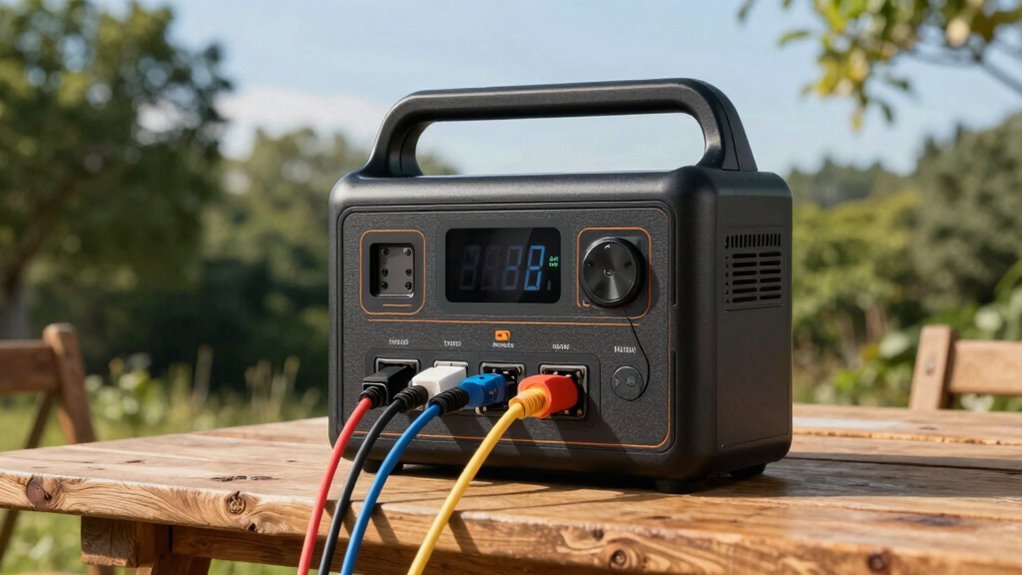

Understanding watt-hours and watts helps you choose the right portable power station. Watt-hours tell you how much total energy the station can store, meaning longer usage between charges. Watts show how much power it can deliver instantly, affecting how fast your devices charge or run. Prioritizing watt-hours extends run time, while watts ensure your devices get enough power. To make the best choice, learn how each measurement influences your specific needs—if you keep exploring, you’ll get the full picture.
Key Takeaways
- Watt-hours measure the total energy capacity, indicating how long a power station can run devices over time.
- Watts reflect the instantaneous power output, showing how much power a station can deliver at any moment.
- Higher watt-hours mean longer device usage, while higher watts enable faster charging or powering high-demand devices.
- Combining both metrics helps determine if a power station suits your energy needs and device compatibility.
- Understanding the difference prevents mismatched expectations and ensures efficient, reliable power management.
What Are Watt-Hours and Why Do They Matter in Power Stations?
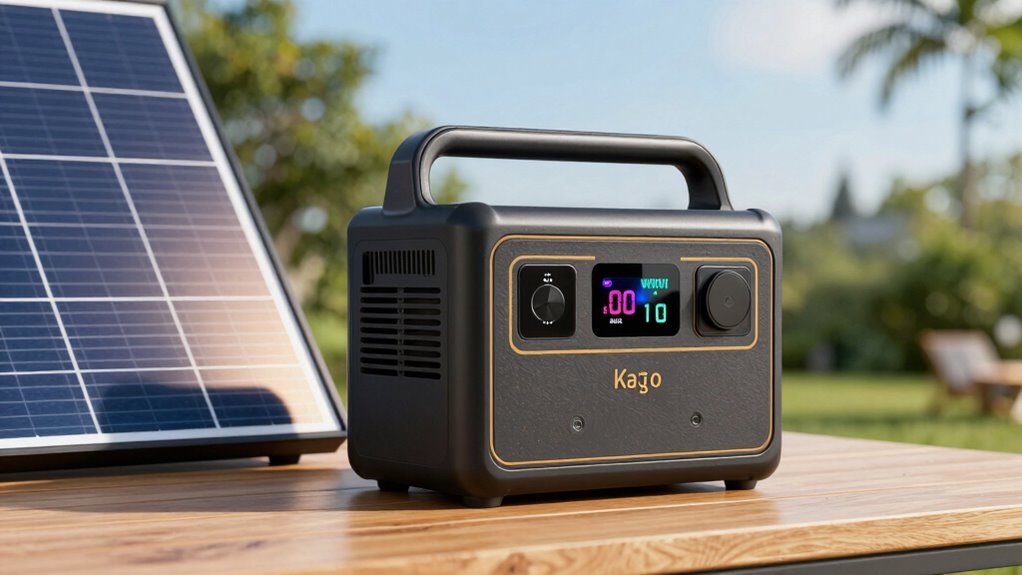
Have you ever wondered what watt-hours really mean when it comes to power stations? Watt-hours measure the total energy a portable power station can store and deliver over time. It combines battery chemistry, which determines how much energy the batteries can hold, with inverter efficiency, affecting how much power actually reaches your devices. A higher watt-hour rating means you can run your gadgets longer before needing a recharge. Understanding watt-hours helps you gauge a station’s capacity more accurately than just looking at watts. It’s especially useful when comparing models, as it reveals real-world usability. By considering battery chemistry and inverter efficiency, you get a clearer picture of how much energy your power station can supply, making it easier to choose the right one for your needs. Recognizing energy capacity is essential for optimizing your portable power solutions and ensuring reliable performance.
How Do Watts Show Power Output and Usage?

Watt-hours tell you how much energy a power station can store, but understanding how that energy translates to actual power output requires looking at watts. Watts measure the rate at which power is used or produced, showing you how much energy a device or station supplies at any moment. For example, a portable power station with a 100-watt output can run a device consuming 100 watts continuously. If you’re using solar panels, watts indicate how quickly they can generate power under sunlight. Additionally, watts are essential for grid integration, helping you match power supply with demand. Monitoring watt output ensures efficient use of your power station, whether charging batteries, running appliances, or connecting to solar panels. It’s the key to understanding real-time power usage and capacity. Understanding power ratings helps you better evaluate how long your devices can run and how efficiently your power station operates, especially when considering power output consistency over time.
Furthermore, knowing the power output stability can assist in planning for uninterrupted energy supply during critical moments.
Watt-Hours vs. Watts: What’s the Difference?
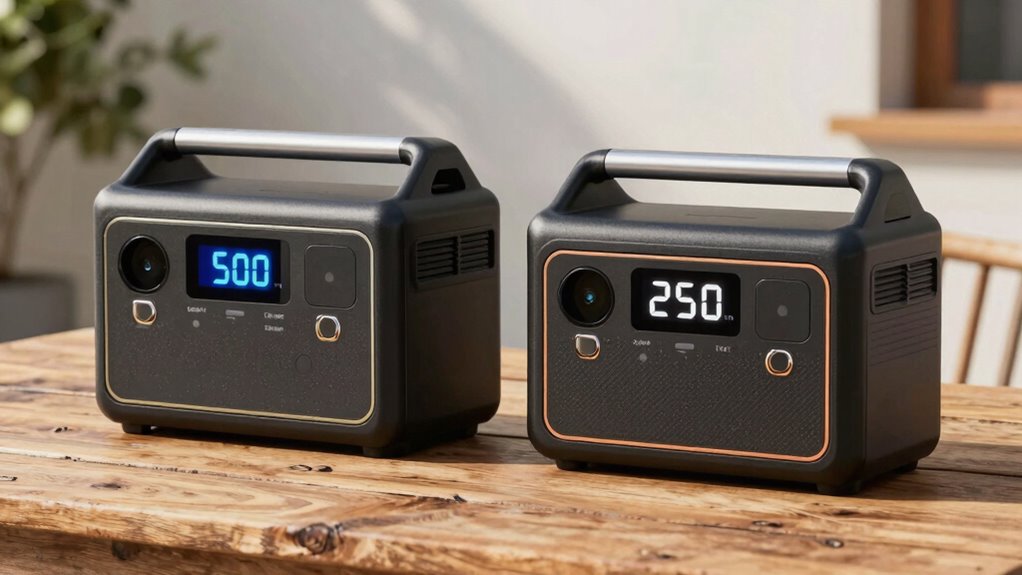
Ever wonder how to tell the difference between watt-hours and watts when choosing a portable power station? Watts measure the power output at any moment, showing how much energy the device can deliver instantly. Watt-hours, on the other hand, indicate the total energy capacity stored in the battery, reflecting how long it can supply power. Understanding this helps you assess energy density—how much energy fits into a compact size—and charging efficiency, which affects how quickly the battery refills. A higher watt-hour rating means longer usage, while a higher watt rating indicates greater immediate power. Knowing the difference guarantees you pick a power station that balances energy capacity and power output, matching your specific needs. This clarity helps you avoid surprises during use and maximizes your device’s performance. Additionally, understanding the safety considerations associated with portable power stations ensures reliable and secure operation. Being aware of battery management techniques can also prolong the lifespan of your device and enhance safety.
How Watt-Hours Affect Battery Life and Usage
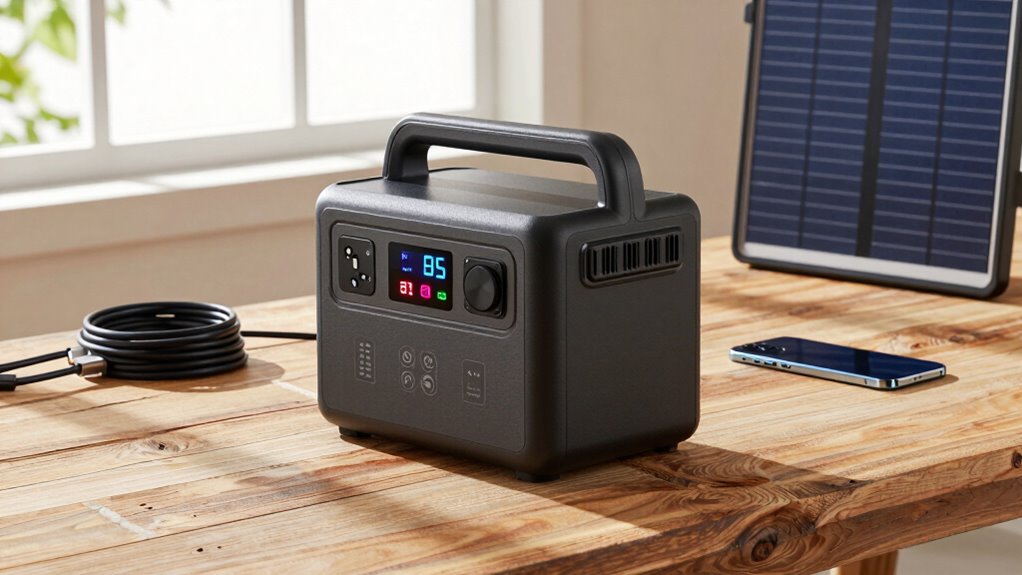
The size of a portable power station’s watt-hour rating directly influences how long it can power your devices. A higher watt-hour means more stored energy, allowing you to run devices longer. To maximize battery efficiency and energy management, keep these points in mind: Larger watt-hour ratings provide extended usage but can be heavier and less portable. Proper energy management involves knowing your device’s power needs and avoiding unnecessary drain. Efficient use of power features, like low-power modes, helps conserve energy, extending runtime. Additionally, understanding power consumption can help you select the right station for your needs and optimize its battery performance. Being aware of energy efficiency principles ensures you get the most out of your portable power station in various situations. For example, selecting a station with features that match your typical usage patterns can significantly improve overall efficiency. Keeping track of energy management techniques can further enhance your device’s longevity and operational effectiveness.
What Watts Tell You About Power Delivery and Charging Speed
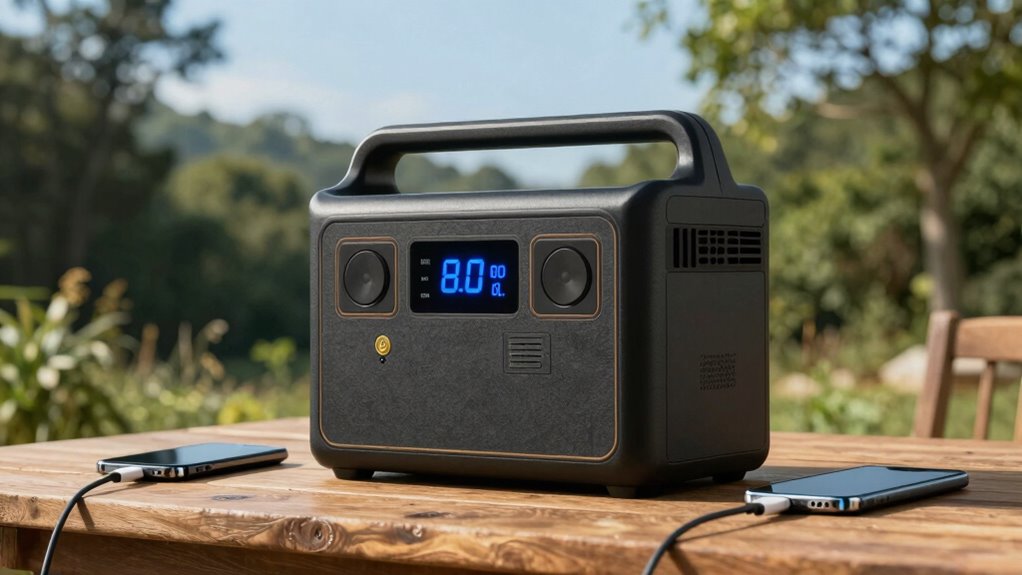
Understanding what watts mean can help you gauge how quickly your portable power station can deliver energy and charge your devices. Higher watt output means faster charging, especially when powering devices with high energy demands. For example, a solar panel with a higher watt rating can recharge your station faster, while inverter efficiency impacts how much power reaches your devices. Here’s a simple visualization:
| Power Aspect | Impact |
|---|---|
| Solar panel wattage | Faster recharging of the power station |
| Device charging rate | Quicker device charging |
| Inverter efficiency | Less energy loss, more effective power |
| Total watt output | Determines overall power delivery speed |
With higher watt ratings, your station can handle demanding devices and rapid recharges more effectively. Enhancing your understanding of power management strategies can help you optimize your station’s performance and longevity. Additionally, considering ventilation considerations is essential for maintaining safe and efficient operation of your portable power system.
Which Should You Prioritize: Watt-Hours or Watts?
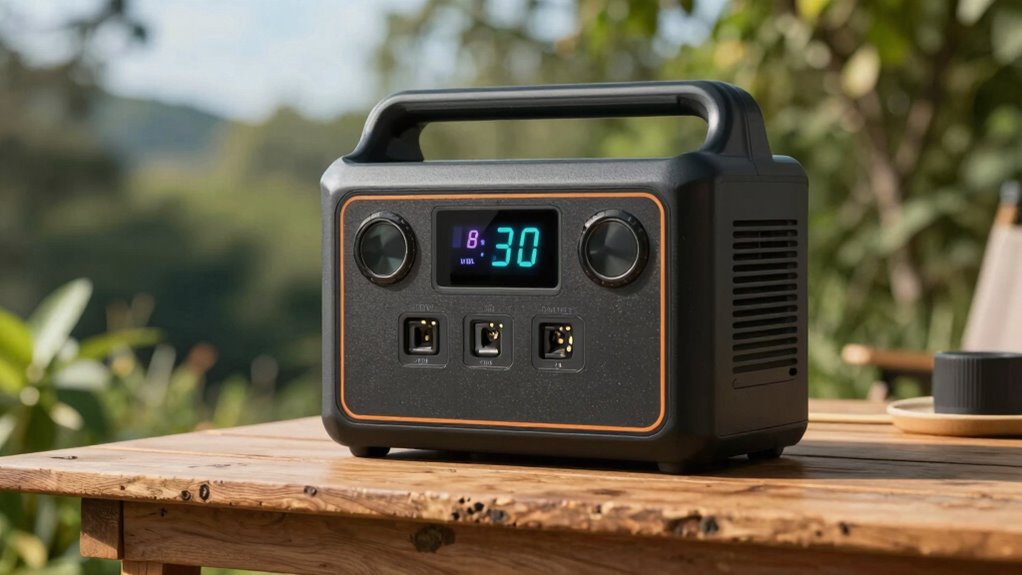
To select the appropriate portable power station, you need to take into account your power needs and how long you’ll use it. Higher watt-hours mean longer usage, but the watt output affects charging speed and device compatibility. Balancing these factors ensures you pick a station that meets both your device requirements and usage habits. Additionally, understanding the concept of Free Floating can help you optimize your setup for maximum efficiency and safety. Recognizing power capacity can also assist in matching your devices to the right station, preventing overloads and ensuring reliable performance. Considering power management strategies can further enhance the longevity and functionality of your portable station.
Power Needs Assessment
When evaluating your power needs, deciding whether to prioritize watt-hours or watts depends on your specific usage. To determine what’s best, consider:
- If you need to run devices for extended periods, focus on watt-hours, which measure total energy capacity.
- For short bursts of high power, prioritize watts to handle peak demands, especially for appliances with high startup wattage.
- Remember, solar panels contribute to recharging your station, so assess your solar panel’s size and inverter efficiency to optimize energy conversion and storage.
Usage Duration Impact
Deciding whether to prioritize watt-hours or watts hinges on how long you plan to run your devices. If your priority is longer usage time, watt-hours matter because they indicate total energy capacity, helping you estimate how long your power station will last. However, focusing on watts is useful if you need high power output for short bursts, like starting a motor or powering a device that demands quick bursts of energy. Keep in mind that higher watt-hour capacities can impact battery lifespan and charging cycles. Using a station with a larger capacity may mean fewer charging cycles over its lifetime, prolonging its usefulness. So, if longevity and frequent use are your goals, watt-hours should be your focus; for quick, high-power needs, prioritize watts. Additionally, understanding the difference between energy capacity and power output can help you choose the best station for your specific needs.
Device Compatibility Factors
Choosing whether to prioritize watt-hours or watts depends largely on the devices you plan to use with your power station. First, consider solar compatibility; if you want to recharge via solar panels, focus on watt-hours to ensure longer use between charges. Second, evaluate device charging speed; higher watt ratings mean faster charging for high-power gadgets like laptops. Third, check the power station’s output options to match your devices’ requirements. If you mainly run low-power items, watt-hours help you gauge overall capacity. For high-demand equipment, watts determine whether the station can handle the startup surge or continuous power needs. Balancing these factors guarantees you select a power station that’s compatible, efficient, and ready for your specific device lineup.
Compare Power Stations: Real-World Examples Using Watt-Hours and Watts
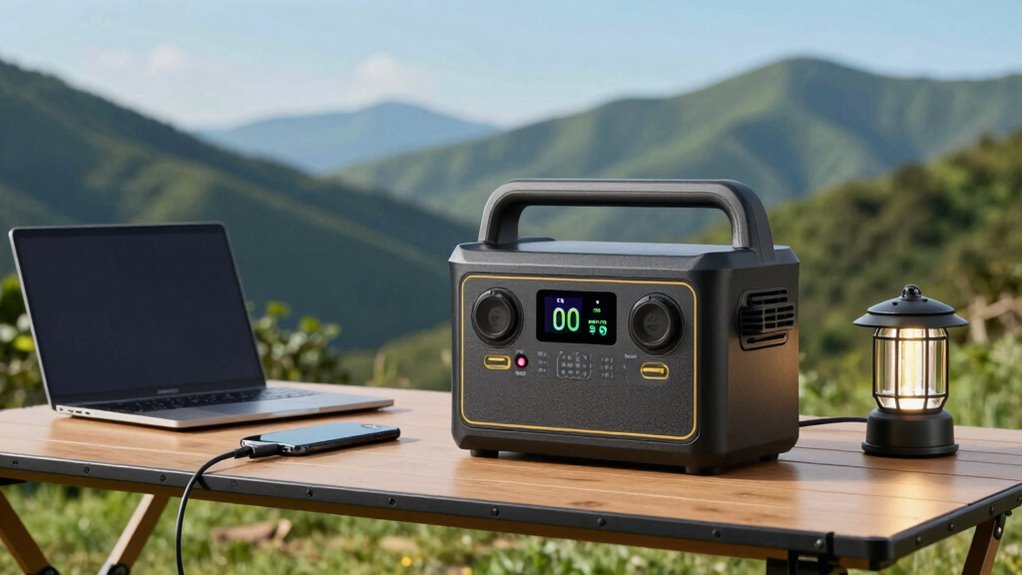
When comparing power stations, it’s important to take into account your device power needs and how long you plan to use them. Battery capacity, measured in watt-hours, shows how much energy a station can store, while watts indicate the power draw at any moment. Examining real-world examples helps you understand how these specs translate into actual usage durations. A clear understanding of power ratings can help you make more informed choices based on your specific needs. Additionally, considering the vetted wave and wind energy sources can further optimize your power station’s efficiency and sustainability. Recognizing the difference between power output and energy capacity allows consumers to select the most suitable station for their unique requirements. Knowing how battery efficiency impacts overall performance can also guide better purchasing decisions.
Device Power Needs
Understanding your device’s power needs is essential for selecting the right portable power station. To do this effectively, you should consider three key factors:
- The wattage your device requires during operation, which helps determine the inverter efficiency needed.
- The total energy consumption in watt-hours, ensuring the station can sustain your device for your desired duration.
- Compatibility with solar panels, so you can recharge sustainably if needed. Additionally, understanding the field‑of‑view and imaging‑scale requirements of your equipment can help you select a power solution that supports your entire setup effectively.
Battery Capacity Explained
Ever wondered how to compare different portable power stations effectively? The key is understanding battery capacity, measured in watt-hours (Wh). This tells you how much energy the battery can store, which directly impacts how long your devices can run. Battery chemistry affects capacity and longevity; lithium-ion batteries are common, offering good energy density and multiple charging cycles—usually around 500 to 1,000. Some batteries may have higher capacity but degrade faster, reducing overall lifespan. When choosing a power station, look at both watt-hours to gauge total energy and consider the Battery chemistry to understand how many times you can recharge it before performance drops. Additionally, assessing the battery longevity helps you select a unit that balances capacity, durability, and cost effectively. Understanding energy density can also guide you in choosing units that maximize performance in a compact size.
Usage Duration Comparison
To compare the real-world usage durations of different portable power stations, you need to look beyond just their watt-hour ratings and consider the power draw of your devices. Factors like inverter efficiency and solar charging influence how long your power station lasts.
- First, determine the device’s wattage and how much power it consumes per hour. A 60W device running for 5 hours uses 300Wh.
- Next, account for inverter efficiency—if it’s 90%, you’ll need slightly more watt-hours to deliver the same output.
- Finally, consider solar charging capacity, which can extend usage time by replenishing power during the day, especially when combined with efficient inverters. This gives you a realistic idea of how long your station will support your needs in everyday scenarios.
How to Choose the Right Portable Power Station for Your Needs
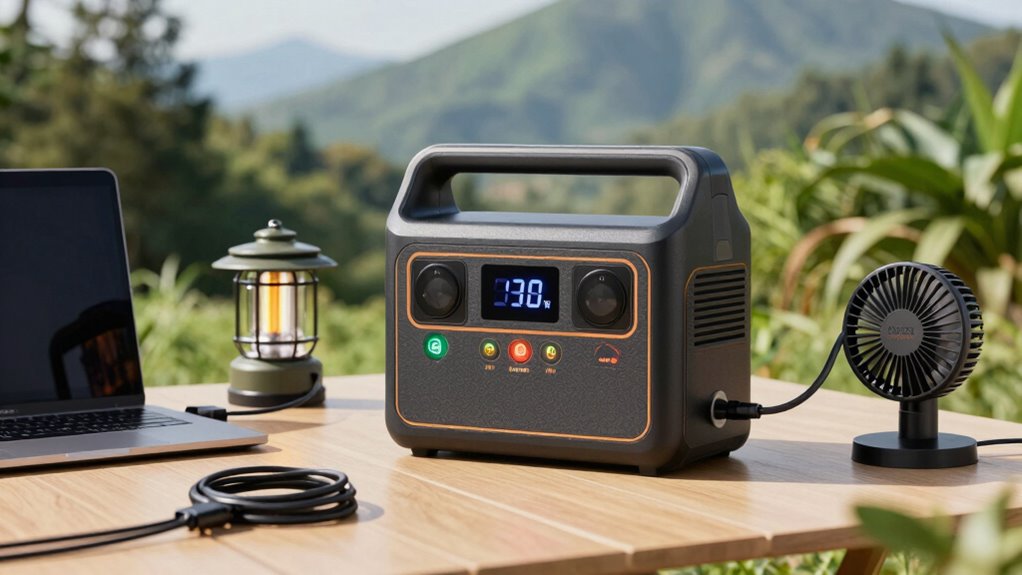
Choosing the right portable power station depends on evaluating your specific power needs and how you plan to use it. Start by considering the devices you’ll power and their wattage, guaranteeing the station’s watt capacity matches or exceeds your requirements. Think about portability considerations—if you’ll carry it often, look for a lightweight, compact model. Solar panel compatibility is also key; if you want to recharge using solar energy, verify the station supports your preferred panels and voltage compatibility. Additionally, consider the station’s size, weight, and ease of transport. Matching these factors to your lifestyle ensures you select a model that’s both powerful enough and convenient to carry around, so you’re prepared for outdoor adventures or emergency use without unnecessary bulk.
Avoid These Common Mistakes When Considering Watt-Hours and Watts
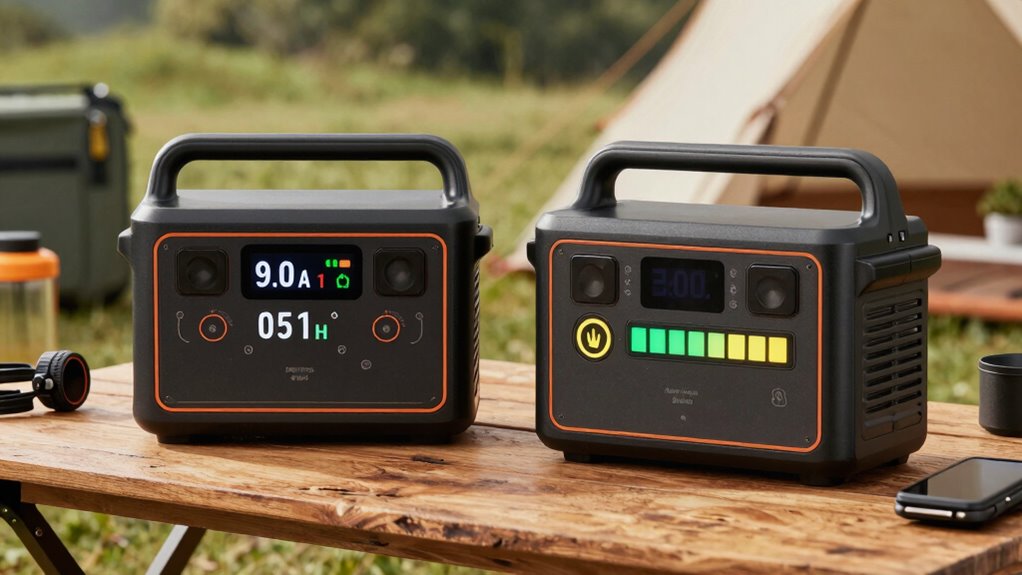
Many people make the mistake of confusing watt-hours (Wh) with watts (W), which can lead to choosing a power station that doesn’t meet their actual needs. To avoid this, focus on understanding how each measurement impacts your device use.
- Relying solely on watt-hours may overlook battery longevity and recharge cycles, which affect how long your station lasts over time.
- Choosing a high-watt rating without considering actual power draw can result in underperformance or overpaying.
- Ignoring recharge cycles can cause you to select a station that won’t sustain your usage, reducing overall efficiency.
Frequently Asked Questions
Can a Higher Watt-Hour Rating Compensate for Lower Watt Output?
Yes, a higher watt-hour rating can compensate for lower watt output because it means you have greater battery capacity and energy storage. This allows your power station to run devices longer even if the watt output isn’t very high. So, if you need extended use for low-watt devices, choosing a model with more watt-hours guarantees you have enough stored energy, making it a practical choice for longer-lasting power.
How Do Environmental Conditions Affect Watt-Hour and Watt Measurements?
Imagine your power station fighting a relentless battle against scorching heat or freezing cold—these environmental conditions dramatically impact watt-hour and watt measurements. High temperatures reduce solar panel efficiency, causing less power to be generated, while extreme cold can diminish battery performance. Conversely, moderate conditions boost efficiency and capacity. You need to account for temperature effects to guarantee your device works at its best, especially when outdoor adventures or unpredictable weather challenge your power needs.
Are Watt-Hours and Watts Interchangeable in Any Device Specifications?
Watt-hours and watts aren’t interchangeable in device specs because they measure different things. Watt-hours indicate battery capacity, showing how much energy a power station can store, while watts measure power output, affecting device compatibility. When choosing a portable power station, make sure the watt-hour capacity fits your needs, and check that the watt output matches your device’s requirements to guarantee proper performance and compatibility.
What Safety Considerations Relate to High Watt-Hour or Watt Ratings?
You might think higher watt-hour ratings are just about longer use, but safety’s the real concern. With high watt-hours, your battery’s more prone to overheating, so always guarantee proper ventilation. Also, check that your device has surge protection—an essential feature to prevent damage during power surges. Ignoring these considerations can turn your power station into a safety hazard, not just a handy gadget.
How Do Efficiency Losses Impact Actual Power Usage From Watt-Hour and Watt Ratings?
Efficiency losses affect your actual power usage because battery degradation and inverter efficiency reduce the usable energy. When your power station’s inverter isn’t 100% efficient, some energy gets lost as heat, lowering available watt-hours. Over time, battery degradation also diminishes capacity, meaning you get fewer watt-hours out of the same rated capacity. These factors make your real energy output less than the theoretical ratings suggest, impacting how long your devices can run.
Conclusion
Think of watt-hours as the reservoir of your power station—holding the energy you’ll draw on—and watts as the stream flowing out, fueling your devices quickly. Balancing these symbols helps you navigate your needs, whether you crave long-lasting power or rapid charging. By understanding their dance, you become the conductor of your energy symphony, ensuring your adventures never run dry. Master this harmony, and your portable power becomes an extension of your journey.