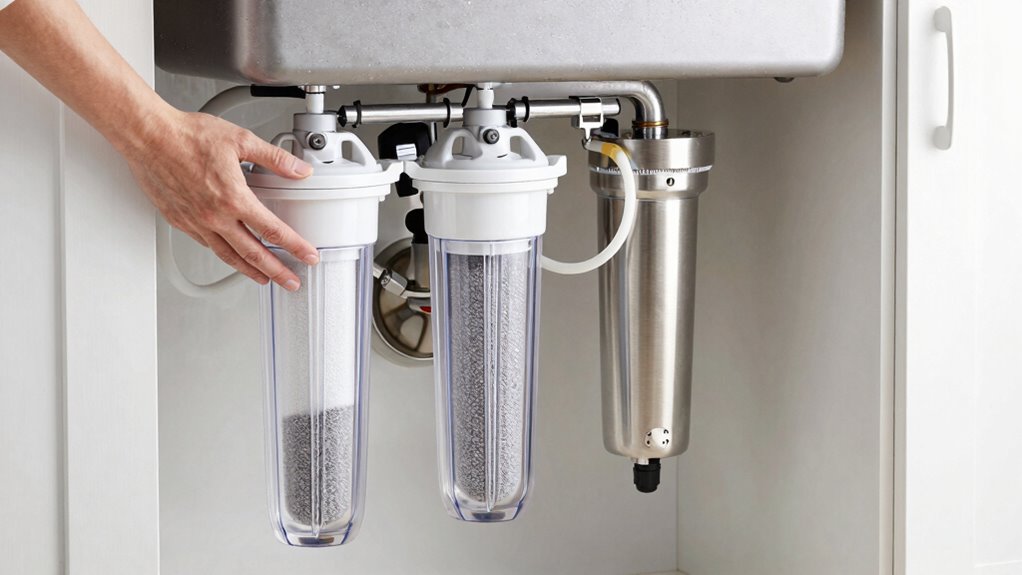

A whole-house filtration system has multiple stages to guarantee your water is safe and clean. It typically starts with a sediment filter to remove dirt and rust, followed by activated carbon to improve taste and remove chemicals like chlorine. Some systems include UV sterilizers to kill bacteria and viruses. Proper maintenance, like changing filters every 6 to 12 months, keeps it working efficiently. This system also manages minerals and prevents scale buildup, so if you’d like more details, keep exploring.

Get your wardrobe favorites delivered free — and shop member deals
- Fast, free delivery on millions of items
- Access to Prime Big Deal Days deals on October 6–7
- Prime Video, Amazon Music and more included
Key Takeaways
- Whole-house filtration systems typically include sediment, activated carbon, and UV sterilization stages for comprehensive water treatment.
- Regular filter replacements every 6 to 12 months are essential for maintaining filtration efficiency and water quality.
- These systems remove contaminants like dirt, rust, chlorine, VOCs, bacteria, and viruses from all household water sources.
- Multi-stage filters enhance removal of impurities and improve water taste and safety.
- Proper maintenance and monitoring ensure sustained performance and prevent buildup of harmful microorganisms and minerals.
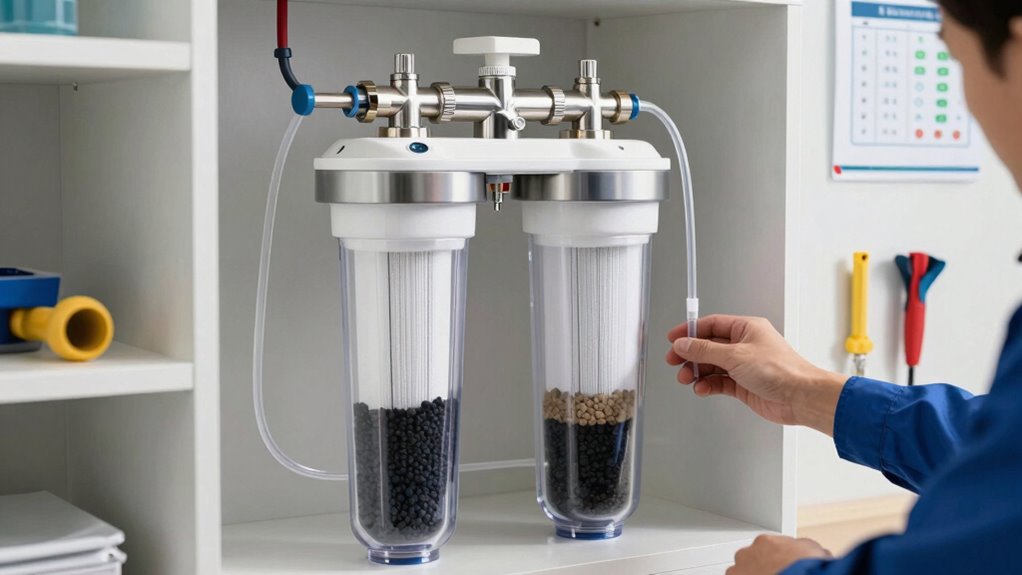
Clean water is essential for your home’s health and your family’s well-being, which is why whole-house filtration systems have become increasingly popular. These systems are designed to treat all the water entering your home, providing safe, clean water from every tap. One critical aspect of these systems is their ability to address water mineralization, which involves reducing or balancing mineral content such as calcium, magnesium, and iron. Excess minerals can cause scale buildup, affect taste, and damage plumbing fixtures. By managing mineral levels, your system guarantees that your water remains both safe and pleasant to use, while also protecting your appliances.
Another vital function of a whole-house filter is bacterial removal. Contaminants like bacteria, viruses, and other microorganisms can pose health risks if not properly filtered out. Modern filtration systems employ advanced technologies such as activated carbon, UV sterilization, or multi-stage filters to effectively eliminate bacterial presence. This means you can trust that your water is free from harmful pathogens, reducing the risk of waterborne illnesses and providing peace of mind for your family.
Most systems incorporate multiple stages to maximize filtration efficiency. The first stage often involves a sediment filter that traps dirt, sand, rust, and other larger particles. This protects the subsequent filters and extends their lifespan. The second stage might feature activated carbon filtration, which is excellent at enhancing water taste, removing chlorine, volatile organic compounds (VOCs), and other chemicals. This stage also plays a key role in bacterial removal, as certain activated carbon filters can trap bacteria and viruses or work in conjunction with UV sterilizers for added disinfection. Regularly monitoring water quality can help ensure these filters are functioning correctly and efficiently.
Some systems include a UV light stage, where ultraviolet radiation destroys bacteria, viruses, and other microorganisms that may have slipped past earlier filters. This stage is especially essential if your water source is well water or has known microbial contamination. Additionally, mineralization filters can be incorporated to add beneficial minerals back into the water after filtration, ensuring the water isn’t just clean but also mineral-rich, which can be good for your health. Proper maintenance of your filtration system, including understanding water mineralization, is crucial for ensuring it functions effectively over time. Regularly monitoring water quality helps maintain optimal performance and ensures contaminants do not bypass the system.
In some cases, integrating advanced filtration can further improve water safety and quality, especially in areas with challenging water sources. It’s also important to note that filter lifespan can vary depending on water usage and quality, so staying aware of when to replace filters ensures continuous protection.
Maintaining your whole-house filtration system involves regular filter changes, typically every six to twelve months, depending on usage and water quality. It’s also wise to periodically check system components for wear or damage. Proper maintenance guarantees your system performs at its best, continuing to remove bacteria effectively and manage mineralization. When your filter system is well-maintained, you’ll enjoy consistently clean, safe, and great-tasting water from every tap in your home, supporting your family’s health and comfort every day.
whole house water filtration system
As an affiliate, we earn on qualifying purchases.
As an affiliate, we earn on qualifying purchases.
Frequently Asked Questions
How Often Should I Replace My Whole-House Filter?
You should replace your whole-house filter every 3 to 6 months, depending on your filter’s lifespan and your water usage. Check the manufacturer’s replacement schedule for specific guidance. If you notice a decrease in water flow or a change in water taste or smell, it’s time to change the filter sooner. Regular maintenance guarantees your filtration system works efficiently, providing clean water and protecting your plumbing.
Can Whole-House Filters Remove Specific Chemicals or Pesticides?
Think of your whole-house filter as a vigilant gatekeeper, capable of chemical removal and pesticide filtration. It can effectively reduce many chemicals and pesticides, but its ability to remove specific ones depends on the filter type and media used. For targeted chemical removal, consider specialized filters or additional treatment systems. Remember, staying informed about your water quality helps guarantee your home’s filtration system keeps your water safe and clean.
Do Whole-House Systems Affect Water Pressure?
Yes, whole-house systems can affect your water pressure. If the filter gets clogged or if the system isn’t properly maintained, water pressure might decrease, impacting system efficiency. Regularly checking and replacing filters helps maintain ideal water flow. Ensuring your system is correctly installed and sized for your home minimizes pressure drops, keeping your water pressure steady and your whole-house filtration effective without sacrificing flow.
Are There Eco-Friendly or Biodegradable Filter Options?
Imagine a gentle breeze cleansing your home’s water; yes, eco-friendly filtration options like biodegradable filters exist. These filters break down naturally, reducing environmental impact and supporting sustainability. They’re designed to effectively remove impurities while being kind to the planet. Opting for biodegradable filters means you’re nurturing your home and the Earth, turning your water filtration into an act of eco-conscious care that’s both effective and gentle on the environment.
How Long Does a Typical Whole-House Filtration System Last?
A typical whole-house filtration system usually lasts about 5 to 10 years, depending on water quality and filter lifespan. You need to monitor the filters regularly because poor water quality can shorten their effectiveness. Regular maintenance, such as replacing filters when needed, guarantees your system continues to deliver clean, safe water. Proper care extends the system’s lifespan, keeps water quality high, and prevents costly repairs or replacements.
Conclusion
Now that you know the ins and outs of whole-house filtration, you’re well-equipped to keep your water pure and your home healthier. Regular maintenance guarantees your system works like a well-oiled machine—no need to channel your inner Leonardo da Vinci! With proper stages and timely filter changes, you’ll enjoy cleaner water and peace of mind. Remember, a little upkeep today prevents a plague of problems tomorrow. Cheers to fresh, pristine water—no time travel required!
Fall Picks
fall essentials
As an affiliate, we earn on qualifying purchases.