
The best pocket cameras balance true portability with dependable image and video quality, and my best overall pick is the DJI Osmo Pocket 3 for its 1-inch sensor and stabilized 4K video. For distant subjects, the Panasonic LUMIX ZS99 offers a 30x optical zoom, while the Kodak PIXPRO FZ55 is a straightforward compact option with 5x optical zoom. The main tradeoffs are zoom reach versus low-light performance, and simple point-and-shoot controls versus creator-focused tracking features. Small cameras can also differ sharply in stabilization, framing screens, and how much work they expect you to do after recording. Read on for my full comparison and guidance on which pocket camera fits your use.

Get your wardrobe favorites delivered free with Prime
- Fast, free delivery on millions of items
- Prime Video, Amazon Music and more included
- Member-only deals all year
Key Takeaways
- The DJI Osmo Pocket 3 leads for creator-focused video: its 1-inch sensor and 4K capture make it a stronger fit for vlogging than compact cameras built mainly around simple snapshots.
- The Panasonic LUMIX ZS99 stands apart for reach: a 30x optical zoom is the clear advantage for travel and distant subjects, though zoom range alone does not guarantee better low-light results.
- The Kodak PIXPRO FZ55 and FZ45 favor simplicity: their conventional compact-camera approach is easier to understand than rotating-lens and face-tracking designs, with the FZ55 offering more optical zoom.
- Several listings emphasize headline video specs and rotating lenses: buyers should verify real recording formats, stabilization, autofocus behavior, and battery details rather than choosing by resolution claims alone.
- Pocketable does not mean interchangeable: waterproofing, optical zoom, a large sensor, and hands-free subject tracking solve different problems, so the best fit depends on what you shoot most.
| Okvwwxy 4K Pocket Vlogging Camera with 75MP Photos, 1.72-Inch Touchscreen, 330° Stabilization, Autofocus, Face Detection, and 4× Digital Zoom |  | Best for Handheld Vlogging | Camera type: Action camera | Sensor: 1/1.2-inch CMOS | Still resolution: 75MP | VIEW LATEST PRICE | See Our Full Breakdown |
| Kodak PIXPRO FZ55 16MP Compact Digital Camera, 5x Optical Zoom, Blue |  | Best Value Point-and-Shoot | Sensor: 16MP, 1/2.3-inch CMOS | Optical zoom: 5× | Lens: 28mm wide angle | VIEW LATEST PRICE | See Our Full Breakdown |
| KODAK PIXPRO FZ45 16MP Compact Digital Camera with 4x Optical Zoom, Black |  | Best for AA-Battery Convenience | Sensor: 16MP, 1/2.3-inch CMOS | Optical zoom: 4× | Lens: 27mm wide angle | VIEW LATEST PRICE | See Our Full Breakdown |
| Panasonic LUMIX ZS99 Compact Camera with 30x Optical Zoom and 4K Video |  | Best for Travel Zoom | Sensor: 20.3MP, 1/2.3-inch BSI CMOS | Lens: 24–720mm LEICA DC | Optical zoom: 30× | VIEW LATEST PRICE | See Our Full Breakdown |
| Insta360 Luna Ultra 8K Vlogging Camera with Dual Leica Lenses |  | Best Premium Vlogging Pick | Sensor: CMOS; 1-inch sensor listed in title | Video: 8K | Optical zoom: 15× | VIEW LATEST PRICE | See Our Full Breakdown |
| 4K Vlogging Camera with 330° Auto-Rotating Lens and Face Tracking |  | Best for Face-Tracked Vlogging | Video: 4K at 30 fps | Photo resolution: 75 MP | Lens rotation: 330° horizontal; 180° manual vertical | VIEW LATEST PRICE | See Our Full Breakdown |
| DJI Osmo Action 4 Essential Combo Waterproof 4K Action Camera |  | Best for Rugged Action Footage | Sensor: 1/1.3-inch | Video: Up to 4K; up to 120 fps at supported resolutions | Color: 10-bit | VIEW LATEST PRICE | See Our Full Breakdown |
| DJI Osmo Pocket 3 Vlogging Camera with 1-Inch CMOS Sensor and 4K Video | 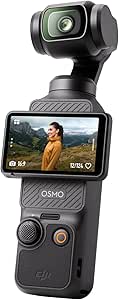 | Best Premium Pocket Vlogging Camera | Sensor: 1-inch CMOS | Video: 4K; up to 120 fps in Slow Motion mode | Stabilization: 3-axis mechanical | VIEW LATEST PRICE | See Our Full Breakdown |
| 5K Vlogging Camera with Rotating Lens, Touchscreen, Wi-Fi, Tripod and 32GB Card |  | Best Starter Kit for 5K Vlogging | Video: 5K | Photo resolution: 80 MP as stated in title | Sensor: 1/2.5-inch CMOS | VIEW LATEST PRICE | See Our Full Breakdown |
| CGXUED Mini Vlogging Camcorder with 180° Rotating Lens |  | Best for Simple, Long-Running Casual Clips | Video: HD | Lens: 180° rotating wide-angle lens; listed focal length 20–28 mm; f/5 maximum aperture | Display: 1.3-inch screen | VIEW LATEST PRICE | See Our Full Breakdown |
| Insta360 Luna Pro 8K Vlogging Camera with Leica Lens |  | Best Premium Pocket Vlogging Camera | Sensor: 1-inch CMOS | Maximum video resolution: 8K at 30 fps | Low-light video: 4K at 60 fps | VIEW LATEST PRICE | See Our Full Breakdown |
| 5K Vlogging Pocket Camera with AI Face Tracking and 270° Rotating Lens |  | Best Feature-Packed Starter Vlogging Camera | Sensor: 1/2.8-inch CMOS | Video modes: 5K at 20 fps; 4K at 60 fps | Lens rotation: 270° | VIEW LATEST PRICE | See Our Full Breakdown |
| Lmzour 4K Pocket Vlogging Camera with 330° Rotating Lens |  | Best for Flexible Self-Framing | Video resolution: Up to 2160p (4K) | Photo resolution: 75 MP | Lens rotation: 330° | VIEW LATEST PRICE | See Our Full Breakdown |
| Compact 4K 48MP Digital Camera with Autofocus and 32GB SD Card |  | Best Simple Pocket Camera for Photos and Webcam Use | Sensor: 1/3.2-inch CMOS | Photo resolution: 48 MP | Video resolution: 4K (2160p) | VIEW LATEST PRICE | See Our Full Breakdown |
| pocket camera | Sensor | Display | Video | Weight |
|---|---|---|---|---|
| Okvwwxy 4K Pocket Vlogging Cam | 1/1.2-inch CMOS | 1.72-inch touchscreen | 4K/30fps; 1080p/60fps | — |
| Kodak PIXPRO FZ55 16MP Compact | 16MP, 1/2.3-inch CMOS | 2.7-inch LCD, 230,000 dots | 1080p Full HD | 3.7 ounces |
| KODAK PIXPRO FZ45 16MP Compact | 16MP, 1/2.3-inch CMOS | 2.7-inch fixed LCD, 230,000 dots | 1080p Full HD | 4.1 ounces |
| Panasonic LUMIX ZS99 Compact C | 20.3MP, 1/2.3-inch BSI CMOS | 3-inch tilting touchscreen, 1,840k dots | 4K at 30fps; 1080p | 322g |
| Insta360 Luna Ultra 8K Vloggin | CMOS; 1-inch sensor listed in title | 2-inch detachable touchscreen | 8K | — |
| 4K Vlogging Camera with 330° A | — | — | 4K at 30 fps | — |
| DJI Osmo Action 4 Essential Co | 1/1.3-inch | — | Up to 4K; up to 120 fps at supported resolutions | — |
| DJI Osmo Pocket 3 Vlogging Cam | 1-inch CMOS | — | 4K; up to 120 fps in Slow Motion mode | — |
| 5K Vlogging Camera with Rotati | 1/2.5-inch CMOS | 2.2-inch touchscreen with 90° rotation | 5K | 6.08 ounces |
| CGXUED Mini Vlogging Camcorder | — | 1.3-inch screen | HD | 173 g |
| Insta360 Luna Pro 8K Vlogging | 1-inch CMOS | Detachable 2-inch OLED touchscreen | — | — |
| 5K Vlogging Pocket Camera with | 1/2.8-inch CMOS | 1.69-inch touchscreen | — | 9.12 ounces |
| Lmzour 4K Pocket Vlogging Came | — | 1.72 inches | — | — |
| Compact 4K 48MP Digital Camera | 1/3.2-inch CMOS | 2.8-inch IPS screen | — | 113 g |
More Details on Our Top Picks
Okvwwxy 4K Pocket Vlogging Camera with 75MP Photos, 1.72-Inch Touchscreen, 330° Stabilization, Autofocus, Face Detection, and 4× Digital Zoom
The Okvwwxy is aimed at creators who want a pocketable camera centered on video, with 4K/30fps recording, face detection, and horizontal mechanical stabilization for handheld clips. Its 1080p/60fps mode also gives you a smoother look or material for slow-motion edits. Compared with the Kodak PIXPRO FZ55, it offers more video-focused tools, while the Kodak has a more conventional point-and-shoot setup and 5× optical zoom. The Okvwwxy’s 4× zoom is digital, so it is less suited to distant subjects, and its 1.72-inch screen leaves less room for framing than the Kodak’s 2.7-inch display. The stabilization is single-axis rather than a full multi-axis system, and the camera is not water resistant. I’d choose it for casual creator footage, not as an all-weather action camera.
Pros:- Records 4K video at 30fps and 1080p at 60fps
- Horizontal mechanical stabilization is designed to steady moving footage
- Autofocus and face detection support straightforward self-recording
- Wi-Fi and the DHV CAM app allow smartphone file transfers
Cons:- 4× zoom is digital rather than optical
- The 1.72-inch touchscreen is smaller than the Kodak PIXPRO FZ55’s display
- Not water resistant, and vertical lens positioning requires manual adjustment
Best for: Casual vloggers who want 4K clips, face detection, and stabilization in a small handheld camera.
Not ideal for: Travelers who need water resistance, strong optical reach, or a larger screen for composing shots.
- Camera type:Action camera
- Sensor:1/1.2-inch CMOS
- Still resolution:75MP
- Video:4K/30fps; 1080p/60fps
- Display:1.72-inch touchscreen
- Stabilization:330° horizontal single-axis mechanical stabilization
- Zoom:4× digital
- Connectivity:Wi-Fi; DHV CAM app
- Water resistance:Not water resistant
Our verdict“Choose the Okvwwxy for casual 4K vlogging and face-tracked handheld clips, but pick a camera with optical zoom or weather protection for travel versatility.”
Kodak PIXPRO FZ55 16MP Compact Digital Camera, 5x Optical Zoom, Blue
The Kodak PIXPRO FZ55 is the straightforward choice for buyers who want a small camera with optical zoom and familiar point-and-shoot controls. Its 5× optical range gives more framing flexibility than the FZ45’s 4× lens without relying on digital cropping, while the 28mm wide end works for groups and everyday scenes. The 2.7-inch LCD is also roomier than the Okvwwxy’s 1.72-inch touchscreen, though the Okvwwxy offers 4K video and stabilization aimed at vloggers. Here, video tops out at 1080p, and the listed stabilization is digital, so this is not the pick for smooth action footage. At about 200 shots per charge, battery life may call for carrying a spare or planning charging breaks. I’d favor it for simple travel photos over creator-focused shooting.
Pros:- 5× optical zoom offers more reach than the Kodak PIXPRO FZ45’s 4× lens
- 28mm wide-angle lens suits group and general-purpose framing
- Lightweight 3.7-ounce body is easy to carry in a pocket or small bag
- Supports SD, SDHC, and SDXC cards up to 512GB
Cons:- Video resolution is limited to 1080p
- Digital image stabilization is less suited to smoothing movement
- Approximate 200-shot battery life can require frequent charging or a spare
Best for: Travelers and families who want a lightweight point-and-shoot with optical zoom for everyday photos and 1080p clips.
Not ideal for: Vloggers seeking 4K recording, advanced stabilization, or long shooting sessions without battery planning.
- Sensor:16MP, 1/2.3-inch CMOS
- Optical zoom:5×
- Lens:28mm wide angle
- Video:1080p Full HD
- Display:2.7-inch LCD, 230,000 dots
- Weight:3.7 ounces
- Battery life:Approximately 200 shots per charge
- Memory card support:Class 10 or above SD, SDHC, or SDXC up to 512GB
- Charging:In-camera USB charging
Our verdict“Pick the FZ55 if you want an uncomplicated pocket camera with useful optical zoom, not a 4K vlogging or action camera.”
KODAK PIXPRO FZ45 16MP Compact Digital Camera with 4x Optical Zoom, Black
The PIXPRO FZ45 keeps the compact point-and-shoot formula simple: a 16MP sensor, 4× optical zoom, and 1080p video in a small body. Its standout practical advantage over the FZ55 is power: it runs on two AA batteries, which can be easier to replace on a trip than finding a charging outlet. The FZ55, however, has a longer 5× optical zoom and a rechargeable lithium-ion battery, making it the more flexible everyday pick for many buyers. Compared with the Panasonic LUMIX ZS99, the FZ45 is far simpler and lighter, but its reach and video features are in a different class. A fixed 2.7-inch screen and digital stabilization limit comfort for framing and moving shots. I’d choose this Kodak for basic stills when replaceable batteries matter more than extra zoom or advanced features.
Pros:- Uses two readily available AA batteries
- 4× optical zoom and a 27mm wide-angle lens cover everyday framing
- Records 1080p Full HD video
- Compact 4.1-ounce body is easy to pack
Cons:- Shorter 4× optical zoom than the Kodak PIXPRO FZ55’s 5× range
- Fixed 2.7-inch screen offers limited flexibility for composing shots
- Digital stabilization is less effective for movement than the Panasonic LUMIX ZS99’s 5-axis system
Best for: Occasional photographers and travelers who prefer replaceable AA batteries and want a basic pocket point-and-shoot.
Not ideal for: Buyers who want longer zoom, a tilting screen, strong stabilization, or 4K video.
- Sensor:16MP, 1/2.3-inch CMOS
- Optical zoom:4×
- Lens:27mm wide angle
- Video:1080p Full HD
- Display:2.7-inch fixed LCD, 230,000 dots
- Battery:Two AA alkaline batteries
- Image stabilization:Digital
- Weight:4.1 ounces
- Memory card support:Class 10 SD, SDHC, and SDXC up to 512GB
Our verdict“Choose the FZ45 for simple photos and easy-to-replace AA power, but step up to the FZ55 for more zoom or the ZS99 for travel features.”
Panasonic LUMIX ZS99 Compact Camera with 30x Optical Zoom and 4K Video
The Panasonic LUMIX ZS99 earns its place for travelers who want a huge optical zoom range in a pocketable body. Its 24–720mm LEICA lens can move from wide scenes to distant details without the digital-only reach of the Okvwwxy, and 5-axis stabilization helps steady shots across that range. The tilting 3-inch touchscreen and USB-C charging also suit days spent moving between locations. It records 4K and offers high-speed video, giving it broader capture options than the Kodak FZ55, which tops out at 1080p. The compromise is its small 1/2.3-inch sensor and relatively modest F3.3–F6.4 aperture range, which limit its appeal when light is scarce. At 322g, it is pocketable but heavier than the basic Kodak models. I’d rank it for reach, not low-light image quality.
Pros:- 24–720mm lens provides a broad 30× optical zoom range
- 5-axis HYBRID O.I.S.+ helps reduce camera shake
- 4K recording and 4K PHOTO bursts add capture flexibility
- Tilting touchscreen, USB-C, Wi-Fi, and Bluetooth support travel use
Cons:- The 1/2.3-inch sensor is small compared with larger-sensor creator cameras
- F3.3–F6.4 maximum aperture range limits light gathering at the telephoto end
- At 322g, it is heavier than the Kodak PIXPRO FZ55
Best for: Sightseers who want one compact camera for wide travel views, distant landmarks, and stabilized 4K clips.
Not ideal for: Low-light photographers or buyers who prioritize a larger sensor and a lighter pocket load.
- Sensor:20.3MP, 1/2.3-inch BSI CMOS
- Lens:24–720mm LEICA DC
- Optical zoom:30×
- Video:4K at 30fps; 1080p
- High-speed video:120fps
- Image stabilization:5-axis HYBRID O.I.S.+
- Display:3-inch tilting touchscreen, 1,840k dots
- Connectivity:Wi-Fi, Bluetooth 5.0, USB Type-C
- Weight:322g
Our verdict“Choose the ZS99 if long optical reach and travel versatility matter more than low-light performance or the lightest possible pocket camera.”
Insta360 Luna Ultra 8K Vlogging Camera with Dual Leica Lenses
The Insta360 Luna Ultra is the most creator-focused option here, pairing 8K recording, 3-axis mechanical stabilization, and AI tracking for people who want to stay in frame while moving. Its claimed 15× optical zoom also sets it apart from the Okvwwxy’s 4× digital zoom, while up to four hours of battery life and fast charging suit longer recording days. The detachable 2-inch touchscreen adds placement flexibility, though the display itself is small for careful framing. Compared with the Panasonic LUMIX ZS99, the Luna Ultra emphasizes stabilized, tracked video rather than a clearly specified travel zoom range and traditional still-photo use. One caution: the listed focal-length values are inconsistent, so buyers cannot confidently judge its framing range from the provided information. I’d select it for mobile vlogging, while travelers wanting dependable zoom details may prefer the Panasonic.
Pros:- Records video at up to 8K
- 3-axis mechanical stabilization and AI tracking support moving self-recording
- Up to four hours of battery life with fast charging to 80% in 23 minutes
- Detachable touchscreen offers flexible monitoring positions
Cons:- The 2-inch display is small for judging composition
- Listed focal-length values are inconsistent, leaving the usable zoom range unclear
- The creator-oriented feature set is less directly suited to simple point-and-shoot travel photography than the Panasonic LUMIX ZS99
Best for: Mobile creators who want AI subject tracking, stabilized high-resolution video, and long recording sessions.
Not ideal for: Buyers who need a clearly documented focal-length range, a larger viewing screen, or a conventional travel camera for stills.
- Sensor:CMOS; 1-inch sensor listed in title
- Video:8K
- Optical zoom:15×
- Stabilization:3-axis mechanical
- Display:2-inch detachable touchscreen
- Focus:Autofocus
- Maximum aperture:f/2
- Battery life:Up to 4 hours
- Fast charging:80% in 23 minutes
Our verdict“Choose the Luna Ultra for tracked, stabilized vlogging and extended recording, but favor the Panasonic ZS99 if a clearly defined travel zoom is your priority.”
4K Vlogging Camera with 330° Auto-Rotating Lens and Face Tracking
The 330° rotating lens and video-only face tracking make this the most hands-off option here for solo creators who want to stay centered while recording. Its 4K/30 fps video and touch screen offer a straightforward setup, while Wi-Fi can simplify moving clips to a phone. Compared with the DJI Osmo Pocket 3, it lacks a gimbal and its digital stabilization is less suited to smoothing movement; the Pocket 3 is the stronger pick for polished walking footage. This camera’s appeal is its rotating framing and simple vlogging focus, not action-ready durability or advanced image control. The battery is rated for up to three hours, but it is not water resistant, and face tracking does not apply to still photos.
Pros:- Face tracking helps keep a presenter centered in video mode.
- 330° horizontal lens rotation supports flexible self-recording angles.
- Touch screen and Wi-Fi provide convenient controls and file transfer.
- Offers slow motion, time lapse, portrait and landscape modes, and creative filters.
Cons:- Face tracking works only in video mode.
- Digital stabilization is less suited to smoothing footage than the Pocket 3’s 3-axis mechanical gimbal.
- Not water resistant.
Best for: Solo vloggers who want face tracking and adjustable framing for stationary or lightly moving 4K recordings.
Not ideal for: Travelers filming in rain or creators who need gimbal-smooth footage while walking; it has no water resistance and uses digital stabilization.
- Video:4K at 30 fps
- Photo resolution:75 MP
- Lens rotation:330° horizontal; 180° manual vertical
- Screen:1.72-inch touch screen
- Focus:Autofocus with face detection
- Battery:2400 mAh; up to 3 hours
- Connectivity:Wi-Fi and USB
- Water resistance:Not water resistant
Our verdict“Choose it for flexible, face-tracked vlogging, but pick the DJI Osmo Pocket 3 for smoother moving footage.”
DJI Osmo Action 4 Essential Combo Waterproof 4K Action Camera
The Osmo Action 4 Essential Combo is the clear choice in this group for recording where water, cold, or rough movement rule out a conventional vlogging camera. Its 18 m waterproof rating, operation down to -20°C, and three stabilization modes give it a practical advantage over the DJI Osmo Pocket 3, which is built around a mechanical gimbal rather than this camera’s rugged action setup. A 1/1.3-inch sensor and 10-bit color also give footage more room for detail and color work. The tradeoff is that its wide action-camera view and mounting approach are less natural for intimate talking-head shots. The 120 fps option applies only at supported resolutions, and the 155° field of view requires stabilization to be off and is available up to 4K/60 fps. The Essential Combo also omits a curved adhesive base.
Pros:- Waterproof to 18 m and rated to operate down to -20°C.
- 1/1.3-inch sensor and 10-bit color support detailed footage and flexible color work.
- Three stabilization modes help smooth and level action video.
- Front and rear touchscreens and magnetic quick-release mounting support varied setups.
Cons:- 120 fps is available only at supported resolutions.
- The 155° field of view requires stabilization off and is limited to up to 4K/60 fps.
- Essential Combo does not include a curved adhesive base.
Best for: Outdoor travelers, swimmers, and action-sports users who need a pocketable camera that can handle water, cold, and movement.
Not ideal for: Vloggers prioritizing a gimbal-style camera for close-up self-recording or buyers who need 120 fps at every resolution.
- Sensor:1/1.3-inch
- Video:Up to 4K; up to 120 fps at supported resolutions
- Color:10-bit
- Field of view:155°; up to 4K/60 fps with stabilization off
- Stabilization:Three stabilization modes
- Waterproof depth:Up to 18 m
- Operating temperature:Down to -20°C
- Displays:Front and rear full-color touchscreens
- Combo contents:Camera, one Extreme Battery, horizontal-vertical protective frame, and quick-release adapter mount
Our verdict“Pick the Osmo Action 4 for rugged outdoor recording; choose the Osmo Pocket 3 instead for gimbal-based vlogging.”
DJI Osmo Pocket 3 Vlogging Camera with 1-Inch CMOS Sensor and 4K Video
The DJI Osmo Pocket 3 earns the premium role with a 1-inch sensor and 3-axis mechanical stabilization in a camera designed to travel in a pocket. That gimbal makes it better suited than the 330° Vlogging Camera for smooth walking shots, while ActiveTrack 6.0 and the rotating 2-inch screen make solo framing more adaptable. Its 10-bit D-Log M and support for two DJI Mic transmitters serve creators who want more control over color and sound than a simple casual camera provides. The tradeoff is a more involved setup: footage requires a separately purchased microSD card, and the battery charger is sold separately. Also, 4K at 120 fps is limited to Slow Motion mode. For rugged water use, the Osmo Action 4 is the better fit; the Pocket 3 favors polished creator footage over action-camera toughness.
Pros:- 1-inch CMOS sensor paired with 3-axis mechanical stabilization.
- Rotating 2-inch screen supports horizontal and vertical framing.
- ActiveTrack 6.0 helps follow a subject while recording.
- 10-bit D-Log M and support for two DJI Mic transmitters offer advanced production options.
Cons:- A microSD card is required and sold separately.
- Battery charger is sold separately.
- 4K at 120 fps is limited to Slow Motion mode.
Best for: Travel vloggers and solo creators who want stabilized walking footage, subject tracking, and room to refine color and audio.
Not ideal for: Swimmers, action-sports users, or buyers wanting a ready-to-record kit with storage and charger included.
- Sensor:1-inch CMOS
- Video:4K; up to 120 fps in Slow Motion mode
- Stabilization:3-axis mechanical
- Screen:2-inch rotating touchscreen
- Tracking:ActiveTrack 6.0
- Color:10-bit D-Log M
- Audio:Stereo recording; supports two DJI Mic 2 or Mic Mini transmitters
- Storage:Requires a separately purchased microSD card
Our verdict“Choose the Pocket 3 for polished, stabilized vlogging and tracking, but choose the Osmo Action 4 for rugged or underwater use.”
5K Vlogging Camera with Rotating Lens, Touchscreen, Wi-Fi, Tripod and 32GB Card
This 5K vlogging camera stands out as a bundle-first option: a tripod and 32GB card are included, so a beginner can start recording without sourcing those basics separately. Its rotating lens, 90°-rotating screen, and face tracking make it more self-recording-focused than the CGXUED Mini Vlogging Camcorder, while Wi-Fi offers a route to phone transfers. The listed 80MP photo resolution and 5K video sound ambitious, but the supplied data gives no frame rate, and digital stabilization is a meaningful limit for handheld movement. Battery life is listed at only 70 minutes, so it suits shorter clips better than long outings. Compared with the DJI Osmo Pocket 3, it lacks mechanical gimbal stabilization and the more creator-focused tracking and color tools; its appeal is the included starter kit, not premium motion handling.
Pros:- Includes a tripod and 32GB card for a ready-to-start setup.
- Rotating lens and 90°-rotating screen support self-recording angles.
- Face tracking and autofocus assist hands-free video.
- Wi-Fi supports transfers to a smartphone.
Cons:- Listed battery life is 70 minutes.
- Digital stabilization is less suited to movement than the Pocket 3’s mechanical gimbal.
- The supplied specifications do not state a 5K frame rate.
Best for: New vloggers who want a bundled tripod and memory card for short, mostly stationary recordings.
Not ideal for: Travel creators recording long sessions or people who need reliable smoothness while walking; listed battery life is 70 minutes and stabilization is digital.
- Video:5K
- Photo resolution:80 MP as stated in title
- Sensor:1/2.5-inch CMOS
- Display:2.2-inch touchscreen with 90° rotation
- Lens rotation:330° as stated in title
- Stabilization:Digital
- Battery life:70 minutes
- Weight:6.08 ounces
- Included accessories:Tripod and 32GB card
Our verdict“Choose this bundled camera for short, stationary starter vlogs; step up to the Pocket 3 for smoother movement and more advanced creator controls.”
CGXUED Mini Vlogging Camcorder with 180° Rotating Lens
The CGXUED Mini Vlogging Camcorder is the simplest pick here: one-button recording, a manually rotating lens, and an included 32GB card keep the setup uncomplicated. Its stated battery life of up to seven hours is a distinct advantage over the 5K Vlogging Camera, whose listed runtime is 70 minutes, making this a better match for long stretches of casual recording. The compromise is image ambition: this model records HD video and is explicitly not designed for DSLR-level quality. Its 1.3-inch screen is also smaller than the displays on the DJI Osmo Pocket 3 and the 5K camera, and lens rotation is manual rather than auto-tracked. A built-in light and time lapse add useful basic options, but the camera is not water resistant and is best treated as a straightforward recorder rather than a polished creator tool.
Pros:- One-button operation makes recording straightforward without an app or QR code.
- Up to seven hours of recording is a longer stated runtime than the 5K Vlogging Camera.
- 180° rotating lens supports POV and self-recording.
- Includes a 32GB SD card, built-in light, and time-lapse mode.
Cons:- HD video is a step below the 4K and 5K options in this group.
- The lens must be rotated manually, without the face tracking offered by the 330° Vlogging Camera.
- Not water resistant.
Best for: Families and casual travelers who want a simple, long-running camcorder for everyday HD clips without app-based setup.
Not ideal for: Creators seeking 4K or 5K detail, stabilized walking footage, or weatherproof recording.
- Video:HD
- Lens:180° rotating wide-angle lens; listed focal length 20–28 mm; f/5 maximum aperture
- Display:1.3-inch screen
- Focus:Autofocus
- Battery:Built-in 2000 mAh; up to 7 hours of recording
- Memory:32GB SD card included
- Weight:173 g
- Special features:Built-in light, time lapse, and one-button recording
- Water resistance:Not water resistant
Our verdict“Choose this camcorder for uncomplicated, extended casual recording, but pick a 4K model for higher-detail creator footage.”
Insta360 Luna Pro 8K Vlogging Camera with Leica Lens
The Luna Pro is the most video-focused pick in this group: its 1-inch sensor, 8K HDR recording, and 3-axis mechanical stabilization are aimed at creators who want polished handheld footage, not just a small camera for casual snapshots. Compared with the DJI Osmo Pocket 3, it offers higher-resolution recording and a detachable screen for remote framing, while the Pocket 3 is the simpler alternative if you do not need 8K. AI subject tracking and Leica color profiles add useful tools for solo filming, and the 4K60 low-light mode gives creators another option when conditions are dim. The tradeoff is a premium, feature-heavy design: its remote control reaches only 20 meters, and the listed four-hour battery life may fall short on extended shoots. I would choose it for advanced video flexibility, not for the most straightforward pocket camera.
Pros:- 1-inch sensor records up to 8K30 HDR video
- Three-axis mechanical stabilization and AI tracking support smooth solo footage
- Detachable OLED touchscreen allows remote preview and control
- Supports 10-bit I-Log, ACES workflows, and DaVinci Resolve integration
Cons:- Remote control range is limited to 20 meters
- Listed battery life of up to four hours may not cover longer shoots
- Its advanced video features may be more than casual pocket-camera buyers need
Best for: Solo creators and vloggers who want high-resolution, stabilized video and remote framing controls in a compact handheld camera
Not ideal for: Casual photographers seeking a simple point-and-shoot, or creators who need all-day battery life and a longer remote-control range
- Sensor:1-inch CMOS
- Maximum video resolution:8K at 30 fps
- Low-light video:4K at 60 fps
- Stabilization:3-axis mechanical
- Focal length:9–20 mm
- Maximum aperture:f/1.8
- Display:Detachable 2-inch OLED touchscreen
- Battery life:Up to 4 hours
Our verdict“Choose the Luna Pro if advanced, stabilized video matters more than simplicity or extended battery life.”
5K Vlogging Pocket Camera with AI Face Tracking and 270° Rotating Lens
This model packs a lot of vlogging controls into a 9.12-ounce body: a rotating lens, face tracking, app control, and a 128 GB card give beginners a ready-to-film setup. Its 4K60 recording is a more useful everyday option than its 5K mode, which is limited to 20 fps. Compared with the Lmzour 4K Pocket Vlogging Camera, this one adds a larger included memory card and a stated 4K60 mode, while the Lmzour lens rotates farther for flexible self-framing. The main compromise is that face tracking and digital stabilization cannot run together, so a creator has to choose between keeping themselves centered and reducing shake. A 110-minute battery and lack of water resistance also make it less suited to long outings or action footage. I see it as a flexible starter kit for controlled, casual filming.
Pros:- Records 4K video at 60 fps
- Includes a 128 GB microSD card
- Rotating lens, face tracking, remote, and app support offer flexible framing
- Can charge while recording
Cons:- Face tracking and digital stabilization cannot be used simultaneously
- Not water resistant and not designed for extreme sports
- Battery life is listed at 110 minutes, and night shooting works best with good lighting
Best for: Beginning vloggers who want an included memory card, app control, and face tracking for indoor or low-movement filming
Not ideal for: Travel and action shooters who need water resistance, longer recording sessions, or tracking and stabilization at the same time
- Sensor:1/2.8-inch CMOS
- Video modes:5K at 20 fps; 4K at 60 fps
- Lens rotation:270°
- Image stabilization:6-axis digital
- Display:1.69-inch touchscreen
- Included storage:128 GB microSD card
- Battery life:110 minutes
- Weight:9.12 ounces
Our verdict“Pick this as a starter vlogging kit if you value easy framing and included storage more than ruggedness or uninterrupted tracking.”
Lmzour 4K Pocket Vlogging Camera with 330° Rotating Lens
The Lmzour’s defining feature is its 330° rotating lens, which gives solo vloggers more freedom to frame themselves than the 270° lens on the 5K Vlogging Pocket Camera. It records 4K video and supports autofocus, Wi-Fi transfers, time-lapse, and slow motion, so it covers basic creator needs without the more advanced video workflow of the Insta360 Luna Pro. That simpler approach is part of the appeal, but the included 16 GB card leaves less room for footage than the 128 GB card bundled with the 5K model. Its stated battery life is just 1.5 hours, and digital stabilization is not a substitute for the Luna Pro’s mechanical gimbal when walking shots need steady movement. The included mini tripod and carrying bag make it a practical small kit, but I would keep it to dry, relatively short shoots.
Pros:- 330° rotating lens supports flexible self-framing
- Records 4K video and captures stated 75 MP photos
- Wi-Fi supports wireless transfers to a smartphone
- Includes a mini tripod, wrist strap, carrying bag, and 16 GB card
Cons:- Listed battery life is 1.5 hours
- Not water resistant
- Digital stabilization is less suited to movement-heavy footage than the Luna Pro’s mechanical stabilization
Best for: Solo vloggers who want a rotating lens for self-framing and a basic camera bundle with a mini tripod and carrying bag
Not ideal for: Creators filming long outings, wet-weather scenes, or lots of high-motion footage who need longer battery life or stronger stabilization
- Video resolution:Up to 2160p (4K)
- Photo resolution:75 MP
- Lens rotation:330°
- Display:1.72 inches
- Image stabilization:Digital
- Connectivity:USB and Wi-Fi
- Included storage:16 GB microSD card
- Battery life:1.5 hours
Our verdict“Choose the Lmzour for flexible solo framing and useful bundled accessories, provided short battery life and basic stabilization fit your shoots.”
Compact 4K 48MP Digital Camera with Autofocus and 32GB SD Card
Unlike the rotating-lens vlogging cameras in this group, this compact model is built around a more familiar 2.8-inch screen and straightforward autofocus, with 4K video and stated 48 MP photos for everyday use. Its light 113-gram body is easy to carry, and the included 32 GB card plus two batteries make it a more ready-to-use package than the Lmzour, which includes a smaller 16 GB card. The camera also doubles as a webcam and can record while charging, giving it some flexibility for desk-based creators. Its limits are clear: the 16x zoom is digital, not optical, and the 1/3.2-inch sensor is much smaller than the Luna Pro’s 1-inch sensor. A stated 60-minute recording capacity also makes it a poor fit for long video sessions. I would treat it as a simple compact camera, not a high-end video tool.
Pros:- Lightweight 113 g body is easy to carry
- Captures 4K video and stated 48 MP photos
- Can function as a webcam and record while charging
- Includes a 32 GB SD card and two batteries
Cons:- 16x zoom is digital rather than optical
- Small 1/3.2-inch sensor is less ambitious than the Luna Pro’s 1-inch sensor
- Listed recording capacity is 60 minutes
Best for: Casual photographers and desk-based creators who want a lightweight camera with a standard screen, included storage, and webcam capability
Not ideal for: Travel photographers who need optical zoom, or video creators seeking long recording sessions and a larger sensor
- Sensor:1/3.2-inch CMOS
- Photo resolution:48 MP
- Video resolution:4K (2160p)
- Zoom:16x digital
- Display:2.8-inch IPS screen
- Weight:113 g
- Included storage:32 GB SD card
- Battery quantity:2
Our verdict“Choose this lightweight compact for casual photos and webcam use, but skip it if optical zoom or extended video recording is a priority.”
How We Picked
I ranked these cameras by how well their stated features address real pocket-camera jobs: carrying a camera daily, taking travel photos, recording handheld video, and framing oneself while vlogging. I gave more weight to practical differentiators—such as the ZS99’s optical zoom, the Osmo Pocket 3’s 1-inch sensor and 4K video, and the Osmo Action 4’s waterproof action-camera design—than to large megapixel or resolution claims on their own.
Ease of use, versatility, and the limits implied by each camera’s design also shaped the order. Traditional compact cameras earn a place for straightforward snapshots; creator models need useful stabilization and framing tools to justify their added complexity. Some product names provide fewer verifiable details than others, so I treat those as more uncertain choices rather than assuming their headline claims translate into better results. The ranking reflects each option’s likely use and tradeoffs, not a claim of hands-on testing.
Factors to Consider When Choosing Best Pocket Cameras
Before choosing among the best pocket cameras, decide what “pocket” and “camera” mean for your routine. A compact zoom camera, a stabilized vlogging camera, and a waterproof action camera may all be small, but they are not substitutes for one another. These factors can help you avoid paying for features that do not match the way you shoot.
Choose the camera around your main subject
Start with the subjects you photograph most often, not the biggest number on the box. Travel scenery and distant landmarks reward optical zoom, while talking-head clips benefit more from reliable framing and stabilization. For family snapshots, a simple camera that starts quickly may be more useful than advanced tracking modes. If you expect one camera to handle everything, check the compromises closely: a long zoom lens, a larger sensor, and a tiny body rarely come together without tradeoffs. Pick the feature that would be hardest to replace with your phone or current camera.
Know what optical zoom changes
Optical zoom changes the lens view, while digital zoom enlarges or crops the image and can reduce detail. That difference matters when you want to photograph a stage, wildlife, or a landmark from a fixed distance. A long zoom range can add bulk and make steady framing harder at the far end, so reach is most useful when the camera also offers practical stabilization and comfortable controls. Do not assume a high megapixel count makes digital zoom equivalent to optical reach. If you mostly take close-up street scenes and portraits, a shorter zoom may be easier to carry and use.
Match the sensor and video tools to your lighting
Resolution labels do not tell the whole story about image quality. Sensor size, lens brightness, focus behavior, and stabilization all affect whether a clip or photo looks usable, especially indoors or after sunset. A larger sensor, such as the 1-inch type listed for the Osmo Pocket 3, can be a meaningful advantage for video, but it does not make every camera the right choice for every scene. Check the actual recording modes and whether the camera can hold focus while you move. If your shooting is mostly outdoors in good light, handling and reliable exposure may matter more than chasing a headline resolution.
Treat tracking and rotating lenses as workflow features
Face tracking and a lens that turns toward the user can make solo recording easier, particularly when you move around while speaking. They do not automatically improve sound, lighting, or the look of the footage, and a moving lens adds another mechanism to learn and maintain. Think through how you frame shots: a fixed screen and simple controls may be faster for casual clips, while creator tools can save repeated adjustments for solo vlogging. Check whether tracking works in the recording modes you plan to use, rather than assuming it works everywhere. If you film mostly static scenes, the extra automation may not earn its space in your bag.
Separate action-camera durability from everyday compactness
A waterproof action camera is built for conditions that can put an ordinary compact camera at risk, but its strengths are specialized. Small body size does not mean every pocket camera is waterproof, shock-resistant, or ready for use in rain. If you need a camera for swimming, cycling, or rough handling, check the exact waterproofing conditions and whether a case or accessory is required. For normal travel, a larger screen or optical zoom may be more helpful than rugged construction. Choose durability for a real use case, not just as a reassuring label.
Check the everyday costs of ownership
A camera’s real convenience depends on more than its body: battery life, charging, memory-card compatibility, and file transfer can shape every outing. Included cards or tripods may help you get started, but they should not distract from whether the camera supports the storage and accessories you need. Video can fill a card quickly, and wireless transfer can be slower or less convenient than a cable or card reader. Before buying, check whether a battery is replaceable and whether a spare is available. A slightly less elaborate camera can be the better travel companion if it is easier to keep charged and ready.
Frequently Asked Questions
Is a pocket camera still useful if my phone already takes good photos?
It can be, if the camera offers a capability your phone does not handle as well. The LUMIX ZS99’s 30x optical zoom gives you reach without relying solely on a phone’s digital crop, while the Osmo Pocket 3 is aimed at stabilized creator video. A basic compact camera may add less value if your phone already covers your usual photos and clips. Think about the situations where your phone falls short—distance, sustained video, controls, or rugged use—and choose around that gap. Otherwise, carrying a second device may not be worthwhile.
Should I choose optical zoom or a larger sensor?
Choose optical zoom when you often need to frame distant subjects without moving closer, such as wildlife or performances. A larger sensor is more relevant when you want stronger video and more flexibility in challenging light, though lens and processing also affect the result. The ZS99 and Osmo Pocket 3 illustrate these different priorities: one is built around extensive optical reach, the other highlights a 1-inch sensor and 4K video. Neither feature replaces the other. If your subjects vary, decide which limitation would frustrate you more often.
Are rotating-lens cameras a good choice for a first-time vlogger?
They can simplify self-framing because the lens can point toward you, and face-tracking features may help keep you in view while moving. But they add moving parts and do not solve audio, lighting, or focus limitations by themselves. A beginner who records mostly stationary clips may prefer simpler controls and a clear framing screen. Before choosing a rotating-lens model, confirm how its tracking works and whether you can comfortably switch between front-facing and scene recording. A camera that feels easy to set up is more likely to get used.
Can I use an action camera as my only pocket camera?
Yes, if your main use involves sports, water, or rough conditions and you value a rugged, compact design. An action camera such as the DJI Osmo Action 4 is a different tool from a zoom compact: it prioritizes action-ready recording rather than long optical reach. That can make distant subjects and traditional still-photo framing less convenient. Check the camera’s waterproof limits and whether additional protection is needed for your planned activities. For mixed travel photography and casual snapshots, a compact zoom or larger-sensor vlogging camera may be a more versatile main camera.
How should I judge cameras with very high megapixel or video-resolution claims?
Look beyond the headline figure and check the sensor, lens, autofocus, stabilization, and recording details. A large resolution number does not tell you how well a camera performs indoors, how steady handheld footage looks, or whether it can maintain focus on a moving subject. This matters especially for lesser-known listings that provide fewer details about supported formats and real-world operation. Confirm that the claimed mode is available at the frame rate and settings you need, and check what accessories or storage it requires. Favor clear, useful specifications over the biggest number.
Conclusion
For the strongest all-around creator choice, I would start with the DJI Osmo Pocket 3; its 1-inch sensor and 4K video make it the best overall fit in this lineup for stabilized vlogging. The Panasonic LUMIX ZS99 is my pick for travelers who need substantial optical zoom, while the Kodak PIXPRO FZ55 is the best value-style choice for buyers who want a conventional compact camera without a creator-focused feature set. Beginners who prefer simple snapshot controls should look first at the FZ55 or FZ45, with the FZ55 providing more zoom reach. For premium creator features, the Osmo Pocket 3 is the clearest choice; for water and action, choose the DJI Osmo Action 4. I would treat rotating-lens and high-resolution listings as specialist options and verify their detailed specifications before choosing one as a main camera.