
Choosing among the best AI fashion design tools depends on whether you need a design application, a learning resource, or a strategy for using AI in a professional workflow. In this lineup, Fashion Studio Designer Premium is the most direct candidate for hands-on fashion creation, though the available listing provides no feature details. AI & Data-Driven Fashion Design is the clearest choice for learning about forecasting and AI-led creative work, while Technical Design and Sustainable Fashion has a more specialized focus on activewear, plus-size fashion, accessories, and sustainability.

Get your wardrobe favorites delivered free with Prime
- Fast, free delivery on millions of items
- Prime Video, Amazon Music and more included
- Member-only deals all year
The main tradeoff is tool versus guidance. The first listing is presented as a fashion design product, but its capabilities cannot be verified from the supplied information. The other two are books, so they can inform decisions and workflows but cannot generate designs or replace production software. I rank these options by how directly they match a buyer’s likely task, how clearly their scope is described, and how easy it is to judge their usefulness before choosing.
Key Takeaways
Fashion Studio Designer Premium is the only listed option positioned as a direct design product, but the supplied information does not confirm its tools, outputs, or platform compatibility.
AI & Data-Driven Fashion Design is the strongest match for professionals seeking guidance on trend forecasting, data, and AI-supported creative workflows.
Technical Design and Sustainable Fashion is the more specialized reading choice for activewear, plus-size design, accessories, and sustainability topics.
The two books can build knowledge, but neither is a substitute for design software when you need to create, edit, or export garment visuals.
Before choosing the ambiguously described product, verify its actual features and format; the books’ titles and summaries provide a clearer sense of their subject matter.
| Fashion Studio Designer Premium |  | Best Potential Hands-On Design Pick | ASIN: B0HHRXMHFW | Product type: Presented as a fashion design product; format is not specified in the supplied details | AI functions: Not specified | VIEW LATEST PRICE | See Our Full Breakdown |
| AI & Data-Driven Fashion Design: A Practical Guide to Trend Forecasting & Creative Innovation with AI – How AI Helps Fashion Professionals Work Smarter & Design for the Future (Fashion Metaverse) |  | Best for Professional AI and Trend-Forecasting Guidance | ASIN: B0FK2W856X | Product type: Book | Primary focus: AI and data-driven fashion design | VIEW LATEST PRICE | See Our Full Breakdown |
| Technical Design and Sustainable Fashion: Elevating Activewear, Plus-Size Fashion, and Accessories with AI and Technology |  | Best for Sustainable and Inclusive Design Topics | ASIN: B0F7FK2VYP | Product type: Book | Primary focus: Technical design and sustainable fashion | VIEW LATEST PRICE | See Our Full Breakdown |
| AI fashion design tool | ASIN | Product type | Intended audience | Primary focus |
|---|---|---|---|---|
| Fashion Studio Designer Premiu | B0HHRXMHFW | Presented as a fashion design product; format is not specified in the supplied details | Not specified | — |
| AI & Data-Driven Fashion Desig | B0FK2W856X | Book | Fashion professionals seeking to work smarter with AI | AI and data-driven fashion design |
| Technical Design and Sustainab | B0F7FK2VYP | Book | Readers interested in sustainable and category-specific fashion design | Technical design and sustainable fashion |
More Details on Our Top Picks
Fashion Studio Designer Premium
Fashion Studio Designer Premium ranks first because its name positions it as the only direct fashion design product in this group. If you want to make or develop fashion concepts rather than read about AI strategy, this is the most relevant starting point on paper. That category fit matters: the other two entries are books, so they can explain ideas but cannot be presumed to provide an interactive design workspace.
That apparent advantage comes with the largest information gap in the roundup. The supplied details list only the product name and ASIN; they do not say whether it uses AI, which design tasks it supports, what files it can produce, or which devices it works on. I cannot confirm features such as sketch generation, garment visualization, technical drawing, fabric selection, or collaboration. Buyers should verify the listing and product documentation before relying on it for a specific workflow.
Compared with AI & Data-Driven Fashion Design, this option could be better for hands-on creation if its actual capabilities match its name, while the book is the safer choice for a clearly described introduction to forecasting and AI concepts. Compared with the sustainability-focused book, it may be more immediately useful for making concepts, but the book offers a more explicit topic focus. The key tradeoff is therefore possible direct utility versus unverified capability. I would shortlist it for exploration, not treat it as a confirmed AI design solution until its functions are documented.
Pros:- Its name makes it the most direct match for buyers seeking a fashion design product rather than a book.
- Could suit hands-on concept development if the product’s actual features support the buyer’s workflow.
- Offers a different type of option from the two educational books in this comparison.
Cons:- No product description or functional specifications are provided.
- AI capabilities, platform support, outputs, and intended skill level cannot be verified from the supplied details.
- Buyers need to check the full listing before depending on it for a particular design task.
Best for: Fashion students, independent designers, or hobbyists seeking a potential hands-on fashion design product and willing to verify its AI features, supported devices, and output options before purchase.
Not ideal for: Buyers who need confirmed AI generation, technical flats, pattern drafting, export formats, or a documented professional workflow; the supplied product information does not establish those capabilities.
- ASIN:B0HHRXMHFW
- Product type:Presented as a fashion design product; format is not specified in the supplied details
- AI functions:Not specified
- Design features:Not specified
- Supported platforms:Not specified
- Export options:Not specified
- Intended audience:Not specified
Our verdict“Choose Fashion Studio Designer Premium only after confirming its actual design and AI features; it is the most direct product match, but the least verifiable option in this lineup.”
AI & Data-Driven Fashion Design: A Practical Guide to Trend Forecasting & Creative Innovation with AI – How AI Helps Fashion Professionals Work Smarter & Design for the Future (Fashion Metaverse)
AI & Data-Driven Fashion Design earns the second spot as the most clearly defined learning option for fashion professionals. Its stated scope connects artificial intelligence and data analytics with trend forecasting, creative innovation, and professional workflow decisions. That makes it a better fit for someone asking how AI can inform design work than for someone simply looking for an application that generates garment images.
Its advantage over Technical Design and Sustainable Fashion is breadth across AI-supported fashion practice. The supplied description points to forecasting and working smarter, then extends into the fashion metaverse. That wider frame can help professionals think about where data fits into creative decisions, rather than focusing mainly on a set of garment categories. The tradeoff is that the description flags potential density for readers without an AI or analytics background. A reader looking for a gentle, purely visual introduction may find this less accessible.
Compared with Fashion Studio Designer Premium, this guide is much easier to evaluate by topic, but it is not a replacement for an interactive tool. It can offer ideas and workflow guidance; it cannot be assumed to generate concepts, edit sketches, or produce production-ready files. I place it ahead of the sustainability title for readers seeking broad professional AI guidance, while the sustainability book is the more targeted choice for inclusive sizing, activewear, and accessories. Choose this guide when your priority is understanding how forecasting and AI may inform fashion work, not when your immediate need is software.
Pros:- Directly addresses AI and data analytics in fashion design.
- Covers trend forecasting and creative innovation, linking technology to professional decisions.
- Includes current workflow applications as well as discussion of the fashion metaverse.
- Its stated audience and subject give buyers a clearer expectation than the sparse Fashion Studio listing.
Cons:- May feel dense to readers without experience in AI or data analytics.
- It is a guide rather than design software, so it does not itself create or export fashion work.
- Its broad professional scope is less targeted to sustainability, inclusive sizing, or specific garment categories.
Best for: Fashion professionals, design leads, and students who want a subject-specific guide to AI, data-informed trend forecasting, and creative workflow changes, and who are comfortable with some technical concepts.
Not ideal for: Readers who need a working design application, want a purely beginner-level visual primer, or are chiefly seeking detailed guidance on activewear, plus-size fashion, or accessory design.
- ASIN:B0FK2W856X
- Product type:Book
- Primary focus:AI and data-driven fashion design
- Key topics:Trend forecasting, creative innovation, professional workflows, and the fashion metaverse
- Intended audience:Fashion professionals seeking to work smarter with AI
- Technical level:May be dense for readers without AI or data analytics background
- Design software included:Not specified; described as a guide
Our verdict“Pick this guide for a clearer, broad professional view of AI and trend forecasting in fashion, but not as a substitute for hands-on design software.”
Technical Design and Sustainable Fashion: Elevating Activewear, Plus-Size Fashion, and Accessories with AI and Technology
Technical Design and Sustainable Fashion is the most specialized option here. Its stated coverage brings together technical design, AI, and technology with activewear, plus-size fashion, accessories, and sustainable practice. That combination makes it a natural reading choice for designers who want to explore how digital methods relate to product categories and design needs that may receive less attention in a general AI workflow discussion.
Compared with AI & Data-Driven Fashion Design, this book appears more focused on application areas and sustainability, while the other guide is more explicit about forecasting and how fashion professionals can use data to work smarter. A reader building a trend-analysis process should start with the data-driven guide; someone researching inclusive or category-specific design may prefer this title. Compared with Fashion Studio Designer Premium, this is a learning resource rather than a presumed design workspace. It can support thinking, but the supplied information does not indicate that it includes software, templates, or production files.
The main limitation is the thin description. The title and summary establish its subject areas, but they do not reveal how deeply it treats each topic, whether it includes exercises, or what technical methods it teaches. I would not assume that it provides measurable sustainability methods or detailed construction instructions without checking the book’s full contents. Its value is in its distinctive subject focus, not in confirmed software features or a documented course structure. It ranks third overall because its scope is narrower and less fully described than the professional AI guide, though it may be the better match for the right specialist.
Pros:- Brings AI and technology into a sustainability-focused fashion discussion.
- Names activewear, plus-size fashion, and accessories as areas of coverage.
- Offers a more specialized subject mix than the broader data-driven fashion guide.
- May suit readers looking to connect technical design with inclusive and category-specific concerns.
Cons:- The supplied details do not explain the depth or structure of the coverage.
- No specific exercises, software, templates, or production outputs are identified.
- Its narrower stated focus may not meet the needs of readers seeking broad trend-forecasting guidance.
Best for: Design students and professionals researching sustainable fashion, activewear, plus-size design, or accessories, especially those who want to consider AI and technology within those areas.
Not ideal for: Readers primarily seeking an AI trend-forecasting workflow, a broad professional AI guide, or an interactive application for creating and exporting fashion designs.
- ASIN:B0F7FK2VYP
- Product type:Book
- Primary focus:Technical design and sustainable fashion
- Named application areas:Activewear, plus-size fashion, and accessories
- Technology topics:AI and technology in fashion design
- Intended audience:Readers interested in sustainable and category-specific fashion design
- Software or templates:Not specified
Our verdict“Choose this book when sustainability, activewear, plus-size fashion, or accessories are your main interests; choose the data-driven guide for broader AI forecasting guidance.”
How We Picked
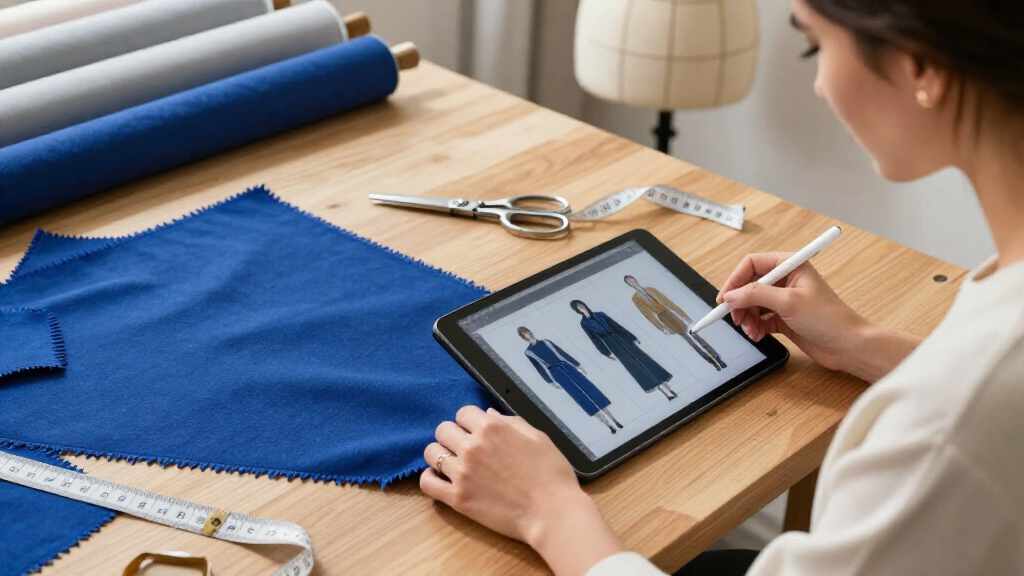
I ranked these three options by their fit for people searching for AI fashion design tools, rather than treating every AI-related fashion resource as interchangeable. A usable design tool should help someone create or develop fashion concepts. A book can still be valuable, but its role is instruction and context, not direct generation or editing. That distinction shapes the order and the recommendations below.
Directness of use case was my first measure. Fashion Studio Designer Premium appears to be the closest match to a hands-on design workflow based on its name, so it takes the lead for buyers who want a product rather than a book. Yet the supplied listing contains no product description or feature specifications. I do not infer that it includes image generation, garment templates, technical flats, pattern tools, export options, or any particular AI capability. Its rank reflects apparent category fit, not verified performance.
I also considered clarity of scope. The AI and data-driven guide is described as covering trend forecasting, creative innovation, professional workflows, and the fashion metaverse. That gives a prospective reader a clearer sense of its subject than the first product’s sparse listing. The sustainable-fashion book has a distinct audience and application range, with activewear, plus-size fashion, accessories, and sustainability at its center. I rank it after the broader professional guide because its stated focus is narrower, not because those topics are less valuable.
Finally, I weighed who can act on the content. Readers seeking practical design output should favor a confirmed software product; readers building methods or understanding should look at the books. The available description says the data-driven guide may be dense for people without AI or data-analysis experience, so I account for that learning curve. For the sustainability title, details beyond its stated subject areas are limited, and I avoid claiming specific exercises, tools, or results. This is a comparison of the information supplied, not a claim of hands-on testing.
| AI fashion design tool | ASIN | Product type | Intended audience | Primary focus |
|---|---|---|---|---|
| Fashion Studio Designer Premiu | B0HHRXMHFW | Presented as a fashion design product; format is not specified in the supplied details | Not specified | — |
| AI & Data-Driven Fashion Desig | B0FK2W856X | Book | Fashion professionals seeking to work smarter with AI | AI and data-driven fashion design |
| Technical Design and Sustainab | B0F7FK2VYP | Book | Readers interested in sustainable and category-specific fashion design | Technical design and sustainable fashion |
Factors to Consider When Choosing Best AI Fashion Design Tools
These three options serve different jobs, so I would start by identifying whether you need to make designs, learn AI methods, or explore a specialized design topic. Their shared connection to AI and fashion does not make them interchangeable. The product name points toward hands-on design, while the two books provide subject guidance with distinct emphases.
Decide whether you need a tool or a learning resource
If your next step is to produce or revise fashion concepts, a design application is the relevant category. Fashion Studio Designer Premium is the only entry presented as a design product, but the supplied information does not verify its features. Before choosing it, look for clear documentation on the tasks it supports, whether AI is included, and how it handles files or exports. A title alone is not enough to establish that it fits a professional workflow.
If your aim is to understand the field, choose one of the books instead. AI & Data-Driven Fashion Design is positioned around forecasting, data, and professional creative processes. The sustainability title is framed around technical design and named product areas. Neither should be treated as a substitute for software when the job requires direct design output.
Match the subject matter to your work
For broad interest in how AI and analytics could inform fashion decisions, the data-driven guide has the most relevant stated scope. It connects trend forecasting and creative innovation with professional work habits, then touches on the fashion metaverse. That makes it the more natural reading choice for design teams or professionals trying to understand where AI may fit into a wider process.
For a project centered on activewear, plus-size fashion, accessories, or sustainability, the specialized book is a closer topic match. Its stated focus is narrower than the data-driven guide, which can be an advantage when your work already has a defined category. I would choose by project need, not by assuming that either book covers every fashion design discipline in equal detail.
Check the learning curve and the level of detail
The data-driven guide may be dense for readers without an AI or data analytics background. If you are new to those subjects, consider whether you want a professional-level discussion or a gentler introduction before you commit. The provided summary does not give chapter-level information, so check the available contents if you need to know how technical the book becomes.
The sustainability title’s summary identifies its topics but says little about teaching style, examples, or exercises. Treat the subject list as a guide to its focus, not proof of a particular level of detail. For Fashion Studio Designer Premium, the issue is more basic: check product documentation for supported functions, skill level, platform, and outputs, because none are established in the supplied details.
Separate inspiration from production readiness
AI can play several roles in fashion work, from generating early concepts to informing trend choices or helping teams examine product opportunities. A book that discusses those uses can help shape decisions, but guidance is not a production tool. If you need technical flats, patterns, specification sheets, collaboration, or production-ready exports, confirm that a software product explicitly supports those tasks rather than inferring them from an AI or design label.
For the two books, assess whether their subject matches the decision you need to make. For the software-like listing, verify actual capabilities before integrating it into a deadline-driven workflow. This distinction can prevent a mismatch between a useful source of ideas and a tool expected to deliver finished assets.
Use evidence, not labels, to judge AI capability
The word AI can refer to very different functions. A product might generate images, analyze trends, assist with editing, or simply discuss AI as a topic. In this lineup, only the books’ subject areas are described, and the first product’s AI functions are not specified. I would look for concrete examples of inputs and outputs, supported formats, and clear limits before deciding that a tool can handle a particular task.
For a learning resource, look for a contents list or sample pages that show the depth and approach. For a design application, confirm whether it can work with your preferred workflow and whether outputs can be used in later stages. Specific, verifiable capabilities are a better buying signal than a broad promise of AI-powered creativity.
Frequently Asked Questions
Which option is the most direct AI fashion design tool?
Fashion Studio Designer Premium is the only option in this lineup presented as a fashion design product, so it is the closest category match for hands-on work. However, the supplied details do not confirm that it uses AI or specify its design functions. I would verify its listing and documentation before relying on it to generate concepts, edit sketches, or produce technical assets.
Which book is better for learning about AI trend forecasting?
AI & Data-Driven Fashion Design is the stronger match for that goal because its stated coverage includes trend forecasting, data analytics, creative innovation, and professional workflows. It may be a better fit for fashion professionals than for readers seeking a basic, nontechnical introduction, since the provided description cautions that it could be dense for people without an AI or analytics background.
Which option best suits sustainable or inclusive fashion interests?
Technical Design and Sustainable Fashion has the clearest connection to sustainability, activewear, plus-size fashion, and accessories. It is the more focused choice for those subject areas compared with the broad forecasting guide. The available summary does not specify how deeply the book treats each topic, so readers who need detailed methods should review its contents before choosing.
Can either book replace fashion design software?
No. The two books are described as guides or discussions of AI, technology, and fashion design, not as interactive design applications. They may help a reader understand workflows or subject matter, but the supplied details do not indicate that they create or export fashion designs. For hands-on production, choose software with documented support for the exact tasks and file outputs you need.
What should I verify before choosing Fashion Studio Designer Premium?
Check whether the product actually includes AI, which design tasks it supports, what devices or platforms it runs on, and whether it can export files suitable for your next workflow stage. The information provided here lists only its name and ASIN, so those details cannot be confirmed in this comparison. If you need professional or production-ready outputs, verify those functions directly rather than assuming they are included.
Conclusion
Choose Fashion Studio Designer Premium if you want a potential hands-on design product and can confirm its features before buying. Its category fit is strongest, but its listing information is too limited to establish what it can do. For professionals seeking guidance on AI and forecasting, AI & Data-Driven Fashion Design is the better-documented match, with the caveat that readers new to data analytics may find it demanding. If your work centers on sustainability, activewear, plus-size fashion, or accessories, Technical Design and Sustainable Fashion offers the most relevant stated focus. My main recommendation is to match the format to the task: use a verified application for making design assets and use the books to build knowledge around AI and fashion practice.