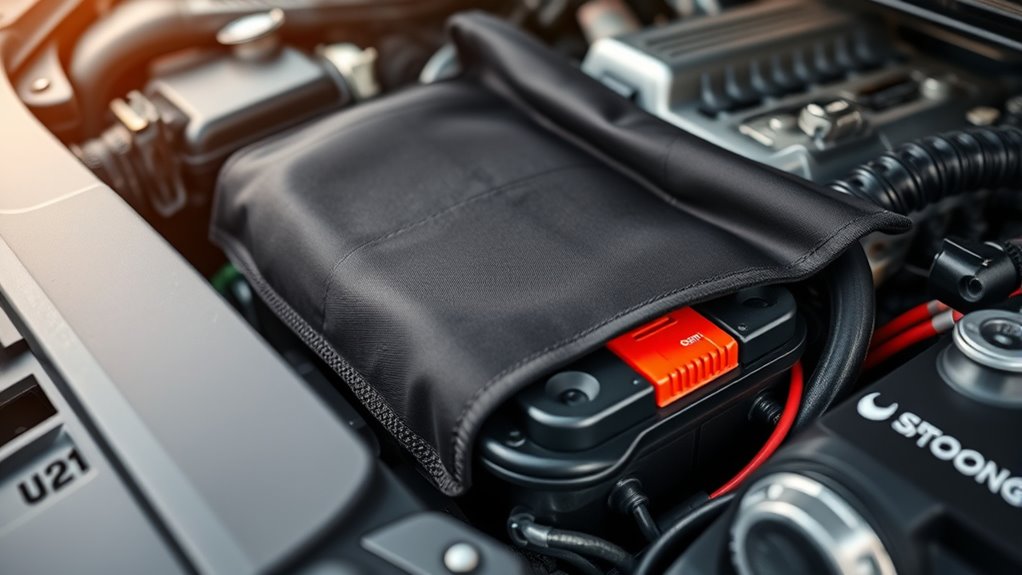

If you’re searching for a vehicle battery warmer pad, you’re likely aiming to prevent cold-weather starting issues. The top pick, the Silicone Battery Heater Pad with Smart Thermostat Control, stands out for its precise temperature regulation and ease of use. Alternatively, the Universal Car Battery Insulation Blanket Kit offers great coverage for larger batteries, while the Kat’s 22400 60 Watt Battery Pad Heater provides reliable heat at a budget-friendly price. The main challenge in this category is balancing effective warmth with safety and ease of installation. Keep reading for a detailed breakdown to help you find the best fit for your needs.

Get your wardrobe favorites delivered free with Prime
- Fast, free delivery on millions of items
- Prime Video, Amazon Music and more included
- Member-only deals all year
Key Takeaways
- Top picks combine adjustable thermostats with straightforward installation for user convenience.
- Coverage size varies significantly, affecting how well the pad can protect different battery types.
- More powerful models tend to generate better heat but may consume more energy and require careful handling.
- Build quality and materials impact durability, especially in harsh winter conditions.
- Budget options often compromise on features like thermostats or size, making them less versatile.


| vehicle battery warmer pad | Material | Voltage | Size |
|---|---|---|---|
| 8-1/2” x 7-7/8” Silicone Bat | Silicone, acid-resistant | 120V | 8-1/2” x 7-7/8” |
| 40×7 Inch Universal Car Batter | Aluminum-plated outer, high-density foam | — | 40"x7" |
| 8-1/2” x 7-7/8” Silicone Bat | Silicone | 120V | 8-1/2” x 7-7/8” |
| 2PCS Silicone Car Engine Block | Red copper | 120V | 4×5 inches |
| Kat’s 22400 60 Watt 5.5" x 8.5 | — | 120V | — |
| Luqeeg Silicone Heater Pad for | Silicone | 12V/24V | 9×5 inches |
| 8.2 x 5.5 Inches Automotive Si | High-quality silicone | — | — |
| CW-B85 Silicone Battery Heater | Silicone coating | 120 volts | — |
More Details on Our Top Picks
8-1/2” x 7-7/8” Silicone Battery Heater Pad with Smart Thermostat Control, 120V, 60W, Automotive Battery Warmer
This silicone battery heater pad stands out for its integrated smart thermostat that activates at 32°F to prevent freezing and turns off at 122°F to avoid overheating, offering precise temperature control that benefits most automotive batteries. Compared with simpler models like the Kat’s 22400, this pad provides automatic regulation, reducing the risk of damage from overheating. Its acid-resistant silicone and waterproof design make it suitable for engine bay environments, while its 72-inch cord offers flexible placement. The tradeoff lies in its limited voltage compatibility—works only with 120V outlets—and the absence of a ground connection, which might concern some users. Overall, this pick makes the most sense for owners seeking reliable, automated battery warming without manual adjustments.
Pros:- Smart thermostat prevents freezing and overheating
- Easy to install without tools or adhesives
- Durable, acid-resistant silicone construction
Cons:- No ground connection on the plug
- Limited to 120V power sources
Best for: Vehicle owners who want a smart, easy-to-install solution that prevents battery freezing and overheating.
Not ideal for: Users with non-standard batteries or those needing a universal, multi-vehicle option that requires trimming or modifications.
- Size:8-1/2” x 7-7/8”
- Voltage:120V
- Wattage:60W
- Cord Length:72 inches
- Temperature Range:32°F to 122°F
- Material:Silicone, acid-resistant
Our verdict“Ideal for drivers seeking a reliable, automated battery heater that adapts to cold weather conditions.”
40×7 Inch Universal Car Battery Insulation Blanket Kit for Cold Weather & Heat Protection
This insulation blanket offers superior thermal protection, capable of handling temperatures from -40°F to 300°F, making it a standout for extreme climates. Compared with silicone pads like the 8-1/2” x 7-7/8”, this blanket covers more surface area and provides insulation that maintains battery health in both extreme cold and intense heat. Its fireproof materials and high-density foam ensure durability and safety, but the installation process involves trimming and multiple steps, which could be challenging for less experienced users. Although it fits most standard batteries easily, some may need to trim for non-standard sizes. This product makes the most sense for those who need robust thermal protection across seasons and weather conditions.
Pros:- Provides excellent thermal insulation in extreme temperatures
- Easy to install with no cutting for standard batteries
- Resists corrosion and leaks for long-term use
Cons:- May require trimming for non-standard batteries
- Installation involves multiple steps
Best for: Owners in regions with harsh winters or hot summers who want full coverage and maximum protection.
Not ideal for: Casual drivers in mild climates who need a simple, low-cost solution and don’t face extreme temperatures.
- Size:40″x7″
- Thickness:5mm
- Material:Aluminum-plated outer, high-density foam
- Temperature Range:-40°F to 300°F
- Fit:Universal, fits 95%+ batteries
Our verdict“Best suited for drivers needing comprehensive, all-weather battery protection in severe climates.”
8-1/2” x 7-7/8” Silicone Battery Heater Pad with Thermostat, 120V, 60W
This silicone heater pad offers thermostatic control to prevent overheating, making it a solid choice for standard automotive batteries. Compared to the smart thermostat version like B0FJWZFTDP, this model lacks automatic activation at low temperatures but still provides reliable temperature regulation within its range. Its silicone construction is durable and easy to install, suitable for most standard batteries, but it doesn’t include advanced features or waterproofing beyond basic needs. Its main limitation is that it is strictly designed for automotive use, so it’s less flexible for other applications. This makes it ideal for users who want a straightforward, thermostatically controlled pad without extra features.
Pros:- Thermostatic temperature regulation prevents overheating
- Durable silicone construction for automotive use
- Easy to install and operate
Cons:- Limited to automotive battery applications
- Requires a power source for operation
Best for: Car owners seeking a simple, thermostatically regulated battery heater for everyday winter use.
Not ideal for: Those needing a universal or heavy-duty insulation solution, or multi-vehicle compatibility.
- Size:8-1/2” x 7-7/8”
- Voltage:120V
- Wattage:60W
- Material:Silicone
- Temperature Control:Thermostatically controlled (32°F to 122°F)
Our verdict“Suitable for drivers who want a straightforward, thermostatically controlled battery heater for everyday cold weather conditions.”
2PCS Silicone Car Engine Block Heater Pad, 4×5 inches, 150W, 120V
This engine block heater focuses on warming the engine rather than the battery, which can significantly improve cold starts by reducing oil viscosity. Compared with battery-specific pads like the silicone options, these are more suitable for engine temperature management. Made of high-quality red copper, they provide excellent heat conduction and durability, but their small size limits coverage to specific engine parts rather than overall engine block heating. Installation is straightforward for those comfortable with engine work, but the requirement for direct engine connection and the limited vehicle compatibility means it’s best for owners with compatible models listed. This pick makes sense for those prioritizing engine warm-up over battery heating alone.
Pros:- Effective at warming engine and reducing oil viscosity
- Made of durable high-quality red copper
- Easy to install with secure leak-proof seal
Cons:- Limited to specific vehicle models listed
- Requires direct installation into engine block
Best for: Owners needing to pre-warm engines in cold climates, especially for vehicles listed in the compatibility guide.
Not ideal for: Battery-focused users who want to keep batteries warm rather than engines, or owners with incompatible vehicle models.
- Size:4×5 inches
- Power:150W
- Voltage:120V
- Material:Red copper
- Application:Specific vehicle models listed
Our verdict“Best for owners aiming to improve engine startup performance in cold weather, rather than solely warming batteries.”
Kat’s 22400 60 Watt 5.5″ x 8.5″ Battery Pad Heater (22400X)
This flexible silicone pad is designed to keep batteries warm during winter, with a simple plug-in setup and easy installation. Compared to the more feature-rich models like B0FJWZFTDP, the Kat’s 22400 offers basic heating without smart regulation, relying on manual operation. Its size makes it suitable for most standard batteries, but it may not fit larger or non-standard batteries comfortably. The silicone cover provides resistance to acid and oil, adding to its durability, yet it lacks the automatic temperature regulation of pricier options. This makes it a good choice for budget-conscious users who need a straightforward solution for cold starts.
Pros:- Helps maintain battery charge in cold weather
- Silicone cover resists acid and oil
- Easy to install without mechanical skills
Cons:- Limited to specific vehicle batteries
- Requires access to a 120V outlet
Best for: Budget-minded drivers who need a simple, effective battery warmer for winter use.
Not ideal for: Owners seeking automatic or precise temperature regulation, or those with non-standard batteries requiring custom solutions.
- Wattage:60W
- Dimensions:5.5″ x 8.5″
- Voltage:120V
- Made in:USA
Our verdict“A practical, low-cost choice for those who need basic battery warming during cold months without extra features.”
Luqeeg Silicone Heater Pad for Engine and Oil Pan, 9×5 Inch, 12V/24V, 100W
This silicone heater pad stands out for its rapid heating—it reaches 100°C within a minute—making it ideal for quick engine and oil pan warming. Its automatic temperature control enhances safety by preventing overheating, a feature not found on simpler pads like the CW-B85. While the size is limited to 9×5 inches, this makes it more manageable for various engine components. Compared to larger or more specialized battery pads, this product offers a multi-purpose design, which is perfect for users needing a single solution for engine and oil heating. The tradeoff is its potential reduced durability under extreme conditions, especially since silicone can degrade with prolonged exposure to harsh weather. This pick is best suited for vehicle owners seeking a flexible, all-in-one engine and oil pan warmer.
Pros:- Fast heating to 100°C within one minute
- Automatic temperature control for safety
- Flexible silicone material suitable for different vehicle types
Cons:- Limited to 9×5 inch size, which may not fit larger engine parts
- Requires 12V or 24V power sources, limiting compatibility with some vehicles
Best for: Mechanics or vehicle owners who want a versatile heater for engine oil and block warming in various weather conditions.
Not ideal for: Those solely interested in battery warming, as its primary design targets engine components, not batteries.
- Material:Silicone
- Temperature Range:‑60°C to 200°C
- Size:9×5 inches
- Voltage:12V/24V
- Power:100 Watt
Our verdict“This product is best for users needing a quick, safe, and adaptable engine or oil pan heater, despite size and power source limitations.”
8.2 x 5.5 Inches Automotive Silicone Battery Heater Pad with Thermostatic Control
This silicone battery heater pad is designed specifically to improve cold-weather starting, offering uniform heat distribution that many general-purpose pads lack. Its automatic thermostat at around 122°F prevents overheating, providing safer operation compared to basic models like the 8-1/2” x 7-7/8” pads without thermostats. The size is well-suited to most standard batteries, making it easy to install without modifications. However, it’s incompatible with lithium-ion or nickel-cadmium batteries and requires a continuous power supply of 15-20 minutes to reach optimal warmth, which could be inconvenient for some users. Compared to the CW-B85, this pad offers a more tailored solution for battery warming but sacrifices versatility for simplicity. This product makes the most sense for drivers in cold climates needing reliable battery warmth without additional features.
Pros:- Efficient, uniform heating improves cold starts
- Thermostatic control prevents overheating
- Easy installation without modifications
Cons:- Not compatible with lithium-ion or nickel-cadmium batteries
- Requires 15-20 minutes of continuous power to reach optimal temperature
Best for: Car owners who want an easy-to-install, effective battery warmer primarily for cold-start assistance.
Not ideal for: Users with lithium-ion batteries or those seeking a multi-purpose engine or oil pan heater, as it is solely designed for batteries.
- Dimensions:8.2 x 5.5 inches
- Material:High-quality silicone
- Power Supply:120V AC
- Temperature Control:Automatic thermostat at ~122°F
- Compatibility:Not for lithium-ion, nickel-cadmium batteries
Our verdict“This pad is ideal for drivers needing a straightforward, reliable battery warmer in cold conditions, with some limitations on battery compatibility.”
CW-B85 Silicone Battery Heater Pad with Thermostatic Control, 60 Watts, 120 Volts, 2-Prong Power Cord Replacement for Automotive Batteries
The CW-B85 stands out for its balanced power output—at 60 watts, it provides steady, effective warmth without excessive energy use. Its thermostatic control activates at around 68°F, ensuring the battery stays warm enough in cold weather without risk of overheating, making it a safe choice compared to non-thermostat models. Its durable silicone coating offers flexibility and resilience across different environments. However, at 60W, it heats more slowly than higher-wattage pads like the 8.2 x 5.5-inch silicone model, meaning it takes longer to reach ideal warmth. The reliance on a 120V outlet may limit portability or use in off-grid situations. Compared to the 8.2 x 5.5-inch pad, this model emphasizes safety and durability over rapid heating. This pick is best for drivers who prioritize safe, consistent battery warming over speed.
Pros:- Effective in maintaining battery warmth in cold weather
- Thermostatic control ensures safe operation
- Durable, flexible silicone coating withstands environmental exposure
Cons:- Limited to 60W, which results in slower heating
- Requires 120V AC power source, reducing portability
Best for: Automotive enthusiasts seeking a safe, reliable, and durable battery warmer for winter conditions.
Not ideal for: Users wanting rapid warming or those with limited access to 120V power, as this model heats more slowly and requires mains electricity.
- Power:60 watts
- Voltage:120 volts
- Temperature Control:Thermostatic, off at 68°F ± 10°F
- Material:Silicone coating
- Application:Automotive batteries
Our verdict“This product is suited for users who value safety and durability for battery warming, accepting longer warm-up times and reliance on mains power.”

How We Picked
Each vehicle battery warmer pad was evaluated based on performance, build quality, safety features, ease of installation, and value for money. We prioritized products with adjustable thermostats to prevent overheating and those with reliable heating elements. Durability in cold conditions and compatibility with various battery sizes also influenced our rankings. Products were compared directly on these criteria, with a focus on real-world usability and safety, ensuring that higher-ranked options offer a balanced mix of effectiveness and user-friendliness.| vehicle battery warmer pad | Material |
|---|---|
| 8-1/2” x 7-7/8” Silicone Bat | Silicone, acid-resistant |
| 40×7 Inch Universal Car Batter | Aluminum-plated outer, high-density foam |
| 8-1/2” x 7-7/8” Silicone Bat | Silicone |
| 2PCS Silicone Car Engine Block | Red copper |
| Kat’s 22400 60 Watt 5.5" x 8.5 | — |
| Luqeeg Silicone Heater Pad for | Silicone |
| 8.2 x 5.5 Inches Automotive Si | High-quality silicone |
| CW-B85 Silicone Battery Heater | Silicone coating |
Factors to Consider When Choosing Vehicle Battery Warmer Pad
Choosing the right vehicle battery warmer pad involves considering several key factors that go beyond simple size or wattage. Assessing compatibility with your vehicle, safety features, and ease of use will ensure you select a product that provides reliable warmth without risking damage or safety hazards. This guide highlights the essential elements to keep in mind during your decision-making process.Size and Coverage
Selecting a pad that fits your battery size is critical for effective heating. Larger batteries require bigger pads or coverage kits to ensure even heat distribution. Oversized pads might be unnecessary and inefficient, while undersized ones can leave parts of the battery unprotected. Consider your vehicle’s battery dimensions carefully and look for products offering adjustable or multiple mounting options.Thermostatic Control and Safety
Thermostats prevent overheating, extending the lifespan of your battery and ensuring safety during use. Models with adjustable temperature controls give more flexibility, especially if you experience varying winter conditions. Avoid cheaper options lacking a thermostat, as they risk uneven heating or damage to your battery and vehicle components.Power Source and Compatibility
Most pads operate on 120V household power or 12V/24V vehicle power. Consider where you’ll be using the pad most often—garage, driveway, or roadside—to choose the right power type. In-vehicle powered pads are more convenient for on-the-go use but may have limitations on wattage or size. Ensure compatibility with your vehicle’s electrical system to avoid overloads or damage.Durability and Material Quality
Look for pads made of high-quality silicone or heat-resistant materials that withstand cold and moisture. Durability is vital for prolonged winter use, especially if you park outside regularly. Cheaper materials may crack, tear, or lose effectiveness quickly, leading to repeated replacements and added costs.Ease of Installation and Maintenance
A user-friendly design with clear mounting instructions and adjustable straps or adhesives can save time and frustration. Maintenance should be minimal—ideally, the pads should be easy to clean and inspect for damage. Avoid overly complex setups if you prefer quick and straightforward installation, especially for seasonal use.Frequently Asked Questions
Can I leave a vehicle battery warmer pad plugged in overnight?
Yes, most modern vehicle battery warmer pads with thermostats are designed to operate safely overnight, as they regulate temperature to prevent overheating. However, it’s important to verify that your specific model includes a thermostatic control and safety features. Always follow the manufacturer’s instructions and ensure the pad is in good condition to avoid risks such as electrical faults or damage to your battery.
Will a battery warmer pad harm my vehicle’s battery or electrical system?
When used correctly, a quality battery warmer pad with built-in safety features like thermostats and proper insulation should not harm your battery or electrical system. Problems usually arise from using incompatible models, poor quality materials, or leaving the pad plugged in improperly. Always select a product rated for your battery size and voltage, and follow installation instructions carefully.
Is a higher wattage pad always better for cold weather?
Not necessarily. A higher wattage can produce more heat, which is beneficial in extremely cold climates, but it also consumes more energy and might require additional precautions, like better insulation or circuit protection. Conversely, a lower wattage pad might be sufficient for milder cold conditions and can save energy. Choose a wattage appropriate for your climate and vehicle specifications to balance effectiveness and safety.
How do I install a vehicle battery warmer pad securely?
Installation typically involves attaching the pad directly to the battery terminals or case using built-in straps, clips, or adhesive surfaces. Ensure the pad is positioned evenly for consistent heat distribution and that wires are routed safely away from moving parts or hot surfaces. Following the manufacturer’s instructions precisely will help prevent accidental disconnections or electrical issues.
Are there any maintenance tips for prolonging the life of a battery warmer pad?
Regularly inspect the pad for signs of wear, cracking, or damage, especially after harsh weather conditions. Keep the pad clean and free from dirt or debris, and store it in a dry place during warmer months if not in use. Ensuring proper connection and avoiding prolonged exposure to moisture will help maintain its effectiveness and safety over time.
Conclusion
For most vehicle owners seeking reliable winter protection, the Silicone Battery Heater Pad with Smart Thermostat Control offers the best overall experience thanks to its adjustable temperature and safety features. Budget-conscious buyers will appreciate the Kat’s 22400 Battery Pad Heater for its affordability and dependable heat. Those with larger batteries or seeking maximum coverage might prefer the Universal Car Battery Insulation Blanket Kit. For beginners or infrequent users, a simple, easy-to-install model with basic features may suffice. Ultimately, choosing the right battery warmer pad hinges on your climate, vehicle size, and safety preferences—consider these factors carefully to ensure your battery stays warm and functional through winter.
As an affiliate, we earn on qualifying purchases.Halloween Picks
halloween