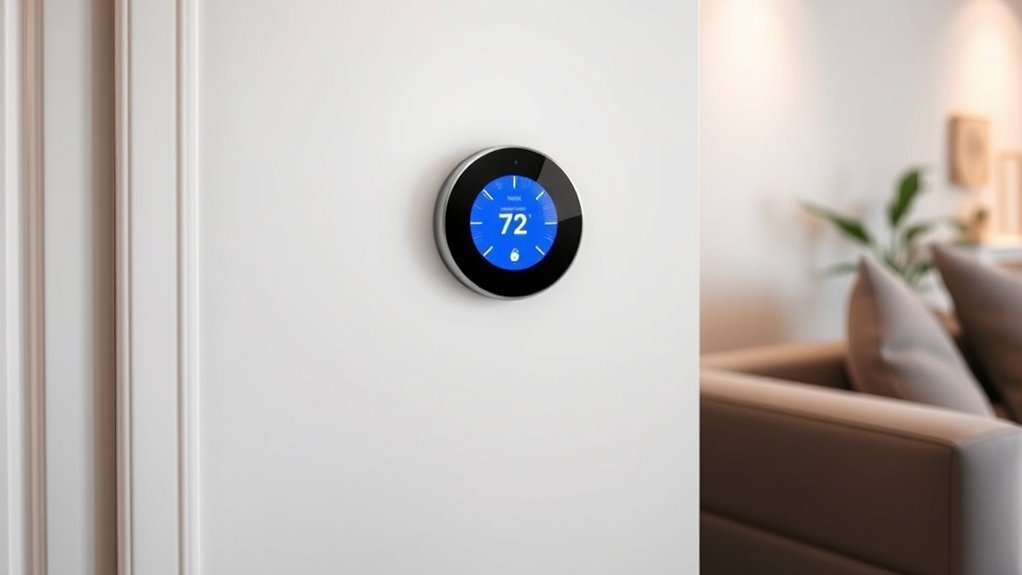

If you’re looking for the best Wi-Fi baseboard thermostats that make home temperature control easy, I recommend exploring options like the Mysa Smart Thermostat, meross, Sensi, and Honeywell models. These devices support smart home integration, remote control, and energy savings, fitting various systems and budgets. They often feature easy installation, programmable schedules, and compatibility with voice assistants. If you want to find out more about these top picks and what suits your home, keep exploring further.
Key Takeaways
- Compatibility with high-voltage electric systems (120V-240V) and support for protocols like Wi-Fi, Zigbee, Z-Wave, and HomeKit.
- Easy DIY installation with clear instructions, ideal for upgrading existing baseboard heating controls.
- Remote control and scheduling features via smartphone apps and voice assistants for convenient home temperature management.
- Support for energy monitoring, open window detection, and adaptive displays to optimize comfort and efficiency.
- Compatibility considerations include wiring requirements, system type, and voltage, ensuring proper fit for your heating setup.
Mysa Smart Thermostat LITE for Electric Baseboard Heaters
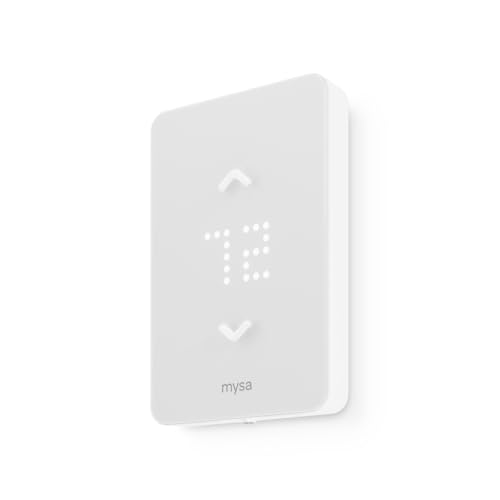

If you’re looking for an easy-to-install Wi-Fi thermostat for your electric baseboard heaters, the Mysa Smart Thermostat LITE is an excellent choice. It’s compatible with 120V-240V systems, including single and double pole setups, making it perfect for garages, workshops, or sunrooms. The installation is straightforward—just a simple 4-wire DIY process guided by an included video. Once set up, you can create custom schedules, monitor energy use, and control the thermostat remotely via the free app. Plus, it integrates with Apple HomeKit, Alexa, and Google Assistant, providing hands-free control and saving you money on heating costs.
Best For: homeowners or DIY enthusiasts seeking an easy-to-install, Wi-Fi-enabled thermostat for electric baseboard heaters in garages, workshops, or sunrooms.
Pros:
- Simple 4-wire DIY installation with included video guide
- Compatible with multiple voltage systems (120V-240V) and smart home platforms like Apple HomeKit, Alexa, and Google Assistant
- Offers customizable schedules and energy monitoring to reduce heating costs
Cons:
- Limited to line voltage electric heaters; not suitable for other heating types
- Requires Wi-Fi connectivity for full feature access, which may be a concern in areas with poor internet
- Does not include professional installation support, so some users may prefer professional setup for complex wiring
meross Smart Thermostat for Electric Baseboard and In-Wall Heaters

The meross Smart Thermostat is an excellent choice for homeowners seeking a reliable, high-voltage solution to control electric baseboard and in-wall heaters with ease. Installation takes less than 30 minutes and requires at least four wires in the electrical box. Compatible with systems up to 16A, 1920W at 120V or 3840W at 240V, it works seamlessly with electric baseboards, convectors, and radiant systems. It supports Apple HomeKit, Alexa, Google Assistant, and SmartThings, enabling voice control and automation. Its sleek LCD display, programmable schedules, energy monitoring, and open window detection make it a versatile, energy-efficient option for modern home heating management.
Best For: homeowners seeking a reliable, high-voltage smart thermostat to efficiently control electric baseboard and in-wall heaters with easy installation and comprehensive smart home integration.
Pros:
- Easy installation in less than 30 minutes with minimal wiring requirements
- Compatible with popular voice assistants including Apple HomeKit, Alexa, and Google Assistant
- Supports energy monitoring, scheduling, and open window detection for increased energy efficiency
Cons:
- Requires at least four wires in the electrical box, which may limit compatibility in some older homes
- Designed for high-voltage systems up to 16A, limiting use with lower wattage heaters
- Does not include electric baseboard heaters, requiring separate purchase of compatible units
Mysa Smart Thermostat for Electric Baseboard Heaters

For those seeking precise control over electric baseboard heaters, the Mysa Smart Thermostat stands out thanks to its compatibility with high-voltage systems and Wi-Fi connectivity. It supports 120–240V systems, handling loads up to 3800W at 240V, making it suitable for various electric heating setups. The thermostat requires at least four wires, including a neutral or second live wire, and isn’t compatible with low-voltage or two-wire systems. Its adaptive display adjusts brightness based on your approach or sleep mode. Controlled via app, voice, or touch, it integrates seamlessly with Alexa, Google Assistant, and Apple HomeKit, offering scheduling, geofencing, and energy insights for smarter home heating.
Best For: homeowners with high-voltage electric baseboard heating systems seeking a smart, customizable thermostat compatible with voice control and home automation.
Pros:
- Supports high-voltage systems up to 3800W at 240V, suitable for various electric heaters
- Seamless integration with Alexa, Google Assistant, and Apple HomeKit for voice and smart home control
- Adaptive display technology adjusts brightness based on approach or sleep mode for convenience and energy efficiency
Cons:
- Requires at least four wires, including neutral or second live wire, limiting compatibility with some systems
- Not suitable for low-voltage or two-wire electric heating setups
- Installation and setup may be complex for users unfamiliar with electrical wiring or smart thermostats
MOES Programmable Smart Thermostat for Electric Heaters

Designed specifically for electric baseboard heaters, the MOES Programmable Smart Thermostat is an excellent choice for homeowners seeking flexible and modern control over their heating systems. It supports 2.4G WiFi and works with both Alexa and Google Home for voice commands. You can easily control and schedule your heating remotely via the Smart Life/TUYA app, ensuring comfort and energy savings. The device features a glare-reducing frosted display and a manual knob for quick adjustments. Built for high-voltage systems, it requires at least four wires, including a neutral or second live wire, for proper installation. This thermostat combines digital convenience with manual control for seamless operation.
Best For: Homeowners with electric baseboard heaters seeking flexible, remote, and voice-controlled temperature management.
Pros:
- Compatible with Alexa and Google Home for convenient voice commands
- Supports remote control and scheduling via the Smart Life/TUYA app for energy savings
- Combines digital display with manual knob for quick, tactile adjustments
Cons:
- Requires at least four wires, including a neutral or second live wire, for installation
- Designed specifically for high-voltage systems, limiting compatibility with other setups
- May be more complex to install for users unfamiliar with electrical wiring
Wi-Fi Smart Thermostat for Electric Baseboard Heaters

If you have electric baseboard heaters running on 120-240V and want precise, remote control, a Wi-Fi smart thermostat is an excellent choice. It’s specifically designed for these voltages and features a Fahrenheit LCD display that shows current and target temperatures, time, and Wi-Fi status. Installation is straightforward with included components like a wall plate, screws, and wires. You can control it via an app or voice commands with Alexa or Google Assistant, allowing you to adjust settings from anywhere. Scheduling helps save energy and prevent freezing. Overall, it’s a reliable, easy-to-use solution for maintaining comfort and efficiency in your home.
Best For: homeowners with 120-240V electric baseboard heaters seeking precise, remote temperature control and energy management.
Pros:
- Easy installation with included components and straightforward setup.
- Compatible with Alexa and Google Assistant for voice control.
- Features scheduling and remote access via app to optimize energy efficiency.
Cons:
- Not suitable for 24V central heating or single pole systems.
- Rated 3.8 out of 5 stars, indicating some users may experience interface or functionality issues.
- Limited to electric baseboard heaters within specified voltage range, reducing versatility for other heating systems.
meross Smart Thermostat for Home with WiFi, Alexa, Apple Home, Google Assistant, App & Voice Control
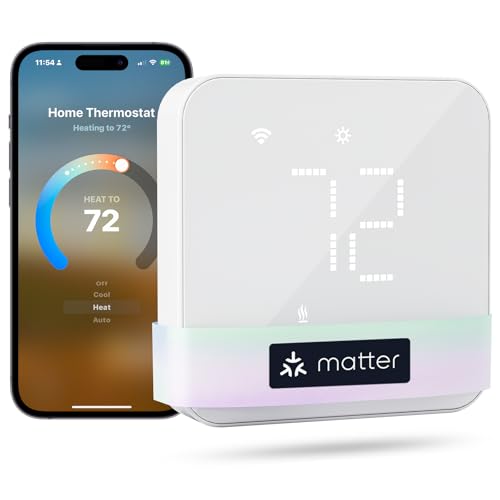
The meross Smart Thermostat stands out as an excellent choice for homeowners seeking seamless remote control and smart integration. It’s compatible with 95% of HVAC systems, including conventional, heat pumps, and heating-only setups, though it doesn’t work with electric baseboard heaters. Installation is straightforward, taking less than 30 minutes with the app’s setup wizard. It supports 2.4GHz Wi-Fi and features Matter technology, enabling local control via Apple Home, Alexa, Google Home, and Samsung SmartThings. You can also control it remotely through the app, set flexible schedules, and monitor energy use—all with voice command compatibility for added convenience.
Best For: homeowners seeking an easy-to-install, versatile smart thermostat compatible with most HVAC systems and integrated with popular smart home platforms.
Pros:
- Compatible with 95% of HVAC systems, including heat pumps and conventional setups
- Supports Matter technology for local control via Apple Home, Alexa, Google Home, and Samsung SmartThings
- Easy DIY installation under 30 minutes with comprehensive app setup wizard
Cons:
- Not compatible with electric baseboard heaters
- Requires a C-wire for proper operation; a C-wire adapter may be needed if unavailable
- Limited to 2.4GHz Wi-Fi networks, with no mention of 5GHz support
KING K902-B Hoot WiFi Line Voltage Smart Programmable Thermostat

The KING K902-B Hoot WiFi Line Voltage Smart Programmable Thermostat is an excellent choice for homeowners seeking precise control of their electric heating systems. It supports 120/208/240V and is compatible with baseboard, fan-forced, and radiant electric heaters. The modern black touchscreen features a large 4-inch LCD, Wi-Fi connectivity, and over-the-air firmware updates. You can program up to six periods daily, set maximum temperatures, and lock controls for security. Its electronic sensing guarantees accurate temperature regulation within ±1ºF. Easy to install with a double pole, 4-wire setup, and controlled remotely via the Hoot app, it offers flexible, reliable heating management.
Best For: homeowners seeking precise, Wi-Fi-enabled control of their electric heating systems with customizable scheduling and security features.
Pros:
- Supports multiple voltage ratings (120/208/240V) suitable for various electrical setups
- Large 4-inch LCD touchscreen with modern black design for easy operation
- Wi-Fi connectivity and app control for remote programming and adjustments
Cons:
- Average customer rating of 3.7 out of 5 stars may indicate mixed satisfaction
- Listed at a relatively high price point compared to basic thermostats
- Installation requires a double pole, 4-wire setup, which might be complex for some DIY users
Sensi Lite Smart Thermostat

For homeowners seeking an easy-to-install, energy-efficient thermostat, the Sensi Lite Smart Thermostat stands out with its Wi-Fi connectivity and compatibility with voice assistants like Alexa. It’s ENERGY STAR certified, helping you save around 23% on HVAC costs through features like scheduling, geofencing, and remote access. Designed for DIY installation, it includes a built-in level and step-by-step instructions, requiring only a C-wire for certain systems. Most HVAC setups are compatible, and your data stays private since Sensi doesn’t sell personal info. With its user-friendly app, you can control your home’s temperature from anywhere, making comfort simple and efficient.
Best For: homeowners seeking an easy-to-install, energy-efficient smart thermostat with remote control and voice assistant compatibility.
Pros:
- Easy DIY installation with built-in level and step-by-step instructions
- ENERGY STAR certified, promoting energy savings of around 23% on HVAC costs
- Compatible with Alexa and remote control via mobile app for convenience
Cons:
- C-wire required only for heat/cool and heat pump systems, which may complicate installation in some setups
- Limited advanced customization features compared to more complex smart thermostats
- May not be compatible with all HVAC systems, especially those with non-standard wiring
Honeywell Wi-Fi Smart Color Thermostat
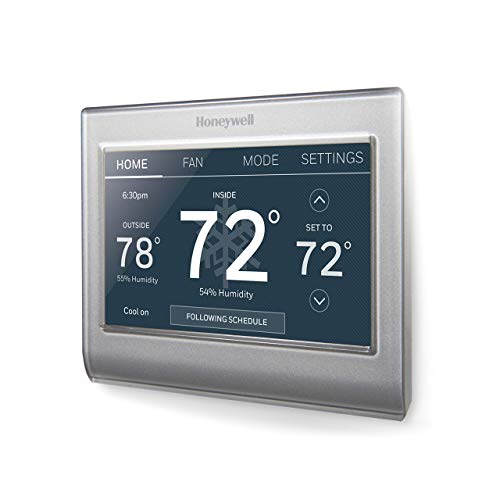
Looking for a thermostat that combines customization with smart control? The Honeywell Wi-Fi Smart Color Thermostat might be just what you need. It offers customizable color options to match your home décor and a bright, easy-to-read touchscreen for intuitive operation. This 7-day programmable model supports flexible scheduling, perfect for adapting to your routine or utility rates. It’s compatible with many HVAC systems, including forced air, hot water, and steam, but requires a C-wire for installation. With seamless integration with Alexa, Google Home, and mobile apps, you can control your temperature remotely. Plus, its Energy Star certification helps save energy and reduce bills.
Best For: homeowners seeking a customizable, energy-efficient smart thermostat compatible with various HVAC systems and integrated with voice assistants for remote control.
Pros:
- Customizable color options and bright touchscreen for personalized usability
- Compatible with multiple HVAC systems and supports remote control via Alexa, Google Home, and mobile apps
- Energy Star certified, offering energy reports and rebate program options
Cons:
- Requires a C-wire for installation, which may necessitate additional setup or adapters
- Not compatible with electric baseboard heat (120-240V) or heating-only oil furnaces without C-wire
- May be complex to install for users unfamiliar with HVAC wiring or smart device setup
Honeywell Home RTH6580WF Wi-Fi 7-Day Programmable Thermostat, White

Are you seeking a smart thermostat that seamlessly integrates with your home’s Wi-Fi and offers flexible programming? The Honeywell Home RTH6580WF makes remote control easy through the Total Connect Comfort or Honeywell Home apps, so you can adjust your temperature from anywhere. It supports voice commands with Alexa, Google Assistant, and Cortana, enhancing your smart home setup. Its large, backlit display and intuitive controls make it user-friendly. Designed for DIY installation, it works with many heating systems (excluding electric baseboard heat). ENERGY STAR certified, it helps save energy and reduce bills by learning your household patterns with Smart Response technology.
Best For: homeowners seeking an easy-to-install, Wi-Fi-enabled smart thermostat compatible with various heating systems and voice assistants.
Pros:
- User-friendly controls with a large, backlit display and intuitive interface.
- Supports remote management via smartphone apps and voice commands with Alexa, Google Assistant, and Cortana.
- ENERGY STAR certified, promoting energy savings through learning household patterns and Smart Response technology.
Cons:
- Requires a C-wire (24 VAC) for power, which may not be available in all setups.
- Not compatible with electric baseboard heat (120-240V).
- Operates on 2 AA batteries (not included) for backup power, which need periodic replacement.
KING K901-W Hoot WiFi Smart Programmable Thermostat

The KING K901-W Hoot WiFi Smart Programmable Thermostat stands out as an ideal choice for homeowners seeking precise electric heater control and flexible scheduling. Its compatibility with 120/208/240V systems makes installation straightforward for various setups, fitting single-pole, 3-wire configurations. The large LCD touchscreen provides an intuitive interface, while the ability to program four or six daily periods offers tailored comfort. With an accurate thermistor sensing temperature within ±1ºF and remote control via the Hoot app, it combines smart features with reliable performance. Firmware upgrades over WiFi ensure the thermostat stays current, making it a versatile and convenient addition to any electric heating system.
Best For: homeowners seeking precise, customizable control of electric heating systems with remote access and easy installation.
Pros:
- Compatible with 120/208/240V systems for versatile installation options
- Large LCD touchscreen simplifies programming and daily adjustments
- OTA firmware updates keep the thermostat current with new features and improvements
Cons:
- Limited to single-pole, 3-wire installations which may not suit complex wiring setups
- Designed primarily for electric heaters, not suitable for other HVAC systems
- Requires WiFi connection for remote features, which may be a concern in areas with unstable internet
MAXKOSKO WiFi Smart Thermostat with Touchscreen for Electric Floor Heating

If you want a smart, easy-to-control thermostat for your electric floor heating system, the MAXKOSKO WiFi Smart Thermostat with Touchscreen is an excellent choice. It features a sleek LED touchscreen display, compatible with 120V and 240V power, making it suitable for most underfloor heating setups. The included 15-foot floor sensor guarantees consistent temperature regulation, and the device is simple to install with a clear manual. You can control it remotely via your smartphone app, and it supports voice commands through Alexa and Google Assistant. Its intuitive design and programmable features help optimize comfort while reducing energy costs.
Best For: homeowners seeking an easy-to-install, smart thermostat to efficiently control their electric floor heating system remotely.
Pros:
- Features a sleek, user-friendly touchscreen LED display for easy operation.
- Compatible with both 120V and 240V power supplies, suitable for most setups.
- Supports voice control via Alexa and Google Assistant, enabling hands-free management.
Cons:
- Only available in white, limiting color options to match decor.
- Requires hardwired installation, which may be challenging for DIY beginners.
- Limited to electric floor heating systems; not compatible with other HVAC types.
Sensi Smart Thermostat
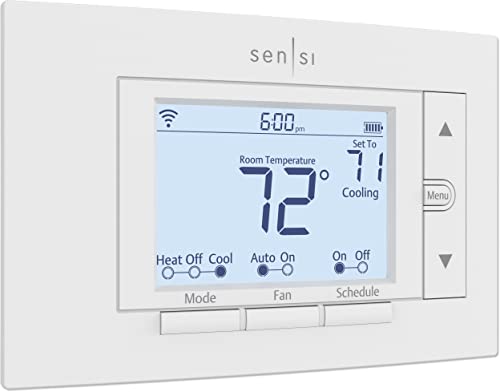
Looking for a smart thermostat that’s easy to install and integrates seamlessly with your existing HVAC system? The Sensi Smart Thermostat (model ST55) from Emerson is a top choice. It features Wi-Fi connectivity, works with Alexa, Google Assistant, SmartThings, and Vera, and fits standard wall spaces—no need for a common wire in most cases. Its intuitive setup includes a built-in level and step-by-step app instructions, making DIY installation straightforward. With a sleek design, a bright 5-inch LED display, and energy-saving features like scheduling and remote access, Sensi combines reliability, security, and convenience for effortless home temperature control.
Best For: homeowners seeking an easy-to-install, energy-efficient smart thermostat that seamlessly integrates with popular voice assistants and smart home systems.
Pros:
- Simplifies DIY installation with a built-in level and step-by-step app instructions
- Compatible with major smart home platforms like Alexa, Google Assistant, SmartThings, and Vera
- Helps save approximately 23% on HVAC energy costs through scheduling and remote access
Cons:
- May not require a C-wire in most cases, but some systems could still need additional wiring assistance
- Limited to models and systems compatible with Wi-Fi and standard HVAC configurations
- The 5-inch LED display may be considered small or less customizable compared to higher-end thermostats
Honeywell Home Smart Thermostat

Are you seeking a smart thermostat that seamlessly integrates with various smart home platforms and helps you save on energy costs? The Honeywell Home Smart Thermostat fits the bill. It supports WiFi connectivity, works with Alexa, Google Assistant, and Apple Home Kit, and is Matter Certified for smooth compatibility. Designed for conventional and heat pump systems, it offers customizable scheduling, auto-away, and demand response features. Its LCD display and app control make adjustments easy, while interchangeable decorative accents help match your decor. ENERGY STAR certified, it promotes energy efficiency, reduces bills, and supports utility programs—making it a smart choice for modern homes.
Best For: homeowners seeking a versatile, energy-saving smart thermostat compatible with multiple smart home platforms and customizable to match their decor.
Pros:
- Supports seamless integration with Amazon Alexa, Google Assistant, Apple Home Kit, and Matter Certified for broad compatibility
- Offers flexible scheduling, auto-away, and demand response features to optimize energy efficiency
- Interchangeable decorative accents and customizable display settings enhance aesthetic appeal and user experience
Cons:
- Requires a C-wire for installation, which may necessitate additional power adapters or wiring work
- Price may vary, and some users might find it higher compared to basic thermostats
- Limited to systems with up to 2 heat/2 cool conventional or 2 heat/1 cool heat pump configurations
Programmable Smart Thermostat with WiFi and App Control

A programmable smart thermostat with WiFi and app control is ideal for homeowners seeking seamless temperature management and energy savings. I love how it offers a 7-day schedule with fully automatic or manual modes, plus a 5+1+1 weekly plan with six daily stages. It’s compatible with Apple HomeKit, Alexa, Google Assistant, and supports the Matter protocol, ensuring no compatibility issues. The easy-to-use LED touch screen, voice control, and weather forecast features make adjusting my home’s climate simple. Plus, it’s energy-efficient, saving around 35% compared to traditional thermostats. Installation is straightforward, and the sleek design fits well with modern decor.
Best For: homeowners seeking a versatile, energy-efficient smart thermostat compatible with multiple voice assistants and smart home protocols.
Pros:
- Supports a wide range of integrations including Apple HomeKit, Alexa, Google Assistant, and Matter protocol.
- Features a user-friendly LED touch screen with customizable backlight and weather forecast display.
- Saves approximately 35% energy compared to traditional thermostats, promoting cost savings.
Cons:
- Requires compatible junction box or converter for installation in some setups.
- Limited to electric heating systems; not suitable for gas or hybrid systems.
- May need a learning curve for users unfamiliar with smart home devices and app controls.
Factors to Consider When Choosing a Wi-Fi Baseboard Thermostat
When selecting a Wi-Fi baseboard thermostat, I consider how well it matches my heating system and the strength of its Wi-Fi connection. Ease of installation and programmable scheduling are also key, along with features like energy monitoring that help me save. By focusing on these points, I can find a thermostat that fits my needs perfectly.
Compatibility With Heating Systems
Choosing a Wi-Fi baseboard thermostat that works seamlessly with your heating system starts with verifying its compatibility with your specific setup. First, check that the thermostat matches your voltage system, whether it’s 120V, 208V, or 240V, to guarantee safe operation. Next, confirm it supports your heater type—electric baseboards, radiant heaters, or fan-forced units—so it can control your system properly. Also, see if your wiring setup requires a neutral or second live wire, especially for high-voltage systems, and confirm the thermostat’s load capacity (watts or amps) can handle your heater’s power needs. Lastly, verify that the communication protocol is compatible with your smart home ecosystem, whether Wi-Fi, Zigbee, or Z-Wave, for seamless integration.
Wi-Fi Connectivity Quality
Ensuring your Wi-Fi baseboard thermostat stays connected relies heavily on the strength and stability of your Wi-Fi network. A strong signal with minimal interference guarantees reliable communication between the thermostat and your router. Using a dual-band router that supports both 2.4GHz and 5GHz frequencies can enhance connectivity stability, especially if the thermostat supports both. It’s crucial to test signal strength at the installation site to prevent issues caused by distance or obstacles like walls and furniture. Poor Wi-Fi quality can delay firmware updates, which are indispensable for security and performance improvements. Additionally, network congestion from multiple devices can slow data transfer, affecting the thermostat’s responsiveness and accuracy. Prioritizing a robust, interference-free connection ensures your thermostat functions seamlessly.
Ease of Installation
Selecting a Wi-Fi baseboard thermostat that’s easy to install can save you time and frustration. First, make sure it’s compatible with your existing wiring—most require at least four wires, including a neutral or second live wire. Look for models that include clear, step-by-step instructions or video guides, which make setup straightforward. It’s also helpful if the mounting system fits standard electrical boxes and wall plates, ensuring a seamless fit in your home. Many thermostats support DIY installation and don’t need a professional electrician, especially with basic wiring. Features like built-in levels or tool-free mounting simplify the process further by making alignment and attachment quick and easy. Overall, choosing a user-friendly design minimizes installation hassle and gets your smart heating system up and running faster.
Programmable Scheduling Options
Programmable scheduling options can substantially enhance your comfort and save energy by allowing you to set specific heating periods throughout the day and week. Most Wi-Fi baseboard thermostats support multiple daily time periods, usually between 4 to 6, for precise temperature control. Advanced features often include customizable start and end times, so you can tailor heating patterns to your schedule, whether it’s weekdays or weekends. Consistent scheduling helps reduce energy waste by automatically adjusting temperatures during unoccupied or sleep hours. Some thermostats even provide graphical weekly schedules, making it easy to visualize and modify your routines for maximum efficiency. Overall, flexible scheduling helps ensure your home stays comfortable while minimizing unnecessary energy consumption.
Energy Monitoring Features
Have you ever wondered how much energy your heating system consumes and whether you’re using it efficiently? An energy monitoring feature lets you track real-time and historical power use, giving you valuable insights into your system’s performance. With accurate data, you can identify inefficiencies, reduce waste, and save money by adjusting schedules or settings. Some thermostats provide detailed reports and insights through their apps, helping you make informed decisions about your energy consumption. Additionally, energy monitoring can alert you to system malfunctions or abnormal usage, enabling timely maintenance. When integrated with your smart home system, it can optimize overall energy efficiency across multiple devices and zones. This feature not only enhances control but also promotes smarter, cost-effective heating management.
Voice Control Support
When choosing a Wi-Fi baseboard thermostat, considering its voice control support can considerably enhance your convenience and ease of use. I recommend ensuring it works with popular voice assistants like Amazon Alexa, Google Assistant, or Apple Siri for seamless integration. Check if the thermostat allows customizable voice commands and routines, so you can tailor how you control your heating verbally. It’s also important to verify that voice control comes standard, with no extra subscriptions or upgrades needed. Look for models with simple setup processes that fit into your existing smart home system. Finally, responsive voice recognition and clear audio feedback make interactions smoother, reducing frustration. A thermostat with solid voice control features can turn home temperature management into a truly hands-free experience.
Price and Warranty Coverage
Price and warranty coverage are crucial factors to contemplate because they directly affect the overall value and peace of mind you get from your Wi-Fi baseboard thermostat. I recommend comparing initial costs carefully, as prices can range widely based on features and brands. Equally important is reviewing the warranty duration; most offer 1 to 3 years for parts and labor, but some higher-end models provide extended warranties or accidental damage coverage. Check if the warranty includes remote repair support or replacement services, which can save you money and frustration long-term. Also, read the fine print for coverage limitations or installation requirements. Balancing price with solid warranty coverage ensures you’re making a smart investment that offers reliable performance and peace of mind.
Frequently Asked Questions
How Do Wi-Fi Thermostats Impact Overall Energy Efficiency?
Wi-Fi thermostats boost my home’s energy efficiency by allowing me to precisely control the temperature remotely. I can adjust settings from anywhere, avoid unnecessary heating or cooling, and optimize energy use based on my schedule. They often include smart features like learning routines and energy reports, which help me identify ways to save. Overall, I find that these thermostats reduce my energy bills while keeping my home comfortable.
Can These Thermostats Be Integrated With Existing Smart Home Systems?
Yes, these thermostats can often be integrated with existing smart home systems. I’ve found that most Wi-Fi baseboard thermostats are compatible with popular platforms like Alexa, Google Home, or Apple HomeKit. You just need to guarantee the thermostat you choose supports your system’s protocol. Once set up, I can control my heating remotely and automate schedules, making home management more convenient and efficient.
What Is the Typical Installation Process for Wi-Fi Baseboard Thermostats?
The installation process for Wi-Fi baseboard thermostats usually starts with turning off the power to your heating system. I then remove the old thermostat, connect the new one’s wires according to the instructions, and mount it on the wall. After that, I power everything back on, connect the thermostat to Wi-Fi, and configure it through the app. It’s straightforward, but I recommend following the manufacturer’s guide closely.
Are There Any Compatibility Issues With Specific Electric Baseboard Heater Models?
Yes, some Wi-Fi baseboard thermostats may not be compatible with certain electric baseboard heater models. I recommend checking the thermostat’s specifications and consulting the manufacturer’s guidelines to guarantee compatibility. It’s also helpful to verify the voltage and wattage ratings match your heater’s requirements. If unsure, I suggest reaching out to a professional or the thermostat manufacturer for personalized advice to avoid installation issues.
How Secure Is the Wi-Fi Connection for Controlling Home Temperature Remotely?
Oh, the thrill of controlling your home’s temperature from a coffee shop—what could go wrong? Rest assured, Wi-Fi connections for thermostats are quite secure, especially with proper encryption and password protections. I make sure to update my firmware regularly and choose reputable brands. So, while remote control is tempting, I don’t lose sleep over hackers—just good security practices. Your home stays cozy and safe, no espionage required.
Conclusion
Choosing the right Wi-Fi baseboard thermostat can make your home more comfortable and energy-efficient. Did you know that smart thermostats can save you up to 10-15% on heating costs? With options like Mysa, meross, and Honeywell, you’ll find a solution that fits your needs. Upgrading your thermostat isn’t just about convenience — it’s about taking control of your home’s temperature and reducing wasted energy. Ready to make the switch?