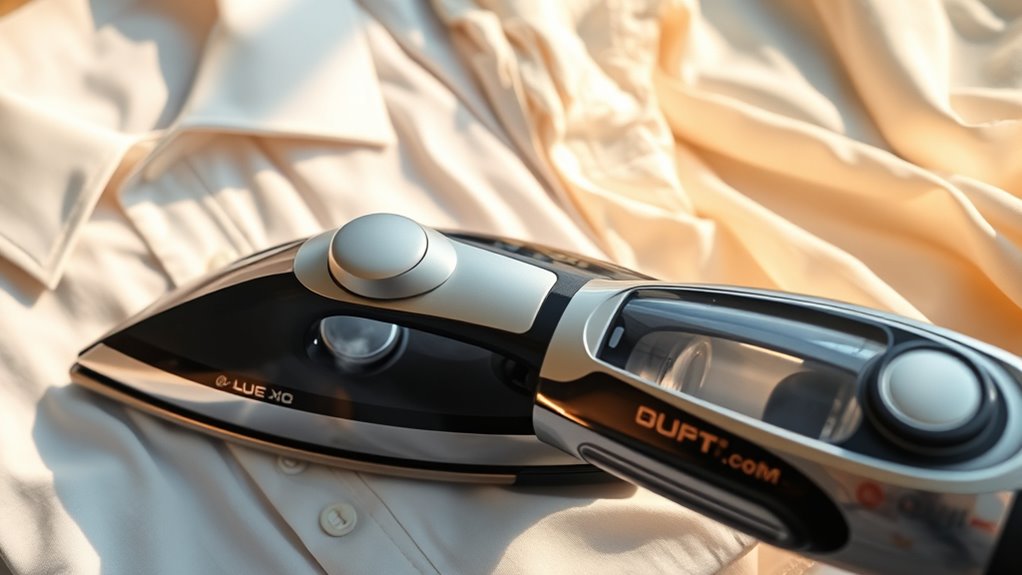

When choosing between ironing and steaming, consider your fabric type and desired result. Use ironing for sturdy fabrics like cotton and linen to create sharp creases and a polished look. Steaming works better for delicate textiles like silk or chiffon, gently relaxing fibers and removing wrinkles without damage. For quick touch-ups or hanging garments straight from the closet, steaming is convenient. To learn more about how to make the best choice, keep exploring effective garment care tips.
Key Takeaways
- Use an iron for crisp, sharp creases and pressing seams on sturdy fabrics like cotton and linen.
- Opt for a steamer to quickly remove wrinkles and refresh delicate fabrics such as silk, chiffon, or polyester.
- Choose ironing when a polished, professional look with defined lines is required; steam is better for gentle wrinkle relaxation.
- Steaming is ideal for hanging garments directly, saving time and avoiding fabric damage from high heat.
- Use an iron for flat surfaces and pressing tasks; steamers are more suitable for quick touch-ups and intricate details.
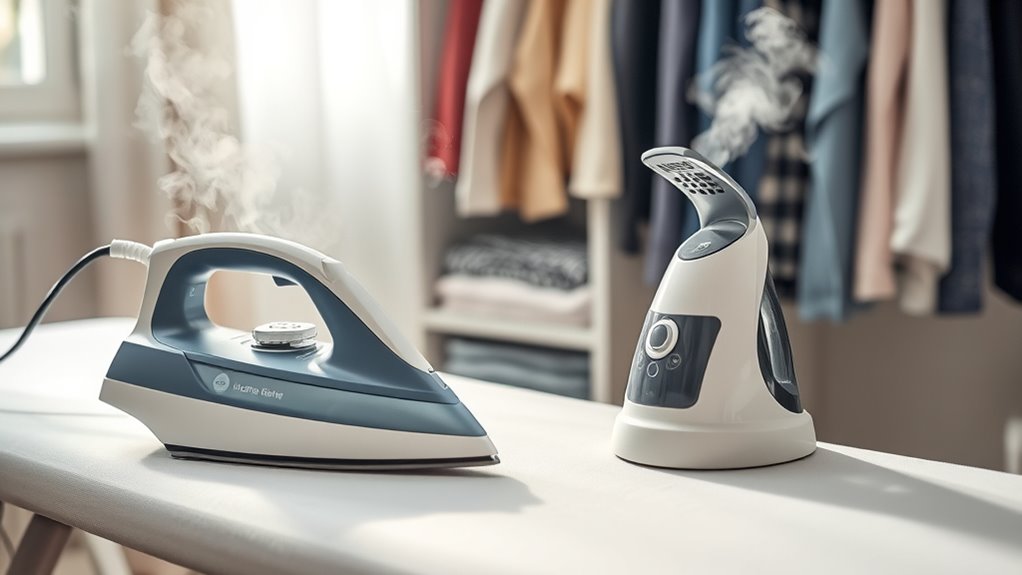
When it comes to removing wrinkles from your clothes, you might wonder whether ironing or steaming is the better option. The answer depends on several factors, including fabric types and steam efficiency. Understanding these elements helps you choose the right method for each garment and achieve the best results.
Fabric types play a *vital* role in deciding whether to iron or steam. For instance, cotton and linen fabrics respond well to traditional ironing because their sturdy fibers can handle direct heat and pressure without damage. Ironing these materials creates sharp creases and smooth finishes. On the other hand, delicate fabrics like silk, chiffon, or polyester benefit more from steaming. These materials are sensitive to high temperatures and can easily scorch or develop shiny spots if ironed directly. Steaming gently relaxes fibers and removes wrinkles without risking damage, making it a safer choice for fragile textiles.
Cotton and linen handle ironing well, while silk and polyester benefit from gentle steaming.
Steam efficiency is another key consideration. Steamers are often more efficient at relaxing fabric fibers, especially for garments that are heavily wrinkled or have intricate details. The continuous flow of steam penetrates deep into the fabric, loosening fibers and smoothing out creases quickly. This process is particularly helpful when you’re in a hurry or need to freshen up clothes without setting up an ironing board. Conversely, traditional irons with adjustable heat settings are effective for pressing garments flat and creating crisp lines. They excel at pressing seams, cuffs, and collars, which require direct contact and firm pressure. When it comes to steam efficiency, steamers tend to be more adaptable for quick touch-ups and delicate fabrics, whereas irons provide precise control for structured garments.
Additionally, consider the versatility of each method. Steaming is generally more convenient for hanging clothes directly on a hanger, making it ideal for everyday touch-ups or for removing wrinkles from suits, dresses, and curtains. Irons, however, are better suited for flat surfaces and tasks that need firm pressing, like creating sharp pleats or ironing sheets and tablecloths. Both tools have their strengths, but understanding your fabric types and how effectively each uses steam will guide you toward the best choice.
Furthermore, some modern airless paint sprayers incorporate features that allow for precise control of pressure and spray patterns, which can be analogous to choosing the right heat and steam settings for different fabrics. Ultimately, knowing when to use ironing or steaming helps you care for your clothes properly and extend their lifespan. Use steam for delicate fabrics and quick refreshes, and opt for ironing when you want a crisp, polished look on sturdier textiles. By mastering the specific needs of your fabrics and the capabilities of each method, you’ll keep your wardrobe looking sharp and well-maintained.

FORNO Lazio Dual Fuel 30″ Inch. Gas Range Electric Oven Freestanding 5 Sealed Burners 69,500 BTU Stove-Top Output, Electric Oven Includes Air Fryer and Griddle
2 Year Warranty and we stand behind each appliance we design and manufacture. The Lazio Freestanding 30-Inch Dual...
As an affiliate, we earn on qualifying purchases.
Frequently Asked Questions
Can Steaming Replace Ironing for All Fabric Types?
Steaming can’t replace ironing for all fabric types because steaming effectiveness varies depending on the material. For delicate fabrics like silk or polyester, steaming works well and is gentle on the fibers. However, for heavy or stubborn wrinkles on cotton or linen, ironing might be more effective. You should choose your fabric care method based on the fabric’s needs, ensuring you avoid damage while achieving smooth, crisp results.
Is It Safe to Steam Delicate Garments Without an Iron?
Sure, you can steam delicate garments without an iron, but don’t expect a flawless finish without risking fabric safety. Steam penetration gently relaxes fibers, making wrinkles disappear, but too much heat might harm sensitive fabrics. If you’re aiming for crisp perfection, an iron’s your best bet. Otherwise, use a gentle hand with the steamer, and remember: sometimes, delicate fabrics prefer a careful touch over steam’s bold embrace.
How Does Steam Affect Stubborn Wrinkles Compared to Ironing?
Steam penetrates stubborn wrinkles more effectively than ironing because it relaxes fabric fibers through deep wrinkle relaxation. You’ll notice that steam, especially with higher pressure, loosens tough creases without direct contact, making it ideal for delicate or intricate garments. Ironing relies on heat and pressure to smooth wrinkles, but steam offers better penetration for stubborn creases, especially in thick or layered fabrics, providing a quick and gentle way to achieve a crisp look.
Are There Specific Fabrics That Should Only Be Ironed or Steamed?
Certain fabrics require specific care, so you should only iron or steam them. For delicate materials like silk or lace, steaming is gentler and helps prevent damage. On the other hand, cotton or linen often benefit from ironing to smooth out stubborn wrinkles and set creases. Always check garment material considerations and fabric-specific care labels to determine the best method, ensuring your clothes stay in top shape without harm.
Does Steaming Save More Time Than Traditional Ironing?
Steaming generally saves you more time than traditional ironing, especially with vertical steaming and portable steamers. You can quickly remove wrinkles from hanging garments without setting up an ironing board, making it ideal for busy mornings. Portable steamers let you touch up clothes on the go, saving even more time. Overall, steaming offers a faster, more convenient way to keep your clothes wrinkle-free without the hassle of traditional ironing.

36" Freestanding Dual Fuel Range Oven Stove, Stainless Steel Gas Stove with 6 Sealed Burners and 6.0 Cu.Ft Electric Convection Oven, True Convection and Self-Cleaning, Perfect for Home or Commercial
【Expansive Cooking Space】 The 36-inch freestanding oven stove combo boasts a spacious 6.0 cu. ft. convection oven, ideal...
As an affiliate, we earn on qualifying purchases.
Conclusion
Now that you know when to iron and when to steam, you can transform your clothes with confidence. Picture yourself gliding the hot iron over crisp shirts, creating sharp lines, or gently steaming away wrinkles, leaving fabrics softly refreshed. Whether you prefer the precise press or the gentle mist, your clothes will look impeccable. With each touch, you bring your wardrobe to life—ready to impress, confident in your perfect balance of heat and steam.

36 Inch Freestanding Dual Fuel Range Oven Stove, 6.0 Cu. Ft True Convection and Self Clean, Cooktop 6 Sealed Gas Burners, Stainless Steel
SPACIOUS COOKING CAPACITY: The 36-Inch Freestanding Oven Stove Combo features a spacious 6.0 cubic foot convection oven, perfect...
As an affiliate, we earn on qualifying purchases.

36 Inch Freestanding Dual Fuel Range Oven Stove, 6.0 Cu.Ft, Stainless Steel Electric Convection Oven with Self Clean, 6 Sealed Gas Burner for Home and Commercial Use
【Spacious Cooking Capacity】 The 36-inch freestanding oven stove combo features a generous 6.0 cu. ft. convection oven, ideal...
As an affiliate, we earn on qualifying purchases.