Choosing between battery-powered and hardwired motorized shades depends on your priorities for installation, energy use, and smart home integration. Battery shades are easier to install, ideal for rentals or temporary setups, but require periodic battery changes. Hardwired shades offer a seamless, energy-efficient solution that’s more permanent, though they involve more invasive wiring and higher initial costs. To find out which option best suits your lifestyle and needs, explore the details ahead.
Key Takeaways
- Battery shades are easier to install and ideal for temporary or rental spaces, while hardwired shades offer a permanent, seamless setup.
- Hardwired shades provide consistent power and lower long-term maintenance, unlike battery shades which require periodic replacements or recharging.
- Battery-powered shades offer greater flexibility and easier integration with existing smart home systems.
- Hardwired options are more energy-efficient and less affected by power outages, but involve higher upfront installation costs.
- Consider your lifestyle, installation preferences, and maintenance willingness when choosing between battery and hardwired motorized shades.
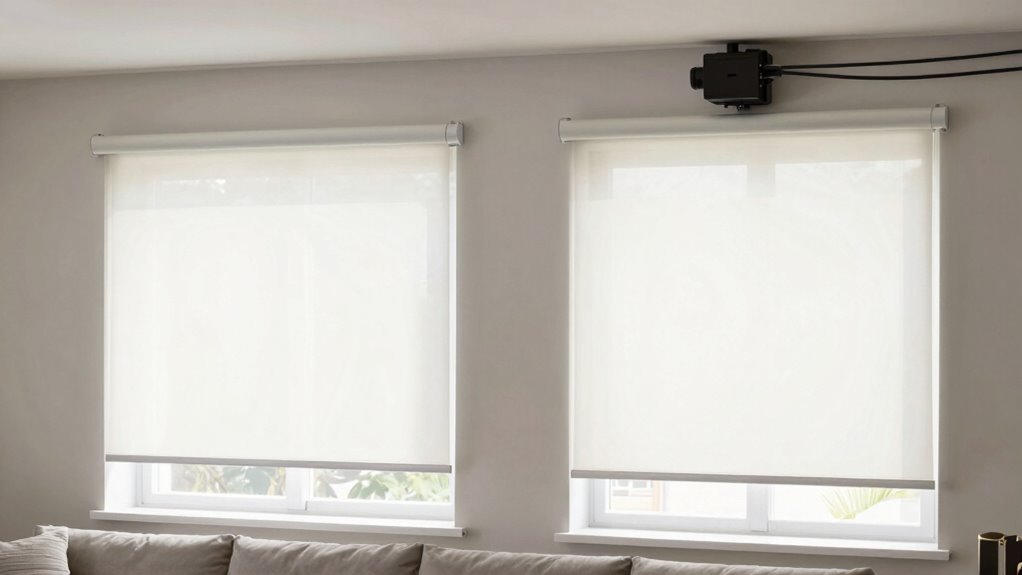
When choosing motorized shades, understanding the differences between battery-powered and hardwired options is vital to making the right decision for your home. Both types offer convenience and automation, but their distinct features influence how well they fit your lifestyle and your home’s infrastructure. If you prioritize smart home integration, battery-powered shades often provide easier compatibility. They typically connect wirelessly to your smart system, allowing you to control shades through apps, voice commands, or automation routines without needing complex wiring. This flexibility makes them ideal if you already have a smart home setup or want to expand your system gradually.
Battery-powered shades offer easy smart home integration with wireless control and flexible setup options.
Energy efficiency is another important factor to contemplate. Hardwired shades usually draw power directly from your home’s electrical system, ensuring a consistent energy supply and eliminating the need for frequent battery replacements. This stability can contribute to more reliable operation, especially in heavily used areas. Conversely, battery-powered shades depend on rechargeable or replaceable batteries, which can impact energy consumption and require maintenance. Over time, replacing batteries can add to your household’s energy footprint and maintenance efforts, though some models are designed to be energy-efficient and have long-lasting batteries. Additionally, smart home compatibility is often easier to achieve with battery-powered shades due to their wireless nature.
Installation is a vital consideration in your decision-making process. Hardwired shades typically require professional installation due to the need for wiring, which might involve drilling and running cables through walls or ceilings. This can be more invasive and costly upfront but results in a neat, integrated look. Battery-powered shades, on the other hand, are generally easier to install, often just needing a simple mounting process without electrical work. If you’re renting or hesitant about major renovations, battery-powered shades can be a more practical choice. Moreover, some homeowners prefer the less invasive setup that battery-powered options provide, especially in historically sensitive or rented spaces. It’s also worth noting that advancements in battery technology have improved the energy efficiency of cordless shades, making them more practical than ever. Furthermore, ongoing innovations in battery technology continue to enhance the overall performance and longevity of these shades, ensuring they remain a reliable option.
Maintenance is another aspect where these options differ. Battery-powered shades require periodic battery replacements or recharging, which can be inconvenient if you have many shades or hard-to-reach locations. Hardwired shades almost eliminate this concern, offering continuous power and reducing ongoing maintenance. However, if your home experiences power outages or fluctuations, hardwired shades might be susceptible unless connected to an uninterruptible power supply. It’s also important to consider the long-term costs associated with each option, as maintenance and installation expenses can vary significantly over time.
Ultimately, your choice hinges on your priorities—whether you value ease of installation, ongoing maintenance, smart home compatibility, or energy efficiency. Battery-powered shades excel in flexibility and quick setup, making them suitable for temporary or non-permanent installations. Hardwired shades provide a more permanent, energy-efficient solution with seamless integration into your home’s electrical system. Weighing these tradeoffs helps you select the perfect motorized shades that align with your home’s needs and your lifestyle.
battery operated motorized shades
As an affiliate, we earn on qualifying purchases.
As an affiliate, we earn on qualifying purchases.
Frequently Asked Questions
How Long Do Battery-Powered Shades Typically Last Before Replacement?
Battery-powered shades typically last around 6 months to a year before needing replacement, depending on battery lifespan and usage frequency. If you use your shades daily, expect more frequent replacement. To extend battery life, choose shades with energy-efficient motors and consider rechargeable batteries. Regularly monitoring the battery level helps prevent unexpected shutdowns. Overall, replacement frequency varies, but proper maintenance can maximize your shades’ performance and lifespan.
Are Hardwired Shades More Energy-Efficient Than Battery-Powered Options?
Hardwired shades are more energy-efficient than battery-powered options because they draw power directly from your home’s electrical system, reducing energy consumption. This consistent power supply guarantees better power efficiency, especially if you use your shades frequently. Battery-powered shades, while convenient, rely on batteries that deplete over time, leading to less than ideal energy use. If energy savings are your goal, hardwired shades are the better choice.
Can Battery Shades Be Integrated With Smart Home Systems?
Yes, battery shades can be integrated with smart home systems. They often feature smart home compatibility, allowing you to control them via apps or voice commands. When choosing, consider the battery capacity, as larger capacities provide longer operation between charges. Many modern battery shades seamlessly connect with systems like Alexa, Google Assistant, or Apple HomeKit, making your automation setup easy and efficient.
What Are the Typical Installation Costs for Each Type?
Imagine transforming your space effortlessly—installation costs vary widely. Battery shades usually cost less upfront, typically $200 to $400, with simple installation. Hardwired shades, however, involve higher costs, around $300 to $600, due to more complex wiring and professional setup. The cost comparison highlights that battery shades are more budget-friendly and easier to install, while hardwired shades offer permanence but require more effort and expense.
How Do Maintenance Requirements Differ Between Battery and Hardwired Shades?
You’ll find that battery shades require minimal maintenance but need periodic battery replacements, which can raise durability concerns over time. Hardwired shades, on the other hand, demand less upkeep since they’re permanently connected, reducing the risk of failure. When considering aesthetic considerations, hardwired options offer a sleeker look without batteries or cords, but battery shades provide easier installation and flexibility. Both choices need regular operation checks to guarantee smooth functioning.
Conclusion
Choosing between battery and hardwired motorized shades is like picking the right brush for a masterpiece. Battery shades offer freedom and simplicity, letting you paint your space without wires tangling your vision. Hardwired shades provide a seamless, permanent foundation, like a sturdy frame supporting your design. Weigh your needs carefully—whether you crave flexibility or permanence—and you’ll craft a window treatment that truly elevates your home’s story.