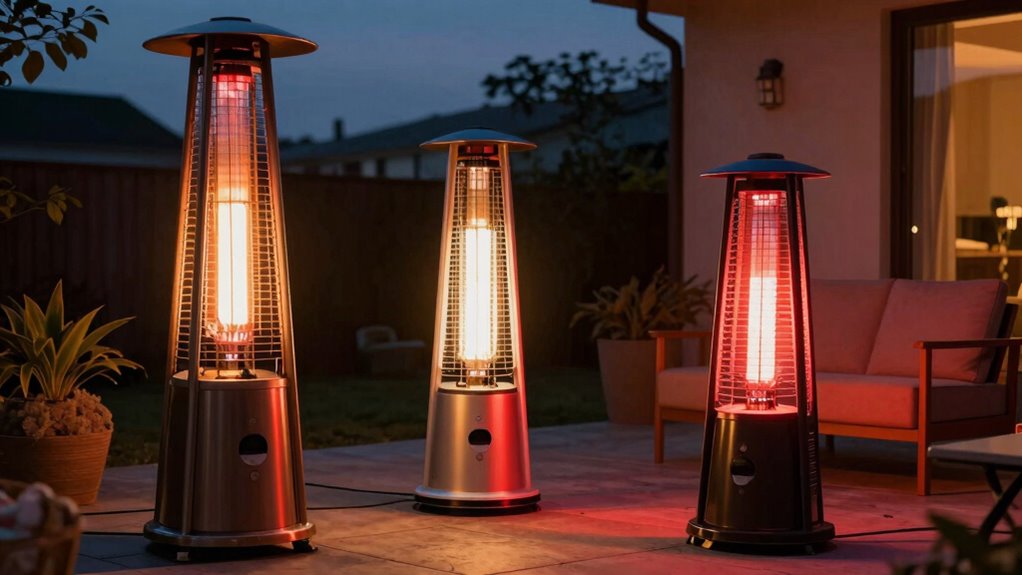
When choosing a patio heater, consider safety, efficiency, and convenience. Propane heaters offer quick, intense warmth but require careful handling and ventilation. Electric heaters are safer, easier to use, and eco-friendly, but need an accessible power supply. Infrared heaters balance efficiency and safety, providing targeted heat without open flames or fumes. Each option suits different outdoor needs; exploring further will help you pick the best fit for your space.

Get your wardrobe favorites delivered free — and shop member deals
- Fast, free delivery on millions of items
- Access to Prime Big Deal Days deals on October 6–7
- Prime Video, Amazon Music and more included
Key Takeaways
- Propane heaters provide quick, intense heat and high portability but require careful handling and ventilation.
- Electric heaters are safer, environmentally friendly, and low-maintenance but depend on electrical access.
- Infrared heaters efficiently target specific areas, offering quick warmth with minimal safety concerns.
- Propane offers rapid heat but has higher fuel costs and safety risks; electric and infrared are safer and more eco-friendly.
- Selection depends on outdoor space, safety preferences, energy efficiency, and convenience needs.
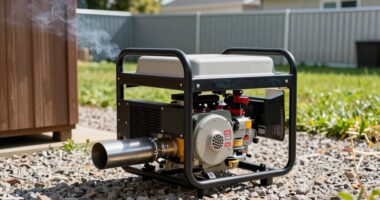
When it comes to extending your outdoor living space into cooler months, choosing the right patio heater can make all the difference. Your decision impacts not just comfort but also energy efficiency and safety concerns. Propane heaters are popular because they produce quick, intense heat and are portable. They’re ideal if you want to move your heater around or if your outdoor space isn’t wired for electricity. However, they tend to consume more fuel, which can lead to higher energy costs over time. Safety is another consideration—propane tanks must be handled carefully to prevent leaks or accidents, and adequate ventilation is necessary to avoid the buildup of harmful fumes. If you prioritize energy efficiency, propane heaters can be less economical in the long run, especially if used frequently. Additionally, the overall safety and environmental impact of different heaters are important factors to consider when making your choice.
Choosing the right patio heater impacts comfort, safety, and energy costs for your outdoor space.
Electric patio heaters, on the other hand, are generally safer and easier to operate. They don’t produce open flames or fumes, reducing safety concerns significantly. These heaters are often more energy-efficient than propane models because they convert electricity directly into heat with minimal waste. If your outdoor space is close to an electrical source, an electric heater can be a cost-effective and low-maintenance choice. They also tend to be more environmentally friendly, as they don’t emit carbon monoxide. On the downside, electric heaters might not deliver the same immediate, intense warmth as propane or infrared options, especially in large or open areas. Their effectiveness depends on the power supply, so if you’re in a remote location without easy access to electricity, this could limit their practicality.
Infrared heaters are often regarded as a middle ground, combining quick warmth with energy efficiency. They work by emitting infrared radiation that directly heats objects and people rather than the surrounding air, making them very effective in outdoor settings. Because they target specific areas, they tend to use less energy while providing ample heat where you need it most. Safety concerns are also minimal with infrared heaters—they don’t produce open flames or fumes, and many models come with safety features like automatic shut-offs. Their compact design makes them easy to install and move, and they’re suitable for small patios or larger spaces alike. Overall, infrared heaters strike a balance between efficiency, safety, and performance, making them an excellent choice if you want reliable warmth without the drawbacks associated with propane or electric models.
Choosing the right heater also involves understanding the safety considerations and how each type aligns with your outdoor environment and usage habits.
As an affiliate, we earn on qualifying purchases.
Frequently Asked Questions
Are Patio Heaters Safe for Indoor Use?
Patio heaters are generally unsafe for indoor use due to indoor safety concerns like carbon monoxide buildup and fire hazards. You should never place heaters too close to walls or furniture—proper heater placement is vital to prevent accidents. Always follow manufacturer instructions and opt for heaters specifically designed for indoor use. Keeping the area well-ventilated and installing carbon monoxide detectors guarantees safer indoor environments when using outdoor-style heaters.
How Long Does Each Heater Type Last Before Requiring a Refill or Replacement?
Propane heaters last about 8 to 12 hours per tank, making them less fuel-efficient but quick to refill. Electric heaters run continuously without refills but depend on power availability, and their lifespan is around 5 to 10 years with proper maintenance. Infrared heaters typically last 10,000 hours, needing replacements only after extensive use. Installation challenges vary: propane requires tanks, electric needs outlets, and infrared units are usually straightforward to set up.
Can Propane Heaters Be Used in Windy Conditions?
When the wind picks up, using a propane heater is like sailing against the gusts—challenging but doable with care. Propane heaters can be used in windy conditions if they’re designed with wind resistance in mind, but you must take safety precautions. Confirm the heater is stable, shield it from direct wind, and keep the flame protected. Always follow the manufacturer’s safety instructions to prevent accidents.
What Are the Maintenance Requirements for Each Heater Type?
You need to regularly check each heater type to guarantee durability and fuel efficiency. Propane heaters require cleaning of burners and tanks, while electric ones need cord and plug inspections. Infrared heaters demand no fuel maintenance but should be kept free of dust and debris. Regularly inspecting and cleaning your heater prolongs its lifespan, maintains efficiency, and ensures safe operation, regardless of whether it’s propane, electric, or infrared.
Are There Any Eco-Friendly Patio Heater Options Available?
Yes, eco-friendly patio heater options are available. You can choose renewable options like electric heaters powered by solar energy, which are eco-conscious choices, reducing your carbon footprint. Infrared heaters often have higher efficiency, wasting less energy. Look for models with eco labels or certifications, and consider solar-powered or energy-efficient electric heaters to enjoy outdoor warmth while supporting sustainability. These choices help you stay warm and environmentally responsible.
Conclusion
When choosing a patio heater, consider your space and heating needs. For instance, if you enjoy cozy gatherings in chilly evenings, an infrared heater might be your best bet due to its quick warmth. Imagine hosting a dinner on your deck, feeling instantly warm thanks to infrared technology. Whether you choose propane’s portability, electric’s convenience, or infrared’s rapid heat, selecting the right heater guarantees your outdoor space remains comfortable all season long.
Fall Picks
fall essentials
As an affiliate, we earn on qualifying purchases.