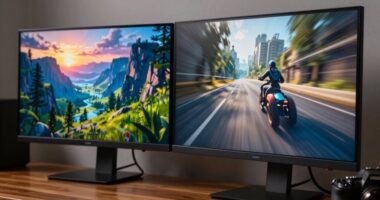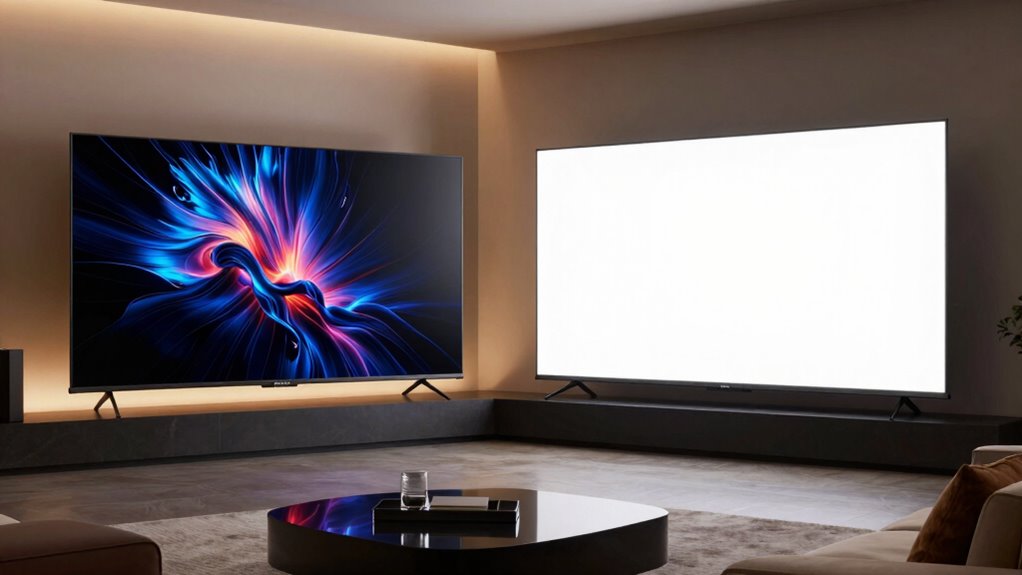

If you often watch in a dark room, OLED delivers perfect black levels and stunning contrast, making it ideal for immersive viewing. For brighter spaces or rooms with lots of ambient light, Mini-LED offers higher brightness and energy efficiency, reducing glare and washout. While OLED excels in color accuracy and deep blacks, Mini-LED is more durable and better suited for daytime viewing. To discover which technology fits your environment and habits best, keep exploring the details.

Get your wardrobe favorites delivered free — and shop member deals
- Fast, free delivery on millions of items
- Access to Prime Big Deal Days deals on October 6–7
- Prime Video, Amazon Music and more included
Key Takeaways
- Choose OLED for dark rooms to enjoy perfect blacks and superior contrast; opt for Mini-LED in bright rooms for higher brightness and visibility.
- Prioritize OLED if color accuracy and deep blacks are essential; select Mini-LED for better brightness and energy efficiency in well-lit spaces.
- Consider OLED’s risk of burn-in for static images; Mini-LED offers greater durability and longevity with less burn-in concern.
- For immersive viewing in controlled lighting, OLED provides exceptional picture quality; for versatile environments, Mini-LED handles ambient light better.
- Balance your preferences for image quality, energy use, and room lighting to select the display technology that best suits your needs.
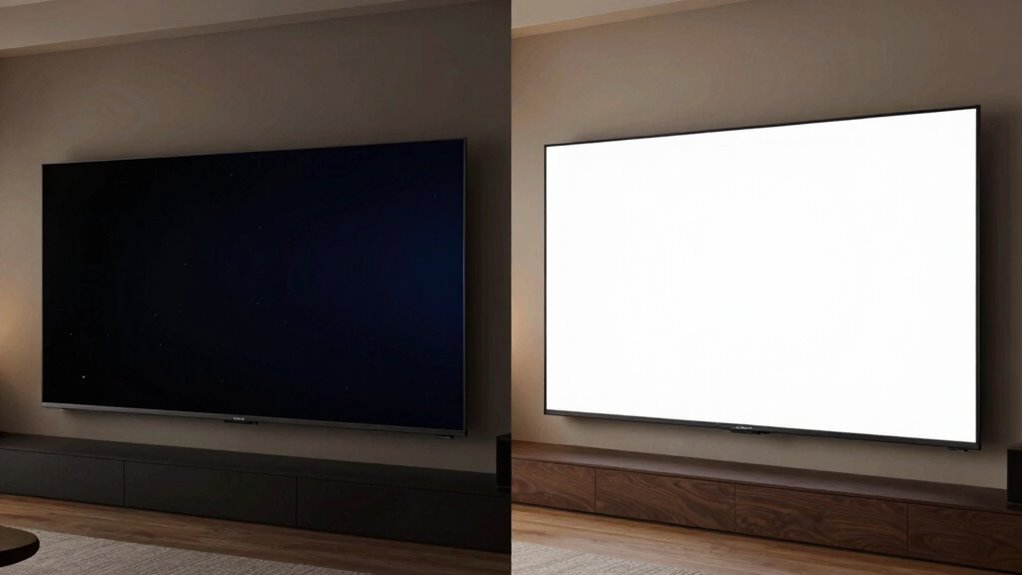
When choosing between OLED and Mini-LED displays, understanding their key differences can help you make an informed decision. Both technologies offer impressive picture quality, but they cater to different needs and preferences. OLED screens excel in delivering exceptional contrast and deep blacks because each pixel emits its own light. This results in superior color accuracy, especially in darker scenes, making images look more vibrant and lifelike. If you prioritize accurate color reproduction and a stunning visual experience, OLED is a compelling choice. However, OLED displays tend to consume more energy when displaying bright images because each pixel individually powers itself, which can impact energy efficiency—particularly if you watch a lot of daytime content or use the screen for extended periods.
OLED offers superior contrast and vibrant colors but consumes more energy during bright scenes.
Mini-LED technology, on the other hand, uses thousands of tiny LEDs behind an LCD panel to produce brightness and contrast. While it doesn’t match OLED’s perfect blacks, Mini-LEDs considerably improve contrast ratios over traditional LED displays. They offer brighter images, making them ideal for rooms with abundant natural light or environments where high ambient brightness is common. Energy efficiency is another important factor where Mini-LEDs have an edge. Their backlighting system is more efficient because it can dim or turn off specific zones based on the content, reducing power consumption during darker scenes. This targeted dimming means you can enjoy vivid, high-contrast images without draining your energy supply as quickly as OLEDs might.
Additionally, longevity and burn-in risks** are considerations, as OLED screens can suffer from burn-in over time if static images are displayed for long periods, while Mini-LEDs tend to be more durable in this regard. Newer manufacturing techniques are also helping to mitigate some of these concerns, making Mini-LEDs increasingly competitive as a long-term investment. Furthermore, advancements in color accuracy are narrowing the gap between the two technologies, providing more options for consumers seeking precise visuals. Size and viewing environment also influence your choice. If you have a dark room and want the best possible picture quality with perfect blacks, OLED’s superior color accuracy and contrast make it the ideal pick. But if your room is bright or you prefer a screen that can get very bright for HDR content, Mini-LEDs may serve you better, especially given their higher peak brightness and energy efficiency. Ultimately, your decision should hinge on what matters most to you—whether it’s the perfect blacks and color precision of OLED or the brightness, energy savings, and durability of Mini-LEDs. By weighing these differences carefully, you can pick a screen that fits your room’s lighting conditions, viewing habits**, and aesthetic preferences, ensuring a satisfying viewing experience tailored to your needs.
As an affiliate, we earn on qualifying purchases.
Frequently Asked Questions
Which Screen Type Is More Energy-Efficient for Everyday Use?
Mini-LED screens are generally more energy-efficient for everyday use. They have lower power consumption because their backlight can be more precisely controlled, reducing energy wastage. This means they have a smaller environmental impact over time. OLEDs, while offering superior picture quality, tend to consume more power, especially with bright images, leading to higher energy use and a greater environmental footprint. So, if energy efficiency matters, Mini-LED is the better choice.
How Do OLED and Mini-Led Screens Perform in Bright Sunlight?
In bright sunlight, OLED screens struggle with glare and reflections, like trying to see through a foggy window, while Mini-LED screens shine brighter and cut through sunlight with ease. The Mini-LED’s high brightness makes it more suitable for sunny rooms, reducing visibility issues caused by sun glare and reflections. OLEDs, with their darker pixels, often fade in intense sunlight, making outdoor viewing a challenge.
Are There Significant Price Differences Between OLED and Mini-Led TVS?
You’ll find that OLED TVs generally cost more than Mini-LED models, mainly due to their advanced display technology. When doing a price comparison, consider your budget and what features matter most. If you prioritize perfect blacks and vibrant colors and are willing to spend more, OLED might be worth it. But if you want impressive picture quality at a lower price, Mini-LED TVs offer excellent value for your money.
How Durable Is Each Screen Type Over Time?
You’ll find that OLED screens typically have a shorter lifespan because of potential burn-in issues, but with proper maintenance, they last around 10-15 years. Mini-LED screens are more durable overall, offering a longer screen lifespan and less risk of burn-in. To keep both types in good condition, you should follow maintenance requirements like avoiding static images and adjusting brightness levels regularly.
Can Both Screens Be Wall-Mounted Securely?
Imagine your sleek screen hugging the wall like a piece of modern art—that’s what wall mounting offers. Both OLED and Mini-LED screens can be securely mounted, provided you check their VESA compatibility. With proper wall mounting hardware, you can confidently hang either display, ensuring a stable fit and a clean look. Just verify the VESA pattern and weight limits, and you’ll enjoy your wall-mounted masterpiece worry-free.
Conclusion
So, which screen suits your space better? OLED’s perfect for deep blacks and vivid contrast, making every scene pop with life. Meanwhile, Mini-LED offers brighter displays and less risk of burn-in, ideal for well-lit rooms. Think about your viewing environment—do you want immersive cinematic quality or a versatile screen that adapts to your space? Ultimately, choosing the right display isn’t just about specs; it’s about creating an experience you’ll love to come home to.
Fall Picks
fall essentials
As an affiliate, we earn on qualifying purchases.