To cut your guinea pig's nails, gather the right tools like small animal nail clippers and a flashlight to see the quick. Prepare your guinea pig by calming them and handling them gently. Hold their paw firmly and trim small portions of the nail, avoiding the quick, which looks pink in light nails. Use treats to reward your pet and reduce stress. If you cut the quick, have cornstarch ready to stop any bleeding. There's more to guarantee a smooth experience!
Key Takeaways
- Use good-quality nail clippers designed for small pets to ensure a clean cut and prevent damage to the nails.
- Identify the quick, the pink area in the nail, using a flashlight for dark nails to avoid cutting it.
- Create a calm environment and position your guinea pig securely to minimize anxiety and sudden movements during trimming.
- Establish a regular trimming schedule, ideally once a month, and monitor nail length to prevent overgrowth.
- Reward your guinea pig with treats and praise after trimming to reinforce positive behavior and reduce stress.
Understanding the Importance of Nail Trimming
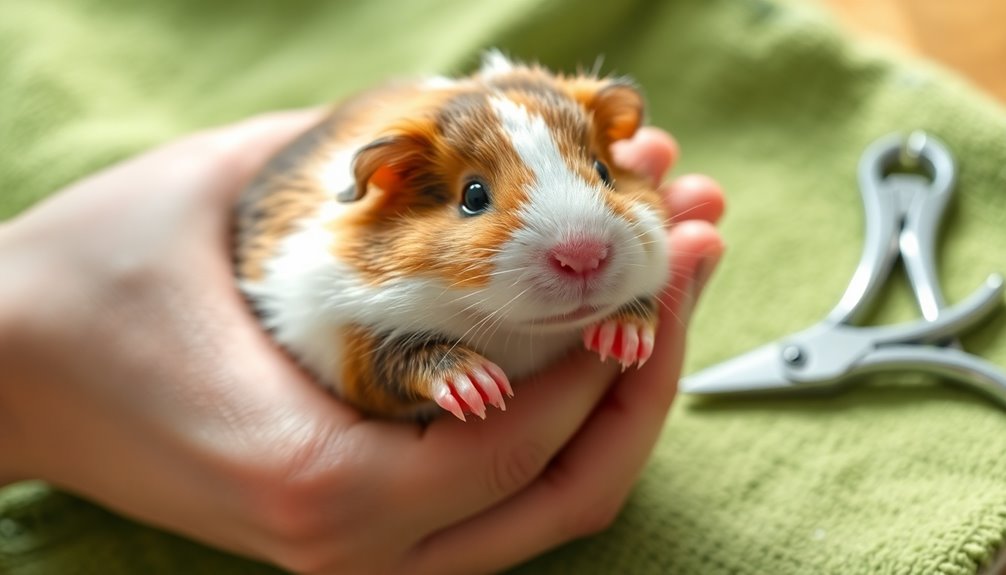
Understanding the importance of nail trimming is essential for keeping your guinea pig healthy and comfortable. Regularly getting those nails trimmed prevents the discomfort and health issues that can arise from long nails.
If you neglect to trim your guinea pig's nails, they may curl and grow into the skin, causing pain and potential infections. It's recommended to trim guinea pig nails at least once a month, and some owners prefer every two to three weeks to avoid cutting into the quick.
As guinea pig nails grow, the quick can extend, making it more challenging to trim safely. Make sure your guinea pig's nails don't touch the ground while standing; if you hear clicking sounds during walks, it's time for a trim! It's crucial to remember that regular nail trimming is a key aspect of overall pet care to ensure their well-being.
Tools You Need for Nail Trimming

Having the right tools makes all the difference when trimming your guinea pig's nails. Start with good-quality nail clippers specifically designed for small pets. These guarantee a clean cut without crushing the nail, reducing stress for both you and your guinea pig.
A small flashlight can help illuminate the quick in dark nails, making it easier to avoid cutting into it. Always have emergency supplies on hand, like cornstarch or styptic powder, to stop any bleeding if you accidentally cut the quick.
Prepare a comfortable surface, such as a potty-proof pad or towel, to keep your guinea pig stable. Finally, keep treats nearby to reward and calm your pet after successful nail trimming, reinforcing a positive experience. Additionally, maintaining a budget for pet care can ensure you have the necessary tools and supplies readily available.
Preparing Your Guinea Pig for Trimming

Before you start trimming your guinea pig's nails, it's important to prepare them properly to guarantee the process goes smoothly.
Begin by gently handling your guinea pig regularly to build trust and reduce anxiety. Familiarize them with the trimming tools; let them see and sniff the clippers before using them.
Create a calm environment by minimizing noise and distractions, making your guinea pig feel secure.
When you're ready to trim, position your guinea pig comfortably and hold them securely to prevent sudden movements.
Use positive reinforcement as a reward for their cooperation—treats or praise can go a long way in encouraging your guinea pig to stay calm during the trimming process. Additionally, ensure that proper airflow is maintained in the room to keep your guinea pig comfortable.
Identifying the Quick in Guinea Pig Nails
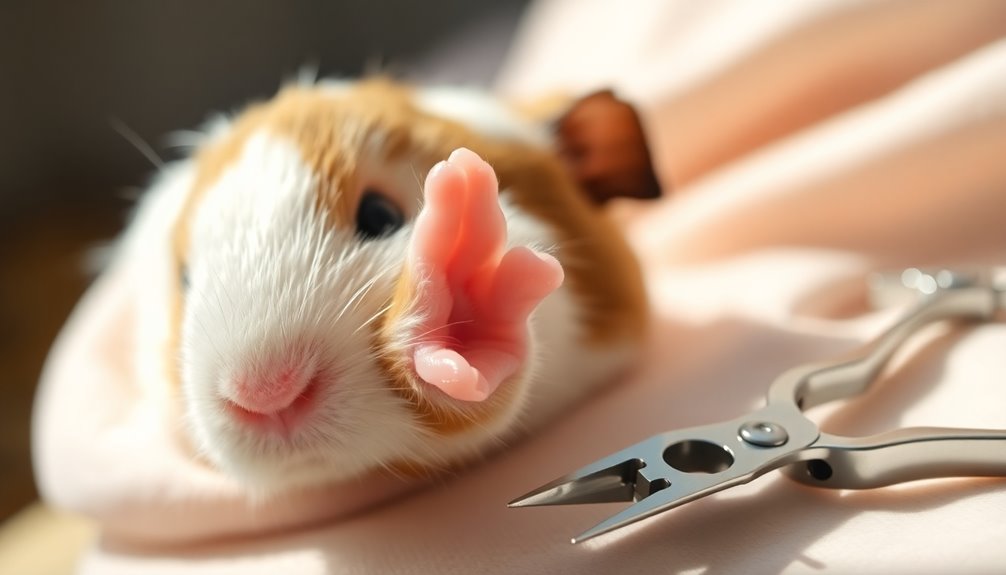
While trimming your guinea pig's nails, it is vital to identify the quick to avoid causing them pain. The quick is the pink area in the nail that contains blood vessels and nerves. For guinea pigs with white nails, the quick is easy to spot. However, with black nails, it's trickier. Using a flashlight can help you see it better. Regular trimming keeps the quick shorter, making future trims safer. Regular nail care is essential for preventing health issues as it helps maintain overall well-being for your pet.
| Nail Color | Quick Visibility | Trimming Tip |
|---|---|---|
| White Nails | Easily identifiable | Cut just beyond the quick |
| Black Nails | Difficult to see | Use a flashlight for help |
| Regular Trims | Helps the quick recede | Monitor nail length closely |
Make sure to take your time!
Step-by-Step Guide to Cutting Nails

To successfully trim your guinea pig's nails, start by gathering all the necessary tools. You'll need:
- Small pet nail clippers
- A flashlight to identify the quick of the nail
- Styptic powder for emergencies
- Treats to reward your guinea pig
Secure your guinea pig in a comfortable position, maybe wrapping them in a towel to minimize movement.
Examine each nail carefully and clip the claws, taking just a tiny bit off the tip while avoiding the quick, which is the pink part.
Trim one nail at a time, and if your guinea pig seems stressed, take a break.
Remember to offer treats after each successful clip to make the experience positive. Regular trimming helps maintain their comfort and health, just like how educational toys can enhance engagement during playtime for other pets.
Tips for Reducing Stress During Trimming

To make nail trimming less stressful for your guinea pig, set up a calm environment free from distractions. Use positive reinforcement techniques, like treats, to help create a more comfortable experience. These simple steps can make a big difference for both you and your furry friend. Additionally, maintaining high vibrational energy can help create a peaceful atmosphere during the trimming process.
Calm Environment Setup
Creating a calm environment is essential for minimizing stress during nail trimming sessions with your guinea pig. Here are some tips to help you set up a quiet and relaxing space:
- Minimize Noise: Keep the area quiet and free from distractions to help your guinea pig stay calm.
- Soft Lighting: Use gentle lighting to avoid startling your pet; bright lights can increase anxiety.
- Soothing Music: Consider playing calming music or using a familiar scent to create a more relaxing atmosphere.
- Establish a Routine: Regular nail trimming sessions help your guinea pig get used to the process, which can greatly reduce stress over time.
- Consider Temperature Regulation: Ensuring a comfortable temperature in the room can contribute to your guinea pig's overall optimal comfort, making the experience more pleasant for both of you.
Positive Reinforcement Techniques
While trimming your guinea pig's nails can seem intimidating, using positive reinforcement techniques can make the process much smoother for both you and your pet.
Start by introducing gentle handling of their feet before the trimming session. This helps your guinea pig get used to having their nails touched, reducing anxiety. Use a soothing voice and gentle strokes to reassure them, creating a calm atmosphere that minimizes stress.
During the trimming, offer treats as positive reinforcement, encouraging them to associate the process with something enjoyable. Keep the sessions short and frequent, allowing breaks to help them relax.
You can also use distraction techniques, like their favorite toy, to keep them occupied and less focused on the trimming process. Additionally, ensuring a safe environment can further decrease stress for your guinea pig during nail trimming sessions.
What to Do if You Cut the Quick

Accidentally cutting the quick of your guinea pig's nail can be distressing, but knowing how to respond can make a big difference. Follow these steps to handle the situation effectively:
- Apply pressure: Use a damp cotton ball or styptic powder to stop the bleeding.
- Keep calm: Soothe your guinea pig with gentle handling and treats to reduce stress.
- Monitor the nail: Check for continued bleeding; if it persists after a few minutes, consult a veterinarian.
- Avoid trimming that nail again: The quick may be sensitive, so wait until it's healed before attempting regular nail trimming again.
Regular nail trimming can help prevent the quick from growing excessively long, reducing the risk of cutting it in the future. Additionally, maintaining good nail health is crucial for your guinea pig's overall emotional intelligence, as it minimizes discomfort and stress during grooming.
Alternatives to Traditional Nail Trimming

If you're looking for gentler options, consider using a nail file instead of clippers to reduce stress for your guinea pig.
You can also encourage natural nail wear by placing smooth rocks or rough bricks in their cage, which they can explore while eating.
These techniques can help keep their nails healthy without the hassle of frequent trimming. Additionally, regular health checks can ensure that your guinea pig's overall well-being is maintained, including their nail health.
Nail Filing Method
Nail filing can be a gentler alternative to traditional trimming, making the grooming process less stressful for both you and your guinea pig. This nail filing method helps maintain your pet's nails at an ideal length, preventing injuries when nails grow too long.
Here are some tips to effectively use this method:
- Choose the right file: Use a nail file designed for small pets or a smooth rock in their cage.
- Monitor their nails: Keep an eye on nail growth and file them down as needed.
- Create a positive experience: Offer treats during filing to keep your guinea pig relaxed.
- Be consistent: Regular filing helps reduce the need for more intensive trimming sessions.
With this approach, your guinea pig's nails will stay healthy and manageable!
Natural Nail Wear Techniques
Regularly incorporating natural wear techniques can greatly reduce the need for traditional nail trimming in your guinea pig. By providing a smooth rock or rough surface in their cage, you help them wear their nails down as they move around. Allowing floor time on concrete can also keep their nails from getting too long.
Here's a quick overview of effective methods:
| Technique | Benefits |
|---|---|
| Smooth rock | Encourages natural wear |
| Rough surfaces | Increases friction for nail wear |
| Concrete floor time | Maintains manageable nail length |
| Regular activity | Promotes movement, aids wear |
Incorporating these techniques can lead to fewer trimming sessions and a happier, healthier guinea pig!
Establishing a Regular Trimming Schedule

To keep your guinea pig comfortable and healthy, establish a nail trimming schedule that you can stick to each month. Aim to trim your guinea pig's nails at least once a month, but adjust as needed.
Here's how to create a regular routine:
- Choose a Day: Pick a specific day each month for trimming.
- Monitor Nail Length: Look for signs like clicking on hard surfaces or curled nails.
- Adjust Frequency: If nails grow quickly, trim every two to three weeks for shorter clips.
- Use Positive Reinforcement: Offer treats or praise during and after trimming to encourage cooperation.
Frequently Asked Questions
Are You Supposed to Trim Guinea Pig Nails?
Yes, you're supposed to trim guinea pig nails regularly. Their nails grow continuously, and if you don't manage this, it can lead to discomfort and health issues for your pet.
Aim to trim their nails at least once a month, or even every two to three weeks for better maintenance. Overgrown nails can curl and cause injuries, making it essential to stay on top of this task for your guinea pig's overall well-being.
How Do You Cut an Overgrown Guinea Pig's Nails?
When you're facing the challenge of overgrown nails, remember to assess their length first, check for any curling, and gather your supplies.
You'll want to secure your guinea pig in a towel, use a flashlight to spot the quick, and trim carefully.
If you accidentally hit the quick, don't panic—apply cornstarch to stop the bleeding.
Regular, gentle trims will keep their nails manageable and make future sessions easier and stress-free for both of you.
How to Trim Guinea Pig Nails Naturally at Home?
To trim guinea pig nails naturally at home, create a rough surface in their cage, like a smooth rock or rough brick. This encourages them to wear down their nails while they eat or explore.
Let them enjoy regular floor time on hard surfaces, too. Gradually acclimate them to having their feet touched, and consider using a nail file instead of clippers for a calmer experience while rewarding them with treats.
How to Trim Guinea Pig Nails When They Are Scared?
When your guinea pig's scared, it's important to create a calm environment.
Start by wrapping them gently in a towel to limit movement and provide comfort.
Take your time, letting them acclimate to the nail clippers before you begin.
Use treats and praise to encourage cooperation, and trim one nail at a time.
If they show any signs of distress, take a break and give them some reassurance before continuing.
Conclusion
To sum up, trimming your guinea pig's nails is a delightful way to bond—after all, who wouldn't want to wrestle with a squirming ball of fur while wielding sharp scissors? Just remember, it's all fun and games until someone cuts the quick. But hey, if you're looking for excitement in your life, why not toss in a nail trimming session? So grab those clippers and embrace the chaos; your guinea pig might even forgive you—eventually!