To cut laundry microplastics, start by using microfiber filters attached to your washing machine drain or place laundry bags designed to catch fibers during washes. Opt for eco-friendly detergents, wash full loads in cold water, and avoid fabric softeners. Turning clothes inside out and air-drying can also reduce fiber shedding. These simple tools and habits make a significant difference, and if you keep going, you’ll discover more ways to protect our waterways effectively.

Get your wardrobe favorites delivered free with Prime
- Fast, free delivery on millions of items
- Prime Video, Amazon Music and more included
- Member-only deals all year
Key Takeaways
- Attach microfiber filters to washing machine drains or use lint traps to catch fibers before water is discharged.
- Use fine mesh laundry bags to contain microplastics during washing cycles, preventing fiber release into water systems.
- Wash full loads in cold water, turn clothes inside out, and avoid overloading to reduce fiber shedding.
- Opt for natural fibers, biodegradable detergents, and air-drying to minimize microfiber release and environmental impact.
- Support laundry technologies with built-in filters and adopt eco-friendly practices to significantly cut microplastic pollution.
As an affiliate, we earn on qualifying purchases.
Why Laundry Microplastics Are a Hidden Pollution Problem
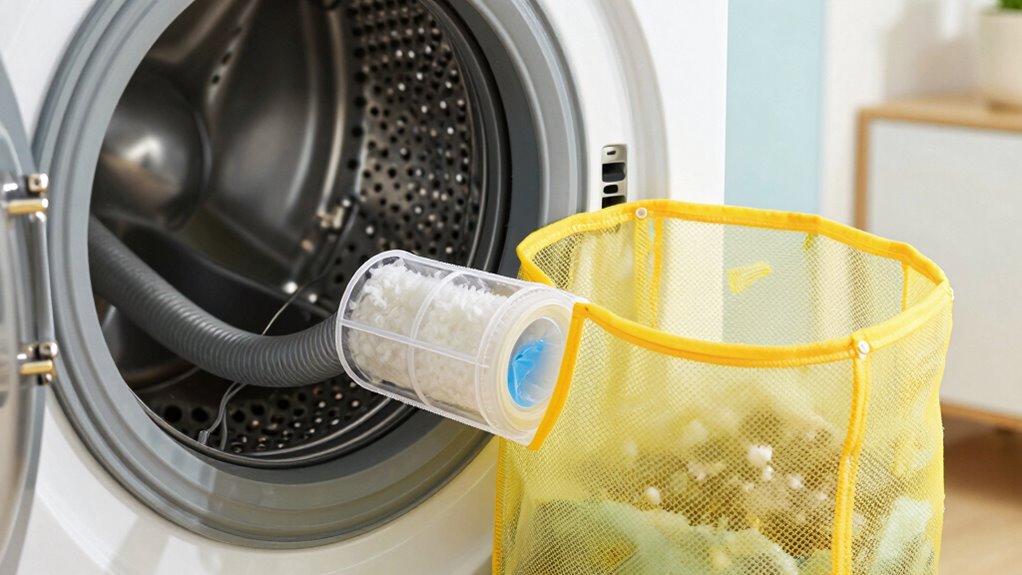
Laundry microplastics are a hidden pollution problem because they easily escape from synthetic fabrics during washing and slip through water treatment systems. When you wash clothes made from synthetic fibers like polyester or nylon, tiny fibers called microfibers shed off. This microfiber shedding happens with every wash, releasing countless small particles into your laundry water. Because these microplastics are so tiny, they’re difficult for water treatment plants to filter out completely. As a result, they often end up in rivers, lakes, and oceans, contributing to environmental pollution. You might not see these microplastics, but they accumulate in aquatic life and ecosystems. Recognizing how microfiber shedding from synthetic fabrics contributes to microplastic pollution helps you understand the importance of reducing laundry microplastics. Additionally, using specialized filters or laundry bags can greatly decrease the number of fibers released during washing. Implementing sustainable laundry practices can further minimize microplastic release and protect our waterways.
How Microplastics From Laundry End Up in Our Waterways
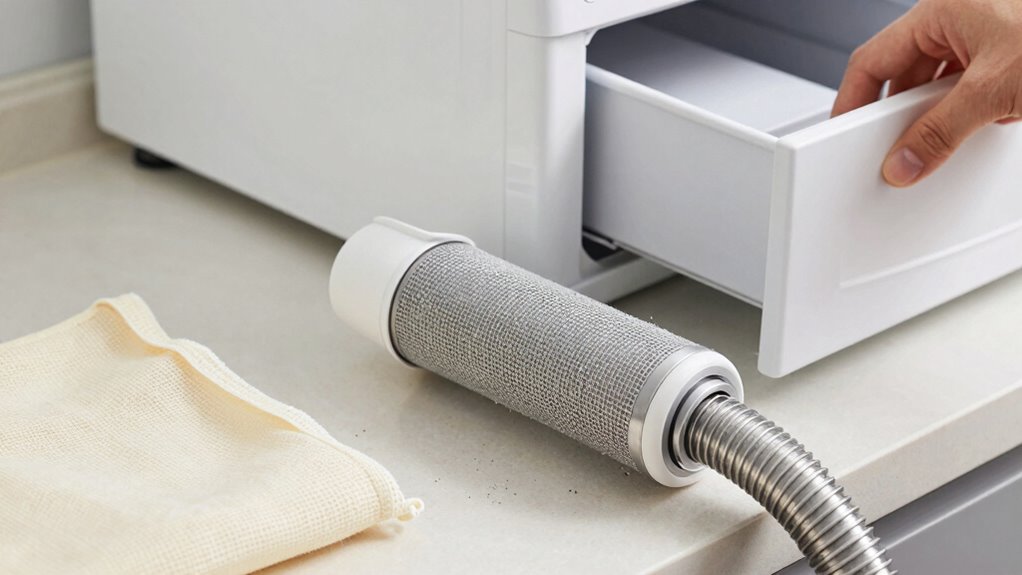
Have you ever wondered how those tiny fibers from your clothes make their way into rivers and oceans? It all starts with fiber shedding during laundry. When you wash synthetic garments, small microplastic fibers break off and are released into the wash water. These fibers are too tiny to be filtered out by standard sewage treatment plants, leading to wastewater contamination. As the wastewater is discharged into waterways, microplastics enter natural water systems. Over time, they accumulate in lakes, rivers, and oceans, impacting aquatic life and ecosystems. Your laundry habits directly influence this process. The more fibers shed, the greater the chance these microplastics will end up in waterways. Understanding this connection highlights the importance of reducing fiber shedding to protect our environment. Additionally, high-quality projectors with advanced filtration features can help minimize the release of microplastics during laundry. Implementing specialized laundry filters is an effective way to capture fibers before they reach the wastewater. Using innovative filtration technologies can significantly reduce microplastic pollution from household laundry. Incorporating fiber-shedding reduction techniques into your laundry routine can further decrease environmental impact. Recognizing the role of passive voice detection can help writers craft clearer, more direct instructions for implementing these measures.
The Best Filters and Laundry Bags to Catch Microplastics

To effectively reduce the release of microplastics during washing, using specialized filters and laundry bags can make a significant difference. Fiber catching devices and laundry barrier solutions are your best tools. Consider these options:
- A microfiber filter attached to your washing machine’s drain to trap fibers before they exit. Incorporating air filtration principles can improve their efficiency in capturing tiny particles.
- A fine mesh laundry bag designed to catch microplastics during wash cycles.
- A lint trap that fits over the washing machine’s drain to intercept fibers.
- A dedicated microfiber catching device that can be placed inside the drum or over the filter.
- Regularly cleaning and maintaining these devices ensures optimal performance in microplastic reduction.
- Using sustainable laundry habits, such as washing less frequently and selecting eco-friendly detergents, can further decrease fiber shedding and pollution.
- Selecting appropriate laundry cycle settings can also help minimize fiber release by reducing agitation and wash time.
- Choosing the right fiber catching technology can enhance overall microplastic containment during laundry.
These solutions help contain microplastic fibers, preventing them from polluting waterways. Incorporating these fiber catching devices into your laundry routine is a practical step toward reducing microplastic pollution effectively.
Easy Habits to Reduce Microplastic Release During Laundry
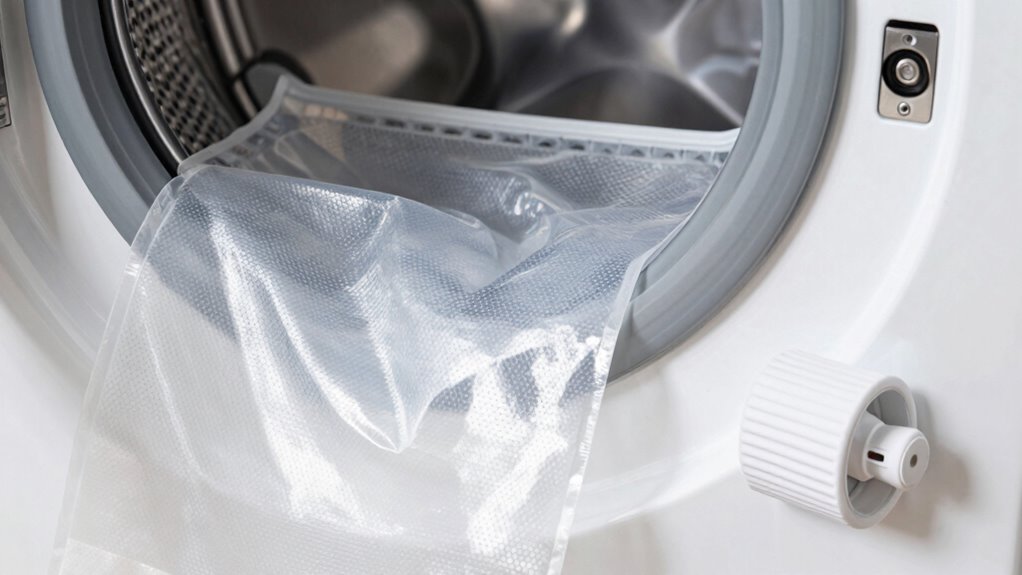
Implementing simple habits can substantially reduce the microplastic fibers released during washing. Avoid using fabric softeners and dryer sheets, as they can coat fabrics and increase fiber shedding. Instead, opt for natural alternatives like vinegar or wool dryer balls, which help soften clothes without adding chemicals or plastics. Wash full loads with cold water to minimize fiber release. Turn clothes inside out before washing to reduce friction, and avoid over-agitating fabrics. Using eco-friendly detergents without added chemicals can also help preserve fabric integrity. Air drying clothes instead of using the dryer reduces mechanical stress, decreasing fiber shedding. Additionally, choosing natural fibers over synthetic fabrics can significantly lower microplastic release. Incorporating clothing labels that specify fiber content can help consumers make more environmentally conscious choices. Understanding the history of pinball machines can inspire more mindful consumption of vintage or modern pinball equipment, promoting sustainable practices. Exploring the role of AI ethicists in regulating technology can also lead to better policies that protect our environment. These small changes in your laundry routine can markedly lower the amount of microplastics released into our waterways, making your laundry more eco-friendly.
Practical Tips for an Eco-Friendly Laundry Routine

Adopting a few practical habits can make your laundry routine more eco-friendly and help reduce environmental impact. First, skip fabric softeners—they often contain chemicals and plastic particles that contribute to microplastics. Instead, use natural alternatives like vinegar or wool dryer balls. Second, choose eco-friendly laundry detergents with biodegradable ingredients to lessen pollutant runoff. Third, wash clothes at lower temperatures; this saves energy and reduces wear on fabrics, which can release fewer microfibers. Fourth, opt for laundry scents derived from natural essential oils instead of synthetic fragrances, which can contain microplastic-like compounds. Additionally, selecting appropriate washing practices can further minimize fiber shedding during laundry. Using cold water washing not only conserves energy but also helps prevent the breakdown of fibers that releases microplastics. Incorporating proper laundry loads ensures your machine operates efficiently and reduces microfiber release. Implementing gentle wash cycles and avoiding overloading your machine are effective ways to reduce microplastic release, benefiting both your home and the planet. These simple steps not only cut down on microplastic pollution but also promote a greener, healthier laundry routine that benefits both your home and the planet.
Frequently Asked Questions
Can Synthetic Fabrics Be Replaced With Natural Fibers to Reduce Microplastics?
Yes, you can replace synthetic fabrics with natural fiber alternatives to reduce microplastics. Opt for materials like cotton, wool, or hemp instead of polyester or nylon. By choosing a synthetic fabric replacement, you lower the microplastic shedding during laundry and everyday wear. This simple switch helps protect the environment, decreases microplastic pollution, and promotes sustainable fashion choices. Making these changes can notably impact reducing microplastics from your clothing.
How Often Should Laundry Filters and Bags Be Cleaned or Replaced?
You should clean your laundry filters and bags after every few loads to prevent buildup and maintain effectiveness. Regular filter maintenance ensures microplastics are caught efficiently, and following a consistent replacement schedule—typically every 6 to 12 months—keeps your system functioning at its best. Don’t wait until they’re clogged; staying on top of cleaning and replacing helps reduce microplastic pollution and keeps your laundry routine eco-friendly.
Do Fabric Softeners or Detergents Influence Microplastic Shedding?
Detergent composition and fabric softener effects can influence microplastic shedding during laundry. Some detergents contain harsh chemicals that weaken fibers, increasing microplastic release. Fabric softeners may coat fabrics, making fibers more prone to shedding when washed. To reduce microplastic pollution, choose eco-friendly detergents with mild ingredients and avoid fabric softeners or select those without plastic-based softening agents. These steps help minimize fiber loss and environmental impact.
Are There Specific Washing Machine Settings That Minimize Microplastic Release?
You can markedly reduce microplastic release by choosing gentle washing cycle settings. Opt for a delicate or wool cycle that minimizes fabric agitation, preventing tiny fibers from breaking free. These settings substantially decrease the wear and tear on your clothes, locking in fibers and keeping microplastics out of your water system. By making this simple adjustment, you’re actively safeguarding the environment while maintaining the integrity of your garments.
What Are the Long-Term Environmental Impacts of Microplastics in Water Sources?
You should know that microplastic bioaccumulation harms aquatic life and eventually affects human health through water contamination effects. Long-term, these tiny plastics accumulate in water sources, disrupting ecosystems and food chains. As microplastics build up, they threaten biodiversity and water quality. By reducing microplastic release from your laundry, you help prevent these environmental impacts, protecting water sources and promoting healthier ecosystems for everyone.
Conclusion
By taking simple steps like using filters, laundry bags, and changing your habits, you can make a real difference in reducing microplastics. Every small effort adds up—think of it as pulling together to turn the tide on pollution. Your laundry routine is more than just cleaning clothes; it’s a chance to protect our waterways and future. Don’t wait for problems to ripple out of control—act now and be part of the solution.
Fall Picks
fall essentials
As an affiliate, we earn on qualifying purchases.