To maintain good makeup hygiene, regularly clean and disinfect your brushes using gentle soap, alcohol-based cleaners, or sanitizers, and let them air dry completely before storing. Keep products tightly sealed and store them in cool, dry places away from humidity. Replace expired makeup and discard brushes or products showing signs of spoilage or change. Practicing these steps helps prevent bacteria buildup and skin issues—in fact, understanding proper techniques guarantees you’re doing all the right things to stay safe.
Key Takeaways
- Regularly disinfect makeup brushes using soap, alcohol-based cleaners, or sanitizers to prevent bacteria buildup.
- Allow brushes to fully air dry and store in clean, dry containers to prevent contamination.
- Close makeup containers tightly, store in cool, dry places, and discard expired or spoiled products.
- Check for changes in makeup’s smell, texture, or color to identify spoilage and replace old items promptly.
- Avoid sharing brushes, keep them protected during travel, and maintain consistent cleaning routines for optimal hygiene.
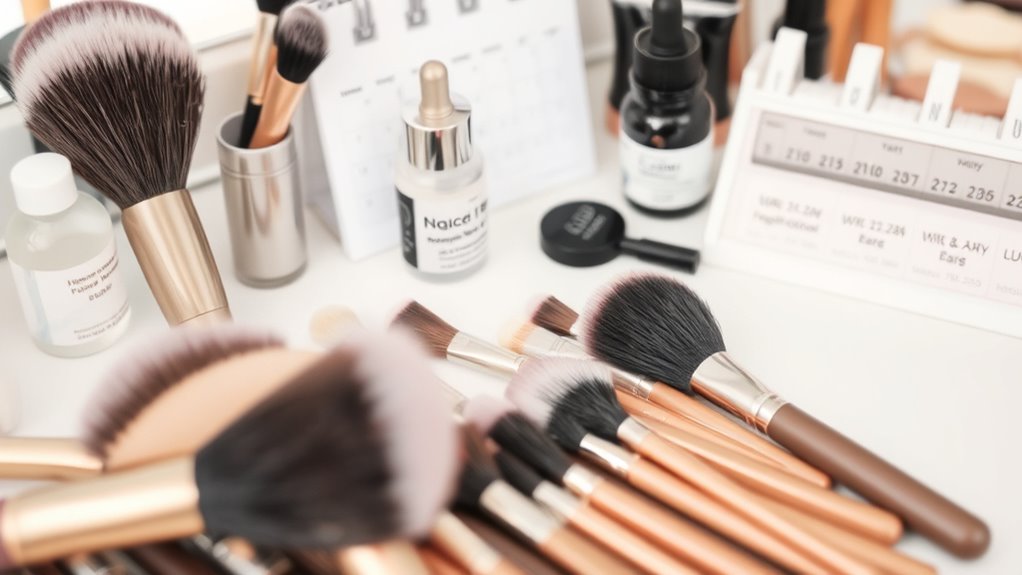
Keeping your makeup tools and products clean is vital for maintaining healthy skin and preventing breakouts. One of the most important aspects of makeup hygiene is ensuring your brushes are properly sanitized and stored. Sanitizing techniques are straightforward but often overlooked. You should regularly disinfect your brushes to eliminate bacteria, fungi, and leftover product buildup, which can cause irritation and breakouts. To do this, soak your brushes in a mixture of gentle soap and warm water, then rinse thoroughly. For deeper sanitization, use alcohol-based brush cleaners or makeup brush sanitizers designed specifically for this purpose. Spray your brushes with a disinfectant, then wipe them clean with a tissue or towel, ensuring you reach all bristles. Avoid sharing brushes with others to prevent cross-contamination and always wash your brushes after each use if you’re applying different products or colors. Proper drying techniques are essential to prevent bacterial growth, so always let brushes air dry completely before storing them.
Storage tips play an indispensable role in maintaining the cleanliness of your makeup tools. Keep your brushes in a clean, dry container rather than tossing them into bags or drawers where dust, dirt, and bacteria can settle. Use brush holders or cups with individual slots to keep each brush separated and prevent the bristles from getting bent or damaged. Make sure your storage area is regularly cleaned to avoid dust accumulation. For makeup products themselves, always close containers tightly after use and store them in a cool, dry place to prevent bacterial growth and product spoilage. Pay attention to expiry dates on your makeup products, and discard anything past its shelf life. Old or expired makeup not only loses effectiveness but can also harbor bacteria that may cause skin issues. Additionally, using proper storage techniques can help extend the lifespan of your makeup tools and products.
Another key tip is to avoid leaving brushes damp or wet for long periods, as moisture encourages bacteria growth. Allow brushes to air dry completely after cleaning before storing them away. When it comes to travel, carry your brushes in protective cases to prevent dirt and germs from settling on the bristles. Regularly check your makeup products for signs of spoilage, such as changes in smell, texture, or color. If you notice any of these, it’s best to toss the item and replace it. Consistently practicing good sanitizing techniques and following proper storage tips can greatly extend the lifespan of your makeup tools and products, ensuring your skin stays healthy and breakout-free. Remember, clean tools mean cleaner skin, so make these routines a regular part of your beauty regimen for the best results.
Frequently Asked Questions
How Can I Tell if My Makeup Brushes Are Contaminated?
You can tell if your makeup brushes are contaminated by noticing signs like mold, an unpleasant odor, or visible buildup of product and debris. Regular brush cleaning helps prevent contamination. If brushes feel itchy or cause breakouts, it’s a sign they need cleaning. Always replace brushes every 6-12 months, and check for signs of wear or damage. Proper hygiene keeps your skin healthy and makeup application flawless.
Are Natural Brushes More Hygienic Than Synthetic Ones?
Natural brushes aren’t necessarily more hygienic than synthetic ones. The hygienic differences depend on how you clean and maintain them. Synthetic brushes are often easier to clean thoroughly because they resist bacteria buildup more effectively. Natural brushes can harbor more bacteria if not cleaned properly, especially if used with creams or liquids. So, focus on regular cleaning and proper storage to keep any type of brush hygienic and safe for your skin.
Should I Replace Makeup Sponges After Each Use?
You should replace your makeup sponge after each use, as studies show they can harbor bacteria and fungi. Proper cleaning routines help reduce buildup, but sponges can develop mold or bacteria over time. To extend their lifespan, store them in a dry, well-ventilated area and replace them regularly. This prevents skin breakouts and infections, ensuring your makeup routine remains safe and hygienic.
What Are Best Practices for Storing Clean Brushes?
You should store clean brushes in a dry, well-ventilated area to prevent bacterial growth. After brushing, use proper brush drying techniques like laying them flat or hanging them upside down to maintain shape and dryness. Follow a regular brush cleaning frequency—at least once a week for daily tools—to keep them hygienic. Store brushes in a brush holder or case to protect the bristles and keep your makeup area organized.
Can Bacteria Transfer From Brushes to My Skin?
Yes, bacteria can transfer from brushes to your skin, increasing the risk of bacterial growth and skin infection. When you use unclean brushes, germs on the bristles come into contact with your skin, potentially causing breakouts or irritation. To prevent this, always clean your brushes regularly and avoid sharing them. Proper hygiene reduces bacterial transfer, helping keep your skin healthy and clear.
Conclusion
Remember, keeping your brushes clean is like nurturing a garden—regular care guarantees vibrant, healthy results. Think of your makeup tools as tiny artists, patiently waiting to create beauty without dirt or bacteria stealing the show. When you replace expired products, you’re pruning away the dead leaves, making space for freshness to bloom. So, stay vigilant, wash often, and swap out when needed. Your flawless look depends on the gentle rhythm of good hygiene—keep it flowing, keep it beautiful.