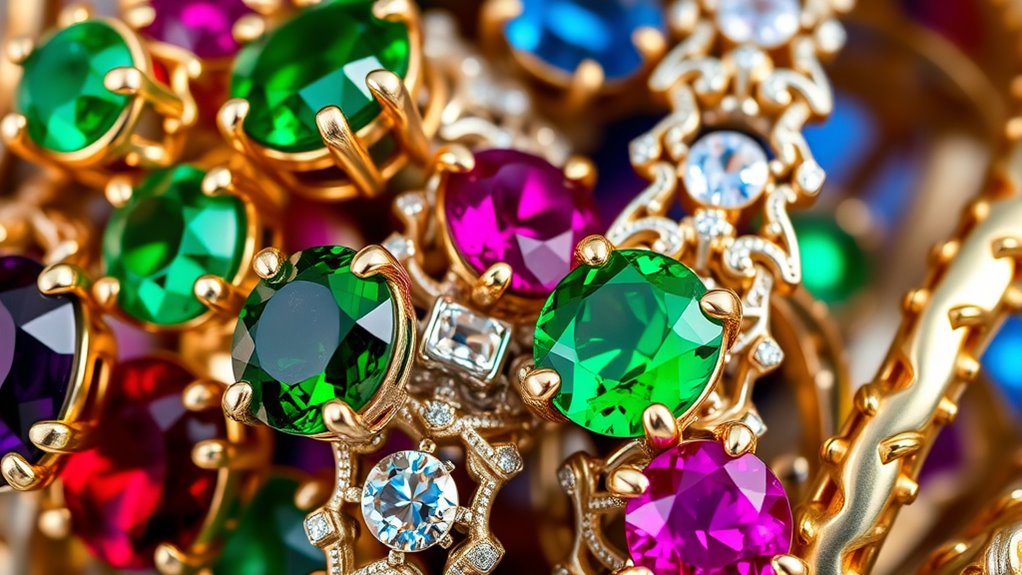

Jewelry metals and stones carry meaningful symbols that reflect your personality, cultural values, and intentions. For example, birthstones connect you to your birth month’s tradition and symbolize traits like love or protection. Durable metals like platinum, titanium, and high-karat gold guarantee your jewelry lasts longer, while stones add emotional and personal significance. By choosing the right combinations, you create jewelry that’s both beautiful and meaningful—discover how these choices can enhance your style and story.
Key Takeaways
- Different metals like gold, silver, platinum, and titanium offer unique durability and symbolic qualities in jewelry.
- Birthstones represent traits such as love, health, or protection, and are linked to specific months with rich traditions.
- Combining meaningful stones with durable metals enhances jewelry’s personal significance and longevity.
- Higher karat gold is softer, while alloys improve strength, affecting jewelry’s durability and maintenance needs.
- Metals like platinum and titanium are highly resistant to tarnishing and scratching, making them ideal for everyday jewelry.
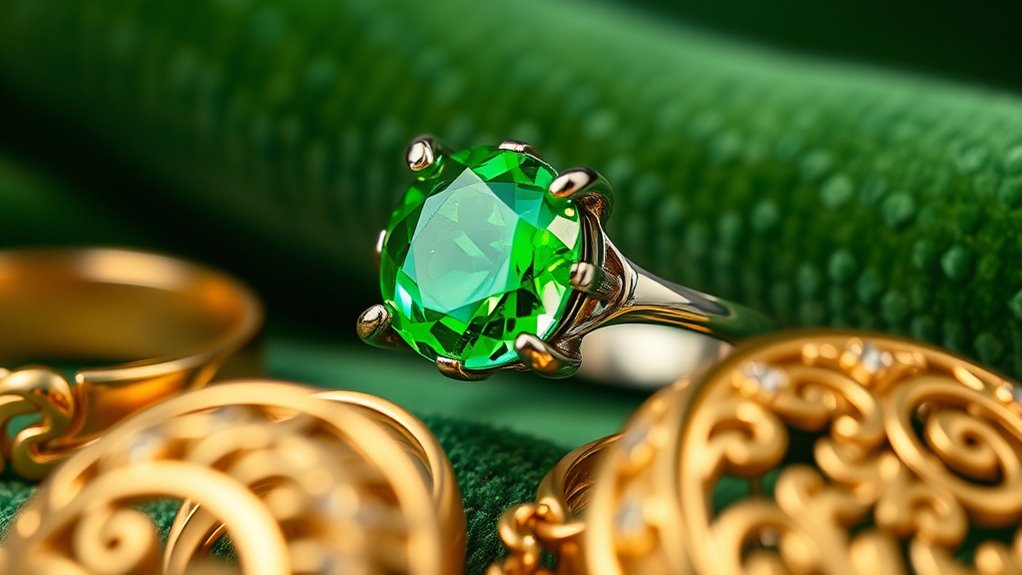
Have you ever wondered what makes jewelry truly stand out? It’s often the combination of carefully chosen stones and metals that gives each piece its unique charm and meaning. When selecting jewelry, understanding the significance behind different stones and the properties of metals can help you find pieces that resonate on a deeper level. For example, birthstone significance plays a big role in personal jewelry. Each month is associated with a specific stone that symbolizes traits like love, health, or protection. Wearing your birthstone can serve as a personal talisman or a meaningful gift, connecting you to your birth month’s tradition and history. These stones are believed to carry unique energies, making them more than just beautiful adornments—they become symbols of identity, hope, and well-being.
Jewelry’s charm lies in meaningful stones and durable metals that reflect your style and personal symbolism.
Equally important is the choice of metal. Metal durability properties determine how well a piece withstands daily wear. For instance, metals like platinum and titanium are renowned for their exceptional strength and resistance to scratching or tarnishing. If you want jewelry that lasts for years without losing its luster, these durable options are ideal. Gold, especially in higher karats, is softer but can be alloyed with other metals to improve its strength. Silver, while more affordable and popular, is softer and requires more care to prevent tarnishing. Knowing metal durability helps you pick jewelry suited to your lifestyle—whether you need something sturdy for everyday wear or a delicate piece for special occasions.
The significance of stones and the durability of metals are intertwined when considering jewelry’s purpose. If you’re choosing a piece meant to be worn daily, selecting a durable metal ensures it stays pristine. Pairing that with a meaningful stone, like a birthstone, adds personal value. For example, a turquoise ring not only offers vibrant beauty but also symbolizes protection and healing, enhancing its sentimental worth. Meanwhile, understanding the properties of metals can help you maintain your jewelry better. Metals like platinum and titanium are easier to care for over time, making them excellent choices for those who want low-maintenance pieces that still hold deep meaning. Additionally, the variety of jewelry metals and stones available allows for personalized and culturally significant selections.
Ultimately, the combination of birthstone significance and metal durability properties allows you to select jewelry that’s both meaningful and resilient. Whether you’re buying a gift or treating yourself, these factors ensure your jewelry isn’t just pretty but also personal and long-lasting. By understanding what each stone and metal symbolizes and how they hold up over time, you can make smarter choices that reflect your style and values. Jewelry becomes more than decoration—it turns into a reflection of you, enduring and meaningful through years to come.
Frequently Asked Questions
How Do Different Metals Affect Jewelry Durability?
Different metals impact jewelry durability based on their alloy strength and resistance to metal corrosion. For instance, stainless steel has high alloy strength and resists corrosion well, making it very durable. Gold, especially in higher karats, is softer and more prone to scratches and corrosion, reducing its longevity. Titanium offers excellent durability due to its strength and corrosion resistance, making it ideal for everyday wear. You should choose metals based on these factors for lasting jewelry.
Can Stones Change Color Over Time?
Yes, stones can change color over time due to factors like light, heat, or chemicals. About 30% of gemstones experience some degree of color shift, highlighting their mineral stability or instability. You should be aware that exposure to sunlight or harsh cleaners can modify a stone’s original hue, so proper care ensures your jewelry maintains its vibrant appearance. Regular maintenance helps preserve your stones’ beauty and color consistency.
Are There Health Risks With Certain Jewelry Metals?
Yes, certain jewelry metals can pose health risks. If you have metal allergies, wearing nickel or other reactive metals may cause skin reactions like redness, itching, or swelling. Always check for hypoallergenic options if you have sensitive skin. Avoid wearing jewelry made from metals that you are allergic to, and consider choosing jewelry with safer metals like surgical stainless steel, titanium, or gold to prevent adverse skin reactions.
How Do Cultural Meanings Influence Jewelry Stone Choices?
Did you know that over 60% of people choose jewelry based on cultural symbolism? You’re influenced by historical significance when selecting stones, as different cultures assign unique meanings—like jade symbolizing purity in Chinese tradition or turquoise representing protection in Native American culture. Your choices are deeply personal, often reflecting your heritage or beliefs, making jewelry more than just accessories but powerful symbols of identity and history.
What Modern Techniques Enhance Traditional Jewelry Stones?
You can enhance traditional jewelry stones by using modern techniques like laser drilling, irradiation, and dyeing, which improve appearance and durability. When choosing between precious and semi-precious stones, consider synthetic options that replicate natural stones at a lower cost. These methods allow you to customize jewelry, highlighting natural beauty or creating stunning semi-precious pieces, whether you prefer natural or synthetic stones.
Conclusion
Now that you know the incredible meanings behind jewelry metals and stones, you’re unstoppable! Every piece you wear isn’t just beautiful—it’s a powerhouse of energy, history, and symbolism that can transform your life in ways you never imagined. So go ahead, embrace these dazzling symbols, and let your jewelry tell a story so vibrant, so powerful, it’ll turn heads and change your world forever. Wear your truth loud and proud—because you’re worth it!