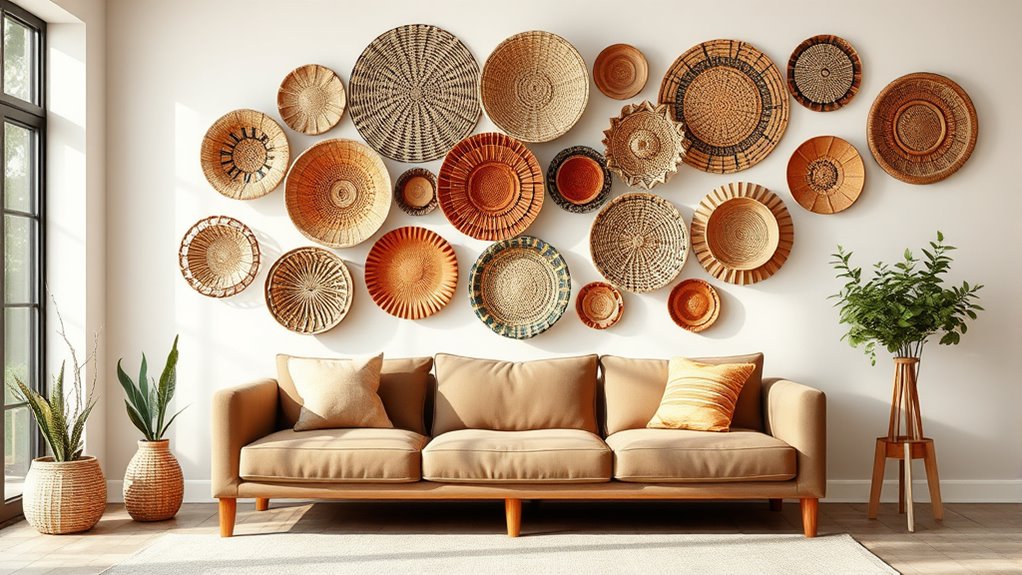

To arrange wall baskets effectively, start by balancing visual weight and creating focal points. Use a central basket as an anchor and experiment with different heights and groupings for depth. Mix shapes and textures for visual interest, and consider asymmetrical layouts for a natural feel. Position baskets at eye level or near natural light sources for maximum impact. If you want more tips on achieving a beautiful, cohesive display, keep exploring how to perfect your setup.
Key Takeaways
- Choose baskets that complement your decor style and consider size, material, and drainage needs for plants.
- Arrange baskets with a central focal point, balancing visual weight and varying heights for depth.
- Use sturdy hooks or wall anchors to securely install baskets at eye level or slightly above.
- Mix shapes, textures, and asymmetrical groupings to create a natural, lively display.
- Regularly maintain plants and clean baskets to keep the arrangement fresh and visually appealing.
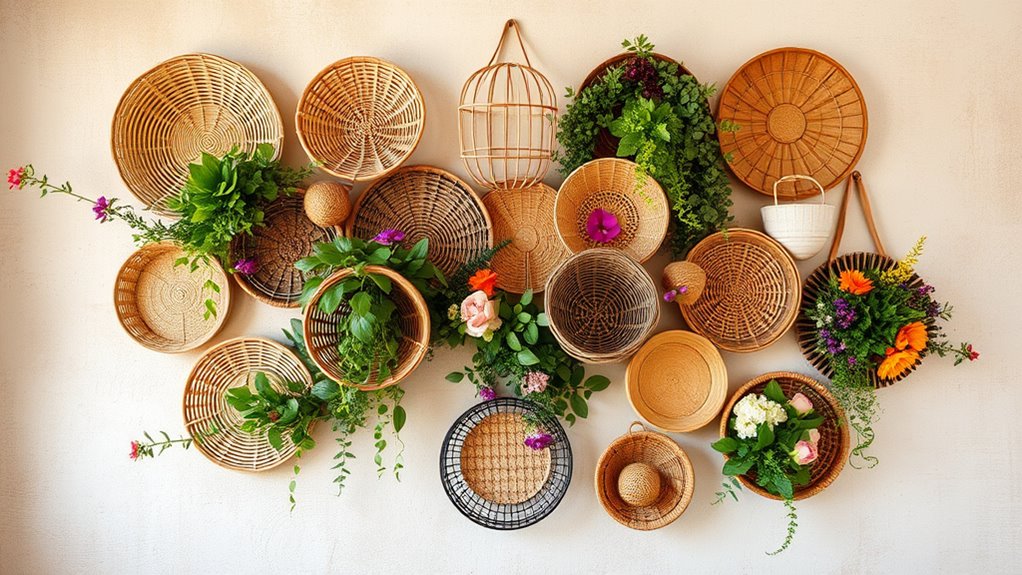
Wall baskets are a versatile and stylish way to add texture and function to your space. Whether you want to create eye-catching plant displays or incorporate decorative accents, wall baskets are an excellent choice. They allow you to showcase your favorite items while saving space and adding visual interest. When choosing wall baskets for plant displays, consider their size, material, and drainage features. Wicker or woven baskets give a natural, cozy feel, perfect for hanging trailing plants like pothos or ivy. Metal or ceramic baskets can lend a more modern or rustic look, depending on your decor style. Be sure to pick baskets that are sturdy enough to support the weight of your plants and soil.
Arranging wall baskets effectively involves balancing visual weight and creating focal points. You might start by selecting a central basket as your anchor piece and then build around it with smaller baskets. Play with different heights and groupings to achieve a dynamic, layered look. For decorative accents, think about mixing basket shapes and textures to add depth and variety. You can hang baskets at varying levels to create a gallery-like effect or cluster them for a more cohesive appearance. Keep in mind that symmetry isn’t always necessary; asymmetrical arrangements often feel more organic and lively, especially with plants that have trailing or cascading growth habits.
Create dynamic, layered wall basket arrangements with varied heights, shapes, and textures for an organic, lively display.
When it comes to placement, consider the overall flow of your room and the natural eye movement. Position baskets at eye level or slightly above to maximize their visual impact. For a cozy nook or empty wall, wall baskets can serve as focal points, drawing attention and adding personality. If you want a more minimalist look, limit yourself to a few carefully curated baskets, each with a specific decorative or botanical purpose. Don’t forget about lighting—placing baskets near natural light sources or adding nearby lamps can highlight their textures and the vibrancy of your plants. Additionally, understanding divorce guidance and how to properly care for your wall baskets can help maintain their appearance and longevity over time.
Securing the baskets properly is essential to avoid accidents. Use sturdy hooks or wall anchors suited for your wall type, and double-check their weight capacity. When arranging multiple baskets, leave enough space between them so each can shine without appearing cluttered. Regular maintenance is also vital; check for dust or debris, and prune your plants to keep them looking fresh. With thoughtful planning and a keen eye for design, your wall baskets will become striking features that enhance your décor, showcase your plant displays, and serve as beautiful decorative accents.

jockcaras 10Pcs Wall Hooks for Bathroom, Kitchen, Closet, and Garage – Black Metal Hooks for Hanging Coats, Towels, Hats, Keys, Bags, and Coffee Cups – Holds Up to 40 lbs
Small but Strong: Made from premium-grade metal with exceptional hardness, tested to hold up to 40 lbs using…
As an affiliate, we earn on qualifying purchases.
As an affiliate, we earn on qualifying purchases.
Frequently Asked Questions
What Are the Best Materials for Durable Wall Baskets?
You should choose wall baskets made from sturdy materials like metal, wicker, or high-quality plastic for durability. Metal offers excellent strength and resistance to rust, while wicker provides natural durability if properly treated. High-quality plastic is lightweight yet tough, making it a practical choice. Consider durability factors such as resistance to weather, weight capacity, and longevity when selecting material options, ensuring your baskets stay functional and attractive over time.
How Do I Clean and Maintain Wall Baskets?
Oh, the glamorous world of basket maintenance—truly a task for the ages. To keep your wall baskets pristine, follow simple basket cleaning tips: wipe with a damp cloth, avoid harsh chemicals, and check for loose fittings. Incorporate maintenance routines like regular dusting and inspecting for damage. This way, your baskets stay charming and functional, providing an effortless blend of style and practicality.
Can Wall Baskets Be Used Outdoors Safely?
Yes, you can use wall baskets outdoors safely, especially if you choose seasonal decor styles designed for exterior use. Opt for wall basket styles made from weather-resistant materials like metal, resin, or treated wood. make certain they’re securely mounted to withstand wind and rain. Regularly check for signs of wear or damage, and bring in delicate or non-weatherproof baskets during harsh weather to keep your outdoor space looking fresh and stylish.
What Weight Can Wall Baskets Typically Hold?
Wall baskets typically hold between 5 to 20 pounds, depending on their weight capacity and basket strength. You should always check the manufacturer’s specifications to verify you’re not exceeding the recommended weight. For heavier items, opt for baskets designed with sturdy materials and reinforced hooks. By paying attention to the weight capacity, you can safely display your favorite plants, accessories, or decorative items without risking damage or accidents.
How Do I Prevent Wall Damage When Hanging Baskets?
To prevent wall damage when hanging baskets, you should use proper hanging techniques and wall protection. Start by choosing the right hooks or anchors suited for your wall type, ensuring they distribute weight evenly. Use wall protectors like mounting pads or felt strips behind the baskets to avoid scratches or dents. Regularly check the hangings for stability, and avoid overloading to keep your walls safe and intact.

Coeusy Set of 2 Hanging Basket, Wicker Wall Basket for Door,Mail,Flower,Planters, Natural Water Hyacinth Storage Basket for Garden Farmhouse Home Decor
Premium Natural Material & Elegant Craftsmanship — Hanging Basket Made from natural water hyacinth, this hand-woven wicker basket…
As an affiliate, we earn on qualifying purchases.
As an affiliate, we earn on qualifying purchases.
Conclusion
Now that you know how to arrange wall baskets, it’s time to get creative. Did you know that a well-designed wall can boost your room’s perceived size by up to 20%? By mixing shapes, sizes, and textures, you’ll create a stunning focal point that reflects your personal style. So, go ahead—experiment with different layouts and turn your wall into a beautiful, functional display that everyone will admire. Happy decorating!

Goodpick 2pack Jute Hanging Basket – Small Woven Fern Hanging Rope Basket Flower Plants Wall Basket Decor Set Boho, 7.87 x 7 x 11.7 inches
Hanging basket, Jute woven thread rope, suitable for multiple uses even kitchen storage
As an affiliate, we earn on qualifying purchases.
As an affiliate, we earn on qualifying purchases.

SheeChung Farmhouse Metal Wire Bin Basket with Wall Mount – Small, 4 Pack – Portable Hanging Wall Basket, Rustic Home Storage Organizer for Cabinets, Pantry, Closets, Bathroom, Kitchen,Bedroom(Black)
✅STORAGE MADE SIMPLE – The vintage/modern farmhouse styling of this wire bin will add style to your storage…
As an affiliate, we earn on qualifying purchases.
As an affiliate, we earn on qualifying purchases.