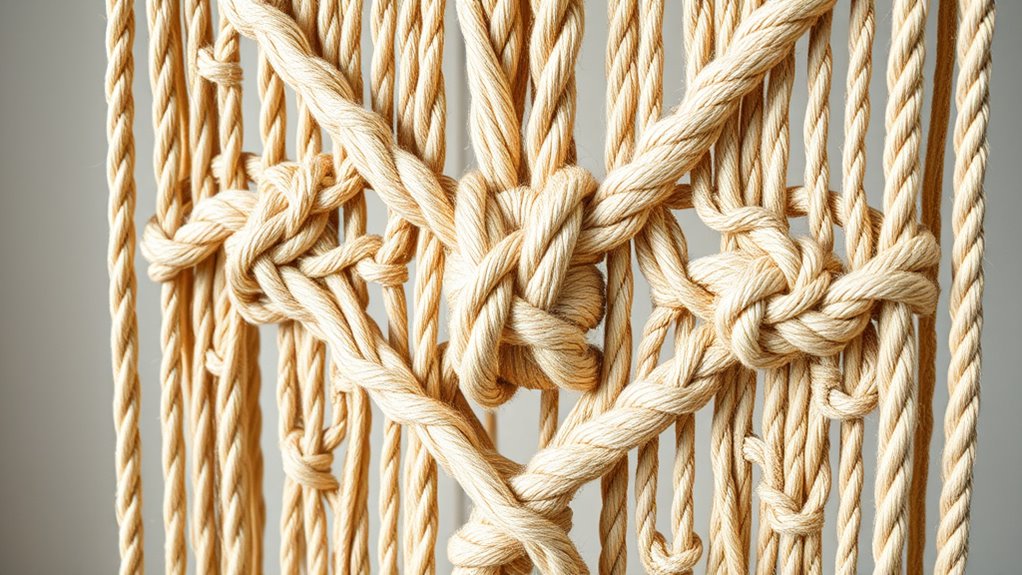

To make your macramé last, choose knots like the square knot or double half hitch, known for their strength and stability. Combine these with decorative knots such as spirals or cow hitches to add visual interest without sacrificing durability. Proper tension and neat tying are vital to prevent slipping and guarantee longevity. Balancing sturdy and decorative knots helps create projects that are both beautiful and built to withstand time—keep going to discover more tips.
Key Takeaways
- Select strong, secure knots like square knots and double half hitch for durability and long-lasting support.
- Combine decorative knots with sturdy ones to balance aesthetics and structural integrity.
- Use proper tension and neat technique to prevent slipping and ensure knot security.
- Match knot type and tightness to your material’s thickness for optimal durability.
- Practice tying different knots to assess their strength and suitability for your specific project.
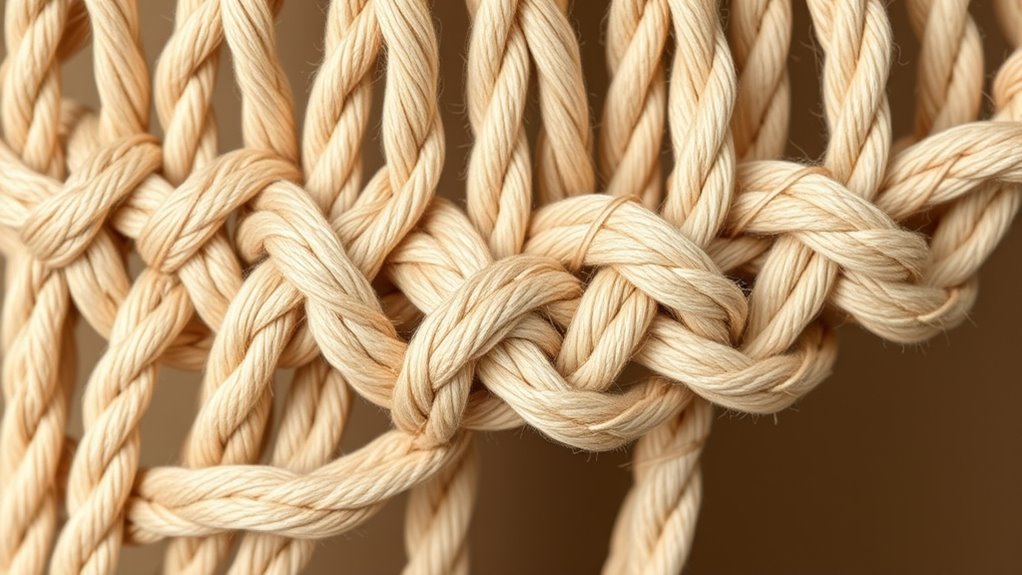
Macramé knots are the fundamental building blocks of this versatile craft, allowing you to create intricate patterns and beautiful designs. When choosing knots for your projects, it’s essential to consider both knot durability and the decorative knots you want to incorporate. The longevity of your piece depends heavily on selecting the right knots, as some are more secure and resilient than others. Stronger knots ensure your finished piece remains intact over time, even with regular handling or exposure to elements like sunlight and moisture. Meanwhile, decorative knots add visual interest and texture, elevating your design from simple to stunning.
Understanding knot durability is key to creating long-lasting macramé. Certain knots, such as the square knot and double half hitch, are renowned for their strength and stability. They hold securely under tension and resist slipping, making them ideal for functional items like plant hangers, curtain tiebacks, or furniture accents. If your project requires supporting weight or enduring daily wear, prioritize these durable knots. Conversely, some decorative knots—like the spiral knot or the cow hitch—are more delicate but add unique visual flair. You can combine these with sturdier knots to craft a piece that’s both attractive and resilient.
Prioritize strong knots like square and half hitch for durability; use decorative knots to add visual flair.
When selecting knots, think about the type of cord or rope you’re using. Thicker cords may require tighter knots to prevent slipping, while thinner cords often need more secure knots to avoid unraveling. Practice different knots beforehand to see how they hold up under tension and how they look in your chosen material. For decorative knots, focus on ones that add texture and detail without compromising the overall strength of the piece. For example, the lark’s head knot is both decorative and easy to tie, making it perfect for creating patterns or attaching elements in your design. Additionally, understanding knot tension is crucial, as improper tension can compromise both the aesthetic and structural integrity of your work. It’s also helpful to learn about knot security, which involves techniques to prevent knots from slipping or coming undone over time. Proper tension and neatness contribute significantly to knot durability, ensuring your finished piece remains secure and beautiful over the years. Another aspect to consider is the technique used to tie each knot. Proper tension and neatness can greatly influence knot durability. Loose knots may look casual but tend to slip or come undone over time, while tightly tied knots provide better support. When working on decorative knots, aim for consistency so the pattern remains uniform and visually appealing. Remember, the best macramé projects balance aesthetic appeal with structural integrity, so choose your knots wisely based on their purpose and durability. With a bit of practice, you’ll master both the decorative and durable knots that will make your macramé creations last for years to come.
Top picks for "macram magic choos"
Open Amazon search results for this keyword.
As an affiliate, we earn on qualifying purchases.
Frequently Asked Questions
Which Knot Is Best for Outdoor Macramé Projects?
For outdoor macramé projects, you should choose knots that offer durability and strength. The square knot or double half hitch are excellent options because they hold securely and work well with sustainable materials like jute or nylon. These knots help create decorative patterns that withstand weather, guaranteeing your project remains beautiful over time. Using the right knots ensures your outdoor piece stays intact while highlighting your craftsmanship and eco-friendly choices.
How Do Knot Choices Affect Macramé Durability?
Like Da Vinci’s master strokes, your knot choices shape durability. You must consider knot tension, ensuring it’s secure without over-tightening, and material compatibility, matching the knot to your cord’s strength and flexibility. These choices directly influence how well your project withstands the elements and regular use. Properly selected knots create a resilient structure, much like a well-built bridge, ensuring your macramé remains beautiful and lasting over time.
Can I Combine Different Knots in One Project?
Yes, you can combine different knots in one project, but consider knot complexity and decorative knots. Mixing simple and intricate knots adds visual interest, but guarantee they work well together for durability. Experiment with coordinating knot styles to achieve your desired look. Just remember, blending various knots can enhance your design, but avoid overcomplicating it, so your piece remains strong and visually appealing.
What’S the Easiest Knot for Beginners?
Think of the simplest knot as a welcoming handshake—friendly and easy to master. For beginners, the square knot is your go-to, symbolizing balance and stability. This knotting technique is perfect for learning fundamental skills and building confidence. With these beginner tips, you’ll quickly get comfortable with basic knotting techniques, making your macramé projects smoother and more enjoyable. Soon, you’ll be ready to explore more complex knots with ease.
How Do I Fix a Loose or Slipping Knot?
If you notice a loose or slipping knot, start by tightening the knot to improve its tension, ensuring it holds securely. To prevent slippage, consider adding an extra wrap or knot, which increases friction and stability. You can also apply a small dab of clear glue or fabric adhesive for extra slippage prevention. Regularly check and re-tighten your knots as needed to maintain consistent knot tension and durability over time.
Conclusion
As you master the art of macramé knots, you might find yourself unexpectedly amazed by how a simple choice of knot can transform your piece’s durability. It’s almost like the perfect knot was waiting for you all along, ready to guarantee your creation lasts through time and trends. So, trust your instincts, pick the right knots, and enjoy the magic of crafting something that’s not just beautiful, but built to endure—just like your newfound skills.