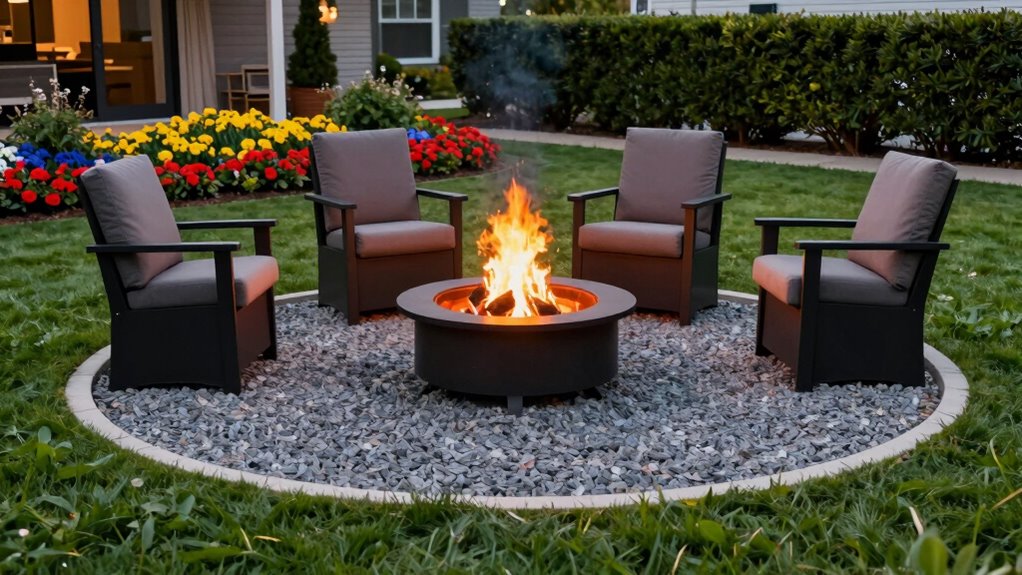
To stay safe around your fire pit, keep a clearance of at least 10 to 20 feet from structures, trees, and furniture, especially on combustible surfaces. Use fire-resistant materials like stone or metal for surrounding surfaces and clearly mark your safety zones with stakes or paint. Always check local regulations and follow manufacturer guidelines for specific distances. If you continue exploring, you’ll discover more essential rules to guarantee safe and enjoyable fire pit use.

Get your wardrobe favorites delivered free — and shop member deals
- Fast, free delivery on millions of items
- Access to Prime Big Deal Days deals on October 6–7
- Prime Video, Amazon Music and more included
Key Takeaways
- Maintain at least 10 to 20 feet clearance from structures, trees, and furniture around the fire pit.
- Use fire-resistant materials like stone or metal, and keep combustible surfaces 10-20 feet away.
- Measure and clearly mark safe zones with stakes, paint, or signage to ensure proper boundaries.
- Follow local laws and fire codes regarding minimum distances, permits, and safety regulations.
- Regularly inspect and maintain the fire pit area, ensuring combustible items are kept away and safety measures are in place.
Why Proper Fire Pit Clearance Keeps You Safe
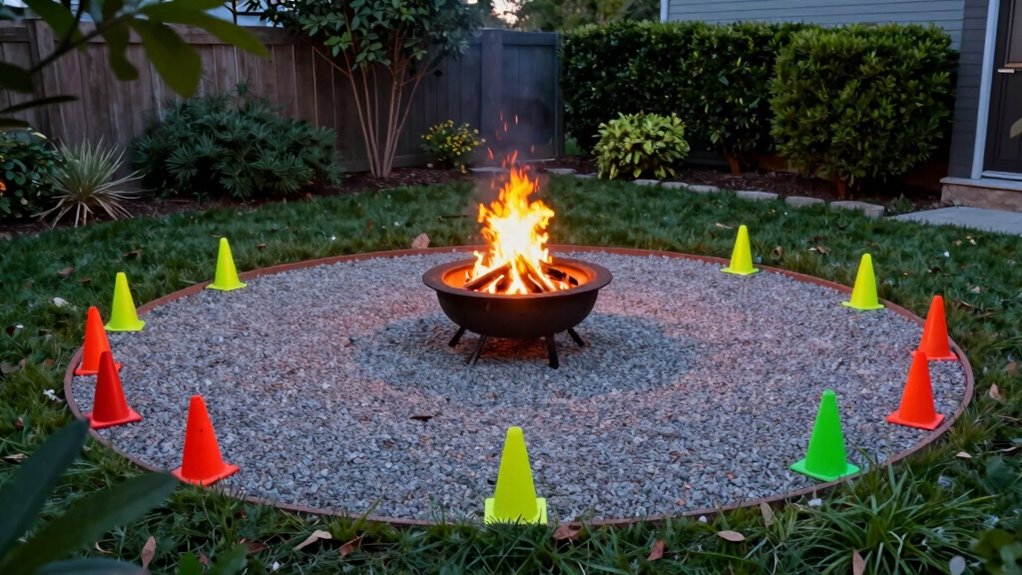
Proper fire pit clearance is essential for ensuring safety while enjoying your fire pit. Keeping a safe distance helps prevent accidental fires and reduces the risk of injuries. Fire resistant landscaping plays a key role in this, as it minimizes the chance of flames spreading to nearby plants or structures. By establishing clear zones around your fire pit, you’re also practicing good emergency preparedness. If an unexpected flare-up occurs, having enough space allows you to respond quickly and safely. Adequate clearance not only protects your property but also creates a safer environment for family and friends. Remember, maintaining proper distances is a simple yet critical step in enjoying your fire pit responsibly and avoiding dangerous accidents. Additionally, understanding heat distribution can help you position your fire pit more safely and efficiently. Furthermore, being aware of fire safety regulations in your area can ensure that you stay compliant and avoid potential fines or hazards. Proper clearance also supports fire suppression efforts in case of emergencies, which is vital for overall safety. Ensuring that your fire pit is positioned with proper airflow can also help reduce smoke buildup and improve safety. To optimize safety, consider consulting local building codes to ensure your fire pit setup aligns with recommended guidelines.
What Are the Recommended Distances for Your Fire Pit?
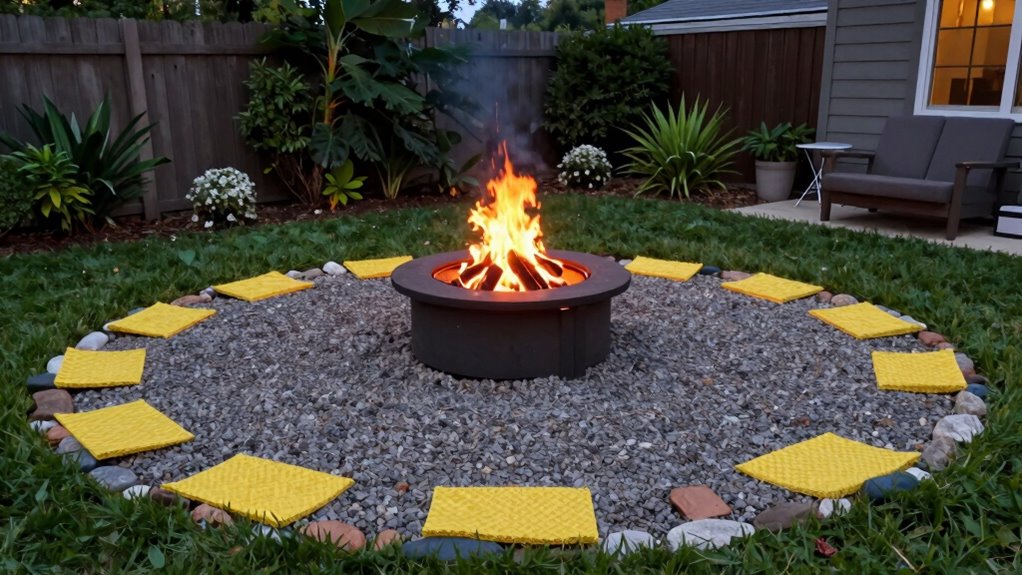
Knowing the right distances for your fire pit is essential for safety. You need to ensure minimum safety clearances, the materials around your fire pit, and local regulations. These factors ensure you create a safe and enjoyable outdoor space. Additionally, understanding safe clearance guidelines can help prevent accidents and prolong the life of your fire pit and surrounding structures. Considering fire safety distances can also aid in selecting the optimal location for your setup, further enhancing safety and enjoyment. Being aware of appropriate clearance measurements can help you make informed decisions that protect both your property and loved ones. Incorporating fire-resistant materials around your fire pit can further improve safety and durability, especially when combined with proper clearance zones.
Minimum Safety Distances
To keep everyone safe around your fire pit, maintaining the recommended minimum safety distances is essential. Typically, you should keep your fire pit at least 10 to 20 feet away from structures, trees, and outdoor furniture. Using fire resistant materials for surrounding surfaces helps reduce fire risk if sparks escape. When selecting fire pit accessories like screens or spark guards, ensure they don’t compromise safety distances. Keep combustible items, including firewood and paper, well clear of the fire pit’s edge. Always follow manufacturer guidelines for your specific fire pit model. Remember, these minimum distances are critical to prevent accidental fires and guarantee safe enjoyment of your outdoor space. Proper clearance is your best defense against fire hazards. Additionally, understanding European cloud innovation and sustainable practices in outdoor safety equipment can help you choose eco-friendly and effective fire safety solutions. Practicing regular safety inspections and staying informed about fire safety standards ensures ongoing protection for you and your loved ones.
Material-Specific Clearance Needs
Different fire pit materials require specific clearance distances to minimize fire risks. Fire resistant materials, like stone or metal, generally need less space around them because they resist heat and reduce fire hazards. In contrast, combustible surfaces such as wood decks or dry grass demand greater clearance—often at least 10 to 20 feet—to prevent sparks from igniting nearby materials. When installing your fire pit, check the manufacturer’s guidelines for material-specific recommendations. For fire resistant materials, guarantee there’s still enough space to prevent heat transfer or accidental contact. For combustible surfaces, maintain the recommended safety distance to keep your area safe. Proper knowledge of these clearance needs helps you minimize fire risks and enjoy your fire pit responsibly.
Local Regulations and Codes
Local regulations and building codes set clear guidelines for fire pit placement, often specifying minimum safe distances to reduce fire hazards. Before installing your fire pit, check if you need fire pit permits, as many areas require approval to guarantee safety compliance. Outdoor fire codes typically mandate a specific clearance from structures, trees, fences, and other combustibles—often ranging from 10 to 25 feet depending on local laws. These regulations help prevent accidental fires and ensure safe operation. Ignoring such rules can lead to fines or unsafe conditions. Always consult your local fire department or municipal authority to understand the exact distances and permit requirements in your area. Following these guidelines helps you enjoy your fire pit responsibly and safely.
How Do You Measure and Mark Safe Distances?

To guarantee safety, you need to accurately measure the proper distance from your fire pit to surrounding objects. Use a tape measure or a ruler to mark clear boundaries with stakes or spray paint. This way, everyone knows exactly where the safe zones are and can enjoy the fire pit without risks. Incorporating sustainable travel practices can also help reduce environmental impact during outdoor gatherings. Additionally, understanding fire safety zones ensures that your outdoor space remains secure and enjoyable for all guests. Remember that maintaining proper clearance rules is essential for preventing accidents and ensuring safe use of your fire pit.
Measuring Safe Distances
Measuring safe distances for a fire pit is essential to prevent accidents and guarantee everyone’s safety. Proper measurement ensures effective fire pit placement and helps with safety zone planning. To do this:
- Use a tape measure to determine the minimum clearance from the fire pit to any structures or combustible materials.
- Mark the designated safety zone with stakes or spray paint, maintaining the recommended distance.
- Consider the size of the fire pit and add extra space for seating and movement.
- Double-check measurements from different angles to ensure consistency and accuracy.
This careful measurement process helps you establish a safe environment, reducing risks and ensuring your fire pit is both enjoyable and secure. Proper planning is key to a safe outdoor setup.
Marking Clear Boundaries
Once you’ve determined the correct distance for your fire pit, the next step is to clearly mark the boundaries of the safety zone. This helps prevent accidents and guarantees everyone knows where they should stay back. Use sturdy stakes and bright safety signage to outline the perimeter. To make it clear, consider using a measuring tape to mark the boundary lines precisely. Place visible signs at key points to indicate the fire pit location and safety zones. Here’s a quick guide:
| Boundary Marking | Tips |
|---|---|
| Fire Pit Location | Mark with durable signage for visibility |
| Distance Measurement | Use a tape measure for accuracy |
| Safety Signage | Install signs at eye level around the zone |
| Boundary Markers | Use stakes or paint for clear demarcation |
This ensures everyone recognizes the safe distance and respects the space.
What Factors Influence How Much Space You Need?
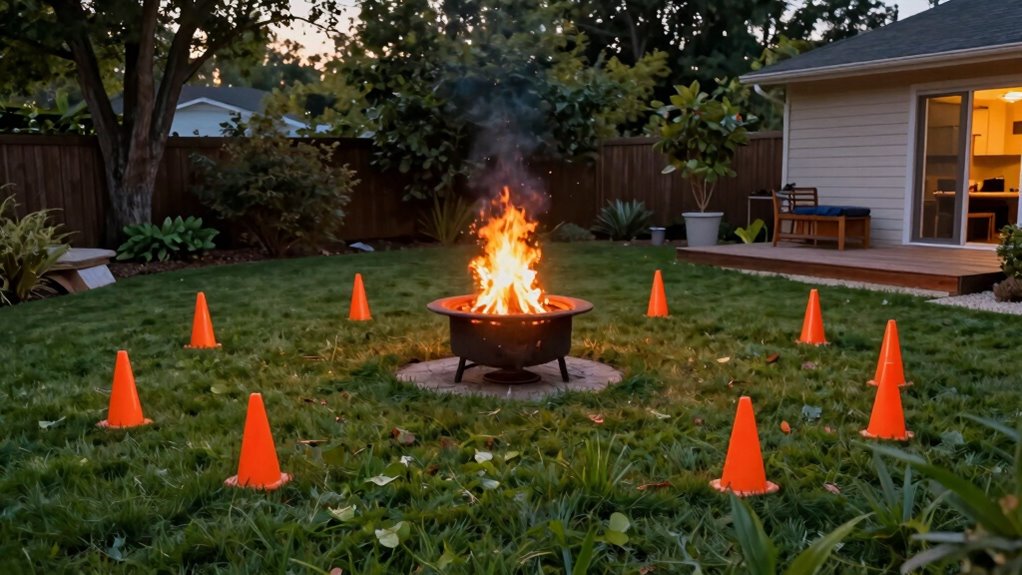
Several factors determine how much space you need around your fire pit to guarantee safety. First, consider the fire resistant materials used in your setup, as sturdier materials may allow closer placement. Second, wind considerations are essential; strong or unpredictable breezes can blow sparks farther, requiring more clearance. Third, the size of your fire pit affects the safety zone—larger pits demand more space. Fourth, the surrounding environment, including nearby structures or trees, influences how much clearance is necessary. By evaluating these factors, you can establish a safe perimeter that minimizes fire risks. Remember, adjusting your safety zones based on these conditions ensures a safer, more enjoyable experience around your fire pit.
How Can You Create Safe Zones Around Your Fire Pit?

To create safe zones around your fire pit, start by establishing a clear perimeter that keeps combustible materials and structures at a safe distance. Proper fire pit placement is essential; choose a level, open area away from overhanging branches, fences, or other flammable objects. When planning your safety zone, consider the recommended clearance distances based on your fire pit’s size and type. Use non-combustible materials like gravel or stone around the fire pit to create a physical barrier. Ensure furniture and other items are positioned outside the safety zone to minimize risk. Effective safety zone planning involves visualizing a buffer zone that prevents sparks from igniting nearby objects, making your fire pit area safer and more enjoyable. Additionally, understanding fire safety guidelines can help you maintain safe distances and prevent potential hazards. Incorporating connected safety devices, such as sensor-based alarms, can further enhance fire safety and alert you to any issues promptly. Regularly inspecting your fire pit and safety zone helps ensure ongoing compliance with fire prevention practices and keeps your outdoor space secure. Being aware of the recommended clearance rules can also help you adjust your setup as needed to ensure maximum safety. Moreover, consulting local regulations and fire codes can provide additional guidance tailored to your area, ensuring comprehensive safety measures.
What Common Mistakes Can Compromise Fire Safety?
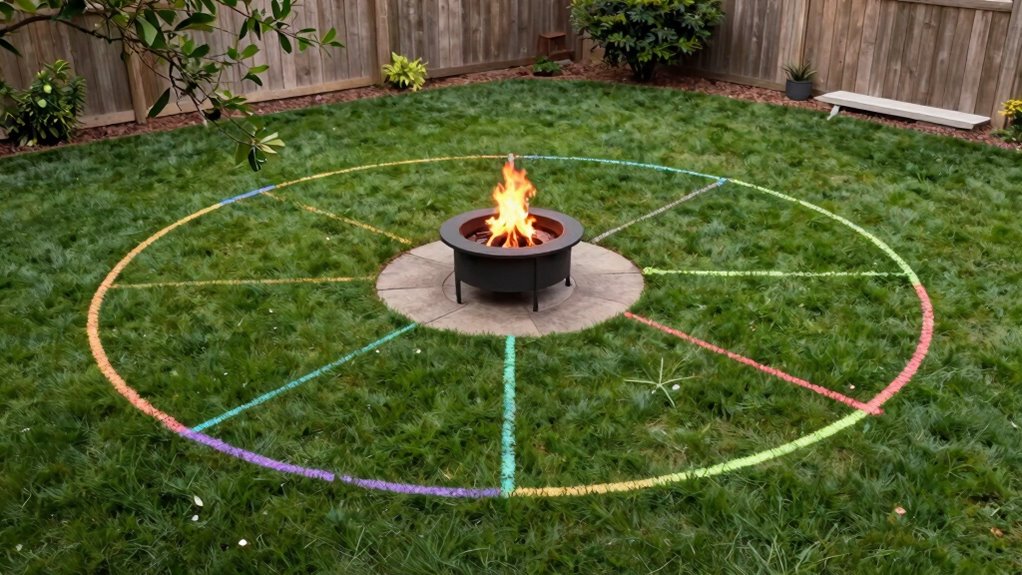
Neglecting proper safety zones can quickly turn a relaxing fire pit session into a hazardous situation. Common mistakes compromise fire safety and increase risk management challenges. First, placing combustible materials too close to the fire pit creates fire hazards. Second, ignoring clearance rules around the fire pit can lead to accidental contact or sparks igniting nearby objects. Third, failing to supervise children and pets around the fire risks accidents. Fourth, using improper tools or lighting methods can cause uncontrolled flames or sparks. These errors undermine your fire safety efforts and escalate danger. To enjoy your fire pit safely, always maintain proper clearances, keep combustible materials away, supervise all activity, and follow safe lighting procedures. Proper risk management depends on avoiding these common mistakes. Staying aware of your surroundings is also essential to prevent unexpected hazards and respond quickly if needed. Being familiar with fire safety guidelines ensures you can identify and address potential issues before they become serious. Additionally, understanding inverter generator capacity helps ensure your fire pit setup does not overload power sources or cause safety issues. Incorporating clearance measurements into your setup can further reduce hazards and promote safe use. Regularly inspecting your setup and keeping a fire extinguisher nearby can also help mitigate emergencies promptly.
What Materials Are Safe for Surfaces Near Your Fire Pit?
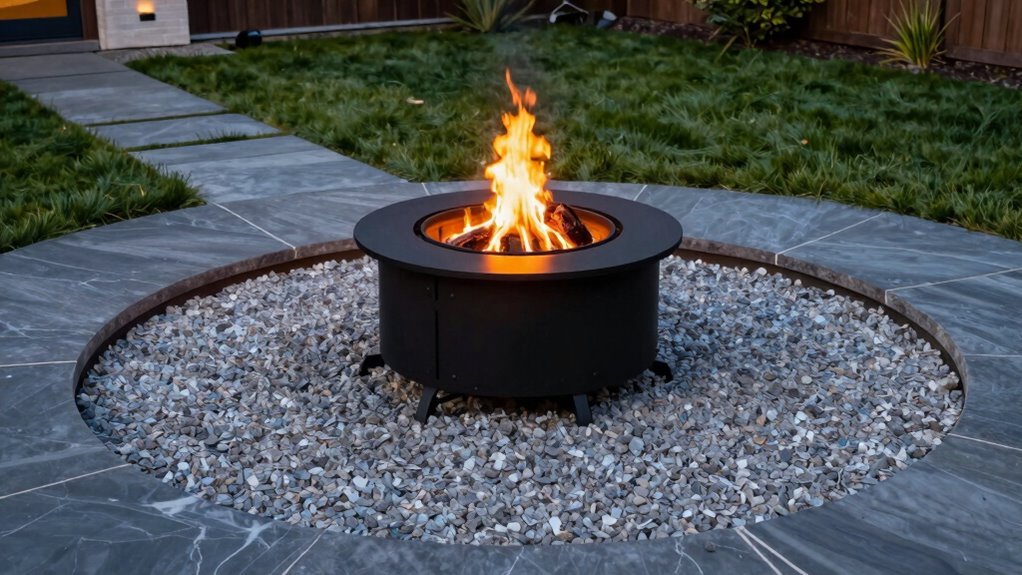
Choosing the right materials for surfaces near your fire pit is essential for safety. Fire resistant surfaces help prevent accidental fires and withstand heat better than combustible materials. Opt for fire-resistant materials like stone, brick, concrete, or slate for your fire pit area. These surfaces can handle high temperatures without catching fire or deteriorating. Avoid combustible materials such as wood, dry leaves, or plastic within at least a 3-foot radius, as they pose a significant fire risk. If you’re installing a fire pit on a deck or patio, ensure the surface is made of non-combustible materials, and add a heat shield if necessary. Using fire-resistant surfaces creates a safer environment, reducing the chance of accidental fires and protecting your outdoor space. Understanding fire-resistant surface properties is crucial for selecting the best materials for your fire pit area.
How Do You Maintain Safety During Fire Pit Use and Maintenance?
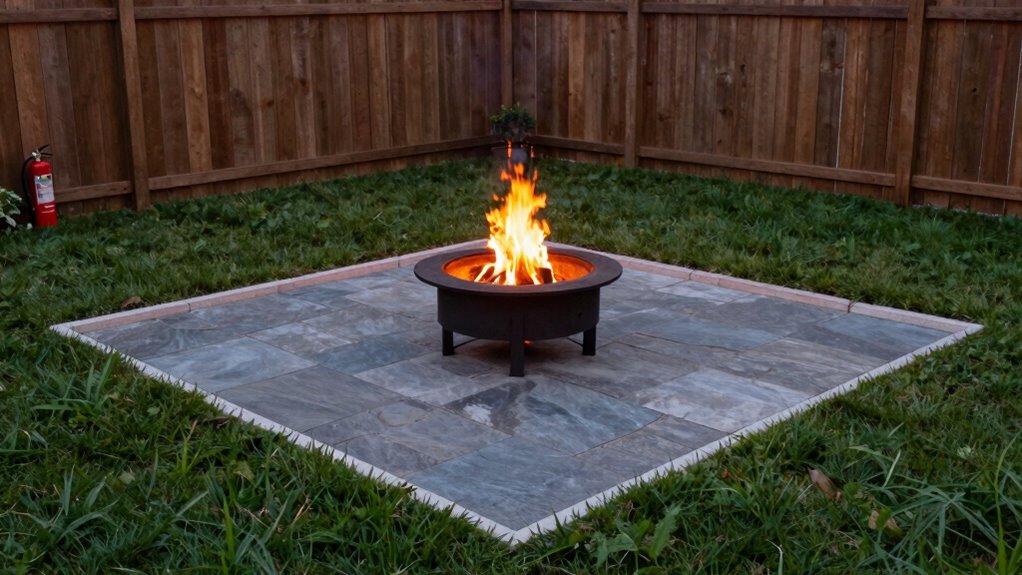
Maintaining safety during fire pit use and maintenance is essential to prevent accidents and injuries. Always keep your fire pit accessories, like tools and covers, organized and within reach. When using your fire pit, follow these steps:
Prioritize safety with organized tools, clear zones, and regular fire pit maintenance.
- Preserve a clear safety zone around the fire pit, removing any flammable debris.
- Ensure your outdoor seating is at a safe distance, complying with clearance rules.
- Use appropriate tools to handle logs and control flames, avoiding direct contact.
- Regularly inspect and clean your fire pit to remove ash buildup and check for damage.
- To optimize your safety, consider integrating air quality awareness in your outdoor space, especially if you use your fire pit frequently.
What Local Regulations and Building Codes Should You Know?

Understanding and complying with local regulations and building codes is essential before installing or using a fire pit, as these rules vary by jurisdiction. Check with your local authorities or fire department to learn about restrictions related to fire pit landscaping and outdoor fire safety. Some areas may require permits, specific setback distances, or restrictions on fuel types. Building codes might specify materials or construction standards to prevent accidents. Ignoring these regulations can lead to fines or safety hazards. Be sure to review regulations on proximity to structures, trees, or fences, and ensure your fire pit setup aligns with all legal requirements. Staying informed helps you enjoy outdoor fire safety responsibly and avoids potential legal issues.
Frequently Asked Questions
Can I Use Artificial or Flammable Materials Near My Fire Pit Safely?
You shouldn’t use artificial materials or flammable substances near your fire pit, as they pose serious safety risks. Artificial materials can emit toxic fumes or catch fire easily, while flammable substances might cause dangerous flare-ups. Keep a safe distance and only use approved, non-flammable items around your fire pit. Staying cautious guarantees you enjoy your fire pit safely without risking accidents or health hazards.
How Often Should I Reassess Fire Pit Clearance Zones?
You should reevaluate your fire pit clearance zones at least once a season—because nothing screams fire safety like forgetting to check for hazards. Regular hazard assessments help you spot changes like new debris or overgrown vegetation that could turn your cozy fire pit into a danger zone. Staying vigilant ensures your setup remains safe, and you’re not the one making headlines for ignoring simple fire safety rules.
Are There Specific Fire Pit Models With Built-In Safety Features?
Many fire pit models come with built-in safety features like spark screens, automatic shut-off valves, and sturdy, heat-resistant materials. When shopping, look for fire pit accessories that enhance safety, such as protective covers and wind guards. These features help prevent accidents and guarantee safer use. Always check product descriptions and reviews to find fire pits with reliable safety features, giving you peace of mind during outdoor gatherings.
What Are the Risks of Overcrowding Around a Fire Pit?
Overcrowding around a fire pit increases the fire hazard, making it harder to maintain safe distances and control the crowd. You risk accidental burns, trips, or falls if too many people gather nearby. Proper crowd control is essential to prevent injuries and make certain everyone stays a safe distance. Keep the area clear, limit the number of guests, and encourage responsible behavior to reduce these risks and enjoy your fire pit safely.
How Do Weather Conditions Affect Fire Pit Safety Zones?
Weather impact your fire pit safety zones like an unpredictable dance partner. Wind safety becomes essential; gusts can turn a gentle flame into a roaring inferno, threatening nearby objects and people. Rain or snow can dampen the fire, but also create slippery surfaces, making safety zones harder to maintain. Always check the weather forecast before lighting up, and keep a watchful eye on changing conditions to keep everyone safe.
Conclusion
Remember, maintaining proper clearance around your fire pit is vital for safety. Did you know that nearly 70% of fire-related injuries happen because of unsafe distances? By following recommended distances, creating clear zones, and using safe materials, you reduce your risk considerably. Stay informed about local codes and always stay vigilant during use and maintenance. Prioritizing these safety steps ensures you and your loved ones can enjoy cozy fires without worry.
Fall Picks
fall essentials
As an affiliate, we earn on qualifying purchases.