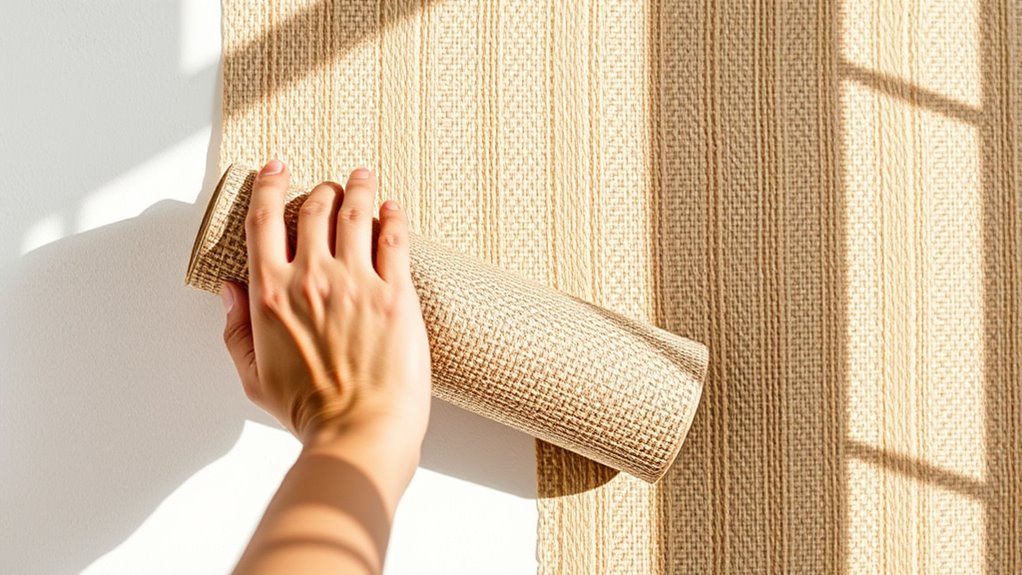

To install natural fiber wallpapers, start by ensuring your wall is clean, smooth, and dry. Measure carefully, leaving a slight overlap, and cut your wallpaper with sharp tools for clean edges. Apply adhesive evenly on the back using a brush or roller, and consider the paste-the-wall method for a strong, textured finish. Smooth out air bubbles with a wallpaper tool, and clean excess adhesive promptly. Keep these tips in mind to achieve a durable, eco-friendly wall covering—more expert advice awaits.
Key Takeaways
- Ensure walls are clean, smooth, and dry before applying natural fiber wallpaper.
- Use a primer compatible with natural fibers to improve adhesion.
- Measure carefully, allowing slight overlap for seamless installation.
- Apply adhesive evenly on the back using a brush or roller, following the paste-the-wall method.
- Smooth out air bubbles with a wallpaper tool or damp sponge and wipe excess adhesive promptly.
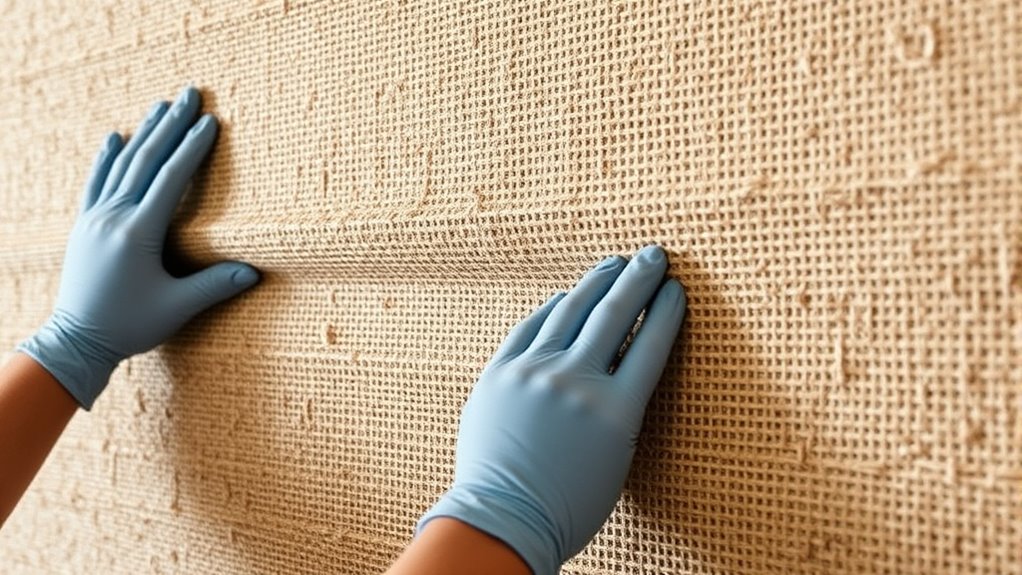
Natural fiber wallpapers are an eco-friendly choice that can instantly add warmth and texture to your space. When you choose these wallpapers, you’re not only enhancing your interior aesthetic but also supporting sustainable practices. These wallpapers are often made from eco friendly materials such as jute, sisal, or seagrass, which are renewable resources that require minimal processing. Their natural origins mean you’re contributing to a healthier environment, reducing your carbon footprint while enjoying a stylish wall covering. Additionally, many natural fiber wallpapers showcase traditional craftsmanship, reflecting centuries-old techniques that emphasize quality and authenticity. By installing these wallpapers, you’re bringing a piece of artisanal history into your home, celebrating skills passed down through generations.
Natural fiber wallpapers add warmth, texture, and eco-friendly style, showcasing traditional craftsmanship and sustainable materials for a timeless home upgrade.
Before you start, make sure your walls are clean, smooth, and dry. Natural fibers tend to be textured, so any imperfections can be more noticeable, making preparation vital. Use a gentle cleaner to remove dust, dirt, and grease, and fill in any holes or cracks with spackle or joint compound. Once the wall surface is smooth, consider applying a primer compatible with natural fibers; this helps the wallpaper adhere better and prevents any potential staining or bleeding through the material. It’s important to follow the manufacturer’s instructions for the primer and adhesive, as some natural fiber wallpapers may require specific products designed to accommodate their unique texture and porosity.
When it’s time to cut your wallpaper, measure carefully, allowing for a slight overlap on the edges to ensure a seamless look and easier alignment. Use a sharp utility knife or scissors for clean cuts. Apply the adhesive evenly to the back of the wallpaper using a brush or roller, making sure to cover the edges thoroughly. For natural fiber wallpapers, a paste-the-wall method often works best, as it provides a strong bond while accommodating the textured surface. Carefully position each strip, starting from a corner and working across the wall, smoothing out air bubbles and wrinkles as you go with a wallpaper smoothing tool or a clean, damp sponge. Take your time aligning patterns if your wallpaper has a design, and double-check measurements before sticking.
Once applied, wipe away any excess adhesive with a damp cloth to prevent staining or damage to the natural fibers. Allow the wallpaper to dry completely, following the recommended drying time specified by the manufacturer. Proper installation not only ensures a beautiful finished look but also prolongs the lifespan of your natural fiber wallpaper. With patience and attention to detail, you’ll achieve a stunning, eco-friendly wall covering that highlights traditional craftsmanship and sustainable materials in your home decor.
Frequently Asked Questions
Can Natural Fiber Wallpapers Be Used in Humid Environments?
Natural fiber wallpapers aren’t ideal for humid environments because their textile durability can weaken with excess moisture. They lack moisture resistance, which can lead to mold, warping, or damage over time. If you want to use them in such areas, consider applying a protective sealant or opting for specially treated natural fiber wallpapers designed to handle humidity. Otherwise, choose more moisture-resistant wall coverings to guarantee longevity.
Are Natural Fiber Wallpapers Suitable for Outdoor Use?
Natural fiber wallpapers aren’t ideal for outdoor use because they’re susceptible to moisture, sunlight, and weather conditions. Instead, you should consider synthetic alternatives designed for outdoor environments, which resist these elements better. While natural fibers offer unique aesthetic variations and a warm, textured look, they require indoor settings to maintain their appearance and durability. For outdoor spaces, choose materials specifically engineered to withstand the elements for lasting beauty.
How Do I Remove Natural Fiber Wallpaper Without Damage?
To remove natural fiber wallpaper without damage, start by using gentle removal tools like a putty knife or a wallpaper steamer. First, carefully peel back a corner and apply wallpaper prep solutions to loosen the adhesive. Gently work your way across, avoiding excessive force. Patience is key—taking your time helps prevent tearing or damaging the wall surface. Always test a small area first to ascertain safe removal.
Do Natural Fiber Wallpapers Require Special Cleaning Methods?
Yes, natural fiber wallpapers do require special cleaning methods. You’ll want to avoid harsh chemicals and excessive moisture, as they can damage the delicate fibers. Instead, use gentle vacuuming or light dusting for regular maintenance, and spot clean with a damp cloth for stains. Follow these cleaning techniques and maintenance tips, and your wallpaper will stay stunning, fresh, and durable—almost like it’s protected by an invisible shield!
Can Natural Fiber Wallpapers Be Painted Over Later?
Yes, you can paint over natural fiber wallpapers later. Before you start, guarantee proper paint prep by cleaning the surface thoroughly. Apply a high-quality primer to seal the fibers and create a smooth base for your paint. Once the primer dries, you can confidently apply your chosen paint. This process helps the paint adhere better, prevents fibers from showing through, and results in a professional-looking finish.
Conclusion
Natural fiber wallpapers bring a touch of nature’s warmth into your home, transforming walls into living art. With a little patience and care, you’ll find that installing these textures is like weaving a cozy blanket—layer by layer, stitch by stitch. Embrace the process, and soon your space will breathe with organic charm. Remember, every carefully hung panel is a demonstration of your effort, turning your walls into a canvas that whispers the beauty of nature.