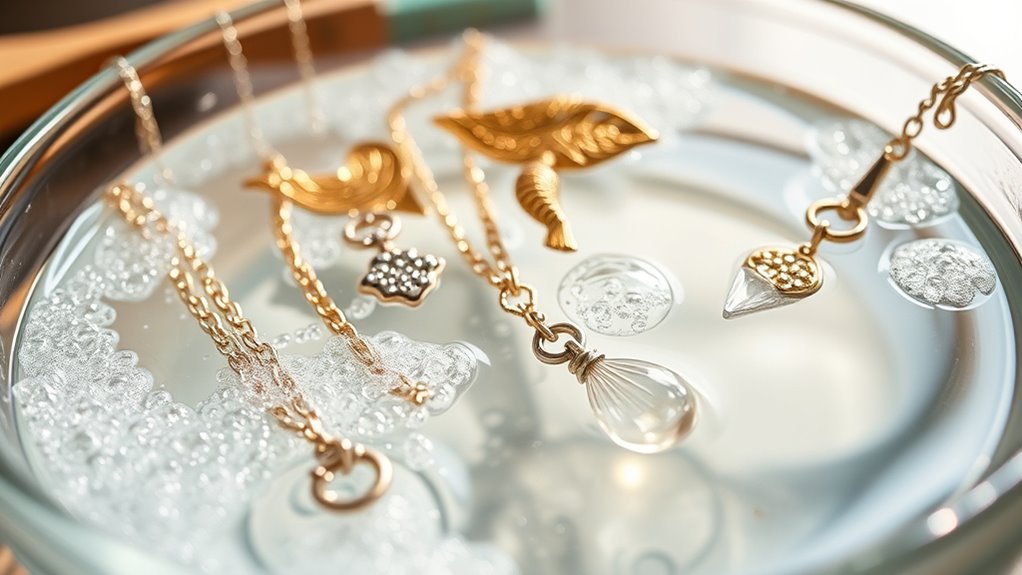

To restore your jewelry’s shine, try a simple DIY hack using a mix of mild dish soap and warm water—soak your pieces briefly, then gently scrub with a soft toothbrush to remove grime. For extra brilliance, buff with a microfiber cloth in circular motions, avoiding abrasive materials. Storing jewelry properly and wiping after each wear helps prevent tarnish. Keep going to discover more proven tips to keep your jewelry looking its best.
Key Takeaways
- Use a mixture of mild dish soap and warm water to gently clean jewelry with a soft brush or cloth.
- Create a cleaning paste with baking soda and water for stubborn tarnish, then gently buff with a soft cloth.
- Soak jewelry in a vinegar and baking soda solution to remove grime and restore shine.
- Regularly wipe jewelry with a microfiber cloth after wearing to prevent buildup and maintain brilliance.
- Store jewelry in airtight containers or anti-tarnish pouches and apply protective coatings to prevent tarnish and damage.

Keeping your jewelry sparkling doesn’t have to be complicated or expensive. With a few simple tips and tricks, you can restore its shine and keep tarnish at bay. One of the most important aspects of jewelry maintenance is mastering polishing techniques. Instead of harsh abrasives, use soft cloths, such as microfiber or jewelry-specific polishing cloths, to gently buff away fingerprints, dirt, and tarnish. For stubborn spots, dampen your cloth slightly with water or a mild soap solution, then carefully polish the piece in a circular motion. This approach avoids scratching delicate surfaces while restoring their luster. When polishing, always remember to use light pressure and avoid abrasive materials that could harm the jewelry’s finish. Additionally, understanding the contrast ratio of your cleaning methods can help you evaluate how well your jewelry will appear after polishing, ensuring deeper blacks and brighter whites in your jewelry’s shine. Regular maintenance, such as wiping your jewelry after each wear, can also significantly extend its lifespan and keep it looking new longer. Being aware of oxidation processes can help you choose the best cleaning and preservation methods for different metals. Tarnish prevention is equally essential in maintaining your jewelry’s appearance over time. To minimize tarnishing, store your jewelry properly—preferably in airtight containers or anti-tarnish pouches that slow down oxidation. Keep pieces separate to prevent scratches and chemical reactions from contact with other metals or jewelry. Regularly wiping your jewelry after wearing it also helps remove oils, sweat, and environmental pollutants that accelerate tarnishing. You can create a simple tarnish prevention routine by applying a thin layer of clear nail polish or specialized jewelry protectant on the metal surfaces. This creates a barrier that delays tarnish formation, especially for jewelry made of silver or brass. Moreover, choosing jewelry with protective coatings can provide an additional layer of defense against tarnish and damage. Another effective tip is to avoid exposing your jewelry to harsh chemicals like chlorine, bleach, or household cleaners, as these can accelerate tarnishing and damage delicate stones. When cleaning your jewelry, remove it before swimming, showering, or applying lotions and perfumes, which can leave residues that dull the shine or cause discoloration. Using gentle cleaning solutions—like a mixture of mild dish soap and warm water—can help maintain its appearance without risking damage. After cleaning, always dry your jewelry thoroughly with a soft cloth, ensuring no moisture remains to promote tarnish or corrosion. Being mindful of chemical exposure is crucial for preserving your jewelry’s beauty and integrity over time.
Frequently Asked Questions
Can I Use Toothpaste to Clean All Types of Jewelry?
You might wonder if toothpaste is safe for cleaning all jewelry types. While it’s a popular hack, remember that toothpaste abrasiveness can scratch softer materials like pearls or opals. Always consider jewelry material compatibility before using toothpaste. For sturdy metals like gold or silver, it often works well, but avoid it on delicate or porous stones. When in doubt, test a small area or consult a professional cleaner.
How Often Should I Clean My Jewelry at Home?
You should clean your jewelry at home every few weeks to keep it sparkling and prevent buildup. Use proper jewelry storage to avoid damage and tarnishing. For a deeper clean, consider professional cleaning once or twice a year. Regular home cleaning with gentle methods complements professional care, ensuring your jewelry stays beautiful longer. Remember, over-cleaning can cause wear, so find a balance that maintains your pieces without harming them.
Are There DIY Methods Safe for Vintage or Delicate Jewelry?
Did you know that 80% of jewelry damage occurs from improper cleaning? When it comes to vintage preservation and delicate jewelry care, DIY methods can be risky. You should avoid harsh chemicals and abrasive tools, as they can harm fragile pieces. Instead, opt for gentle cleaning with mild soap and soft brushes. Always test a small area first, and consider consulting a professional for valuable or delicate vintage jewelry.
What Should I Avoid When Cleaning Jewelry Myself?
When cleaning jewelry yourself, you should avoid using harsh chemicals or abrasive materials, as they can cause chemical reactions or abrasive damage. Steer clear of bleach, ammonia, or baking soda on delicate pieces, and don’t scrub too hard. Instead, opt for gentle cleaning methods, like warm water and mild soap, to protect your jewelry’s finish and prevent any long-term harm. Always test on a small area first.
Can Homemade Solutions Damage Specific Gemstones?
When cleaning jewelry yourself, you should consider that homemade solutions can cause chemical reactions harmful to some gemstones. Certain stones, like opals or pearls, are more gemstone sensitive and may get damaged by acidic or abrasive solutions. Always research your specific gemstone’s properties before using DIY cleaners. Using harsh chemicals can weaken or discolor your jewelry, so sticking to gentle, gemstone-safe methods helps preserve their beauty and integrity.
Conclusion
Now that you know these simple DIY jewelry cleaning hacks, keeping your pieces sparkling has never been easier. Did you know that over 60% of jewelry owners neglect regular cleaning, risking damage? By using these quick tricks, you can save money and extend the life of your jewelry. So go ahead, try them out—your jewelry will thank you for the extra care and shine! Cleaning your jewelry regularly is a small effort that makes a big difference.