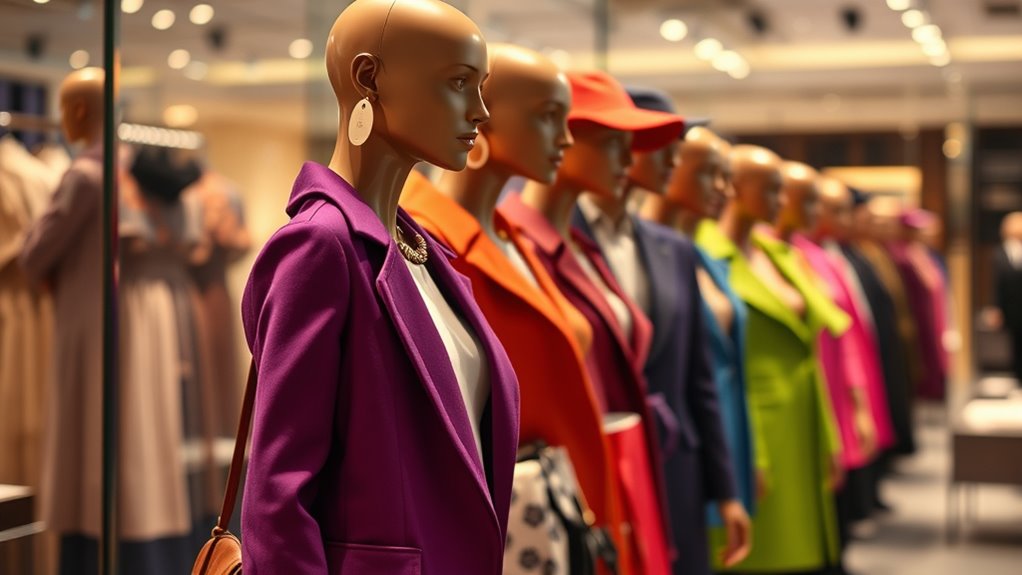

In fashion, pricing psychology plays a big role in shaping how you perceive luxury, exclusivity, and value. Brands use high prices to signal rarity and prestige, making their products more desirable and desirable. Discount tactics can create urgency and make items feel more accessible without damaging the brand’s image. Understanding these subtle cues helps you recognize when pricing influences your choices. Stick around, and you’ll discover more about how these strategies impact your buying decisions.
Key Takeaways
- High prices signal exclusivity, enhancing perceived value and desirability in fashion branding.
- Strategic pricing reinforces luxury status, attracting status-seeking consumers and emphasizing craftsmanship.
- Discounts create urgency and FOMO, but limited offers maintain the brand’s premium image.
- Small markdowns on luxury items increase accessibility without diminishing perceived prestige.
- Consumers interpret higher prices as indicators of quality, rarity, and superior fashion statements.

Understanding pricing psychology in fashion can considerably influence your purchasing decisions. When you see a brand labeled as luxury, it often triggers a perception of higher quality, exclusivity, and status. This isn’t accidental; luxury branding strategically uses pricing to reinforce its image. High price points signal rarity and prestige, making you more inclined to see the product as valuable. Even if you’re aware that some luxury brands mark up their items substantially, the price still plays a pivotal role in how you perceive the item’s worth. The psychology behind this is that a higher price can create a sense of desirability, making you more eager to own something that feels exclusive. Brands leverage this by positioning their products at premium levels, which naturally attracts consumers seeking status symbols or unique fashion statements. Additionally, textured fabrics and soft color palettes can subtly influence your perception of comfort and quality, further elevating perceived value.
On the flip side, discount strategies are just as effective in shaping your buying behavior. Retailers often use discounts to create a sense of urgency, making you believe you’re getting a special deal or limited-time offer. This taps into your fear of missing out, prompting quicker purchases. When you see a luxury item marked down, it can evoke mixed feelings—excitement over the deal but also questions about the product’s original value. Sometimes, brands use discounts to clear out inventory or attract new customers who might be hesitant to pay full price initially. The key is that discounts are carefully calibrated; a small markdown can make a product appear more accessible without undermining its perceived value. This is especially true when a brand maintains its luxury image by only offering selective discounts or limited-time sales. You may also notice that limited discounts on high-end products can increase their allure, making them feel even more exclusive because they’re rarely on sale.
Both luxury branding and discount strategies manipulate your perceptions of value and desirability, but they do so in opposite ways. Luxury brands create a perception of exclusivity through high prices, while discount strategies use reduced prices to stimulate demand. As a consumer, understanding these tactics can help you become more aware of how pricing affects your feelings about a product. Instead of impulsively reacting to a sale or the prestige of a luxury label, you can evaluate whether the item truly fits your needs or if your perception of its value is being influenced by clever marketing. Recognizing these psychological cues allows you to make more conscious, informed choices, ultimately improving your shopping experience and helping you avoid overspending based on manipulated perceptions of worth. Being mindful of perceived value can help you develop a more balanced approach to fashion purchases and avoid falling prey to marketing tricks.
Frequently Asked Questions
How Do Cultural Differences Influence Pricing Psychology in Fashion?
Cultural differences shape how you perceive pricing, influenced by cultural perception and local pricing customs. In some cultures, higher prices suggest better quality, while others see lower prices as more attractive. You might also respond differently to discounts or premium pricing based on cultural norms. By understanding these nuances, you can tailor your pricing strategies to resonate with diverse markets, boosting your brand’s appeal and sales across various cultural contexts.
What Role Does Social Media Play in Perceived Value?
Social media considerably shapes your perceived value by amplifying influencer impact and encouraging user engagement. When influencers showcase fashion items, they boost desirability and create a sense of trendiness, making products seem more valuable. Your engagement—likes, comments, shares—further reinforces this perception, signaling popularity and quality. This dynamic fosters a sense of community and trust, ultimately elevating how you value and desire certain fashion pieces.
How Do Seasonal Trends Affect Pricing Strategies?
Picture a shifting tide, reflecting seasonal trends. You adjust your pricing strategies with that ebb and flow, offering seasonal discounts to clear out last season’s stock. Trend-driven pricing means you stay ahead, raising prices as new styles emerge and lowering them when trends fade. By aligning your prices with these natural cycles, you attract customers enthusiastic for fresh fashion while maximizing profit during peak seasons.
Can Pricing Psychology Impact Brand Loyalty?
Yes, pricing psychology can impact your brand loyalty. By using dynamic pricing, you adapt prices based on demand, encouraging repeat customers who feel they’re getting personalized deals. Psychological pricing, like charm pricing or prestige pricing, influences perceptions of value, making customers more likely to stay loyal. When you combine these strategies thoughtfully, you create a sense of trust and satisfaction, fostering long-term loyalty that benefits your brand.
What Are the Ethical Considerations of Pricing Tactics?
You should consider that ethical marketing and price transparency are vital when using pricing tactics. You need to be honest about your prices, avoid misleading customers, and guarantee your tactics don’t exploit vulnerable buyers. By maintaining transparency and practicing ethical marketing, you build trust and loyalty. This approach not only aligns with moral standards but also safeguards your brand’s reputation, encouraging long-term success and customer satisfaction.
Conclusion
By understanding pricing psychology, you can make smarter choices and feel confident in how you shop and sell fashion. Some might think these tactics are manipulative, but really, they’re just tools to help you recognize value and make informed decisions. Next time you see a price that seems “perfect,” remember it’s all about how your mind perceives value. Embrace these insights—they’ll empower you to shop smarter and sell more effectively.