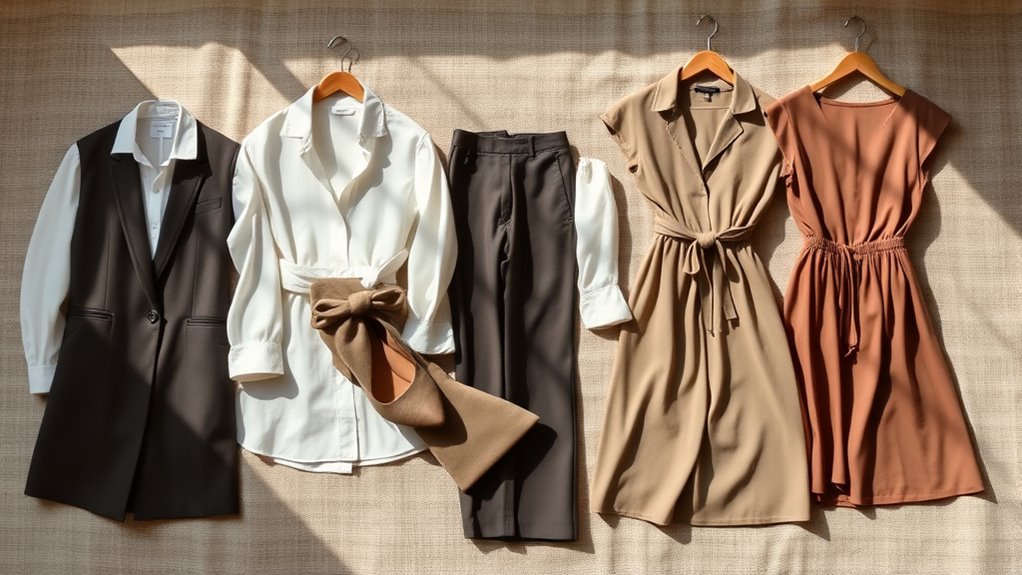

Seasonless collections offer you versatile, sustainable clothing that can be worn year-round, reducing waste and encouraging mindful shopping. They help you invest in timeless pieces, but may make it harder to choose what to wear for specific weather. Without seasonal cues, fashion can feel less exciting or fresh. While they promote durability and reduce fast fashion, some find wardrobe updates less motivating. For a deeper understanding of these benefits and challenges, keep exploring more insights.
Key Takeaways
- Promote sustainable fashion by reducing waste and overproduction through year-round wearability.
- Offer versatility but can cause decision fatigue due to lack of seasonal cues.
- Encourage consumers to invest in timeless, high-quality pieces instead of fast fashion trends.
- Challenge traditional seasonal cycles, fostering a shift toward durability and timeless style.
- May lead to less wardrobe turnover and decreased excitement for seasonal updates.
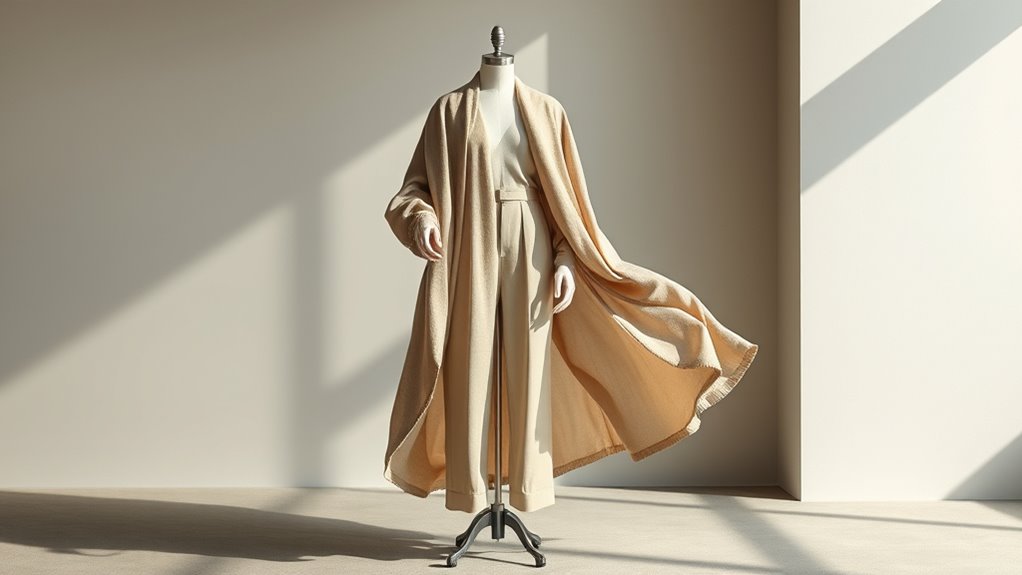
Have you ever wondered why fashion cycles still cling to seasonal trends when the climate and your personal style don’t? It’s a question many of us ponder as the industry continues to push new collections aligned with specific times of the year. Seasonless collections are gaining popularity, offering an alternative that challenges this traditional cycle. One of the biggest advantages is fabric sustainability. By designing pieces meant to be worn year-round, brands reduce waste and overproduction. Instead of releasing separate summer and winter lines, they focus on versatile fabrics that can adapt to different climates and styles. This shift encourages you to buy less often, making your consumer shopping habits more mindful. You’re less likely to purchase items solely because they’re in season and more inclined to invest in quality, timeless pieces. As a result, your wardrobe becomes more sustainable, and you contribute to decreasing the environmental impact of fast fashion. Additionally, cost efficiency can be achieved as consumers buy fewer items over time, saving money in the long run.
However, embracing seasonless collections isn’t without its drawbacks. For starters, it can be challenging to determine what to wear when the clothing isn’t tied to a specific season. You might find yourself questioning whether a lightweight sweater is suitable for winter or if a breezy dress works for summer. This ambiguity can lead to decision fatigue or even purchasing mistakes, which undermines the goal of thoughtful shopping. Additionally, some consumers find that seasonless collections lack the excitement of seasonal changes, which often inspire renewal and creativity in personal style. Without the cyclical shift, your wardrobe might feel stagnant or less motivating to update regularly.
From a broader perspective, these collections influence consumer shopping habits in complex ways. On one hand, they promote longer-lasting garments, reducing the need for frequent shopping sprees driven by seasonal trends. On the other hand, they can encourage more frequent purchases of core pieces to fill gaps in your wardrobe, especially if you’re trying to adapt to different climates or activities without the traditional seasonal cues. This shift might also lead to a reevaluation of how fashion brands market their products; instead of emphasizing seasonality, they focus on versatility and durability, which could be a positive change for consumers seeking more meaningful investments.
Ultimately, seasonless collections present a compelling case for a more sustainable, less wasteful approach to fashion. They challenge the entrenched norms of seasonal cycles, encouraging smarter shopping habits and promoting fabric sustainability. Yet, they also demand a different mindset—one that values timeless style over fleeting trends. If you’re open to embracing versatility and mindful consumption, seasonless collections could transform how you build your wardrobe, aligning your style more closely with your values and the planet’s well-being.
Frequently Asked Questions
How Do Seasonless Collections Impact Supply Chain Management?
Seasonless collections simplify your supply chain management by increasing inventory flexibility and streamlining production scheduling. You can order materials and produce items year-round without worrying about seasonal peaks or drops. This approach reduces excess inventory, minimizes waste, and allows you to respond quickly to customer demand. It also helps you better coordinate logistics, leading to more efficient operations and lower costs across your supply chain.
What Are the Environmental Implications of Seasonless Fashion?
They say, “Every little bit counts,” and in seasonless fashion, choosing sustainable materials helps reduce environmental impact. By designing versatile, long-lasting pieces, you promote waste reduction and lessen fast fashion’s pollution. This approach minimizes overproduction and landfill waste, supporting a healthier planet. Embracing seasonless collections encourages mindful consumption, making a positive difference for the environment and future generations.
How Do Consumers Perceive Seasonless Collections Compared to Seasonal Ones?
You see seasonless collections as versatile, offering you fashion options year-round without worrying about seasonal trends. Consumer perception often values this flexibility, making these collections appealing for their practicality and style. However, some might view them as less exciting or trendy compared to seasonal lines. Overall, you appreciate how seasonless fashion enhances versatility, allowing you to mix and match pieces effortlessly, but opinions vary depending on personal style preferences.
Are There Specific Fabrics Better Suited for Seasonless Designs?
You’ll find that fabrics with high versatility, like wool blends, linen, and cotton, are best suited for seasonless designs. These materials offer excellent durability and adaptability across various temperatures. You should prioritize fabrics that breathe in summer and insulate in winter, ensuring comfort year-round. Choosing the right versatile and durable fabrics allows your seasonless collection to appeal to consumers seeking timeless, all-season wear.
How Do Seasonless Collections Influence Fashion Industry Employment?
Imagine a world where your wardrobe never feels outdated—that’s what seasonless collections bring to the industry. They influence fashion industry employment by stabilizing retail staffing, reducing seasonal fluctuations, and creating continuous demand. As trend forecasting adapts, workers find steadier jobs, and brands can innovate year-round. This shift not only stabilizes employment but also fosters creativity, ensuring your style stays fresh without the rush of changing seasons.
Conclusion
By embracing seasonless collections, you can offer versatile pieces that appeal year-round, reducing waste and inventory challenges. Plus, studies show that 60% of consumers now prefer sustainable, timeless fashion over fast fashion trends. While this approach boosts your brand’s sustainability and flexibility, it also requires careful planning to stay relevant. Ultimately, seasonless collections let you connect more authentically with eco-conscious shoppers, making your brand both stylish and responsible in today’s evolving market.