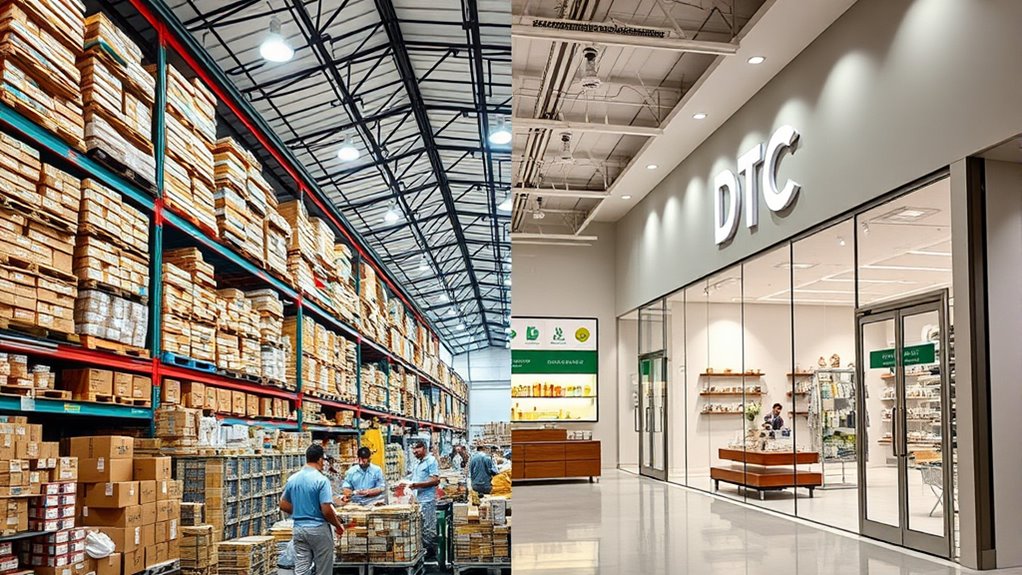

Choosing the right mix between wholesale and DTC depends on your goals. Wholesale offers steady revenue and rapid market expansion through bulk sales, while DTC provides valuable customer insights and higher margins via personalized offerings. A hybrid approach lets you balance broad reach with strong customer relationships. To make the most of both channels and optimize your growth, explore how blending them can align with your long-term strategy. Keep going to discover more tips and insights.
Key Takeaways
- A hybrid approach balances rapid market expansion through wholesale with personalized customer engagement via DTC.
- Wholesale offers predictable, scalable revenue streams, while DTC provides brand control and customer insights.
- Combining both channels maximizes brand visibility and fosters deeper customer loyalty.
- Wholesale is ideal for broad distribution; DTC allows flexible pricing and tailored marketing strategies.
- A strategic mix supports sustainable growth by leveraging the strengths of each channel.

Are you weighing the pros and cons of selling your products wholesale or direct-to-consumer (DTC)? Making this decision affects your overall business strategy and how you connect with your audience. When considering a wholesale approach, you’ll often focus on pricing strategies that emphasize bulk discounts and consistent margins, which can lead to steady revenue streams. However, with wholesale, you might sacrifice some control over how your brand is perceived, since you’re selling through intermediaries. On the other hand, DTC allows you to set your own prices, giving you more flexibility to offer personalized deals or premium pricing that reflects your brand’s value. This direct connection enables you to craft a unique customer experience, fostering deeper engagement and loyalty.
Customer engagement plays a *vital* role in your choice. When you sell DTC, you gain valuable insights about your customers’ preferences and behaviors, which helps refine your marketing and product development. You can build meaningful relationships through personalized communication, social media, and exclusive offers. This direct engagement often results in higher customer lifetime value and brand loyalty. Conversely, wholesale relationships tend to be more transactional, with less opportunity for ongoing interaction. Still, collaborating with wholesale partners can expand your reach quickly, especially in retail environments where customers trust established brands.
Pricing strategies differ *considerably* between the two channels. In wholesale, you need to set prices that allow retail partners to mark up your products while still maintaining healthy margins for yourself. This often means offering wholesale discounts that are predictable and scalable. With DTC, you control your pricing, which can be advantageous if your products have a high perceived value or if you want to implement tiered pricing strategies based on customer segments. You can also run targeted promotions or loyalty programs directly, which encourages repeat purchases and boosts customer engagement. Incorporating mindfulness into your business practices can also help you stay attuned to consumer needs and market shifts, enabling more thoughtful decision-making.
Choosing the right mix depends on your goals. If your priority is rapid expansion and brand visibility, a hybrid approach could be ideal—selling wholesale to reach broader audiences, while strengthening your DTC channels for customer loyalty and higher margins. This blend allows you to leverage the strengths of both strategies—broad distribution through wholesale and meaningful customer relationships through DTC. Ultimately, balancing these channels requires careful planning, especially in developing pricing strategies that support your growth while fostering customer engagement. When you find the right mix, you’ll position your brand for sustainable success in today’s competitive marketplace.
Frequently Asked Questions
How Do Pricing Strategies Differ Between Wholesale and DTC Channels?
Pricing strategies differ markedly between wholesale and DTC channels. In wholesale, you typically use volume-based pricing models to attract bulk buyers, which often results in lower margins but higher revenue streams. For DTC, you can implement premium pricing models, allowing you to capture more value directly from consumers. This approach enables you to maximize profit margins and build brand loyalty, tailoring your pricing to match each channel’s unique revenue opportunities.
What Are the Key Legal Considerations for Each Sales Model?
You need to prioritize protecting your Intellectual Property rights in both models by using clear contracts. In wholesale, focus on detailed contract negotiations to define usage rights and responsibilities. For DTC, guarantee your terms of service and privacy policies are robust. Always consult legal experts to navigate licensing, trademarks, and copyright issues, reducing risks of infringement or disputes, and safeguarding your brand across both sales channels.
How Does Customer Data Ownership Vary in Wholesale Versus DTC?
Think of customer data like a garden—you hold the keys to nurture and grow it. In DTC, you own customer insights and have full data control, giving you direct access to valuable information. In wholesale, your control dims because the retailer owns the customer data, limiting your insights. You need to navigate these differences carefully to maximize your understanding and strategy in each sales model.
What Are the Logistical Challenges Unique to Each Approach?
You face unique logistical challenges in each approach. With wholesale, managing inventory across multiple retailers complicates inventory management and increases the risk of stock shortages or surpluses. Shipping logistics can also be complex, as you coordinate with various partners and locations. In DTC, you handle direct shipping, which demands efficient logistics systems to meet customer expectations for fast delivery. Both models require tailored solutions to optimize inventory and shipping processes.
How Can Brands Balance Wholesale and DTC Efforts Effectively?
You can balance wholesale and DTC efforts by embracing partnership opportunities that complement both channels. Focus on maintaining brand consistency across all touchpoints, ensuring your messaging and visuals stay cohesive. Allocate resources wisely to support each channel’s strengths, and regularly analyze performance data. This approach helps you optimize growth while building strong relationships with partners and customers, creating a unified brand experience that drives long-term success.
Conclusion
So, as you weigh wholesale against DTC, remember this: neither is the sole path, but a dance of balance. You don’t have to choose one or the other; instead, craft a mix that plays to your strengths, amplifies your reach, and fuels growth. Like a symphony, your strategy thrives on harmony—blending the broad strokes of wholesale with the intimacy of DTC. Embrace the rhythm, and let your business sing.