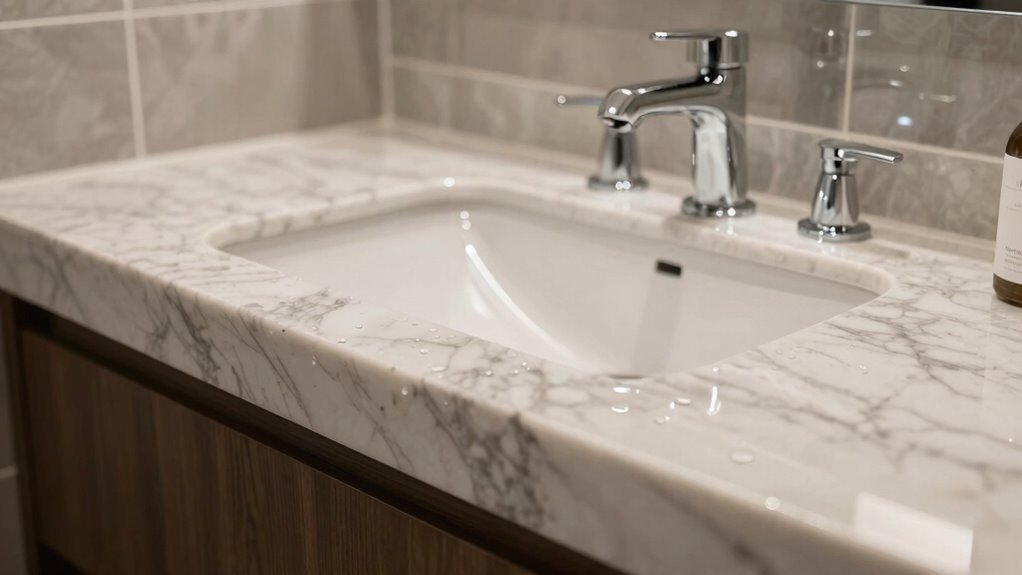

When choosing a bathroom vanity, consider quartz or solid surface countertops for their non-porous, moisture-resistant qualities that make them easy to maintain. Natural stone like marble or granite can look stunning but needs sealing to prevent water damage. To guarantee longevity, select moisture-resistant cabinets and properly seal around sinks. Want to discover more about creating a durable, stylish bathroom vanity? Keep exploring to find out how the right components come together.
Key Takeaways
- Quartz and solid surface countertops are highly moisture-resistant, ideal for humid bathroom environments.
- Natural stone like marble and granite require sealing to prevent water damage and maintain durability.
- Proper sealing around sinks and edges is essential for all countertop materials to prevent moisture infiltration.
- Choosing moisture-resistant vanity components, such as waterproof MDF or treated wood, prolongs vanity lifespan.
- Material selection impacts both the aesthetic style and functional moisture protection of bathroom vanities.
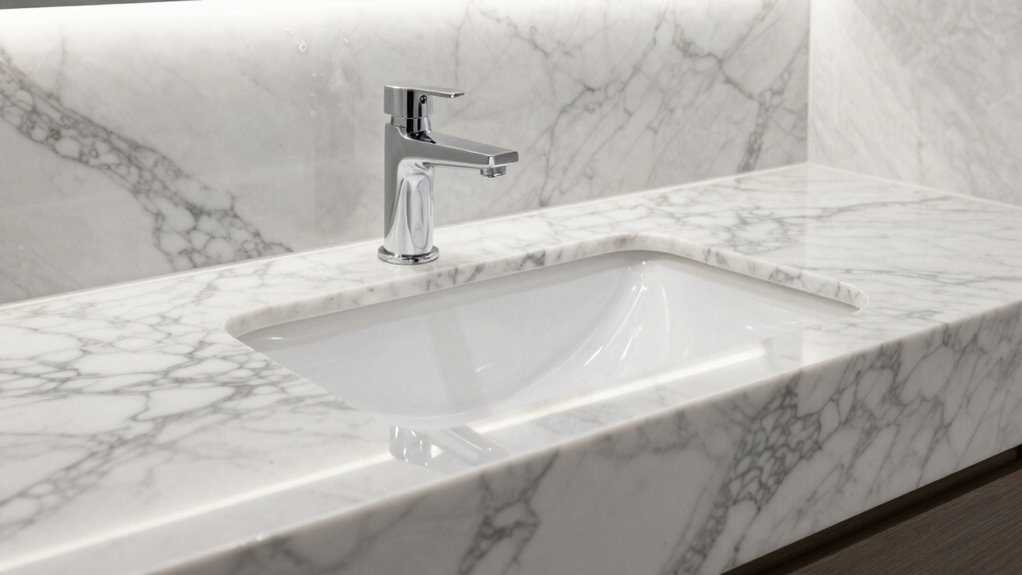
Bathroom vanities are a key element in both the style and functionality of your bathroom. When choosing the right vanity, you’ll want to consider not just how it looks but also how well it handles moisture and daily use. The countertop material you select plays a significant role in this, impacting both durability and moisture resistance. Popular options include natural stone, quartz, and solid surface materials. Natural stone like marble or granite offers a luxurious look, but it requires regular sealing to prevent moisture damage. Quartz, on the other hand, is engineered for high moisture environments; it’s non-porous, making it easier to clean and maintain without worry about water seepage. Solid surface materials provide a seamless, uniform look and are highly resistant to moisture, making them a practical choice for busy bathrooms.
Choose durable, moisture-resistant countertops like quartz or solid surfaces for a stylish, low-maintenance bathroom vanity.
As you explore different vanity mirror styles, you’ll notice that many complement the countertop material and overall aesthetic. Modern mirrors with sleek, frameless designs pair well with minimalist countertops, while ornate, framed mirrors can add elegance to more traditional vanities. When considering sink faucet designs, think about how they integrate into your overall look. Wall-mounted faucets, for example, offer a clean, uncluttered appearance that pairs beautifully with simple countertops. Deck-mounted faucets, meanwhile, can serve as a statement piece, especially when matched with the right sink style. Whichever designs you choose, make sure your faucet installations are compatible with your countertop material to prevent water damage and ensure longevity.
Moisture resistance isn’t just about the countertop; it extends to the entire vanity setup. You’ll want to opt for cabinetry made from moisture-resistant materials like treated wood, MDF with waterproof coatings, or even PVC. This helps prevent warping, swelling, or mold growth over time. Proper sealing around sink areas and edges also plays a vital role in maintaining the integrity of your vanity. Additionally, consider the placement of your vanity in relation to windows and ventilation to reduce excess humidity. Good airflow helps keep moisture levels in check and preserves your investment. Incorporating moisture-resistant materials into your vanity design can significantly extend its lifespan and keep it looking new. Regular maintenance and proper ventilation are also essential in preventing mold growth and ensuring long-term durability. Moreover, choosing moisture-resistant countertops can further safeguard your vanity from potential water-related issues. Selecting materials with proven moisture resistance can provide peace of mind in a humid environment. For added protection, some homeowners opt for waterproof coatings on cabinetry to enhance durability against moisture exposure.
Ultimately, selecting the right countertop material and understanding moisture resistance will guarantee your bathroom vanity remains beautiful and functional for years to come. By paying attention to details like vanity mirror styles and sink faucet designs, you create a space that’s not only stylish but also practical and resilient against everyday moisture challenges. Your bathroom should be a sanctuary—well-designed, easy to maintain, and built to withstand the moisture-rich environment it’s exposed to daily.

72"Ash Grey Floating Vanity with Sink,Modern Vanity Double Sinks Combo
- Large 72-inch floating vanity: Ideal for luxury bathrooms
- Double integrated sinks: Provides ample washing space
- Four wide soft-close drawers: Offers extensive storage capacity
As an affiliate, we earn on qualifying purchases.
As an affiliate, we earn on qualifying purchases.
Frequently Asked Questions
How Do I Clean and Maintain Different Countertop Materials?
To clean and maintain different countertop materials, use appropriate cleaning techniques for each type. For stone surfaces, avoid harsh chemicals and opt for a mild, pH-balanced cleaner; wipe spills immediately. For laminate, use a soft cloth and gentle soap. Regular maintenance tips include sealing natural stone annually and avoiding abrasive scrubbers. By following these steps, you’ll keep your countertops looking great and extend their lifespan effortlessly.
Which Materials Are Best for Preventing Mold and Mildew?
You might think that all countertops resist mold and mildew equally, but some materials truly stand out. Quartz and solid surface countertops excel in mold prevention and mildew resistance because their non-porous surfaces prevent moisture buildup. These materials are less likely to harbor mold spores, making them ideal for damp bathroom environments. Choosing these options guarantees you’re investing in long-term cleanliness and hygiene, reducing the need for frequent mold removal efforts.
Can I Install a Countertop Myself or Should I Hire a Professional?
You can attempt a DIY installation if you’re comfortable with basic tools and measurements, but for the best results, professional assistance is advised. Installing a countertop involves precise cutting, leveling, and sealing, which can be tricky for beginners. Hiring a professional ensures proper fit, avoids damage, and provides peace of mind. If you’re unsure about your skills, investing in expert help is a smart choice for a flawless finish.
Are There Eco-Friendly Countertop Options Available?
Yes, eco-friendly countertop options are available, and you can choose sustainable materials that reduce environmental impact. Visualize countertops made from bamboo, reclaimed wood, or recycled glass, which are durable and environmentally conscious. These sustainable options not only look stylish but also help lower your carbon footprint. Incorporating eco-friendly materials into your bathroom vanity supports sustainability and offers a beautiful, responsible choice for your home.
How Long Does a Typical Vanity Countertop Last?
A typical vanity countertop lasts around 10 to 15 years, depending on the material and maintenance. Countertop durability varies; for example, granite and quartz offer excellent material longevity, resisting scratches and stains better over time. Proper care, like sealing and cleaning, extends its lifespan. If you choose durable materials and maintain them well, your countertop can stay functional and attractive for many years, providing lasting value and style in your bathroom.
Conclusion
Choosing the right countertop material for your bathroom vanity is like finding the perfect dance partner—both need to be in sync with your style and needs. Prioritize moisture resistance to keep your space looking fresh and vibrant, no matter how often you splash around. With the right choice, your bathroom will shine brighter than a diamond, turning everyday routines into a spa-like retreat. So, pick wisely, and let your vanity be the crown jewel of your bathroom!