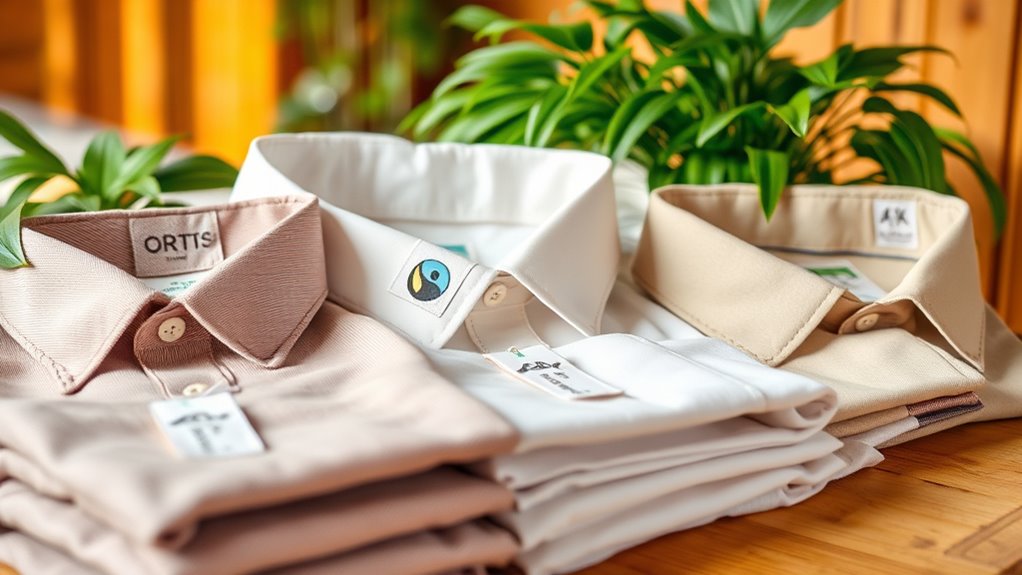

Ethical certifications like Fair Trade, GOTS, and B‑Corp guarantee products meet responsible standards for environmental sustainability, fair labor, and supply chain transparency. They serve as trust marks that help you identify brands committed to ethical practices. These certifications promote fair wages, safe working conditions, and eco-friendly methods. By choosing certified products, you support responsible companies and contribute to positive change. To understand how these standards impact your choices and the industry, keep exploring these key certifications.
Key Takeaways
- Ethical certifications like Fair Trade, GOTS, and B‑Corp verify that products meet standards for fair labor, environmental sustainability, and supply chain transparency.
- Fair Trade certification emphasizes fair wages, safe working conditions, and responsible sourcing practices for farmers and workers.
- GOTS focuses on environmentally friendly textile production with social criteria, including fair labor and organic fiber use.
- B‑Corp assesses companies’ overall social and environmental performance, promoting responsible business practices across industries.
- These certifications help consumers identify high-quality, ethically produced products and support brands committed to sustainability.
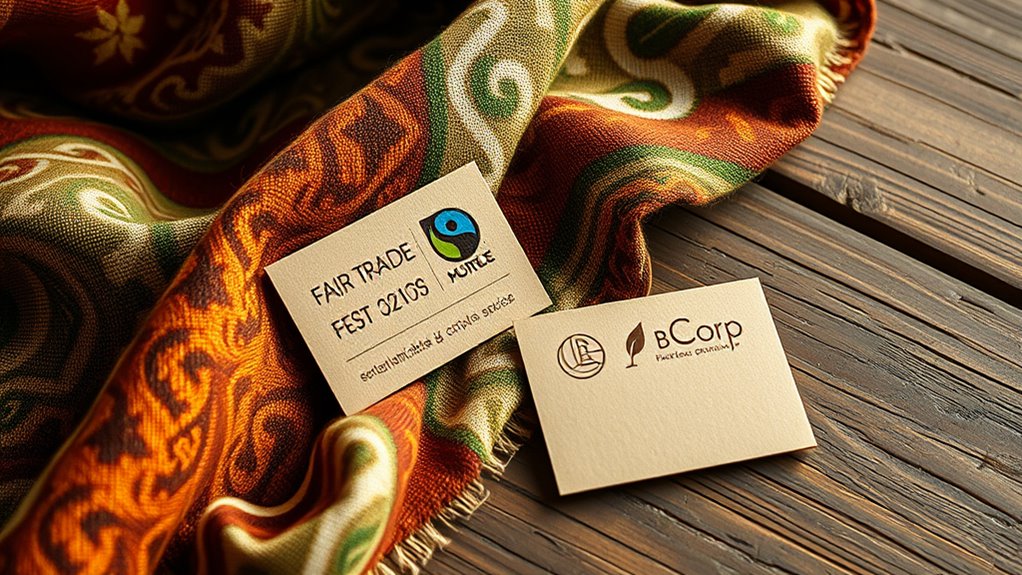
Have you ever wondered how to guarantee the products you buy meet ethical standards? One of the key ways is by understanding ethical certifications that verify a company’s commitment to responsible practices. These certifications serve as a mark of trust, showing that brands prioritize supply chain transparency and fair labor practices. When you see a product bearing a certification like Fair Trade, GOTS, or B‑Corp, you can feel more confident that it aligns with ethical values.
Supply chain transparency is fundamental to ethical certifications. It means companies openly share information about how their products are sourced, processed, and transported. This openness helps ensure that every step of the supply chain adheres to responsible standards, whether it’s avoiding environmental harm or preventing exploitation. For instance, Fair Trade certification requires companies to reveal their sourcing practices, ensuring that farmers and workers receive fair wages and work in safe conditions. When brands commit to supply chain transparency, they allow consumers like you to make informed choices, knowing that the products weren’t made at the expense of labor rights or environmental health. Promoting supply chain transparency can also encourage companies to adopt more sustainable and ethical practices overall.
Supply chain transparency ensures responsible sourcing and fair labor practices throughout production.
Fair labor practices are another core aspect of these certifications. They guarantee that workers involved in producing goods are treated ethically—working in safe environments, earning fair wages, and not subjected to forced labor or child exploitation. Certifications like Fair Trade mandate strict adherence to these principles, providing a safeguard for workers around the world. When you buy from a Fair Trade-certified company, you support businesses that prioritize human rights and fair compensation, ensuring that labor rights are respected at every stage of production. Understanding fair labor standards helps consumers advocate for better work conditions and ethical sourcing.
Beyond Fair Trade, certifications like GOTS (Global Organic Textile Standard) focus on environmentally friendly and socially responsible practices in textile manufacturing. GOTS not only requires organic fiber content but also enforces strict social criteria, including fair labor standards. Understanding certification standards can help consumers better evaluate the ethical credentials of products. Similarly, B‑Corp certification evaluates companies on a broad spectrum of social and environmental performance, emphasizing transparency, accountability, and positive community impact. Additionally, recognizing the importance of supply chain transparency can help consumers advocate for more responsible business practices and better working conditions worldwide.
Choosing products with these certifications means you’re actively supporting companies that value ethical standards. You gain assurance that the products you purchase are not only high-quality but also produced responsibly. These certifications act as a bridge between consumers and businesses, fostering trust and encouraging industry-wide improvements. When you prioritize certified products, you’re helping to promote supply chain transparency, fair labor practices, and a more sustainable, equitable world.
Frequently Asked Questions
How Do Ethical Certifications Impact Product Pricing?
When you consider how ethical certifications impact product pricing, you see that they often increase costs due to stricter standards and sustainable practices. This influences consumer perception positively, as shoppers value ethically produced items, even if they cost more. You might notice higher prices because brands invest in fair wages, eco-friendly materials, and transparent supply chains, all of which have cost implications but also boost the product’s appeal to conscious consumers.
Can Certifications Guarantee Completely Cruelty-Free Products?
Like a lighthouse guiding ships, certifications help you navigate product claims, but they don’t guarantee cruelty-free products. Certification limitations mean some companies might still engage in unethical practices despite having labels. Consumer skepticism exists because certifications aren’t foolproof, and standards can vary. So, while they offer some assurance, you should also research brands and ask questions to truly ensure cruelty-free products.
Are Ethical Certifications Recognized Globally or Regionally?
You might wonder if ethical certifications are recognized globally or regionally. These certifications often follow international standards, but regional differences can impact their recognition and credibility. While some certifications, like Fair Trade or GOTS, are widely accepted, others may be more region-specific. It’s important to research each certification’s scope and acceptance to guarantee your products meet the ethical expectations of your target markets.
How Often Are Ethical Certifications Re-Evaluated or Renewed?
You might wonder how often ethical certifications are re-evaluated or renewed. Certification longevity varies, but most require renewal processes every one to three years to guarantee ongoing compliance. Regular re-evaluations help maintain credibility and verify that standards are upheld. Staying aware of renewal deadlines ensures your certification remains valid, showing your commitment to ethical practices. This process keeps certifications meaningful and trustworthy for consumers and partners alike.
Do Certifications Cover the Entire Supply Chain or Just Specific Stages?
Think of certification scope like a map—some cover the entire journey, ensuring supply chain transparency from start to finish, while others focus on specific stages. You should check each certification’s scope, as it varies; some verify ethical practices throughout, others only at certain points. This helps you understand what part of the supply chain is guaranteed, so you can confidently support brands that meet your ethical standards across their whole operation.
Conclusion
By choosing products with ethical certifications like Fair Trade, GOTS, or B-Corp, you’re making a positive impact on workers, the environment, and communities. Did you know that sales of certified sustainable products grew by over 20% in the last year? Every purchase supports fair wages, eco-friendly practices, and responsible companies. So, next time you shop, look for these certifications—your choices can drive meaningful change and promote a more ethical world.