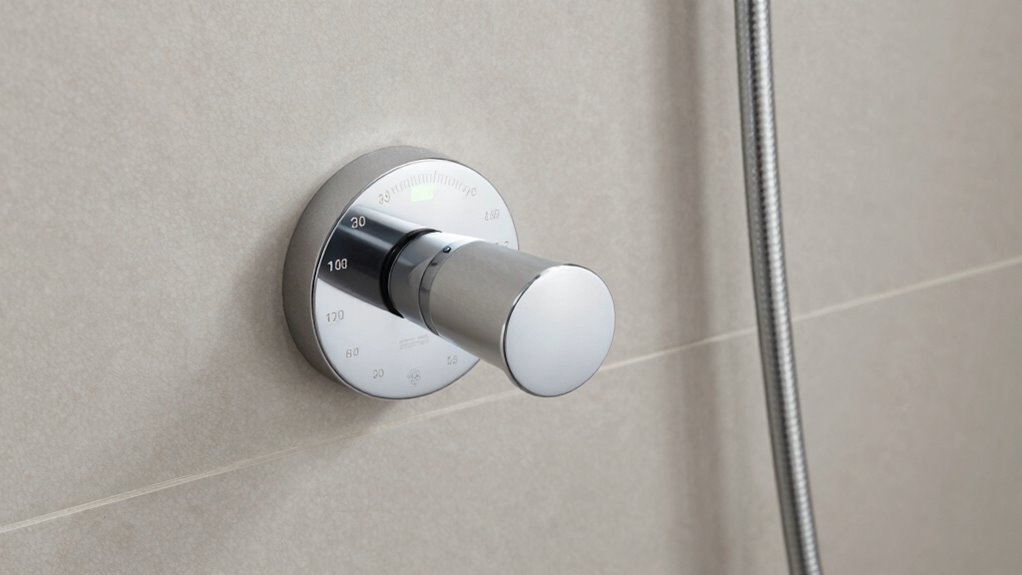

Thermostatic shower valves prevent temperature jumps by instantly adjusting hot and cold water flow whenever there are pressure or supply fluctuations. They use sensitive sensors that detect changes and quickly respond, ensuring a steady and comfortable water temperature. Proper installation, regular maintenance, and high-quality components are key to peak performance. If you’re curious about how these valves keep your shower stable and how to ensure they work perfectly, there’s more to discover below.
Key Takeaways
- Proper calibration of the thermostatic valve’s sensors ensures accurate temperature detection and prevents sudden jumps.
- Pressure balancing mechanisms adapt quickly to fluctuations in water pressure, maintaining consistent water temperature.
- Regular maintenance, including cleaning filters and checking sensors, helps prevent issues causing temperature fluctuations.
- High-quality thermostatic valves respond rapidly to temperature changes, minimizing abrupt shifts during use.
- Correct installation on stable water supply lines with appropriate pressure settings ensures optimal temperature stability.
As an affiliate, we earn on qualifying purchases.
Why Does My Shower Water Temperature Fluctuate?
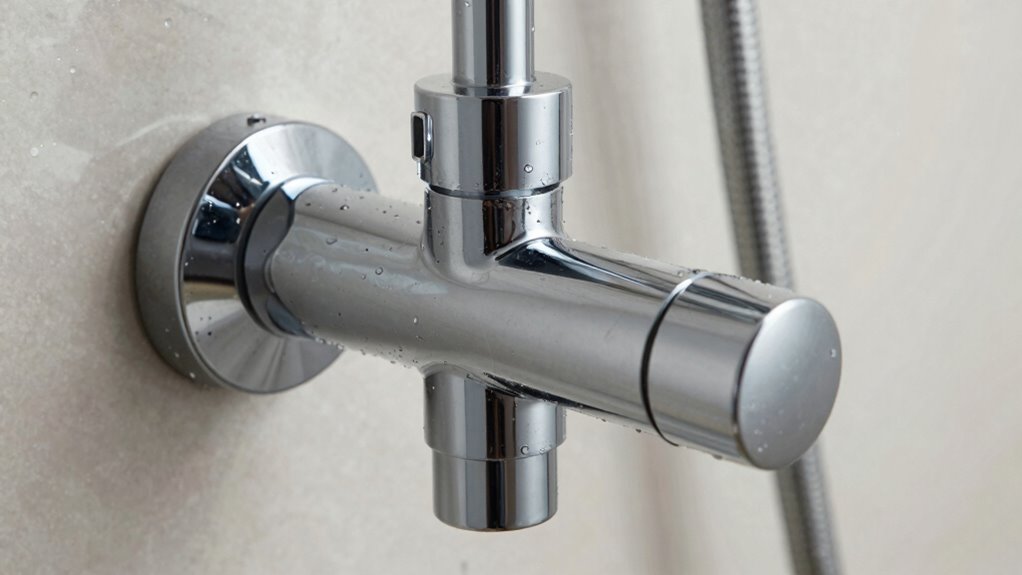
If your shower water temperature keeps changing unexpectedly, you’re not alone. Fluctuations often happen because of inconsistent water pressure or flow rate issues. When water pressure varies, it can cause the flow rate to fluctuate, making the shower temperature feel unpredictable. For example, if someone uses a tap elsewhere in your home, it might reduce the flow rate, leading to cooler water. Conversely, sudden increases in flow rate can push hotter water through the system faster, causing the temperature to spike. These changes happen because the hot and cold water supplies aren’t balanced, and your shower’s current setup can’t regulate temperature effectively. Understanding how water pressure and flow rate impact your shower helps explain why your water temperature jumps unexpectedly.
How Do Thermostatic Shower Valves Keep the Water Comfortable?
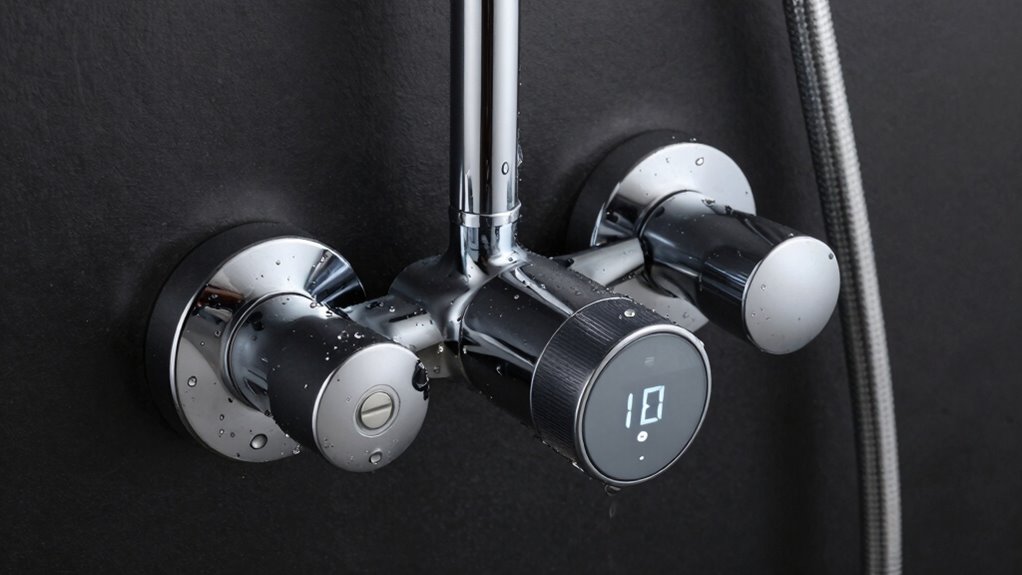
Thermostatic shower valves keep your water comfortable by providing precise temperature control, so you don’t have to constantly adjust the knobs. They respond quickly to changes, ensuring the water stays at your preferred warmth even if someone else uses water elsewhere in your home. This combination of accuracy and speed keeps your shower safe and relaxing. Additionally, connected technology can enhance these systems by allowing you to monitor and adjust your water temperature remotely for even greater convenience. Understanding the importance of temperature regulation technology can help you choose the best system for your needs. Incorporating smart features can further improve the user experience by offering more customization and control. Integrating local automation can also optimize your shower system’s performance within your smart home ecosystem. Regular maintenance of valve components helps ensure consistent performance and longevity of your thermostatic shower system.
Precise Temperature Control
Thermostatic shower valves automatically adjust water temperature to keep it consistent, guaranteeing a comfortable shower every time. They achieve this through precise sensor calibration, which detects even small temperature changes and adjusts the flow accordingly. The quality of valve materials, like brass or stainless steel, ensures durability and responsiveness. These components work together to maintain stable water temperature, preventing sudden fluctuations. By fine-tuning sensor calibration and selecting high-quality valve materials, manufacturers optimize temperature control, so you don’t experience hot-to-cold surprises. Here’s a quick look at key factors influencing control:
| Factor | Impact | Example |
|---|---|---|
| Sensor calibration | Ensures accurate temperature detection | Regular calibration |
| Valve materials | Affects responsiveness and durability | Brass or stainless steel |
| Flow regulation | Maintains steady water flow | Precision valves |
| Temperature sensors | Detects temperature changes | High-sensitivity sensors |
Rapid Water Adjustment
To keep your shower water consistently comfortable, thermostatic shower valves respond almost instantly to temperature changes by adjusting the flow of hot and cold water. This rapid water adjustment relies on accurate sensor calibration, ensuring the valve quickly detects temperature shifts. Proper valve maintenance keeps the sensor functioning correctly, maintaining responsiveness. When the sensor is well-calibrated and maintained, the valve can promptly balance hot and cold flows, preventing sudden temperature jumps. Additionally, European cloud innovation in sensor technology can enhance the precision and durability of these components. Here are key factors that enable quick adjustments: 1. Precise sensor calibration for accurate temperature detection 2. Regular valve maintenance to prevent sensor debris or malfunction 3. Automated flow regulation for seamless temperature stabilization. Furthermore, advances in sensor technology can improve the overall reliability of thermostatic valves, ensuring consistent performance over time. Together, these elements keep your shower experience comfortable and safe.
What Are the Main Parts Inside a Thermostatic Shower Valve?
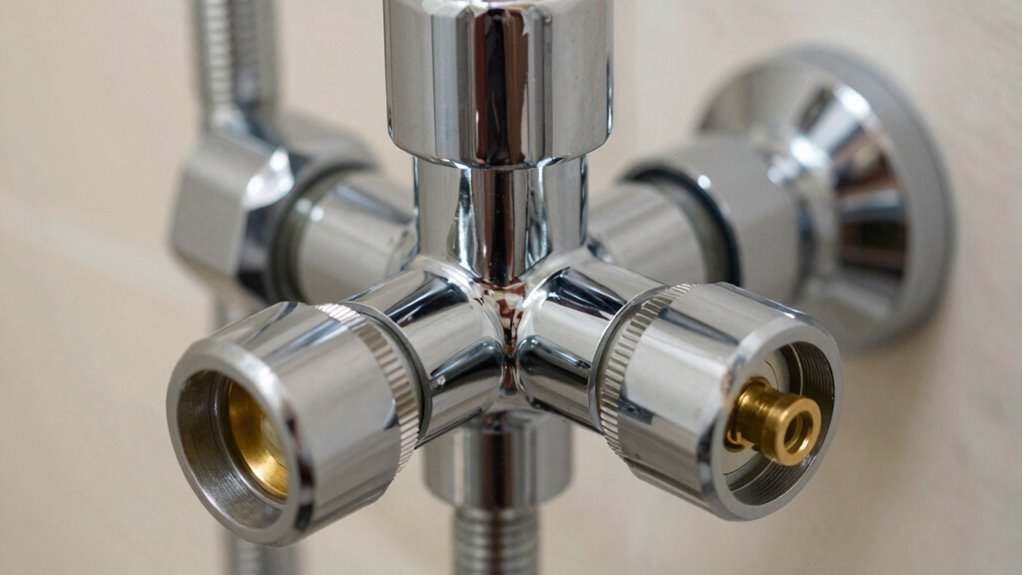
Inside a thermostatic shower valve, you’ll find key parts like the temperature control mechanism and pressure balancing components. These work together to maintain a steady water temperature and pressure during your shower. Understanding how these parts function helps you appreciate the valve’s reliability and performance. Additionally, smart appliances within the system can enhance overall control and convenience. Recognizing the importance of internal components and their precise operation can also help with troubleshooting and maintenance, especially when considering valve calibration for optimal performance.
Temperature Control Mechanism
Have you ever wondered what makes a thermostatic shower valve so effective at maintaining a consistent water temperature? The key lies in its temperature control mechanism. This mechanism includes components that respond quickly to changes, ensuring stability. The main parts are:
- Sensor Calibration: It detects temperature fluctuations and adjusts the valve accordingly, preventing sudden jumps.
- Thermal Element: Usually a wax capsule or similar device that expands or contracts with temperature, controlling water flow.
- Valve Durability: Built to withstand frequent use and temperature shifts, ensuring long-term reliability and precise control.
Together, these parts work seamlessly, giving you smooth temperature adjustments and preventing surprises. Proper sensor calibration and durable materials are vital to maintaining consistent performance over time, keeping your shower safe and comfortable.
Pressure Balancing Components
Pressure balancing components are essential for maintaining a consistent water flow and temperature during your shower. They work to counteract pressure fluctuations that can cause sudden changes in temperature. They often include a pressure sensing element that detects changes in pressure and responds accordingly. The main parts include a pressure balancing valve, a cartridge, and a spring mechanism, which work together to keep water flow steady during valve calibration. Here’s a quick overview:
| Part | Function | Effect on Pressure Fluctuations |
|---|---|---|
| Pressure balancing valve | Adjusts flow based on pressure changes | Minimizes temperature jumps during pressure drops |
| Cartridge | Controls water mix and flow rate | Ensures stable output despite pressure shifts |
| Spring mechanism | Responds to pressure variations | Maintains consistent flow and temperature |
These components help you avoid sudden temperature jumps caused by pressure fluctuations, ensuring a smooth shower experience. Additionally, understanding pressure fluctuations is key to selecting the right valve for your needs, especially considering pressure stability to prevent discomfort during use. Proper maintenance of these pressure balancing components is also crucial for long-term performance and safety.
What Causes Temperature Fluctuations in Standard Showers?
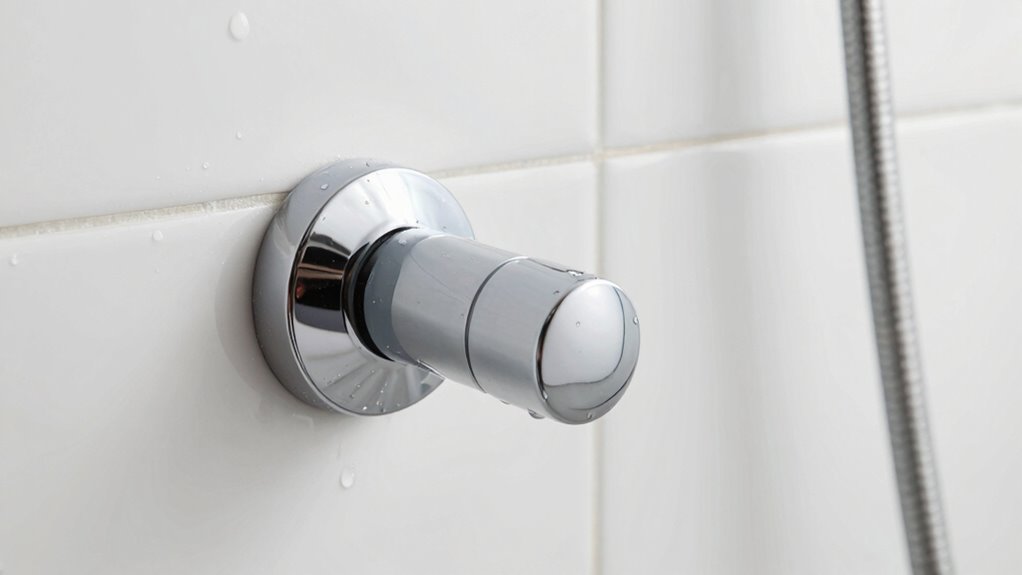
Temperature fluctuations in standard showers often occur because the mixing valve relies on fluctuating water pressure and temperature from your supply lines. When water pressure varies, it can cause the mix of hot and cold water to shift unexpectedly. Additionally, poor pipe insulation can lead to heat loss, making the water cooler before it reaches your shower. These factors make it challenging to maintain a consistent temperature. Proper valve design can also help mitigate these issues by maintaining stable water flow and temperature. Ensuring your plumbing system is well-maintained and properly configured can significantly reduce temperature instability, especially when combined with modern thermostatic valves that respond quickly to changes. Regular maintenance and inspection of your plumbing components can further enhance temperature consistency and ensure a more comfortable shower experience. Implementing pressure-balancing mechanisms can additionally help stabilize water temperature during fluctuating supply conditions.
How Do Thermostatic Valves Regulate Water Temperature?
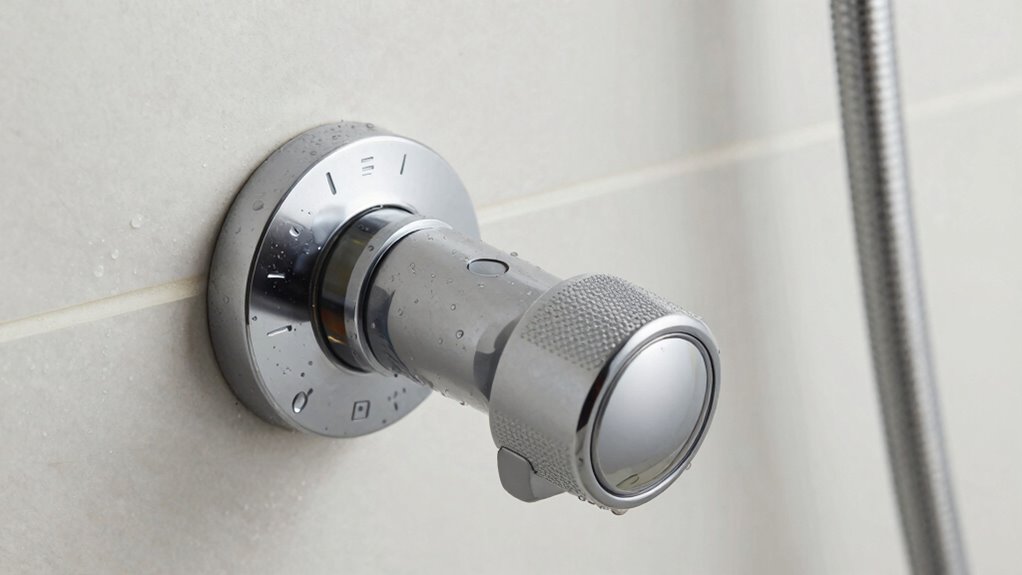
Thermostatic valves are designed to maintain a steady water temperature by automatically adjusting the mix of hot and cold water. They achieve this through built-in temperature sensors that constantly monitor the water’s temperature as it flows. When the sensors detect a change, they send signals to the valve cartridge, which adjusts the flow of hot or cold water accordingly. This process happens quickly, ensuring you experience minimal temperature fluctuation. The valve cartridge acts as the control mechanism, fine-tuning the water mix to keep the temperature consistent. Additionally, many modern thermostatic valves feature temperature stability settings to further prevent sudden changes, providing an extra layer of comfort. These sensors and control mechanisms work together to deliver a reliable and precise water temperature, even if someone else uses water elsewhere in the house. Proper installation and regular maintenance also help ensure the valve performs optimally and maintains consistent temperature regulation. Regular calibration of the sensors can improve the performance of thermostatic valves over time. Understanding the sensor technology involved can help in troubleshooting and ensuring proper function. As a result, you can enjoy a comfortable shower without sudden jumps or drops in temperature, even if someone else uses water elsewhere in the house.
What Are the Benefits of Using Thermostatic Shower Valves?
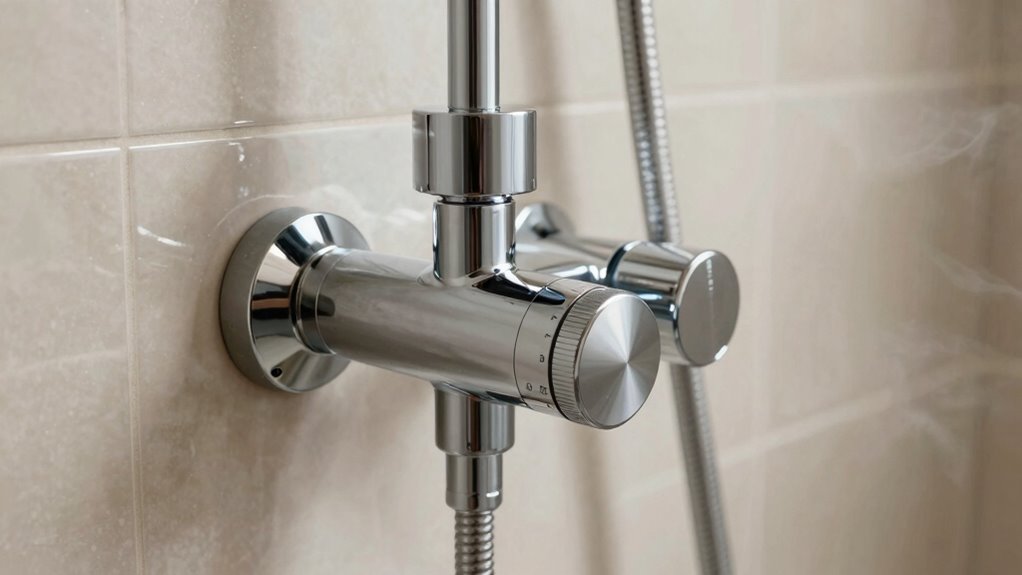
Using thermostatic shower valves offers you a safer and more comfortable shower experience by ensuring the water stays at a consistent temperature. This eliminates sudden temperature shifts, preventing scalding or cold surprises. The safety features include automatic shut-off if cold water fails, giving you peace of mind. Installation tips include placing the valve at an accessible height and ensuring proper plumbing connections for *ideal* performance.
Benefits include:
- Enhanced safety with built-in safety features to prevent burns
- Consistent temperature control for comfort
- Easier installation with clear instructions and adjustable settings
These advantages make thermostatic valves a smart choice for safer, more reliable showers, especially in households with children or elderly family members.
Troubleshooting Common Problems With Thermostatic Shower Valves?
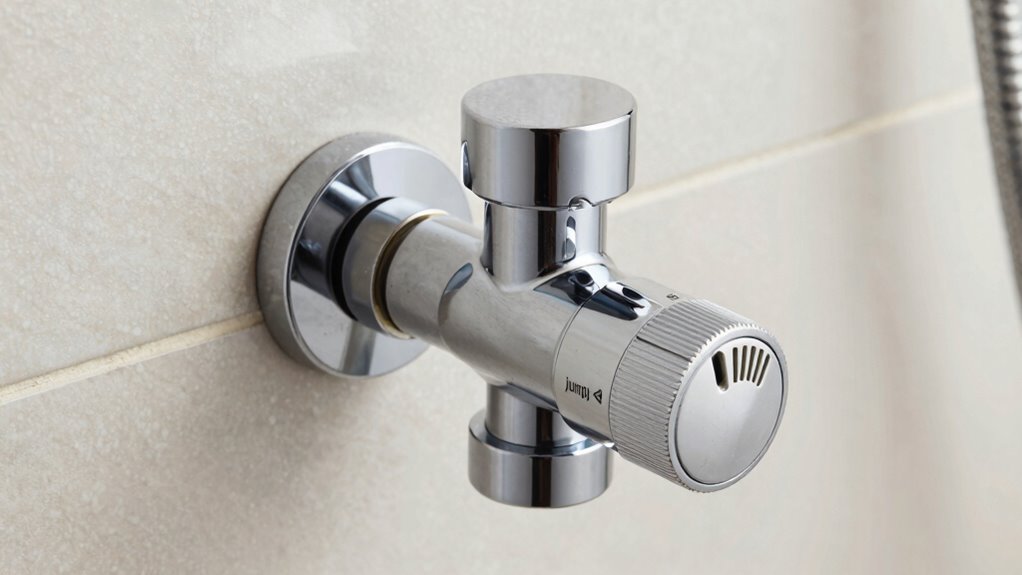
Even the most reliable thermostatic shower valves can encounter issues that disrupt your bathing experience. Common problems include inconsistent water temperature, fluctuating flow rates, or difficulty calibrating sensors. To fix these, start by checking sensor calibration; if the sensor isn’t calibrated properly, it may cause temperature jumps. Also, ensure flow rate adjustment is correct, as improper flow can impact temperature stability. Regular maintenance helps prevent these issues.
| Problem | Solution |
|---|---|
| Temperature inconsistency | Calibrate the sensor correctly |
| Low water flow | Adjust flow rate for balanced pressure |
| Sudden temperature jumps | Check sensor calibration and flow settings |
| No hot water flow | Inspect for blockages or valve issues |
| Erratic operation | Perform routine maintenance and calibration |
How to Choose the Best Thermostatic Shower Valve for Your Bathroom?
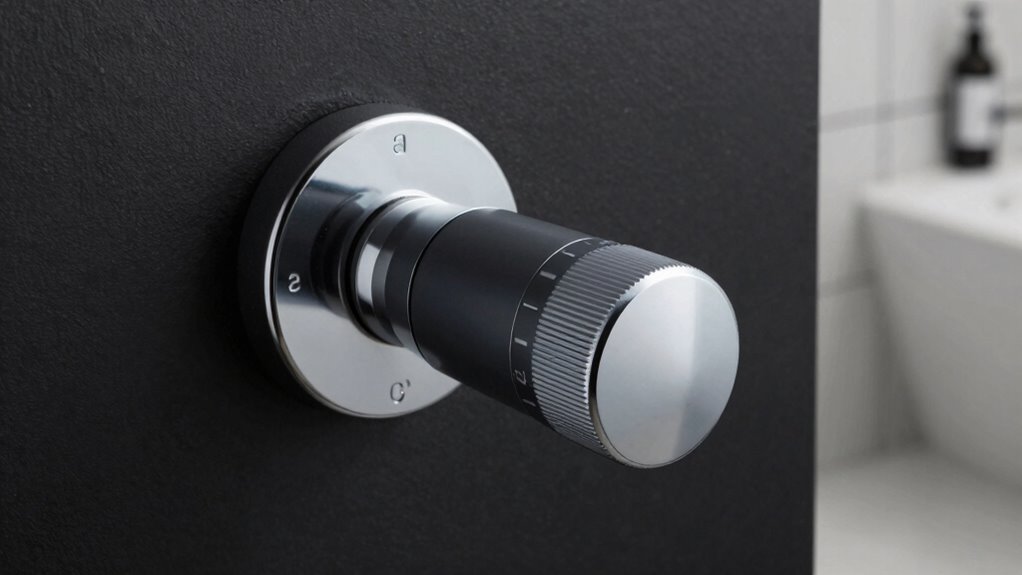
Choosing the right thermostatic shower valve guarantees a safe, reliable, and comfortable shower experience. To select the best one for your bathroom, consider these factors:
- Shower design compatibility: Make sure the valve matches your existing fixtures and aesthetic preferences for seamless integration.
- Temperature stability: Look for valves with precise control features to prevent sudden temperature jumps, enhancing safety.
- Water conservation features: Opt for models with flow restrictors or eco-friendly settings to save water without sacrificing performance.
Tips for Installing and Maintaining Your Thermostatic Shower Valve

Proper installation and regular maintenance are essential to guarantee your thermostatic shower valve functions safely and efficiently. Start with installation tips like ensuring the valve is fitted to a stable, level surface, and checking for proper water pressure. Follow the manufacturer’s instructions carefully, and use the right tools to avoid damaging components. Once installed, create a maintenance checklist that includes inspecting for leaks, cleaning filters, and testing the temperature stability regularly. Keep the valve free of mineral buildup by descaling as needed, and replace worn parts promptly. Proper care prevents temperature fluctuations and prolongs your valve’s lifespan. Regular maintenance not only enhances safety but also ensures your shower remains comfortable and reliable every time you use it.
Frequently Asked Questions
Can Thermostatic Shower Valves Prevent Scalding Accidents?
Yes, thermostatic shower valves can prevent scalding accidents. Their safety features, like maintaining a consistent temperature and shutting off if water gets too hot, protect you from burns. To guarantee safety, follow proper installation tips, such as setting the correct temperature limits and regularly checking the valve’s functionality. This way, you enjoy a safe, comfortable shower without worry.
Are Thermostatic Shower Valves Suitable for All Plumbing Systems?
You’ll find that thermostatic shower valves suit most plumbing systems, but with 80% of installations requiring specific compatibility checks, it’s essential to take into account installation requirements. These valves work best with standard pressure systems, yet high or low-pressure setups may need additional adjustments. Always review compatibility considerations, ensuring your plumbing system matches the valve’s specifications to guarantee safe, efficient performance and avoid costly modifications.
How Often Should I Service My Thermostatic Shower Valve?
You should service your thermostatic shower valve at least once a year to maintain ideal performance. Follow a regular maintenance schedule and include troubleshooting tips like checking for sediment buildup or worn-out parts. If you notice temperature fluctuations or inconsistent water flow, it’s time for a thorough inspection. Regular servicing prevents issues, extends the valve’s lifespan, and ensures you always enjoy a safe, comfortable shower experience.
Do Thermostatic Valves Save Water Compared to Standard Valves?
Yes, thermostatic valves can save water compared to standard valves by maintaining consistent water temperature, reducing waste from adjusting or waiting for the right temperature. Their valve efficiency guarantees you don’t run hot or cold water unnecessarily, which helps conserve water overall. By providing precise control, you’re less likely to use excess water, making thermostatic shower valves an eco-friendly choice that promotes better water conservation in your home.
Can I Install a Thermostatic Shower Valve Myself?
You can absolutely try a DIY installation of a thermostatic shower valve, but it’s like trying to tame a wild storm without experience. You’ll need to verify plumbing compatibility and follow the manufacturer’s instructions carefully. If you’re comfortable with basic plumbing tasks and have the right tools, it’s doable. Otherwise, hiring a professional guarantees safety, proper setup, and avoids costly mistakes. Always prioritize safety and proper installation.
Conclusion
So, now you’re armed with all you need to tame your rebellious shower water. With a trusty thermostatic valve, you’ll enjoy a perfectly steady stream—no more surprise hot or cold surprises. Just remember, even the best valves can’t fix a plumbing system that’s had one too many arguments with your water pressure. So go ahead, upgrade confidently, and let your shower finally behave—your mornings will thank you for it.