
Decoding fabric labels and fiber content helps you care for your clothes properly and make eco-friendly choices. Look at the symbols for washing, drying, ironing, and storing to follow the right instructions and keep your garments in good shape for longer. Knowing whether fabrics are natural or synthetic guides you toward more sustainable options and reduces environmental impact. Keep exploring to discover how understanding labels can help you make smarter, greener decisions for your wardrobe.
Key Takeaways
- Fabric labels display symbols indicating washing, drying, ironing, and bleaching instructions to ensure proper garment care.
- Fiber content labels specify the material composition, helping identify eco-friendly and sustainable fabric choices.
- Decoding symbols prevents damage from incorrect cleaning methods, prolonging garment lifespan.
- Understanding fiber types guides consumers in making environmentally conscious purchasing decisions.
- Proper interpretation of labels supports eco-friendly practices like cold washing and line drying, reducing environmental impact.
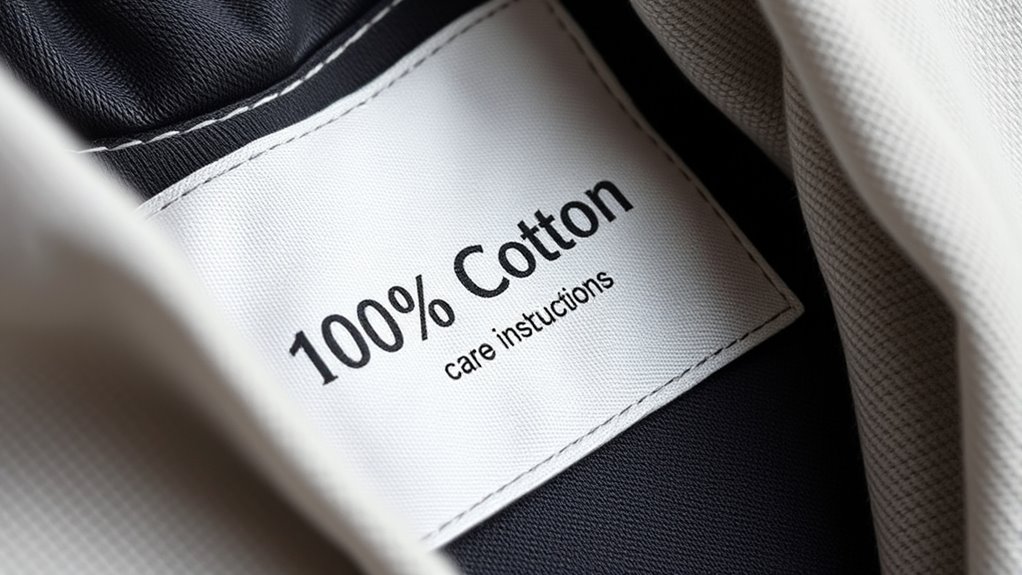
Have you ever looked at a fabric label and wondered what all those symbols and words really mean? It can be confusing, but understanding how to decode these labels is essential for caring for your clothes properly and making eco-friendly choices. The care instructions on a label tell you how to wash, dry, iron, and store your garments, helping them last longer and maintain their appearance. Following these guidelines not only preserves the quality of your clothing but also minimizes environmental impact. For example, washing clothes in cold water reduces energy consumption and prolongs fabric life, while line drying cuts down on energy use from dryers. When you pay attention to care instructions, you’re actively reducing your carbon footprint and supporting sustainable habits. Recognizing fabric label symbols can help you quickly understand the specific care needs of each garment without guesswork.
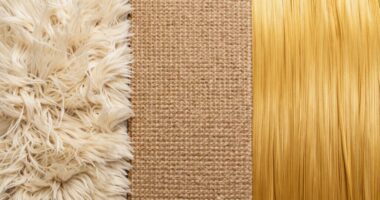
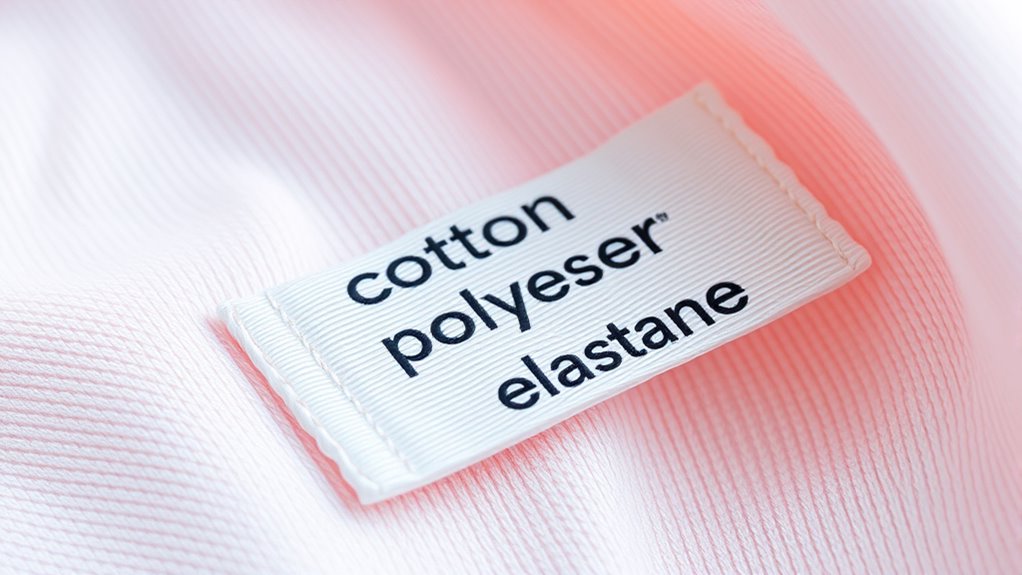
Fabric labels also reveal the fiber content, which is vital for understanding how your clothes are made and how they might affect the environment. Natural fibers like cotton, wool, and silk are renewable resources, but their environmental impact depends on how they’re produced. Organic cotton, for instance, uses fewer pesticides and less water, making it a more eco-friendly choice. Synthetic fibers like polyester and nylon, on the other hand, are derived from petroleum and contribute to pollution during manufacturing and when washed, shedding microplastics into waterways. Knowing the fiber content helps you make more informed decisions about the environmental impact of your wardrobe. If reducing your ecological footprint is a priority, choosing garments with sustainable fibers or blends can make a significant difference.
Decoding fabric labels isn’t just about caring for your clothes; it’s also about making responsible choices. When you understand the care instructions, you avoid unnecessary washing or drying cycles, which saves energy and reduces wear and tear on fabrics. Additionally, by knowing the fiber content, you can select items that align with your values, such as opting for organic or recycled materials. This knowledge empowers you to support brands that prioritize environmental sustainability and to shop smarter. Over time, paying attention to these details encourages more conscious consumption habits that benefit both your wardrobe and the planet. So, next time you pick up a piece of clothing, take a moment to read the label carefully—your clothes and the environment will thank you.
Frequently Asked Questions
How Can I Identify Blends Versus Pure Fibers on Labels?
You can identify blends versus pure fibers on labels by checking the fiber content list, where blends usually list multiple fibers with percentages. To verify, consider fiber testing methods like burn tests or chemical analysis, which reveal the actual composition. Keep in mind, label accuracy varies, so testing helps ensure you understand the true fabric makeup, especially when shopping for quality or specific fiber properties.
Do Fabric Labels Always Specify Exact Fiber Percentages?
No, fabric labels don’t always specify exact fiber percentages. Labeling regulations vary by country, but many require only the fiber composition to be listed without precise percentages, especially for blends. You might see terms like “cotton blend” or “polyester,” but not exact ratios. To know the exact fiber composition, check for detailed labels or contact manufacturers, as regulations often prioritize general identification over detailed fiber percentages.
Are There International Differences in Fabric Label Standards?
Yes, there are international differences in fabric label standards. You’ll find that global labeling regulations vary by country, reflecting cultural differences and legal requirements. Some countries require detailed fiber content and care instructions, while others are more lenient. When shopping internationally, you should verify labels carefully, as standards influence how fabrics are labeled and what information is included. This guarantees you understand what you’re buying, regardless of where you’re shopping.
How Do I Interpret Symbols on Fabric Care Labels?
Ever wondered what those care label symbols mean? You just need to adhere to the symbols, like a tub for washing or a triangle for bleaching, to care for your clothing properly. Look for fiber content codes to understand what materials your garment is made of, which helps you decide if it’s suitable for your needs. By interpreting these symbols, you ensure your clothes stay in great shape longer.
Can Fabric Labels Be Misleading or Inaccurate?
Fabric labels can sometimes be misleading or inaccurate due to label accuracy issues or misleading claims by manufacturers. You should always double-check the fiber content and care instructions, especially if something seems off. Keep in mind that labels might not always be perfectly up-to-date or truthful, so trust your senses and perform tests like burn tests or fabric feel assessments when in doubt. This way, you guarantee proper care and avoid potential fabric mishaps.
Conclusion
Now that you can decode fabric labels and fiber content, you hold the key to making smarter choices about your clothing. Think of labels as a secret map guiding you through the fabric jungle, helping you find garments that match your needs and values. With this knowledge, you’ll navigate the world of textiles like a seasoned explorer, confidently choosing pieces that not only look good but feel right, ensuring your wardrobe stays both stylish and sustainable.