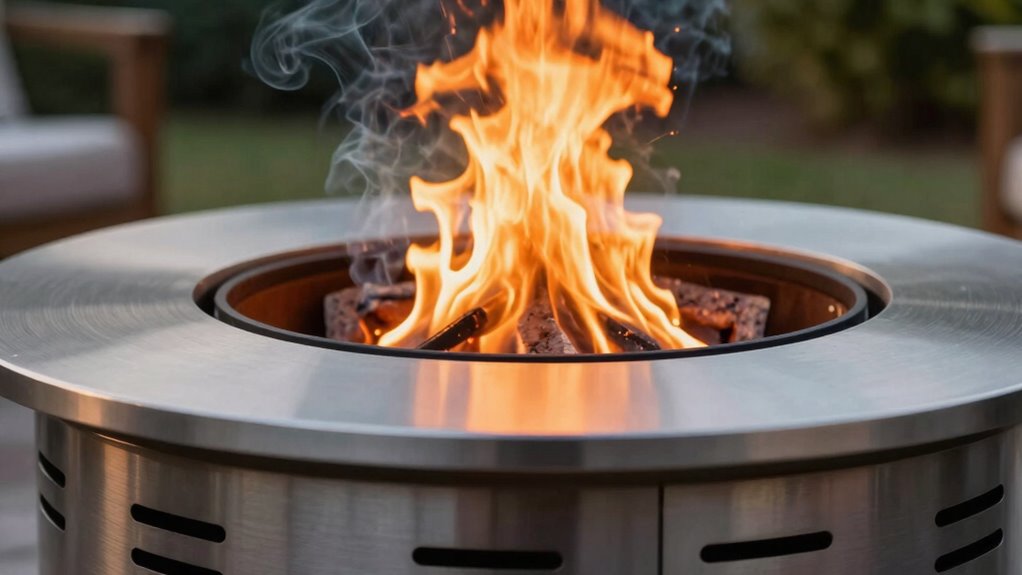

Proper airflow in smokeless fire pits is key to reducing smoke and improving burn efficiency. When airflow is optimized, oxygen flows directly to the fuel, ensuring complete combustion and fewer unburned particles. Well-placed vents and adjustable controls allow you to regulate airflow for cleaner, hotter fires. This not only minimizes smoke and emissions but also enhances safety. Keep exploring to discover how smart airflow design can transform your outdoor fire experience.

Get your wardrobe favorites delivered free — and shop member deals
- Fast, free delivery on millions of items
- Access to Prime Big Deal Days deals on October 6–7
- Prime Video, Amazon Music and more included
Key Takeaways
- Optimized airflow ensures complete combustion, significantly reducing smoke and unburned particles.
- Proper vent placement and size promote steady oxygen flow, minimizing smoke emissions.
- Adjustable vents allow users to control airflow, maintaining cleaner, hotter fires.
- Well-designed airflow pathways prevent incomplete combustion and harmful gas buildup.
- Enhanced airflow efficiency improves fuel use, reduces emissions, and creates a safer outdoor environment.
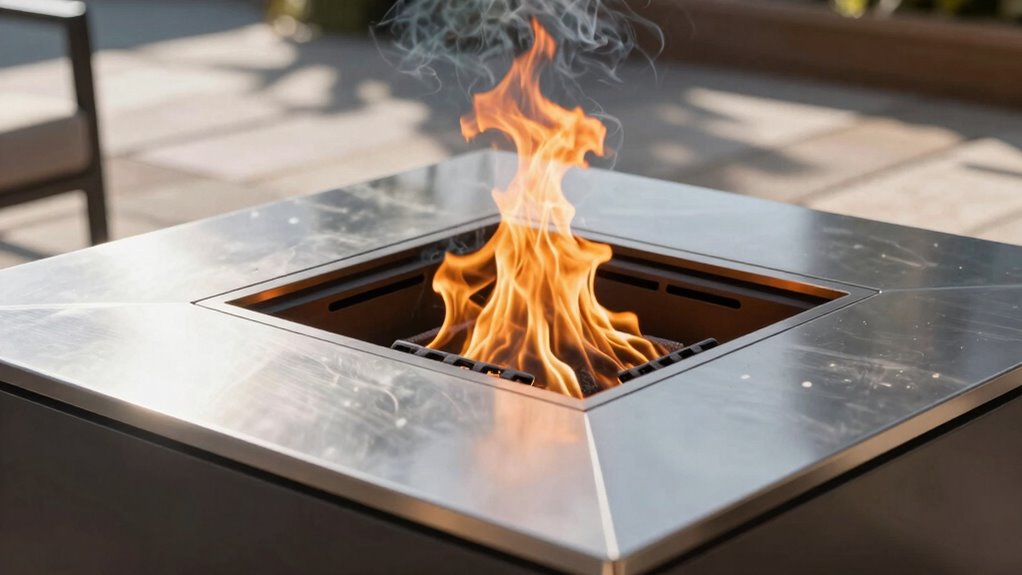
Ever wondered how some fire pits produce minimal smoke while others fill the air with fumes? The secret lies in their airflow design. When airflow is optimized, it allows the fire to burn more completely, which not only reduces smoke but also enhances fuel efficiency. With better airflow, you use less wood or other fuel sources to keep the fire burning steadily, saving you money and making your fire pit more eco-friendly. Proper airflow guarantees that oxygen reaches the combustion zone efficiently, encouraging a cleaner, hotter burn. This means less unburned particles and fewer emissions escaping into the air, creating a more comfortable environment for you and your guests.
Optimized airflow ensures a cleaner, hotter burn, reducing smoke and emissions for a more eco-friendly fire experience.
Good airflow design also directly impacts safety features. When a fire burns efficiently and produces less smoke, there’s less risk of smoke inhalation, which can cause respiratory issues or discomfort. Additionally, well-designed airflow helps prevent dangerous flare-ups caused by incomplete combustion or the buildup of combustible gases. Many modern smokeless fire pits incorporate features like adjustable vents or chimneys that allow you to control airflow precisely. These safety features give you peace of mind, enabling you to manage the fire more effectively and reduce hazards.
You’ll notice that the placement and size of air vents are vital in airflow design. If vents are too small or poorly positioned, oxygen supply becomes limited, leading to incomplete combustion and more smoke. Conversely, well-placed vents promote a steady flow of air directly into the fire, encouraging a clean burn. Some fire pits use a double-walled construction, where air channels between the walls preheat and circulate air, ensuring a consistent supply of oxygen. This not only reduces smoke but also improves fuel efficiency by maintaining a hotter, steadier fire. Understanding the importance of airflow pathways can help you choose a fire pit that performs optimally. Properly designed airflow pathways also reduce the buildup of dangerous gases, further enhancing fire safety.
The design of airflow pathways also influences how you operate your fire pit. Features like adjustable vents give you control over the airflow rate, allowing you to increase or decrease combustion intensity. This flexibility helps you tailor your fire’s performance based on your needs—whether you want a quick warm-up or a slow, smoky-free burn. By focusing on airflow design, manufacturers enhance both the efficiency and safety of smoke-free fire pits, making them a smarter choice for your outdoor space. When you understand how airflow impacts these factors, you can select a fire pit that truly minimizes smoke while maximizing safety and fuel economy. Additionally, airflow optimization ensures that your fire remains consistent and safe throughout its use.
smokeless fire pit with adjustable vents
As an affiliate, we earn on qualifying purchases.
As an affiliate, we earn on qualifying purchases.
Frequently Asked Questions
Can Smokeless Fire Pits Work Effectively With All Types of Wood?
Smokeless fire pits work best with dry, seasoned hardwoods like oak or hickory, which promote efficient combustion. Softwoods or damp wood tend to produce more smoke due to lower combustion efficiency, reducing their effectiveness in a smokeless design. To get the best results, choose the right wood types and guarantee proper airflow, which helps the fire burn hotter and cleaner, minimizing smoke regardless of the wood you use.
How Does Airflow Affect Burn Temperature and Efficiency?
Did you know that proper airflow can increase combustion efficiency by up to 30%? When you optimize airflow dynamics in your fire pit, you enhance burn temperature and efficiency. Better airflow allows oxygen to reach the fuel more effectively, resulting in a hotter, cleaner burn. This means less smoke and more warmth. So, adjusting airflow isn’t just about reducing smoke—it’s about maximizing your fire’s heat and efficiency for a better experience.
Are Smokeless Fire Pits Safe for Indoor Use?
Smokeless fire pits are generally safe for indoor use if they’re designed with proper airflow and ventilation. These pits reduce smoke and emissions, lowering risks of indoor safety issues like carbon monoxide buildup. However, you should always guarantee adequate ventilation and follow manufacturer guidelines. Never leave them unattended while burning, and consider installing a carbon monoxide detector to ensure safety. Proper precautions help you enjoy the ambiance without hazards.
What Maintenance Is Required for Optimal Airflow Performance?
You need to regularly inspect and clean your airflow filters to keep airflow ideal. Remove any debris or soot buildup that could block airflow paths. Additionally, perform ventilation maintenance by ensuring vents and chimneys are clear of obstructions. Check for loose connections or damage, and replace filters as recommended by the manufacturer. Proper airflow filters and ventilation maintenance help your smokeless fire pit operate efficiently and safely, reducing smoke and enhancing performance.
Do Airflow Designs Impact the Longevity of the Fire Pit?
Think of airflow design as the backbone of your fire pit’s longevity. When ventilation efficiency is optimized, it reduces excessive heat buildup and airflow strain, which can wear down structural durability over time. Proper airflow prevents corrosion and warping, helping your fire pit stand the test of time. So, yes, well-designed airflow directly impacts your fire pit’s durability, ensuring it remains a reliable centerpiece for years to come.
Conclusion
By embracing airflow design, you turn your fire pit into a smoke-free symphony, where flames dance freely and smoke whispers away. With clever engineering, your outdoor gatherings become cozy stories around a crackling, clean-burning fire. Think of it as a refreshing breeze, clearing the haze and filling your space with warmth and laughter. So, light up your nights with a smokeless fire pit, and let the glow lead your memories into a smoke-free future.
Fall Picks
fall essentials
As an affiliate, we earn on qualifying purchases.