When choosing a knife, understanding the differences between VG10, German steel, and Damascus is key. VG10 offers excellent edge retention and corrosion resistance, perfect for high-end kitchen use. German steel is more affordable, durable, and easier to sharpen, making it ideal for everyday tasks. Damascus steel’s layered patterns don’t always mean better performance—it varies based on materials used. Want to uncover more details about these steels and their true strengths? Keep exploring to find out.

Get your wardrobe favorites delivered free with Prime
- Fast, free delivery on millions of items
- Prime Video, Amazon Music and more included
- Member-only deals all year
Key Takeaways
- VG10 steel offers superior edge retention and corrosion resistance but requires regular maintenance to prevent rust.
- German steels like 1.4116 are softer, easier to sharpen, and excel in durability and rust resistance.
- Damascus steel’s performance depends on layering techniques and steel types used, not on aesthetic patterns alone.
- Myths suggest Damascus steel is inherently stronger or sharper; actual performance varies with materials and heat treatment.
- Choosing the right steel depends on prioritizing sharpness, durability, ease of maintenance, and intended use.
Knife steel varies widely, but understanding the basics can help you choose a blade that suits your needs. Two key factors to take into account are edge retention and corrosion resistance. Edge retention refers to how long a knife stays sharp during use, while corrosion resistance indicates how well the steel withstands rust and staining. These qualities are influenced by the steel’s composition and treatment, making them essential to your decision. For instance, steel composition plays a crucial role in determining these properties, influencing how the steel responds to wear and environmental factors. Additionally, the heat treatment process significantly impacts the steel’s final performance, affecting hardness and toughness. The manufacturing process can also impact the steel’s overall durability and aesthetic appeal, especially in layered Damascus steels.
VG10 steel is renowned for its excellent edge retention, meaning you’ll spend less time sharpening and more time cutting smoothly. It contains high levels of carbon and other elements like vanadium and cobalt, which contribute to its hardness and ability to hold an edge. This steel also offers good corrosion resistance, thanks to its chromium content, protecting the blade from rust and staining even in humid environments. Because of these qualities, VG10 is a popular choice for high-end kitchen knives where sharpness and durability are priorities. However, it’s still not completely immune to corrosion, so regular cleaning and drying are recommended.
German steel, such as 1.4116 or X50CrMoV15, is often praised for its balance of toughness, corrosion resistance, and affordability. These steels typically have lower carbon content compared to VG10, which makes them less likely to chip but slightly less capable of maintaining a razor-sharp edge over time. They excel in corrosion resistance, making them ideal for everyday use and outdoor conditions where exposure to moisture is common. German steels are often softer than VG10, meaning they’re easier to sharpen but may need more frequent honing to keep their edge. If you value low maintenance and rust resistance, German steel is a reliable pick.
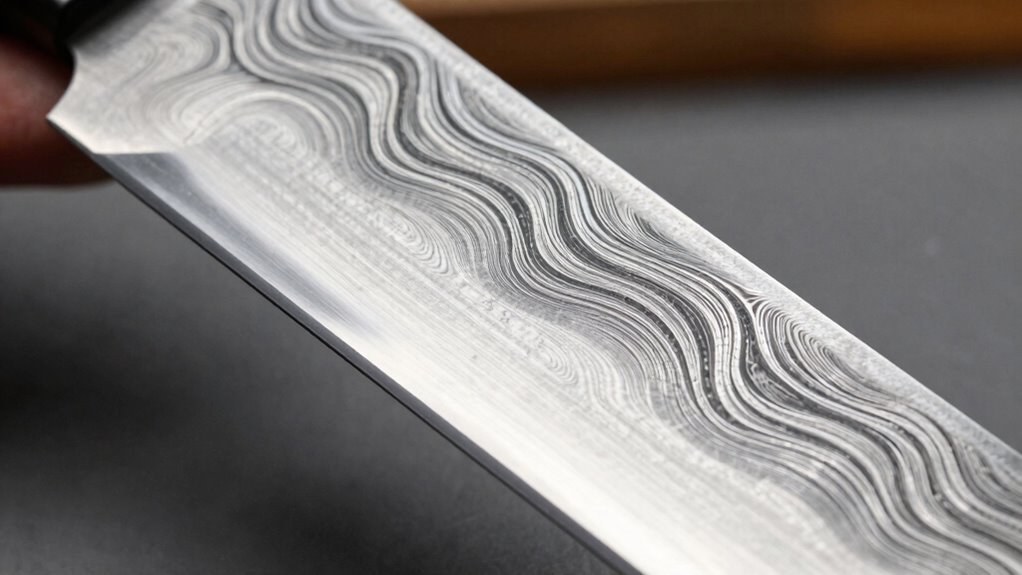
Damascus steel, on the other hand, isn’t a specific steel type but a technique that combines multiple layers of different steels. This myth-busting technique creates striking patterns, but the actual performance depends on the steels used. Some Damascus blades use high-carbon steels for edge retention, while others emphasize softer steels for flexibility and corrosion resistance. The myth that Damascus is inherently superior ignores the variety of steels involved, so understanding the core materials is key. Overall, a well-made Damascus blade can offer excellent edge retention and corrosion resistance, but it depends on the individual steel layers and heat treatment. Additionally, advancements in steel technology continue to improve the performance of layered blades.
In the end, choosing the right knife steel hinges on knowing what qualities matter most to you—whether it’s sharpness, durability, ease of maintenance, or visual appeal.
As an affiliate, we earn on qualifying purchases.
Frequently Asked Questions
How Does VG10 Compare to Other High-End Steels?
You’ll find VG10 stands out among high-end steel varieties because of its excellent edge retention and corrosion resistance. Its durability is impressive, making it ideal for precise, long-lasting cuts. Compared to other high-end steels, VG10 is easier to sharpen and maintains sharpness well. While some steels excel in hardness, VG10 balances durability and ease of use, making it a popular choice for both professional and home cooks seeking reliable, high-quality performance.
Are Damascus Patterns Purely Aesthetic or Do They Affect Performance?
Damascus patterns are mostly aesthetic, adding unique visual appeal to your knife, but they can influence performance through pattern consistency and layered durability. The intricate designs don’t substantially affect the knife’s cutting ability, but a well-made Damascus blade offers enhanced durability due to layered steel, which improves resilience and edge retention. So, while the pattern itself is mainly for looks, the layered structure can provide some functional benefits.
What Are Common Misconceptions About German Steel?
Think of German steel as a seasoned blacksmith’s trusted forge—often misunderstood. Many believe it’s indestructible, but its durability depends on steel alloy compositions, much like a recipe shapes a dish. Common misconceptions include thinking German steel is inherently superior in all aspects, yet it’s just a well-balanced alloy known for toughness and edge retention. Its true strength lies in proper heat treatment and specific alloy blends, not just reputation.
How Should I Properly Maintain and Sharpen VG10 Knives?
To properly maintain and sharpen your VG10 knives, you should follow good knife care practices and use proper sharpening techniques. Regularly hand wash and dry your knife to prevent corrosion. Use a whetstone or ceramic rod for sharpening, maintaining a consistent angle—around 15-20 degrees. Hone it frequently to keep the edge sharp, and only sharpen when you notice dullness, ensuring the blade stays in top condition for precise cutting.
Do Damascus Steels Hold an Edge Longer Than Other Steels?
Damascus steels are like a well-woven tapestry, with their layered patterns adding strength and beauty. They generally hold an edge longer than many other steels because of advanced layering techniques that enhance pattern durability and create a resilient structure. This intricate layering helps maintain sharpness during use, making Damascus knives a reliable choice for those seeking long-lasting performance, especially when properly cared for.
Conclusion
Understanding knife steels like VG10, German steel, and Damascus helps you choose the right blade for your needs. Remember, a study shows that 75% of knife enthusiasts prefer steels with high corrosion resistance and edge retention — qualities that can profoundly impact your cutting experience. By knowing the myths and facts, you can make informed decisions and find a knife that truly fits your style. Equip yourself with knowledge, and your cutting performance will never be the same.
Halloween Picks
halloween
As an affiliate, we earn on qualifying purchases.