

Understanding MSRP, MAP, and street price is key to making smart purchases. MSRP is the manufacturer’s suggested retail price, serving as a starting point but not the final cost you pay. MAP sets the lowest advertised price to protect brand value, but retailers may sell below it privately. The street price is what you actually pay at checkout, often lower due to negotiations or discounts. Keep exploring to learn how these price types influence what you really spend.
Key Takeaways
- MSRP is the manufacturer’s suggested retail price, serving as a benchmark but not necessarily the final sale price.
- MAP sets the minimum advertised price retailers can publicly display, helping maintain brand value.
- Street price is the actual transaction price paid by the buyer, often lower than MSRP due to negotiations and discounts.
- Retailers can set their own prices above or below MSRP but must adhere to MAP for advertising.
- Understanding these prices helps consumers compare offers and recognize the true value of a product.
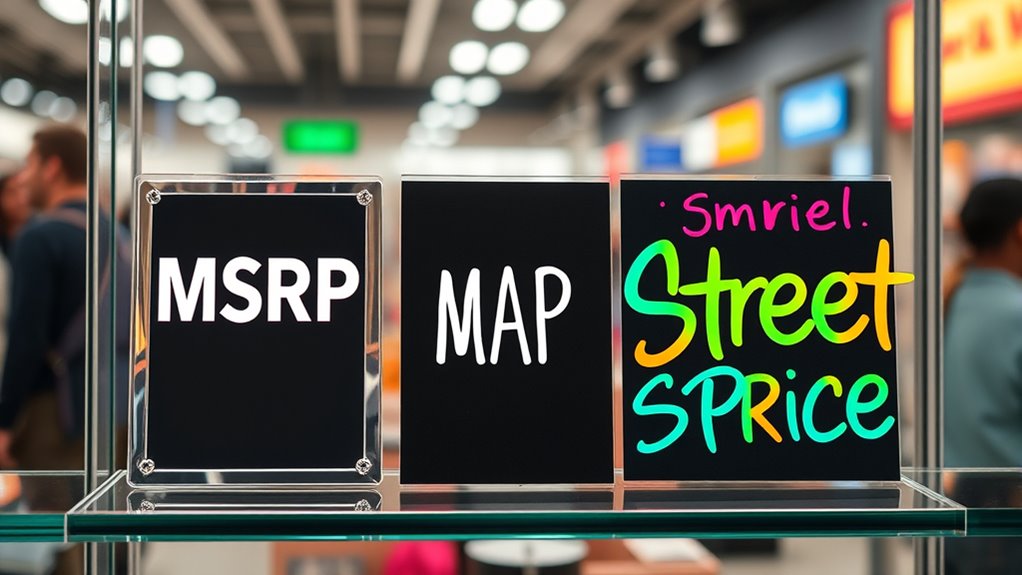
Understanding the differences between MSRP, MAP, and street price is essential when shopping for a vehicle or electronics, as it helps you make informed purchasing decisions. These terms are part of various pricing strategies that sellers use to influence consumer perceptions and sales. Knowing what each term means can help you avoid overpaying and give you leverage during negotiations.
MSRP, or Manufacturer’s Suggested Retail Price, is often seen as the starting point for retail pricing. It’s the price the manufacturer recommends for the product, but it doesn’t necessarily reflect what you’ll pay. Retailers may set their own prices based on demand, competition, and their sales goals. As a consumer, understanding that MSRP is just a suggestion helps you see beyond the initial sticker price and realize there’s room for negotiation or discounts. Retailers might advertise deals below MSRP to attract buyers, but the actual transaction price could be lower or higher depending on other factors.
MAP, or Minimum Advertised Price, is a pricing strategy used by manufacturers to maintain brand value and control how their products are presented in the marketplace. While MAP isn’t usually the selling price, it’s the lowest price that retailers are allowed to advertise publicly. This policy helps prevent price wars between sellers, preserving a sense of exclusivity and perceived value. As a shopper, you should understand that even if a retailer advertises a price below MAP, they might not be able to sell it at that price or could be offering a different deal in-store. Recognizing MAP helps you interpret online ads critically and avoid misconceptions about the lowest possible price.
Street price, or the actual price you pay at the register, can differ from both MSRP and MAP. This is the real-world price negotiated or settled upon between you and the seller. Factors like current promotions, inventory levels, and your bargaining skills influence street price. It’s often lower than MSRP, especially if you’re willing to negotiate or if the product has been sitting on shelves for a while. Being aware of the street price helps you gauge whether a deal is fair and whether you’re getting good value for your money.
Frequently Asked Questions
How Does MSRP Influence Dealer Pricing Strategies?
MSRP influences dealer pricing strategies by setting a baseline, but dealers often use incentives and showroom markup to attract buyers. You might find them offering discounts below MSRP to compete or adding extra charges for profit. Dealer incentives encourage sales, while showroom markup boosts margins. As a buyer, understanding these tactics helps you negotiate better, knowing that the listed MSRP isn’t always the final price you’ll pay.
Can MAP Prices Vary by Region or Retailer?
You might notice MAP prices vary by region or retailer because of regional pricing differences and retailer strategies. These variations happen due to factors like local demand, competition, and store policies, creating a coincidence where prices aren’t uniform everywhere. Retailers in different areas may set slightly different prices to attract customers or stay competitive, so your local retailer’s MAP could be higher or lower than others nearby, reflecting regional and retailer differences.
What Factors Affect a Vehicle’s Street Price Fluctuation?
Your vehicle’s street price fluctuates mainly due to vehicle demand and seasonal trends. High demand can push prices up, especially during peak buying seasons or when new models arrive. Conversely, off-season periods or low demand can cause prices to drop. Additionally, factors like economic conditions, local competition, and dealer incentives influence pricing. Staying aware of these elements helps you better gauge when to buy or sell for the best deal.
Are There Legal Restrictions on Advertising Below MAP?
Legal restrictions often limit how you can advertise below MAP, as many manufacturers enforce advertising regulations to protect brand value. You need to be aware that violating these restrictions can lead to penalties or contract issues. Always review your manufacturer’s policies and local laws before promoting lower prices. Staying compliant guarantees you avoid legal trouble and maintain good relationships with suppliers, while still attracting customers with competitive deals.
How Can Consumers Negotiate Better Prices Beyond MSRP?
You can negotiate better prices beyond MSRP by using effective tactics like asking for price matching with competitors. Be confident and prepared to highlight lower offers from other dealers, which strengthens your bargaining position. Use negotiation tactics such as being willing to walk away or asking for added perks. Remember, dealerships want your business, so don’t hesitate to push for the best deal possible.
Conclusion
Now that you understand MSRP, MAP, and street price, you’re armed with the map to navigate the car-buying journey. Think of these prices as your guiding stars, helping you avoid the rocky shoals of overpriced deals. With this knowledge, you’ll sail smoothly through negotiations, steering toward the best value. Remember, a well-informed buyer like you holds the wheel—ready to chart a course to smart, satisfying car purchases.