
To tell freshwater, saltwater, and imitation pearls apart, look at their luster, shape, and surface quality. Saltwater pearls often have a brighter, softer glow and are more round, while freshwater pearls can be irregular and less lustrous. Imitation pearls usually feel lighter, have a smooth surface, and lack depth in their sparkle. Observing these clues carefully can help you spot genuine from fake, and there’s more to uncover if you keep exploring.

Get your wardrobe favorites delivered free with Prime
- Fast, free delivery on millions of items
- Prime Video, Amazon Music and more included
- Member-only deals all year
Key Takeaways
- Genuine saltwater pearls are typically more lustrous, round, and rarer than freshwater pearls, which are often irregularly shaped.
- Imitation pearls are made from glass or plastic and lack natural luster and depth compared to real pearls.
- Saltwater pearls, like Akoya, South Sea, and Tahitian, are more expensive and cultivated in ocean oysters.
- Freshwater pearls are grown in lakes and rivers, generally more affordable, with less uniform shapes and softer luster.
- Clues for identification include surface texture, luster, shape, weight, and the presence of natural ridges or irregularities.
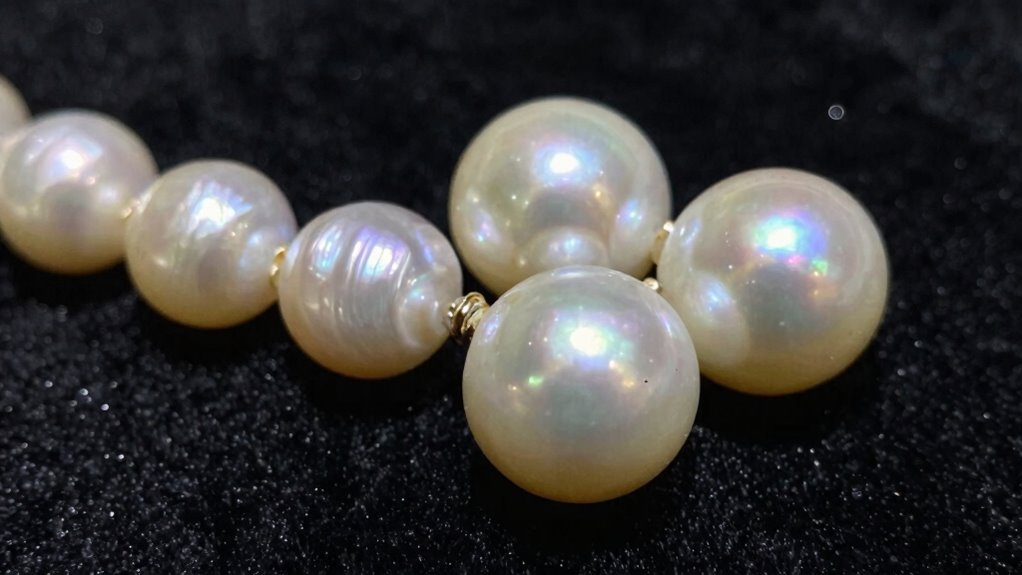
When it comes to choosing pearls, understanding the differences between freshwater, saltwater, and imitation options can help you make an informed decision. Pearls carry rich cultural significance across many societies, symbolizing purity, wisdom, and elegance. In some cultures, pearls are treasured as heirlooms, representing tradition and social status. Their cultural importance can influence your choice, especially if you’re selecting jewelry for a special occasion or as a meaningful gift. Additionally, pearls have a significant economic impact. Saltwater pearls, such as Akoya, South Sea, and Tahitian varieties, are often more valuable and command higher prices due to their rarity and the labor-intensive cultivation process. This economic aspect influences both the market and consumer perceptions, making genuine pearls a symbol of luxury and prestige. Freshwater pearls, on the other hand, tend to be more affordable but still hold cultural value, particularly in regions where they are part of traditional adornments or ceremonies.
Choosing between freshwater, saltwater, and imitation pearls depends on cultural significance, value, and personal style preferences.
You’ll notice that saltwater pearls are usually more lustrous and round, which makes them highly sought after. Their cultivation involves oysters in oceans or seas, and the process takes longer, adding to their exclusivity and cost. The cultural significance of these pearls is often tied to luxury and status, which is reflected in their high price tags and desirability in fine jewelry. Meanwhile, freshwater pearls are grown in freshwater lakes and rivers, and they’re generally less expensive because they can be produced in larger quantities. Despite their lower cost, freshwater pearls still hold cultural importance in many communities, often used in everyday jewelry and traditional accessories. Their more irregular shapes and softer luster distinguish them from saltwater pearls but don’t diminish their symbolic value. Advancements in cultivation techniques have also contributed to the increasing quality and variety of genuine pearls available today.
Imitation pearls are crafted from glass or plastic and coated to mimic the appearance of genuine pearls. They lack the cultural significance and economic impact of real pearls but serve as budget-friendly alternatives. You might find imitation pearls in costume jewelry or fashion accessories, where affordability takes precedence over authenticity. While they don’t carry the same traditional or cultural weight, they can still be stylish and fun, especially for casual wear or costume purposes. It’s also worth noting that advancements in pearl cultivation techniques have improved the quality and appearance of genuine pearls over time.
Ultimately, your choice depends on what you value most—whether it’s the cultural significance, the economic impact, or simply the aesthetic appeal. Genuine freshwater and saltwater pearls carry centuries of tradition and meaning, making them more than just adornments—they’re symbols of history and craftsmanship. Imitation pearls, meanwhile, offer an accessible way to enjoy the look of pearls without the investment, perfect for experimenting with style or for those on a budget.
genuine freshwater pearl necklace
As an affiliate, we earn on qualifying purchases.
As an affiliate, we earn on qualifying purchases.
Frequently Asked Questions
How Do Pearl Prices Vary Across Different Types?
You’ll notice pearl prices vary based on type, with saltwater pearls generally costing more than freshwater, and imitation pearls being the most affordable. Market trends and pearl grading, which considers luster, surface quality, shape, and size, influence prices considerably. Higher-grade saltwater pearls like Akoya and South Sea fetch premium prices due to their rarity and beauty, while freshwater pearls remain popular for their affordability and variety.
Are There Health Benefits Associated With Natural Pearls?
You might find that natural pearls offer subtle health benefits, though scientific evidence is limited. Some believe they contain nutritional benefits and antioxidant properties that could promote skin health and overall well-being. Wearing pearls may help reduce stress and improve mood, but these effects aren’t scientifically proven. Remember, pearls are mainly valued for their beauty and symbolism, not for significant health benefits. Always consult healthcare professionals for health-related concerns.
What Environmental Impacts Are Linked to Pearl Farming?
Think of pearl farming as planting seeds in delicate ecosystems—you’re impacting the environment. It can lead to water pollution, habitat destruction, and resource depletion if not managed responsibly. But by embracing environmental conservation and sustainable practices, you can mitigate these effects. Responsible pearl farms prioritize eco-friendly methods, conserving aquatic habitats, and reducing chemical use. You help guarantee that these beautiful gems don’t come at the planet’s expense, fostering harmony between beauty and nature.
Can Imitation Pearls Cause Allergic Reactions?
Imitation pearls can cause allergy concerns, especially if they’re made from synthetic materials like plastic or coated with certain dyes. Some people react to these synthetic compositions, experiencing skin irritation or allergic reactions when they wear them. To avoid discomfort, check the product details and choose high-quality, hypoallergenic options. If you notice redness or itching, remove the imitation pearls and consult a dermatologist to prevent further allergic reactions.
How Do Cultural Perceptions Influence Pearl Valuation?
You see that cultural perceptions profoundly influence pearl valuation. Cultural symbolism and traditional beliefs shape how people value pearls across different societies. For instance, some cultures see pearls as symbols of purity and wisdom, increasing their worth. Others may associate specific types with status or luck. Your appreciation of pearls can deepen when you understand these cultural meanings, which can elevate their perceived value beyond mere material worth.
Conclusion
Now that you know the secrets behind freshwater, saltwater, and imitation pearls, you’re practically a pearl detective! With this knowledge, you’ll spot the real gems from miles away—no more falling for shiny imposters. Whether you’re hunting for a dazzling necklace or just impressing friends with your savvy, you’re now armed with the ultimate pearl prowess. Get ready to shine brighter than ever—your jewelry game just leveled up to legendary status!
Fall Picks
fall essentials
As an affiliate, we earn on qualifying purchases.