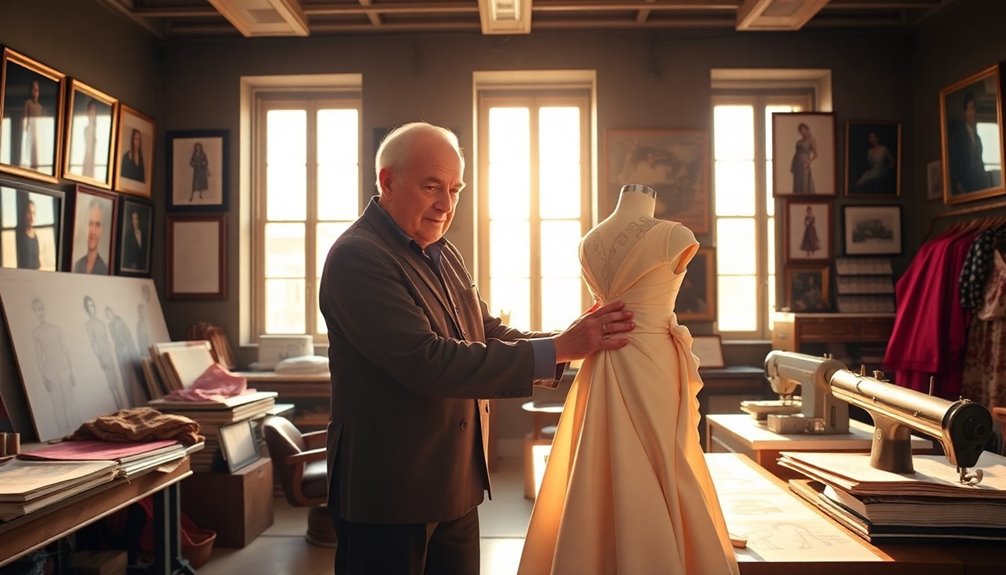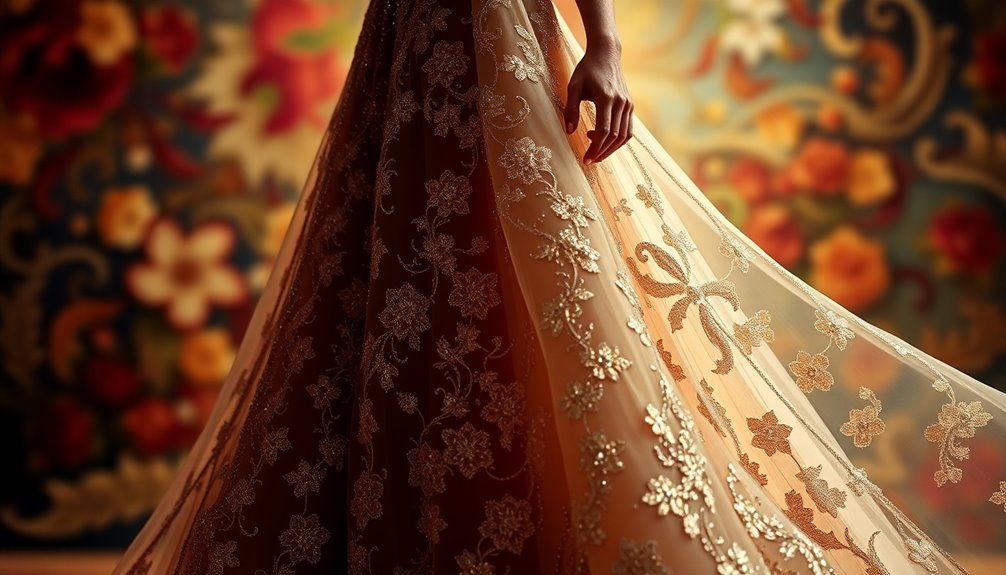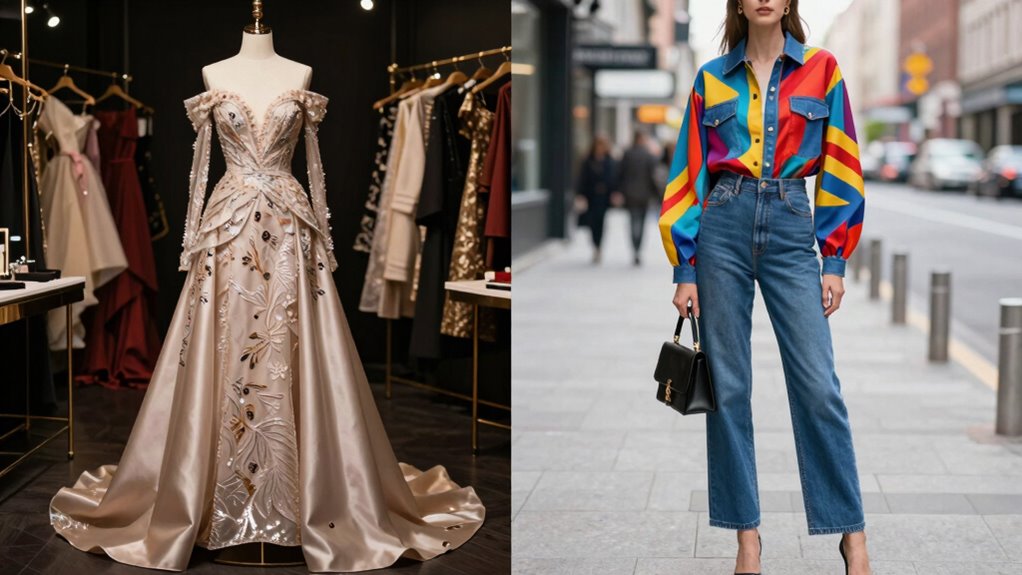

The gap between couture and ready-to-wear is huge because couture involves meticulous handcrafting, premium fabrics, and custom designs made by skilled artisans, which drives up costs and exclusivity. Ready-to-wear, on the other hand, relies on mass production, standardized patterns, and affordable materials to reach a broader audience quickly and affordably. If you want to understand the deeper differences that create this divide, you’ll find it fascinating to explore further.

Get your wardrobe favorites delivered free with Prime
- Fast, free delivery on millions of items
- Prime Video, Amazon Music and more included
- Member-only deals all year
Key Takeaways
- Couture involves handcrafted, intricate details, and personalized craftsmanship, leading to higher production costs and exclusivity.
- Ready-to-wear relies on mass production with standardized patterns, reducing costs and making garments more affordable.
- Couture garments are custom-made, often taking months, while ready-to-wear is produced quickly for broad market access.
- The use of finest fabrics and embellishments in couture significantly increases its price compared to ready-to-wear.
- Couture emphasizes artistic expression and exclusivity, whereas ready-to-wear prioritizes practicality and mass appeal.
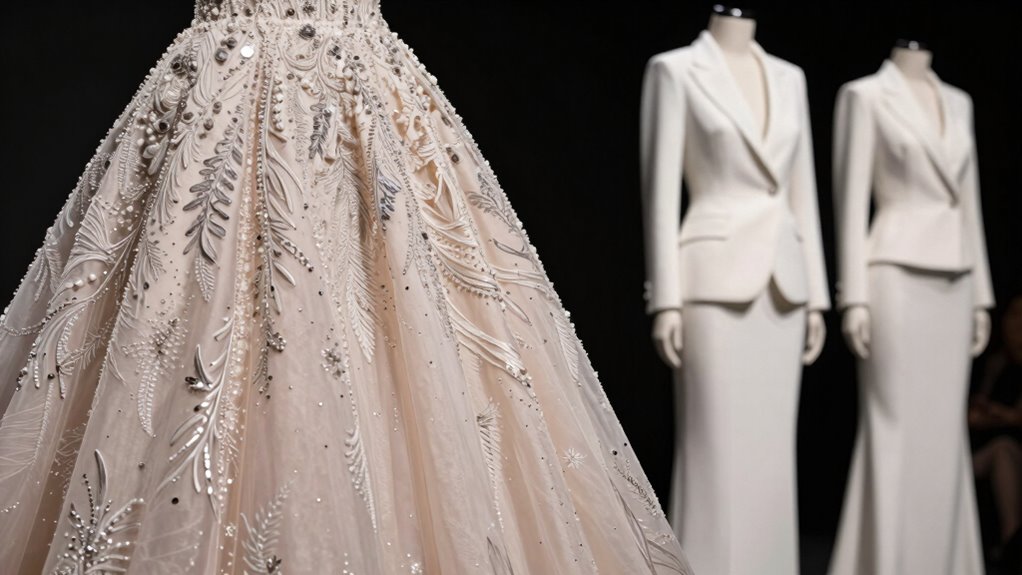
When you step into the world of fashion, you’ll quickly notice the stark differences between couture and ready-to-wear clothing. Couture is all about luxury craftsmanship; each piece is meticulously handcrafted by highly skilled artisans. These garments often feature intricate details, hand-sewn embellishments, and the finest fabrics, reflecting an artistry that’s become rare in today’s mass-produced world. Every stitch and seam is carefully executed, making couture a true symbol of exclusivity and high fashion. On the other hand, ready-to-wear collections are designed for broader consumption. They prioritize efficiency and affordability, often relying on mass production techniques to produce large quantities of clothing quickly and consistently. This approach makes ready-to-wear accessible to a much wider audience, but it also means sacrificing the level of detail and bespoke quality that defines couture.
The gap between these two categories is enormous because they serve fundamentally different purposes. Couture is about creating one-of-a-kind pieces that showcase the designer’s artistry and innovation. It involves lengthy processes, from sketching and fabric selection to fitting and finishing touches. Because each garment is custom-made for a client, the focus is on perfection and exclusivity. This craftsmanship commands premium prices and takes months to complete. Conversely, ready-to-wear lines are developed with commercial viability in mind. They’re designed to be produced efficiently, often using standardized patterns and automated manufacturing processes. This lets brands offer stylish clothing at more affordable prices, but it also means sacrificing the personalized touch and the level of luxury craftsmanship inherent in couture.
The difference also extends to the experience of owning and wearing these garments. Couture pieces often feel like wearable art, with a sense of history and craftsmanship embedded in every detail. They’re made to fit perfectly and to stand out in a crowd. Ready-to-wear, however, tends to prioritize practicality and everyday wearability. While it can be high quality, it usually doesn’t have the same level of handcrafted detail or uniqueness. Instead, it’s about providing fashionable options that are more accessible, catering to a broader market. Additionally, the artisanal craftsmanship involved in couture highlights the dedication and skill that sets it apart from mass-produced apparel. This emphasis on craftsmanship underscores the importance of preserving traditional techniques in a rapidly industrializing world.
As an affiliate, we earn on qualifying purchases.
Frequently Asked Questions
How Do Pricing Differences Impact Consumer Accessibility for Couture and Ready-To-Wear?
Pricing differences profoundly impact your accessibility to couture and ready-to-wear. Luxury branding elevates couture prices, making it exclusive and less attainable for most consumers. Market segmentation guarantees that ready-to-wear remains affordable and accessible, broadening its consumer base. You’ll find that couture’s high costs serve a niche market, while ready-to-wear’s lower prices allow more people to enjoy stylish, designer pieces without the hefty investment.
What Are the Environmental Impacts of Couture Versus Ready-To-Wear Production?
Think of couture as a delicate butterfly and ready-to-wear as a sturdy oak. Couture often uses sustainable fabrics and emphasizes waste reduction, but its small scale means less environmental impact overall. Ready-to-wear, produced in larger quantities, can generate more waste and use less eco-friendly materials. Your choices influence this balance—favoring brands that prioritize sustainability helps reduce environmental impacts across both production styles.
How Do Customer Customization Options Vary Between Couture and Ready-To-Wear?
You’ll find that couture offers extensive personalization options, allowing you to select fabric choices and tailor every detail to your liking. In contrast, ready-to-wear provides limited customization, usually only fitting standard sizes and styles. Couture’s bespoke approach guarantees your garment reflects your unique preferences, while ready-to-wear emphasizes affordability and quick availability. This difference highlights couture’s focus on individuality versus the mass production of ready-to-wear.
What Role Does Celebrity Endorsement Play in Each Market Segment?
Celebrity endorsement acts like a magnet, pulling attention to both segments. In couture, celebrity influence elevates exclusivity and prestige, often through high-profile brand collaborations. For ready-to-wear, it broadens appeal, making brands more accessible and trendy. You see stars wearing collections, which boosts visibility and desirability. Whether in couture or ready-to-wear, celebrity endorsements shape consumer perception, driving sales and solidifying brand status in their respective markets.
How Do Manufacturing Timelines Differ Between Couture and Ready-To-Wear Collections?
You’ll find that manufacturing timelines for couture are much longer because fabric sourcing involves selecting rare, luxurious fabrics, and craftsmanship techniques demand meticulous, handcrafted work. In contrast, ready-to-wear collections benefit from streamlined production processes, faster fabric sourcing, and standardized craftsmanship techniques, allowing for quicker turnaround times. This difference reflects couture’s emphasis on exclusivity and artistry, while ready-to-wear prioritizes efficiency and mass production.
Conclusion
So, now you see why the gap between couture and ready-to-wear is as vast as the Grand Canyon. Couture remains an exclusive masterpiece, crafted with the flair of a Renaissance artist, while ready-to-wear offers accessible style for the modern age. Whether you’re channeling Marie Antoinette or just want a chic outfit for brunch, understanding these differences helps you make smarter fashion choices. In the end, it’s all about finding your perfect fit—like a true fashionista of yore.
Halloween Picks
halloween
As an affiliate, we earn on qualifying purchases.