

Barcode codes like UPC, EAN, and SKU are powerful tools that help you quickly identify products and manage inventory behind the scenes. UPC and EAN are standard international and North American codes that link to detailed product info, while SKUs are unique to each retailer for internal tracking. Using these codes, stores can keep stock accurate and speed up checkout. Keep exploring, and you’ll uncover even more about how these codes keep the shelves stocked and your shopping smooth.
Key Takeaways
- UPC and EAN are barcode formats that encode product identifiers linked to detailed database info.
- SKUs are retailer-specific codes used internally for tracking product variations.
- These codes streamline inventory management, sales processing, and stock replenishment.
- UPC and EAN facilitate quick, accurate scanning to reduce human error at checkout.
- Each code type supports efficient, real-time updates to inventory, ensuring product availability.
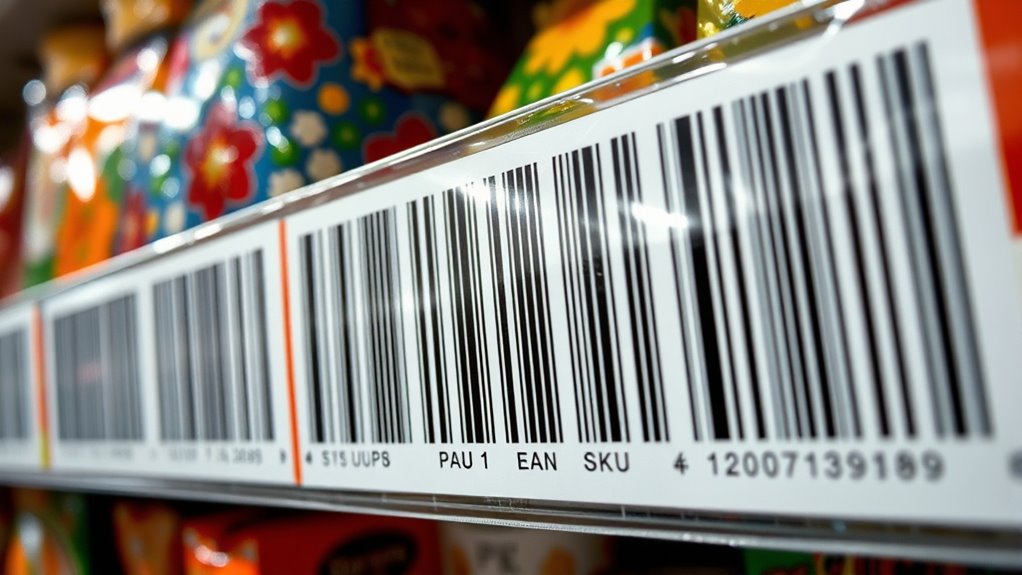
Have you ever wondered how retailers keep track of products efficiently? Behind the scenes, barcode scanning plays a vital role in streamlining inventory management. When you pick up an item, it’s not just about checking the label; it’s about a complex system working seamlessly to update stock levels, process sales, and reorder products when necessary. Barcode scanning allows retail employees to quickly and accurately identify each item, reducing errors and speeding up checkout lines. This technology forms the backbone of inventory management, ensuring that the right products are available at the right time without unnecessary overstock or shortages.
Barcode scanning streamlines inventory management, ensuring accurate stock updates and faster checkout experiences.
At the core of this system are various codes—UPC, EAN, and SKU—that serve as unique identifiers for products. The Universal Product Code (UPC) is the most common barcode used in North America. It consists of a series of black and white bars that encode numbers representing a product’s identity. When scanned, the UPC links directly to a database containing detailed information about the item, such as its name, price, and stock quantity. European and international retailers often use the European Article Number (EAN), which functions similarly but has a different format and can encode more digits. Both UPC and EAN are designed to be easily read by barcode scanners, making inventory management more efficient and less prone to human error.
Then there’s the SKU, or Stock Keeping Unit, which isn’t standardized across industries but is unique within a retailer’s system. It’s a code that a store assigns to each product variation—size, color, style—to facilitate internal tracking. Unlike UPC or EAN, which are assigned by manufacturers, SKUs are created by retailers themselves, allowing for flexible categorization based on their specific inventory needs. When you scan a barcode at checkout, the system references the UPC or EAN to pull up detailed product info, while the SKU helps the store keep track of stock levels for each specific variant. Barcode standards help ensure compatibility and accuracy across different systems and regions.
All these codes work together to create a seamless inventory management process. They enable quick scanning, accurate data collection, and real-time updates, which are essential for maintaining efficient operations. Whether it’s restocking shelves, managing seasonal inventory, or analyzing sales trends, these codes are fundamental to how modern retailers keep everything organized behind the scenes. So next time you scan an item at checkout, remember that these tiny codes are powering a sophisticated system that keeps the shelves stocked and the shopping experience smooth.
Frequently Asked Questions
How Do Companies Generate Unique Barcode Numbers?
You generate unique barcode numbers by following encoding standards like UPC or EAN, which guarantee each code is unique and scannable worldwide. You typically work with a barcode provider or a company that manages barcode customization, assigning your products specific numbers within a designated range. This process guarantees that each barcode is distinct, helping with inventory management and tracking. Always double-check your codes against the standards to avoid duplication or scanning issues.
Can Barcodes Be Reused or Recycled?
Think of barcodes like sacred scrolls; they’re meant to be unique and untouchable once assigned. Reusing or recycling a barcode is risky because it can lead to barcode theft or confusion in inventory. While some companies try recycling practices, it’s generally best to generate new, unique codes for each product to avoid mix-ups and maintain inventory integrity. Keep your barcodes inviolable to ensure smooth operations.
What Are the Costs Associated With Barcode Implementation?
You’ll face costs for barcode printing, which varies depending on the quality and volume you need, plus expenses for scanner accuracy to guarantee reliable data capture. Additionally, you might pay for software to manage your barcode system and staff training to operate scanners effectively. These investments help streamline your inventory process, reduce errors, and improve efficiency, making the overall cost worthwhile for accurate and consistent barcode implementation.
How Do Digital Products Use UPC or EAN Codes?
Digital products don’t typically use UPC or EAN codes for barcode scanning or product tracking like physical items do. Instead, they rely on unique identifiers such as digital IDs or serial numbers stored in databases. These identifiers help you manage licenses, updates, and analytics. When you scan barcodes in physical stores, they track tangible products, but for digital goods, tracking involves digital codes linked to user accounts and download histories.
Are There International Standards for Barcode Formatting?
Imagine a universal language that connects merchants worldwide—that’s what international barcode standards do. Yes, there are established guidelines like GS1, which set the format and size for barcodes, ensuring seamless global trade. These standards also address barcode privacy, safeguarding data during scanning. Adopting international barcode standards simplifies inventory management and reduces errors, making your products easily recognizable worldwide, just like speaking a common language that everyone understands.
Conclusion
Now that you know the basics behind UPCs, EANs, and SKUs, you can confidently navigate the world of warehousing and checkout counters. Remember, these codes carry vital clues, connecting products to their prices and places. By understanding their purpose, you’ll master the maze of markings behind the shelves, transforming confusion into clarity. So, stay sharp, spot the symbols, and see the seamless system that keeps shopping simple and swift.