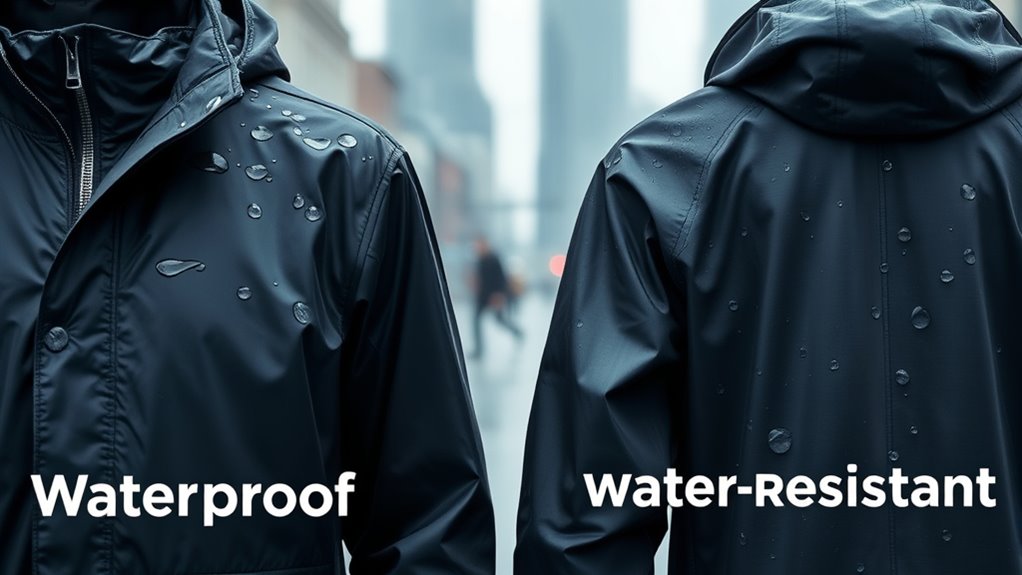

Waterproof items fully prevent water from seeping in, even during heavy rain or submersion, thanks to tightly woven fabrics with special coatings or membranes. Water-resistant gear, on the other hand, only repels light moisture and splashes but can’t handle prolonged or intense water exposure. The key difference lies in how long and how much water each can withstand. If you want to understand more about their construction and best uses, there’s more to discover below.
Key Takeaways
- Waterproof products prevent water penetration during heavy rain or submersion, while water-resistant items only repel light moisture temporarily.
- Waterproof fabrics use waterproof membranes or coatings, whereas water-resistant fabrics are treated or woven for lighter water protection.
- Waterproof gear is tested against rigorous standards like IP ratings; water-resistant items undergo simpler spray or splash tests.
- Waterproof items are suitable for activities like kayaking or heavy rain, whereas water-resistant gear is ideal for light rain or splashes.
- Waterproof fabrics are more durable and long-lasting, while water-resistant fabrics may lose effectiveness over time with wear or washing.
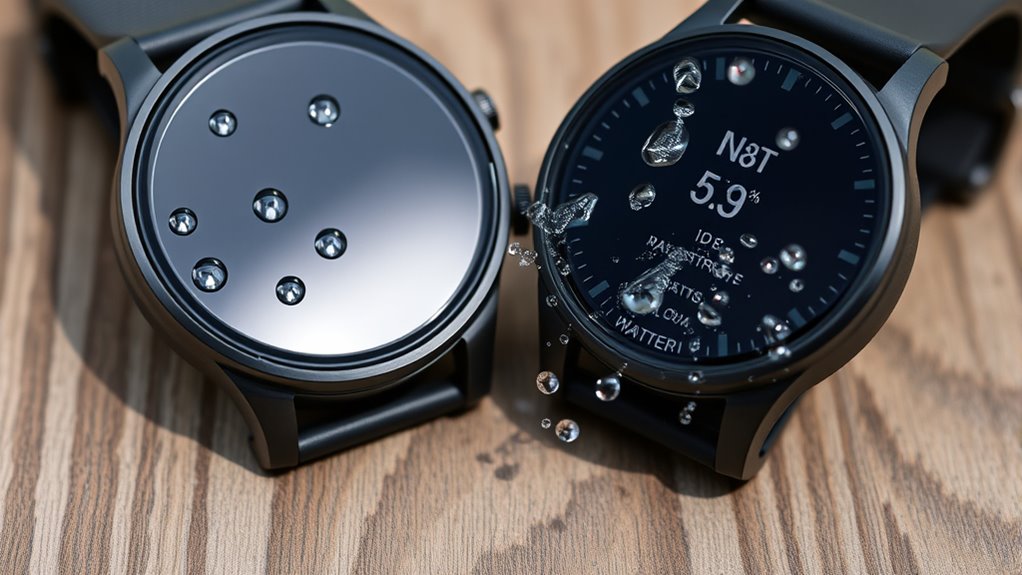
Ever wondered what sets waterproof and water-resistant products apart? The key lies in understanding how each type handles exposure to water and what it signifies for your daily activities. When shopping for gear, clothing, or equipment, you need to know the difference so you can pick the right item for your needs. At the core, these differences come down to fabric durability and testing standards. Waterproof materials are designed to withstand continuous immersion, while water-resistant fabrics offer only a certain level of protection against light moisture or brief splashes.
Waterproof products are made with tightly woven fabrics and often include waterproof membranes or coatings that create a barrier to water. These fabrics are engineered to prevent any water from penetrating, even under high pressure or prolonged exposure. The durability of these fabrics is tested rigorously—using standards like IP (Ingress Protection) ratings or specific industry tests—to ensure they can endure severe conditions. When a product is labeled waterproof, it means it has passed these strict testing standards, confirming that water won’t seep through during heavy rain, accidental submersion, or extended exposure. This level of fabric durability makes waterproof gear ideal for activities like kayaking, mountain climbing, or working in wet environments. Additionally, waterproof fabrics often undergo rigorous testing to verify their performance under various conditions.
Water-resistant fabrics, on the other hand, are treated or woven in a way that repels water to some extent. They can handle light rain, splashes, or brief contact with water, but they’re not designed for prolonged immersion. Their fabric durability is generally lower compared to waterproof materials, as they don’t usually meet the same rigorous testing standards. Instead, water-resistant items often undergo simpler tests—like a spray test—to see how well they repel water. The coatings or treatments can wear off over time, especially after frequent washing or exposure to harsh conditions, reducing their effectiveness. Because of this, water-resistant gear works well for everyday use, like running errands or walking in drizzle, but it’s not suitable for intense outdoor adventures where persistent rain or submersion is expected.
Frequently Asked Questions
Can Waterproof Gear Be Used Underwater for Extended Periods?
You can use waterproof gear underwater for extended periods if it’s designed for that purpose, but you need to consider its submersion limits and pressure tolerance. Some gear is built to handle deep water and high pressure, while others only withstand brief immersions. Always check the manufacturer’s specifications to ensure the gear suits your activity, so you avoid leaks or damage from exceeding its pressure limits.
How Do I Maintain Waterproof Clothing to Ensure Durability?
You can’t afford to let your waterproof clothing fall into disrepair; it’s your armor against the elements! To keep it durable, focus on fabric care—wash it gently, avoid harsh detergents, and always follow the label. Seam sealing is essential—reapply sealant when you notice leaks. By consistently maintaining your gear, you’ll guarantee it stays waterproof, ready to conquer rainstorms and splashes, no matter how intense!
Are Waterproof Watches Suitable for Diving?
You might wonder if waterproof watches are suitable for diving, especially for marine safety. Yes, many waterproof watches are designed as diving equipment, capable of withstanding underwater pressure and ensuring durability at significant depths. When selecting one, check its water resistance rating and features like a rotating bezel. This makes your watch reliable gear for diving, helping you keep track of time safely while exploring underwater environments.
What Are the Cost Differences Between Waterproof and Water-Resistant Products?
Imagine shopping for gear as stepping into a market full of colorful stalls. The cost comparison between waterproof and water-resistant products varies like a price rainbow—waterproof items usually cost more due to advanced materials and technology. Price factors include durability, brand, and intended use. You’ll find water-resistant gear more budget-friendly, while waterproof options, designed for deeper water exposure, often come with a premium. Choose based on your needs and budget.
Can Water-Resistant Devices Be Upgraded to Waterproof?
You can’t typically upgrade a water-resistant device to waterproof through a simple device upgrade. Water resistance depends on specific design features like seals and coatings, which are built into the device. To enhance durability and make it waterproof, you’d need to replace or modify key parts, which isn’t usually practical. Instead, consider buying a device specifically designed for waterproof use to ensure reliable protection from water.
Conclusion
Ultimately, understanding the difference between waterproof and water-resistant helps you decide what’s right for your needs. Whether you’re venturing into vigorous rain or gentle splashes, knowing these qualities keeps your gear guarded and your goals gained. Waterproof offers worry-free protection, while water-resistant provides a wary wall against water. By mastering this minor but meaningful distinction, you’ll make smarter, safer selections, securing your stuff and staying steadfast in the face of shifting weather.